
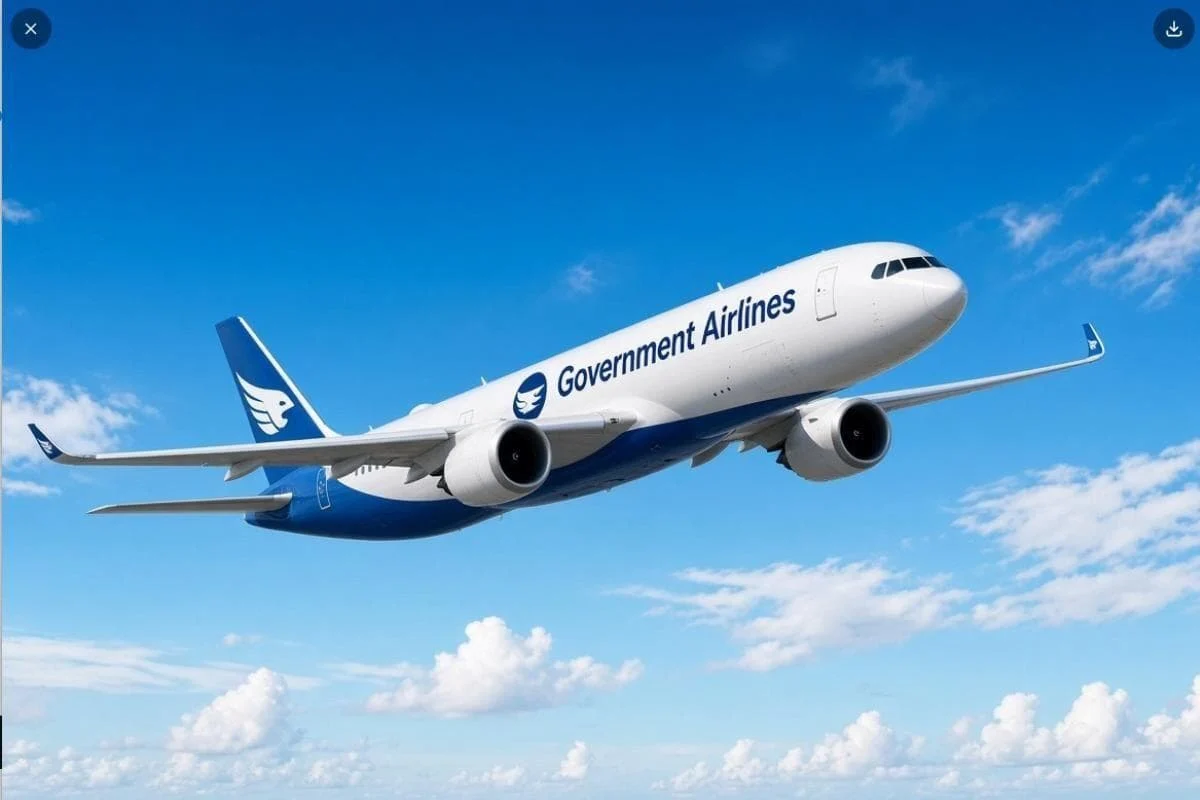
The recent nationwide airline ground stop, which brought air travel across the United States to a standstill, served as a stark reminder of the extensive and often unseen influence of the federal government on commercial aviation. On January 11, 2023, the Federal Aviation Administration (FAA) issued an unprecedented halt to all domestic flight departures, an action that underscored the foundational truth that the movement of airline passengers is, at its core, subject to governmental oversight and control. This event, attributed to a critical system outage, highlighted the intricate web of federal agencies, regulations, and infrastructure that underpin the entire air transport system, far beyond the branding on an aircraft fuselage.
Chronology of the January 2023 FAA NOTAM System Outage
The disruption began in the early hours of Wednesday, January 11, 2023, when the FAA’s Notice to Air Missions (NOTAM) system experienced a significant failure. NOTAMs are crucial advisories containing information essential for flight operations, such as hazards, airport closures, and changes to navigational aids. Without functioning NOTAMs, pilots and air traffic controllers lack critical real-time data necessary for safe flight planning and execution.
- Early Morning (approx. 3:28 AM ET): Reports of issues with the NOTAM system began to surface. The system, which transmits vital safety information to flight crews, stopped processing new or updated information.
- Morning (approx. 6:30 AM ET): As the extent of the outage became clear and attempts to restore the system proved difficult, the FAA issued a nationwide ground stop for all domestic departures. This unprecedented order mandated that all flights scheduled to depart would remain on the ground, impacting thousands of flights and millions of passengers.
- Mid-Morning (approx. 8:50 AM ET): The FAA announced that normal air traffic operations were gradually resuming at some airports, with the ground stop beginning to lift.
- Late Morning (approx. 9:05 AM ET): The nationwide ground stop was officially lifted, though delays and cancellations continued throughout the day as airlines worked to recover their schedules.
- Aftermath: The incident led to over 10,000 flight delays and more than 1,300 cancellations across the U.S. and internationally. Secretary of Transportation Pete Buttigieg confirmed that there was no evidence of a cyberattack, and the FAA attributed the outage to a damaged database file, requiring a system reboot and restoration.
The Foundational Pillars of Government Control
The incident brought into sharp focus the "five A’s" of the aviation system, a framework often used by industry analysts to describe its components: the airline, the airport, the airspace, air traffic control (ATC), and the agency (FAA). With the exception of the specific airline brand, each of these elements operates under significant, if not total, governmental authority and ownership.
- Airports: While many airports are operated by municipal or state authorities, they are ultimately subject to federal regulation, funding mechanisms, and safety standards dictated by the FAA. Major infrastructure projects, operational procedures, and security protocols are all overseen by federal mandates.
- Airspace: The U.S. government holds exclusive sovereignty over its national airspace, as stipulated by federal law (49 U.S. Code § 40103). This means that all flights, commercial or private, operate within a federally managed domain. The National Airspace System (NAS) is a jointly managed asset, with significant portions reserved or shared with military operations, underscoring its strategic national importance.
- Air Traffic Control (ATC): All air traffic controllers are federal employees, working under the direct authority and direction of the FAA. They are responsible for safely separating aircraft, managing traffic flow, and issuing clearances, making them an indispensable government function vital to every flight.
- The Federal Aviation Administration (FAA): As the primary regulatory body, the FAA sets and enforces safety standards for aircraft design, manufacturing, maintenance, and operation. It licenses pilots and mechanics, certifies airlines, and oversees all aspects of civil aviation.
Beyond the "Five A’s": Deeper Government Integration
The government’s role extends even further. Pilots, the individuals at the controls of commercial flights, are not merely airline employees but also "government-licensed machine operators." Their certification, medical approvals, and operational limits are entirely administered and controlled by the FAA, primarily through its aeromedical branch in Oklahoma City. This stringent oversight ensures a uniform standard of competence and health across the entire pilot population.
Furthermore, all suppliers to the airline industry, from aircraft manufacturers to maintenance providers and technology developers, are subject to a complex web of federal regulations. This ensures that the components and services critical to flight safety meet rigorous governmental standards.
A lesser-known but critical aspect of government power is its ability to effectively "commandeer" any airline flight or company. Under statutory rules and emergency mobilization powers, the government can requisition private aviation assets for national defense or public interest during crises, demonstrating the ultimate authority it holds over the entire commercial fleet.
Airport Security and the Evolution of Passenger Control
Airport security has transformed significantly, evolving into what some describe as centralized population control points. Post-9/11, the Transportation Security Administration (TSA), a federal agency, took over airport security, replacing private contractors with federal employees and standardized procedures. While private contractors may still be employed for specific services, the overarching framework and ultimate authority remain federal.
The introduction of measures like mandatory shoe removal and enhanced pat-downs sparked considerable public debate regarding privacy and convenience. More recently, the increasing use of biometric identification, such as facial recognition technology, has become a standard feature, particularly for international travel. Federal passports are now often biometric-enhanced, signifying that international mobility is increasingly linked to government-controlled digital identities. This integration of technology and security measures means that a passenger’s ability to travel is directly contingent on compliance with federal identification and screening protocols.
Technological Dependencies and National Security Implications
The recent ground stop, attributed to a radar and communications problem, underscored the critical reliance of the aviation system on complex technology. Key systems, often provided by specialized defense and technology contractors like L3Harris, are integral to maintaining the safety and efficiency of the NAS. The widespread adoption of such technologies, sometimes by foreign entities, necessitates careful management to mitigate potential national security risks. A radar outage, for instance, could create a "blind period" where national airspace detection capabilities are compromised, potentially exposing vulnerabilities to adversary reconnaissance or intrusion.
Beyond external threats, the technology powering modern aircraft also introduces internal security concerns. Contemporary airline aircraft are increasingly "electric" and sophisticated, making them susceptible to cyber threats. Malware and electronic interception of civilian aircraft systems are potential risks that demand advanced shielding and electronic countermeasures, highlighting the need for continuous investment in cybersecurity within the aviation sector.
The Debate Over "Airline Competition" and Public Utility Status
The profound governmental influence over aviation has led some industry experts, including Matthew G. Andersson, a former aerospace CEO and airline transport pilot, to question the conventional notion of "airline competition." He posits that true competition is limited because airlines largely operate with similar aircraft, from the same federally regulated airports, within the same controlled airspace, directed by federal air traffic controllers, and overseen by the same federal agency. In this view, the "competition" primarily boils down to branding and pricing within a tightly constrained operational environment.
This perspective suggests that airlines might be more accurately categorized as a national public utility rather than purely private enterprises. The argument for a public utility model often includes the potential benefits of standardization, such as wider, more comfortable seats, flat everyday fares akin to commuter trains, and a comprehensive flight schedule to all destinations. Proponents argue that a single, regulated national airline could streamline operations, facilitate significant security and technology upgrades that are difficult to implement across numerous cost-conscious competitors, and provide a more consistent and reliable service for the public. The analogy is often drawn to air traffic control itself: "We don’t have a dozen different air traffic control operators – we have one. The best one. So why do we need a dozen airlines?" This argument emphasizes efficiency, safety, and public service over market competition in a sector deemed essential infrastructure.
Future Horizons: Private Aviation and Advanced Mobility
While commercial aviation remains heavily federalized, alternatives and future developments offer glimpses into evolving mobility options. Private aviation, historically more accessible to affluent individuals, is projected to become more affordable over time, potentially offering a different tier of air travel less immediately tied to the mass-market commercial system.
The advent of "flying car" concepts, or electric Vertical Take-Off and Landing (eVTOL) aircraft, promises short-trip solutions that could integrate into urban mobility landscapes. Beyond that, futuristic concepts like new supersonic aircraft and sub-orbital hypersonic flights, such as the "Orient Express" envisioned by former U.S. President Ronald Reagan for rapid intercontinental travel, are also on the horizon. These innovations, while exciting, will inevitably require significant federal involvement in their regulation, certification, and integration into the existing national airspace system, ensuring safety and managing complex operational challenges.
Investment and the Path Forward
Secretary Buttigieg has acknowledged the U.S. possesses the world’s best aviation system but stressed the urgent need for substantial upgrades. This modernization, particularly for critical infrastructure like the NOTAM system and broader ATC technology, demands significant investment. Estimates, such as the $50 billion figure cited by Secretary Buttigieg, underscore the scale of financial commitment required.
Achieving this vision necessitates robust public-private partnerships, echoing the collaborative spirit that characterized the earliest stages of aviation development. Given the current political climate and congressional gridlock, which some argue prioritizes regulating airlines over modernizing them, the impetus for this public policy vision—including creative financing solutions—will likely fall to the executive branch, working in concert with private sector leadership. This approach aims to leverage governmental authority and private sector innovation to build a more resilient, secure, and advanced air transport system for the future.

