
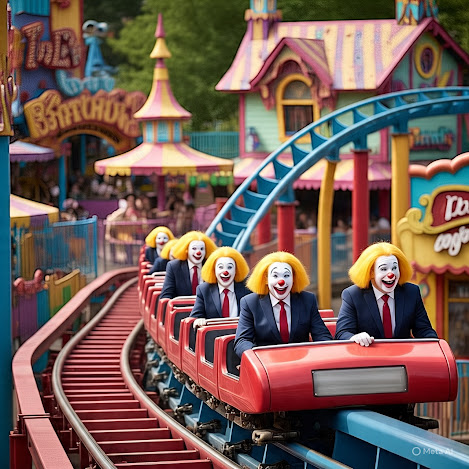
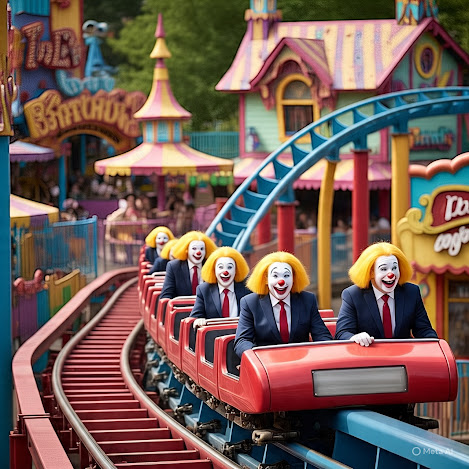
The year 2025 has ushered in a period of remarkable turbulence in global financial markets, with the stock market experiencing a dizzying roller coaster of steep drops and equally rapid recoveries. This volatility, which saw the market shed a full 20% of its value at its nadir before astonishingly rebounding to near its peak levels, has been largely attributed to one dominant factor: the resurgence and unpredictable application of tariffs. Businesses across sectors are bracing for profound changes, currencies and interest rates are reacting sharply, and individual investors are grappling with uncertainty over the future of their financial stability and retirement funds.
The Resurgence of Tariffs: A Shifting Economic Landscape
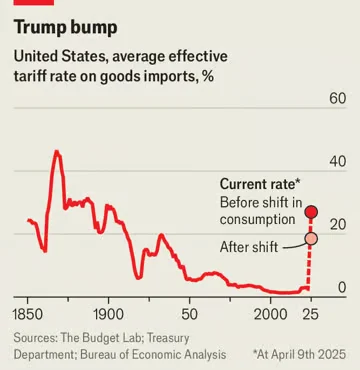
The current economic maelstrom finds its roots in a significant departure from decades of established trade policy. Historically, the United States, particularly since the mid-20th century, has championed a global economic order characterized by progressively lower tariffs and the promotion of free trade through international agreements like the General Agreement on Tariffs and Trade (GATT) and later the World Trade Organization (WTO). This framework fostered intricate global supply chains, optimized for efficiency and cost, contributing to lower consumer prices and increased corporate profitability. This period saw average U.S. tariff rates decline significantly, reaching historical lows of around 1.5% to 2% on average for dutiable imports by the early 21st century.
However, this paradigm began to shift noticeably in recent years, culminating in the intensified tariff regime observed in 2025. Following a period of multi-year market growth that peaked in February 2025, the global economy found itself caught in a whirlwind of trade disputes. The catalyst for this dramatic shift has been the administration’s aggressive use of tariffs, presenting them as a primary tool for economic leverage and domestic industrial protection. This policy direction, often framed under an "America First" doctrine, seeks to rebalance trade relationships, reduce trade deficits, and incentivize domestic production. The dramatic market drop on April 2nd, 2025, following a significant tariff announcement referred to as "Liberation Day," underscored the immediate and profound impact of these policies on investor confidence.
Understanding Tariffs: Economic Mechanism and Impact
At its core, a tariff is a tax levied by a government on imported goods or services. It functions as a sales tax, but one specifically applied at the border. When a product enters the country, the importer – whether it’s a large corporation like Amazon, Walmart, or Apple, or an individual ordering directly from an overseas supplier – is required to pay this tax to the government.
Crucially, while importers initially bear the cost, the burden ultimately falls on the end consumer. Businesses, facing increased costs for their imported raw materials or finished products, invariably pass these expenses on through higher retail prices to maintain their profit margins. This phenomenon is not limited to consumer goods; tariffs on industrial components like steel, copper, or lumber directly increase the cost of major infrastructure projects, factory construction, and even housing development. For example, a 25% tariff on imported steel raises the cost for domestic manufacturers who use steel in their products, from automobiles to construction beams. These manufacturers then either absorb some of the cost, reducing their profits, or pass it on to their customers. This ripple effect permeates the entire economy, increasing production costs for industries and ultimately raising consumer prices.
Economists widely agree that, on average, tariffs lead to higher prices across the board, effectively functioning as a broad-based sales tax that diminishes overall purchasing power and can slow economic activity. A study by the National Bureau of Economic Research on previous tariff implementations found that nearly 100% of the tariff burden was borne by domestic consumers and importing firms.
On the revenue side, the funds collected from tariffs flow into the national treasury, potentially contributing to the federal budget and, in theory, reducing the national deficit. However, the economic consensus suggests that the broader negative impacts on consumer spending, business investment, and overall economic efficiency often outweigh these direct revenue benefits. An optimal tax system, according to economic principles, should be as low, fair, and predictable as possible to foster business confidence and long-term planning. The current environment, characterized by frequent changes and high uncertainty, stands in stark contrast to these principles.
The Dual Edge of Protectionism: Jobs, Innovation, and Costs
One of the primary arguments for imposing tariffs is to protect domestic industries from foreign competition. The theory posits that by making imported goods more expensive, tariffs create a competitive advantage for domestically produced alternatives. For instance, a substantial tariff on imported automobiles could boost sales for domestic car manufacturers, potentially leading to increased production, job creation in factories, and investment in new models and technologies. This could, in certain strategic sectors like national defense or essential goods, be deemed a necessary cost for national security or self-sufficiency, ensuring domestic capacity for critical supplies.
However, this protective measure comes with significant trade-offs. While a specific industry might benefit, consumers generally lose out due to higher prices and reduced choice. Furthermore, the protected domestic industries may face less pressure to innovate and improve efficiency, potentially leading to stagnation in the long run. Without the constant impetus of global competition, companies might invest less in R&D and process improvements. The overall economic efficiency of the nation can suffer as resources are diverted to less competitive sectors.
Moreover, the jobs gained in one sector due to tariffs are often offset by job losses or reduced growth in other sectors. Higher costs for imported goods mean that businesses throughout the supply chain, from logistics to retail, face increased operational expenses. This can lead to slower expansion, reduced hiring, and even job cuts elsewhere in the economy. For example, a tariff on steel might help domestic steel producers, but it raises costs for the far larger downstream industries like automotive manufacturing, construction, and appliance production, potentially leading to net job losses. The consensus among most economists, including the International Monetary Fund and the Congressional Budget Office, is that tariffs should be applied very selectively and sparingly, as their unintended negative consequences, including decreased overall employment and economic slowdown, are often substantial.
Even bipartisan policies have embraced tariffs, sometimes with questionable economic rationale. The article points to an example from previous administrations, where tariffs were imposed on imported solar panel components. While intended to protect domestic manufacturing, critics argue that such policies hinder the adoption of cheaper, cleaner energy, raising costs for consumers and businesses alike, and potentially slowing the transition to a more sustainable energy infrastructure. The current administration has reportedly escalated these tariffs further, illustrating a bipartisan willingness to utilize this tool despite broad economic advice against it.
The Unpredictable Hand: Tariffs as a Political Lever
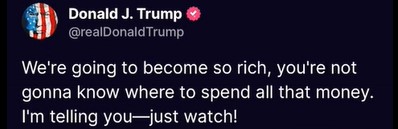
The present tariff regime, particularly under Donald Trump’s stated economic philosophy, has introduced an unprecedented level of unpredictability. The administration has frequently announced, threatened, and then modified tariff rates, sometimes on a daily basis. This erratic approach has been a major source of market instability. The president’s public statements have often suggested a belief that tariffs inherently make the nation "wealthier," focusing on the immediate, visible benefits to specific domestic industries while seemingly downplaying the broader, often hidden, costs to the overall economy. This "first-order effects" perspective contrasts sharply with the complex interdependencies of modern global trade.
Financial markets, populated by investors and corporate leaders who grapple with these complexities daily, react predictably to tariff announcements. When new or higher tariffs are threatened, share prices tend to fall, reflecting anticipated reductions in corporate profits due to increased costs, disrupted supply chains, and reduced consumer demand. Conversely, when tariff threats are paused or reduced, markets often rally, signaling investor relief and renewed confidence in a more stable trade environment. The S&P 500, for instance, has seen swings of several percentage points within days of major trade policy announcements, creating a whipsaw effect on asset values, impacting everything from large multinational corporations to individual retirement portfolios.
This unpredictable application has led many analysts to theorize that the tariffs are not merely an economic policy but a strategic negotiating tactic, a form of economic coercion designed to extract concessions from trading partners or to consolidate executive power domestically. This perspective suggests that the volatility is an intentional byproduct, aiming to create leverage in international negotiations or to demonstrate presidential authority.
Such an approach, however, raises profound questions about democratic governance. The concentration of such significant economic power in the hands of a single individual, allowing for unilateral and rapid shifts in national economic policy, challenges the traditional checks and balances enshrined in democratic constitutions. The article notes that this situation has already begun to trigger legal challenges, with courts being asked to review the scope of presidential authority in imposing tariffs, reflecting a fundamental tension between executive action and legislative oversight. Legal experts point to cases where courts are scrutinizing the statutory basis for broad presidential tariff powers, potentially setting precedents for future trade policy.
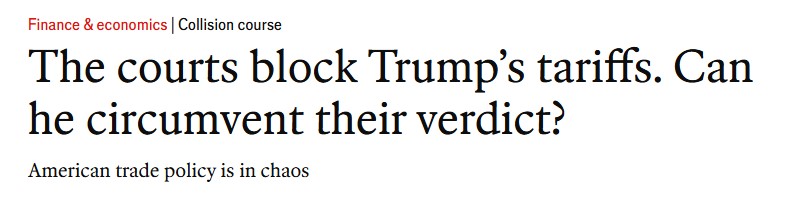
Current Tariff Levels and the Lag in Consumer Impact
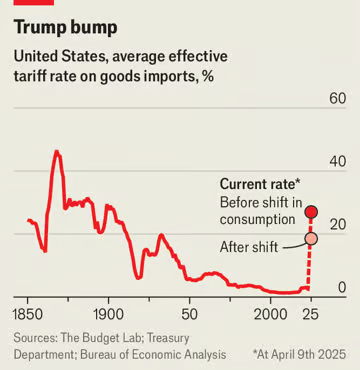
Despite the market’s recent rebound, current tariff levels remain significantly elevated – reportedly seven times higher than they were before the current "circus" of trade disputes began. This stark figure underscores the dramatic shift in U.S. trade policy. The U.S. economy, having been meticulously built over decades on a foundation of low tariffs and free trade, is now attempting to adjust to a fundamentally different operational environment.
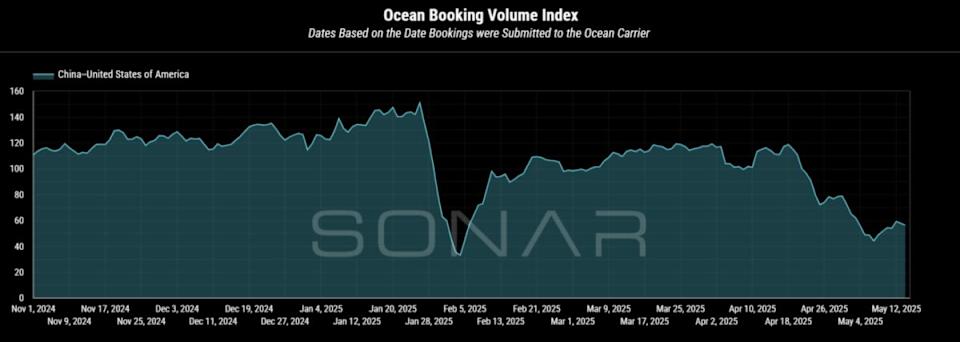
The immediate absence of widespread, noticeable price increases at the consumer level might seem to contradict the severity of these tariffs. However, this lag is a characteristic feature of large economies. The U.S. economy functions like an immense cargo ship: it possesses vast existing inventories of goods, and it takes time to alter its course. When tariff threats first emerged, many importers strategically accelerated their orders, stockpiling goods to preempt the impending taxes. This created a temporary buffer of cheaper products. Data from Freightwaves’ Ocean Shipping Index (OSI) has shown fluctuating import volumes, with spikes preceding anticipated tariff hikes and subsequent declines.
As these stockpiles are drawn down, and with a significant reduction in new imports due to the higher tariffs, the economic impact is expected to become more palpable. Analysts project that consumers could begin to see widespread shortages and noticeable price increases throughout the summer and fall of 2025. While a scarcity of certain "plastic party trinkets" might be manageable, a reduction in the availability of essential tools, machinery, and critical components could have far more severe economic consequences, affecting productivity and increasing costs across various industries, from agriculture to high-tech manufacturing. Supply chain managers report actively seeking alternative suppliers in non-tariffed countries, but these transitions are costly and time-consuming.
Navigating the Future: Scenarios and Resilience
The path forward for the global economy amidst these trade tensions remains uncertain, but two primary scenarios are widely discussed among economists and policymakers:
Scenario 1: Entrenched High Tariffs and Economic Reconfiguration
Should the current, elevated tariffs persist and become a long-term fixture of U.S. trade policy, the implications would be substantial. This less likely but plausible scenario could lead to a sustained period of economic slowdown, both domestically and globally. Businesses would be forced to fundamentally restructure their supply chains, potentially leading to extensive reshoring or nearshoring of manufacturing. While this might create some domestic manufacturing jobs, it would come at the cost of significantly higher production expenses, which would ultimately be passed on to consumers. Studies by organizations like the Peterson Institute for International Economics have modeled scenarios suggesting a sustained tariff regime could reduce U.S. GDP growth by several tenths of a percentage point annually.
Global trade patterns would inevitably reorient, with countries forming new alliances and trade blocs, potentially fragmenting the integrated global economy that has flourished for decades. Consumer choice would likely diminish, and innovation could slow in protected sectors. Inflation would likely become a more persistent challenge as the cost of imported goods and components rises structurally. The global economy could descend into a tit-for-tat tariff war, where retaliatory measures by other nations further choke international trade and investment, ultimately reducing overall global prosperity. This scenario risks undermining multilateral institutions like the WTO.
Scenario 2: Tariffs as a Negotiating Tactic Leading to De-escalation
The more optimistic, and currently favored by financial markets, scenario posits that the tariffs are primarily a tactical maneuver. In this view, the administration is using tariffs as a high-stakes bargaining chip to compel trading partners to agree to new terms, address perceived unfair trade practices, or secure other geopolitical objectives.
If this proves true, the expectation is that a "truce" will eventually be declared, leading to a de-escalation of tariff rates and a return to a more open, predictable international trade environment, albeit potentially with revised trade agreements. Such a resolution would likely trigger a significant rebound in market confidence, stimulate global trade, and alleviate inflationary pressures. The stock market’s current recovery, despite ongoing high tariffs, strongly suggests that investors are betting on this outcome – that the economic disruptions are temporary, a prelude to a return to free-ish international trade. This scenario aligns with historical instances where trade disputes, while disruptive, eventually led to renegotiated agreements rather than permanent trade wars.
The fundamental principle underpinning this optimism is the belief in the mutual benefits of free exchange. Just as the internal market of the United States thrives on open borders between its 50 states, the global community benefits immensely from the collaborative exchange of goods, services, and ideas. Treating each other with collaborative respect, rather than engaging in economic warfare, is seen as the most reliable path to collective prosperity. International bodies, like the WTO, consistently advocate for this approach, emphasizing that open markets foster competition, innovation, and economic growth for all participants.
Epilogue: Market Resilience and the Information Age Challenge
The journey through this period of intense market volatility has been a testament to both the fragility of investor sentiment and the underlying resilience of the market. The significant market drop witnessed around April 2nd, 2025, following a major tariff announcement, led some investors to panic and lock in substantial losses, as evidenced by online forum discussions. However, the subsequent two months demonstrated a remarkable bounce-back, with each perceived reduction or pause in tariff threats correlating directly with an increase in stock prices. This pattern underscores the market’s forward-looking nature and its persistent hope for a return to trade normalcy.
Currently, the U.S. stock market has largely recovered to its previous all-time highs, a valuation that appears to be at odds with the current, significantly higher tariff environment. This discrepancy highlights the market’s collective belief that the present trade disruptions are temporary. Investors are placing their bets on the eventual resolution of these disputes and a return to a functioning, rules-based global trading system. While the "roller coaster ride" may not be entirely over if these expectations prove misplaced, the long-term historical trend suggests that economies, particularly robust and innovative ones like the U.S., tend to adapt and recover from periods of uncertainty, especially when democratic institutions eventually reassert balance.
A critical lesson emerging from this period is the imperative for informed decision-making, particularly concerning complex economic issues. In an era where news headlines are increasingly crafted for attention and emotional response rather than objective information, it is crucial for individuals to cultivate critical thinking skills. The stark contrast in headlines from different media outlets regarding the same economic events illustrates the pervasive bias, often driven by the commercial imperative to generate outrage or fear. For example, a tariff announcement might be framed by one outlet as "President Secures American Jobs" while another reports "Tariffs Threaten Economic Stability," highlighting the divergent narratives.

To navigate this landscape, individuals must either consciously disengage from the constant media churn or commit to becoming subject matter experts in areas of personal importance, seeking out original sources and authoritative analyses from non-partisan economic institutions. The deeper one’s understanding of a subject, the more apparent the inaccuracies and oversimplifications in mainstream media narratives become. Ultimately, fostering a deeper understanding of economic principles and resisting the urge to react impulsively to sensationalized news are vital for personal financial well-being and a more stable public discourse.

