

The economic landscape of 2023 has presented unique challenges for middle-income households, particularly those located in high-cost-of-living corridors such as the Northeastern United States. In central Connecticut, a representative case study of these modern financial pressures is found in the lives of Michael and Brian, both 34, who serve as state employees in the behavioral health and hospital sectors, respectively. Despite a robust combined gross annual income of approximately $167,544, the couple faces a complex intersection of consumer debt, rising rental costs, and the psychological weight of delayed homeownership—a phenomenon frequently cited by sociologists as a defining characteristic of the millennial experience in the post-pandemic economy.

Executive Summary of the Financial Profile
The subjects of this study maintain a household supported by stable public sector employment. Michael operates as a project coordinator for a state behavioral health agency while managing a secondary role as a disability leadership coordinator. Brian serves as a quality assurance manager for a state-run hospital. Together, they net approximately $109,455 annually after taxes and standard deductions.
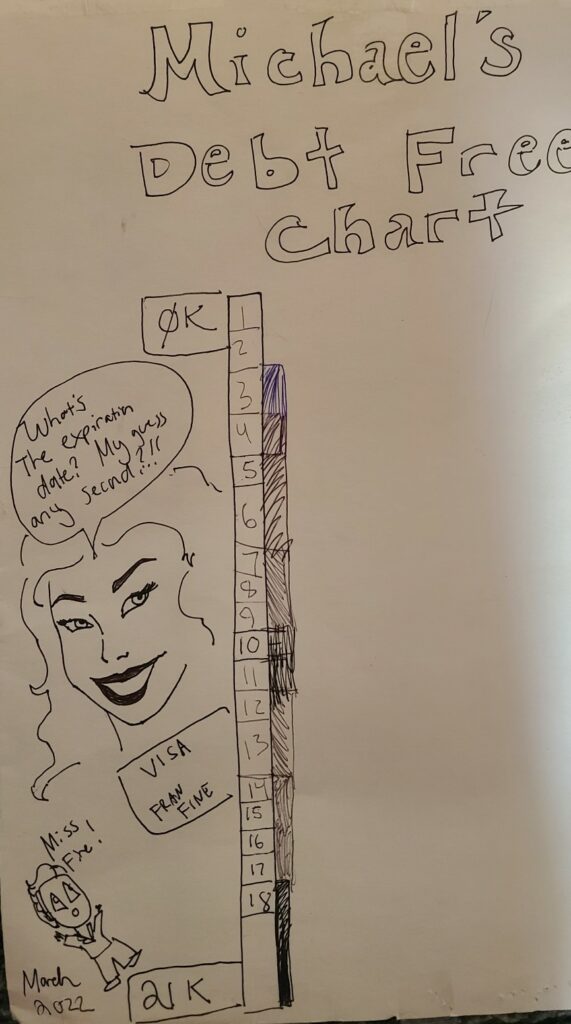
Despite their six-figure income, the couple reports a total consumer debt of $28,259, primarily held in high-interest credit card accounts. This debt is contrasted against a total asset portfolio of $91,250, much of which is illiquid or tied to retirement accounts. Their current primary objective is to transition from their $2,000-per-month luxury apartment into a permanent residence, a goal currently hampered by their debt-to-income ratio and a lack of significant liquid savings for a down payment.

Chronology of Financial Disruption (2022–2023)
The current financial standing of the household is largely the result of a series of compounding events that occurred over the preceding 12 months. In late 2022, the couple was residing in a 600-square-foot studio apartment with a monthly rent of $945. This low overhead allowed for a projected entry into the housing market by late 2023. However, two primary variables disrupted this trajectory:
- Forced Relocation: An unexpected change in their housing status forced the couple into the volatile 2023 rental market. After a three-and-a-half-month search, they secured a two-bedroom apartment in a refurbished industrial mill. While the new space offers 12-foot ceilings and modern amenities, the rent increased by more than 110%, jumping to $2,000 per month.
- Veterinary and Moving Expenses: The relocation coincided with significant health issues for their two new kittens. The combination of emergency veterinary care, prescription dietary needs, and the logistical costs of moving an eight-year household resulted in the accumulation of the aforementioned $28,259 in consumer debt.
This sequence of events illustrates the fragility of financial plans when faced with "sequence of returns" risks or unexpected cash flow disruptions, even for high-earning individuals.

Comprehensive Debt and Asset Analysis
To understand the couple’s path to "the next level of adulting," a granular audit of their liabilities and assets is required.
The Debt Portfolio
The household’s $28,259 debt is distributed across three primary accounts:

- Brian’s Visa (SCU): $16,057. Currently at 0% interest, but set to spike to 17.99% in November 2023.
- Michael’s Visa Platinum: $9,700. Carrying a 10.99% interest rate.
- Brian’s Visa Platinum (NFCU): $2,503. Currently at 0.99%, rising to 17.74% in late 2023.
Financial analysts note that the looming interest rate hikes on these accounts represent a significant "ticking clock" for the household’s fiscal health. At 17.99%, the interest on the $16,057 balance alone would cost the couple approximately $2,888 annually, or $240 per month, without reducing the principal.
The Asset Portfolio
The couple’s $91,250 in assets is largely concentrated in retirement vehicles, reflecting the benefits of their state employment:
- Michael’s 401k: $36,992 (fully vested with a 4% match).
- Brian’s Legacy 401k: $19,305.
- Brian’s Pension Fund: $8,953 (projected to pay $4,150 monthly upon retirement in 2054).
- Emergency Savings: $7,000 (Michael) and $1,000 (Brian).
The current cash reserve of $8,000 represents less than one month of their reported $8,035 in monthly expenses. This lack of liquidity is the primary barrier to homeownership and leaves the couple vulnerable to further debt if another emergency occurs.
The Connecticut Real Estate Context
Michael and Brian’s desire for homeownership is set against one of the most challenging housing markets in Connecticut’s history. According to data from the Connecticut Realtors Association, the median sales price for single-family homes in the state has seen a steady increase, with low inventory driving competitive bidding. Furthermore, as state employees, the couple is tied to the geographic area of their work, which limits their ability to seek cheaper housing in more rural, distant counties.

The couple’s current rent of $24,000 annually is a "sunk cost" that does not build equity. However, with current mortgage rates hovering between 6.5% and 7.5%, the cost of a mortgage on a modest $350,000 home would likely exceed their current rent when property taxes and insurance are factored in. This necessitates a strategic liquidation of consumer debt to improve their credit score and debt-to-income (DTI) ratio before approaching lenders.
Strategic Recommendations for Debt Liquidation
Financial experts suggest a two-pronged approach for the couple: aggressive spending reduction and a prioritized repayment schedule.

Spending Categorization
The couple’s monthly expenditure of $8,035 includes several "reducible" and "discretionary" items. Analysts recommend a "spending detox" to reallocate funds toward the $28,259 debt. Key areas for potential savings include:
- Dining Out and Gifts: $400 combined.
- Home Goods and Personal Care: $350 combined.
- Subscription and Media Costs: $100+.
By transitioning to a "fixed-expenses-only" budget, the couple could potentially free up an additional $1,300 to $1,500 per month. When added to their current $2,000 monthly debt payments, they could apply approximately $3,500 per month toward their balances, effectively clearing the debt in approximately eight months.

Repayment Priority
The "Avalanche Method"—paying off the highest interest rates first—is typically recommended for mathematical efficiency. However, given the 0% promotional windows closing in November, the couple should prioritize Brian’s $16,057 SCU Visa. Preventing that balance from hitting an 17.99% interest rate is the most critical move for their Q4 2023 fiscal health.
Long-term Stability: Pensions and Social Security
A notable strength in the couple’s profile is Brian’s access to the "triple crown" of retirement: a 403b, a 457b, and a state pension. The 457b plan is particularly advantageous as it allows for penalty-free withdrawals upon separation from service, regardless of age, providing a bridge to early retirement that most private-sector workers lack.

While Brian expressed concern regarding the stability of Social Security, most fiscal policy analysts suggest that while the system may face adjustments, it is unlikely to disappear entirely. When combined with a state pension and diversified retirement accounts, the couple is actually in the top quintile of their age bracket for retirement readiness, despite their current feelings of being "behind."
Professional Development and the ROI of Education
Brian has expressed interest in pursuing a master’s degree to rectify past academic struggles and potentially increase his career ceiling. From a journalistic and analytical perspective, the return on investment (ROI) for such a degree must be scrutinized. In the public sector, salary increases are often strictly codified. If a master’s degree does not trigger a guaranteed "step" increase or qualify Brian for a specific higher-paying role, the tuition cost—likely to be funded by further debt—could be counterproductive to the couple’s goal of homeownership.

Broader Implications and Conclusion
The case of Michael and Brian is a microcosm of the "middle-class squeeze" affecting high-earning millennials. It demonstrates that income alone is not a safeguard against financial anxiety; rather, the management of cash flow, the avoidance of high-interest consumer debt, and the maintenance of an adequate emergency fund are the true markers of financial "adulthood."
For this Connecticut couple, the path forward is clear: a short-term period of austerity to liquidate $28,000 in debt will unlock the ability to save for a down payment. With their stable state careers and excellent retirement benefits, their long-term outlook remains positive, provided they can break the cycle of using credit to bridge the gap during life transitions. As they approach their 10th anniversary, the transition from "debt-focused" to "equity-focused" will be the defining theme of their next decade together.

