
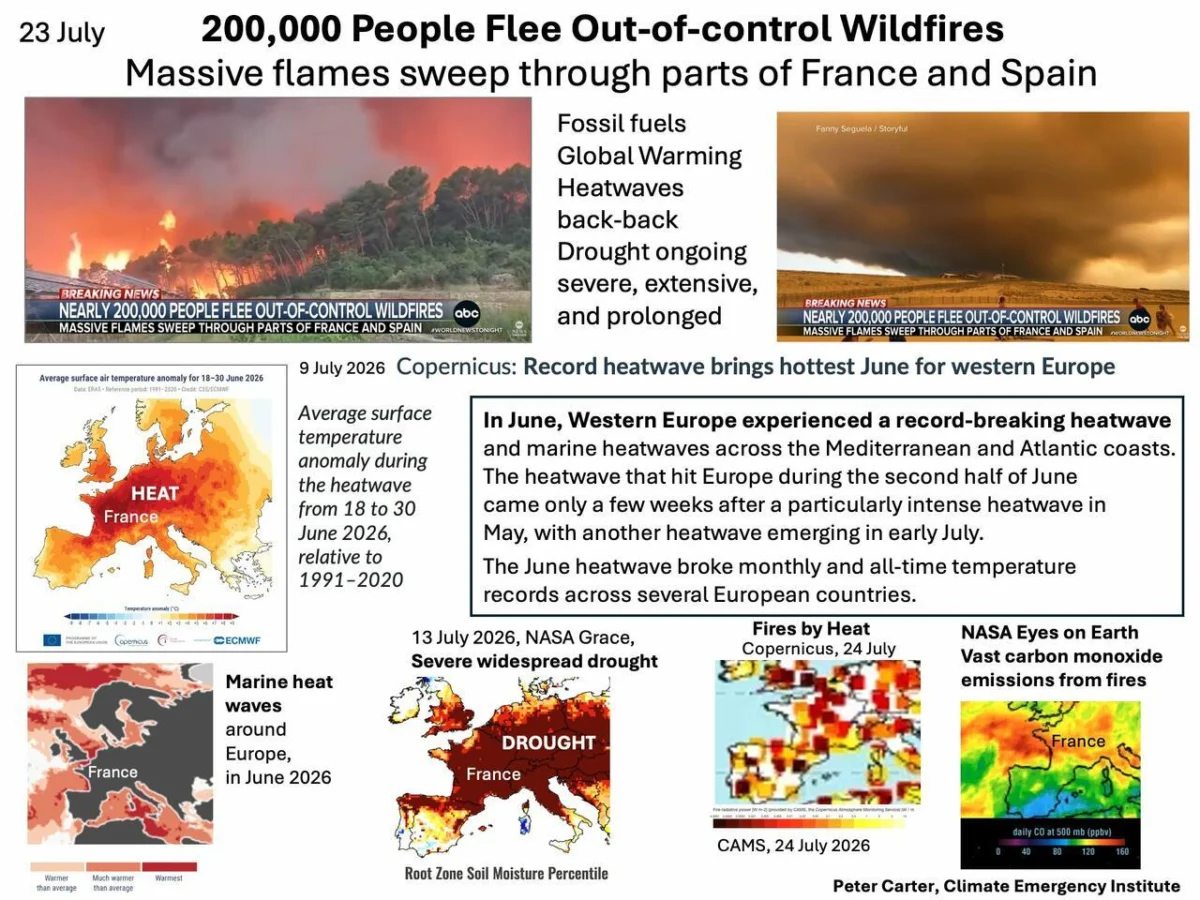
Thousands of dedicated firefighters are currently locked in a relentless battle against rapidly advancing wildfires that are sweeping across vast swathes of Spain and France, driven by a deadly combination of extreme heat and powerful winds. This escalating crisis has compelled the evacuation or shelter-in-place orders for more than 300,000 residents in critically impacted areas, including regions near major urban centers like Madrid and Valencia in Spain, and the historically significant Bordeaux area in France. The scale of the disaster, unfolding in late July 2026, marks a somber chapter in the continent’s struggle with increasingly severe climate-related events, straining emergency services and threatening livelihoods.
Escalation of the Crisis: A Chronology of Destruction
The crisis, which reached critical levels over the past 24 hours leading up to July 26, 2026, has seen an unprecedented acceleration in fire spread and intensity. The conditions conducive to these mega-fires have been building for weeks, with a persistent heat dome settling over Southern Europe, pushing temperatures into record-breaking territory. Drought conditions, exacerbated by several consecutive dry seasons, have transformed forests and scrublands into tinderboxes. The arrival of strong, erratic winds has acted as a catastrophic accelerator, fanning flames across vast distances and creating firestorms that defy conventional containment strategies.
Initial reports indicated scattered outbreaks, but by mid-July, the fires began to coalesce and intensify. By July 25th, multiple fronts were active across both nations, prompting localized evacuations. However, the situation dramatically worsened on July 26th, as extreme temperatures, in some areas exceeding 40 degrees Celsius (104 degrees Fahrenheit), combined with sustained high winds, caused exponential growth in fire perimeters. This rapid expansion triggered the mass evacuation orders that have now affected hundreds of thousands.
Regional Impact: Spain Under Siege
In Spain, the Socialist Prime Minister Pedro Sánchez has provided a grim update, confirming that approximately 20,000 hectares (nearly 50,000 acres) of land have been consumed by wildfires in just the past day. The human toll is already tragic, with more than 105,000 people directly affected by the fires and two fatalities reported so far. These fires are not confined to remote wilderness; they are encroaching upon populated areas, creating immediate threats to life and property.
The regions around Madrid and Valencia have been particularly hard-hit. While Madrid is often associated with its bustling urban core, its surrounding autonomous community encompasses extensive forested areas and natural parks that have proven vulnerable. Similarly, Valencia, with its Mediterranean climate and rich agricultural lands, is experiencing significant ecological and economic damage. Emergency services, comprising thousands of firefighters, military personnel, and volunteers, are working tirelessly. Their efforts are focused not only on containing the infernos but also on safeguarding human life through strategic evacuations and establishing safe zones. Aerial assets, including water-bombing planes and helicopters, are operating continuously, often in challenging conditions of heavy smoke and turbulent air currents. The psychological toll on both the affected populations and the frontline responders is immense, as they grapple with the relentless nature of the fires.
France’s Fiery Ordeal: Gironde and Bordeaux
Across the Pyrenees, France is grappling with an equally devastating scenario, particularly in the southwestern Gironde region. Here, the situation has prompted the largest peacetime evacuation in France since World War II, with over 220,000 people displaced from their homes. Roughly 30 distinct fire fronts are actively spreading, many threatening the iconic vineyards and picturesque towns surrounding Bordeaux. The intensity of these blazes is so extreme that, as reported by Interior Minister Laurent Nuñez, one of the largest fires in Gironde has begun generating its own localized winds, a terrifying phenomenon known as a pyrocumulus or pyro-tornado, which makes firefighting efforts even more perilous and unpredictable.
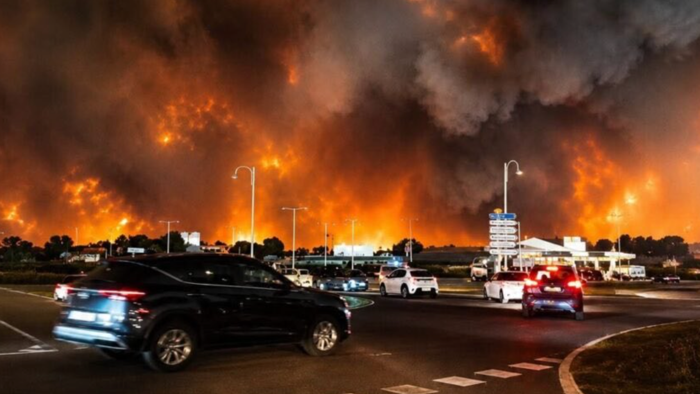
The mobilization of resources in France has been swift and substantial. Approximately 1,500 troops have been deployed alongside civilian firefighters, forming a formidable ground force. They are supported by a fleet of specialized aircraft, including Canadair water bombers, which are crucial in tackling the towering flames and preventing their spread to densely populated areas. The sheer scale of the fires has already led to the destruction of 98,000 hectares (over 242,000 acres) of land across France, marking a new national record for wildfire devastation and cementing 2026 as the country’s worst wildfire crisis in recorded history. The pervasive smoke plume from these fires has been so extensive that it even impacted major events, with the final stage of the prestigious Tour de France cycling race reportedly cut short due to safety concerns and visibility issues, a stark illustration of the crisis’s far-reaching impact.
Humanitarian Crisis and Emergency Response
The human element of this disaster cannot be overstated. Hundreds of thousands of individuals have been uprooted, many with only minutes to gather essential belongings. Emergency shelters have been established in schools, community centers, and sports halls, providing temporary refuge, food, and medical assistance. Local and national authorities are coordinating efforts to ensure the safety and well-being of evacuees, including vulnerable populations such as the elderly, children, and those with pre-existing health conditions. The psychological impact of losing homes, livelihoods, and witnessing landscapes transformed by fire will be profound and long-lasting.
Medical teams are on high alert, treating cases of smoke inhalation, burns, and heatstroke, which are prevalent among both residents and firefighters. The logistical challenge of coordinating such a massive humanitarian response across two nations, often involving cross-border cooperation, is immense. European Union civil protection mechanisms have likely been activated, channeling additional resources, firefighters, and equipment from member states to assist Spain and France in their desperate struggle against the flames. The spirit of solidarity, however, is being severely tested by the relentless nature of the fires.
Economic Repercussions: The Wine Industry’s Vigil
Beyond the immediate human and environmental toll, the wildfires pose a significant economic threat, particularly to France’s world-renowned Bordeaux wine region. As fires rage perilously close to these historic vineyards, concerns are mounting among oenophiles and industry professionals globally regarding the fate of the 2026 vintage. CNN reporter Max Saltman, speaking with wine expert Nicolle Croft, shed light on the delicate situation.
Croft, a prominent tour guide based in Bordeaux, acknowledged the influx of worried inquiries from around the world. "A lot of people are contacting me from around the world hearing all these terrible stories, but actually the vineyards are not impacted at the moment," Croft reassured CNN. However, she quickly added, "But we’re all very upset because there are people losing homes." This sentiment underscores the dual nature of the crisis: while the immediate commercial impact on the vineyards might be contained for now, the broader social and economic fabric of the region is under immense strain.
A key factor mitigating the immediate threat to the wine quality is the current stage of grape development. Croft explained that harvesting for the 2026 vintage is not expected until early September. At this point in the growing season, the grapes are not yet large enough to readily absorb wildfire smoke, a phenomenon known in winemaking as "smoke taint." Dr. Phil Crews, a winemaker and chemist at the University of California, Santa Cruz, further elaborated on this scientific aspect. He explained that unripe grapes are less vulnerable to smoke taint because they lack the high concentrations of sugars that would typically bind with the bitter-tasting phenols present in wildfire smoke. These phenols, when absorbed and bound within the grape, can later impart undesirable smoky, ash-like, or medicinal flavors to the finished wine. While the current stage offers a reprieve, the extended duration and intensity of the fires, coupled with the potential for future smoke exposure as grapes mature, remain a significant concern for producers. The long-term economic impact on a region whose identity and economy are so intertwined with its viticultural heritage could be profound if the situation deteriorates or if future vintages are affected by increasingly frequent and severe fire seasons.
The Broader Environmental Catastrophe
The environmental devastation wrought by these wildfires is catastrophic. Vast tracts of forests, including ancient woodlands and vital ecosystems, have been incinerated. This leads to an immediate loss of biodiversity, destroying habitats for countless species of flora and fauna, some of which may be endemic or endangered. The fires also contribute significantly to air pollution, releasing massive quantities of particulate matter, carbon monoxide, and other harmful gases into the atmosphere. This not only poses immediate health risks to communities far beyond the fire lines but also exacerbates the greenhouse effect, contributing to climate change in a vicious cycle.

Furthermore, the long-term ecological consequences are severe. Soil degradation is a major concern; intense heat can sterilize soil, destroy organic matter, and increase its susceptibility to erosion, especially in mountainous or hilly terrain. With forecasts indicating no immediate rain in the fire-ravaged areas, the risk of subsequent mudslides and flash floods once rains eventually do arrive will be significantly elevated, further endangering communities and infrastructure. The recovery of these ecosystems will take decades, if not centuries, with significant investment required in reforestation and habitat restoration efforts.
A European Challenge: Climate Change and Future Preparedness
The wildfires of July 2026 are not isolated incidents but rather a stark manifestation of a broader, accelerating trend driven by climate change. Southern Europe, in particular, has been identified as a hotspot for increasing temperatures, prolonged droughts, and more frequent extreme weather events. Scientific models have consistently predicted an escalation in the frequency and intensity of wildfires across the Mediterranean basin, and these 2026 events appear to be fulfilling those grim forecasts.
The unprecedented scale of these fires underscores the urgent need for enhanced prevention, preparedness, and response strategies across Europe. This includes better forest management practices, such as controlled burns and creating firebreaks; investing in advanced early warning systems; upgrading firefighting equipment and aerial fleets; and fostering greater international cooperation in resource sharing and expertise. Critically, it also necessitates a more aggressive approach to climate change mitigation, reducing greenhouse gas emissions to curb the underlying drivers of these increasingly destructive phenomena. The events of 2026 serve as a potent and tragic reminder that the window for decisive action is rapidly closing.
Official Voices and Calls for Action
The gravity of the situation has prompted strong reactions from political leaders. Prime Minister Sánchez’s statements highlight not only the immediate devastation but also the broader implications for national resilience. The coordinated efforts with France reflect a recognition that these are cross-border challenges requiring integrated responses. Interior Minister Laurent Nuñez’s acknowledgment of fires generating their own winds underscores the novel and terrifying challenges faced by firefighters, pushing the boundaries of traditional fire suppression techniques.
These events are likely to trigger intense political debate and policy re-evaluations across the European Union. Calls for increased funding for climate adaptation, disaster relief, and scientific research into wildfire behavior are expected to grow louder. The collective experience of 2026 will undoubtedly shape future European environmental and emergency response policies, emphasizing the critical need for proactive measures rather than reactive crisis management.
Looking Ahead: The Path to Recovery
As the fires continue to burn, the focus remains on containment and the protection of human life. However, the long road to recovery will begin once the immediate threat subsides. This will involve rebuilding homes and infrastructure, providing support for displaced communities, and embarking on monumental ecological restoration projects. The psychological scars on those who have lost everything will require sustained community and governmental support. The 2026 wildfire season in Spain and France stands as a harrowing testament to the escalating climate crisis, demanding a fundamental shift in how societies prepare for and respond to the forces of a changing planet. The resilience of the affected communities will be tested, but the shared experience also highlights the enduring human spirit in the face of immense adversity.

