
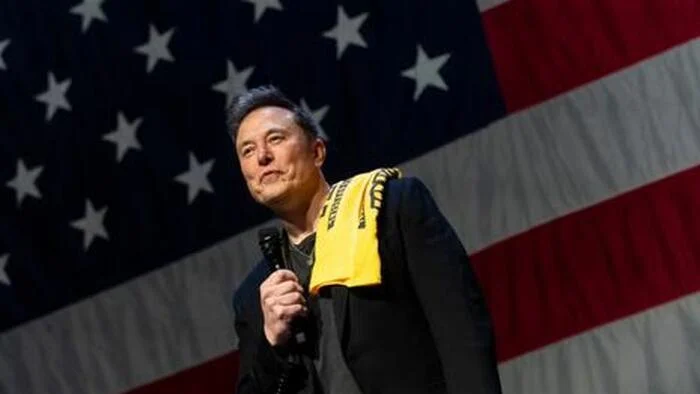
Elon Musk’s America PAC has initiated its 2026 midterm election advertising campaign with a concentrated barrage of ads centered squarely on transgender issues, marking an early and significant entry into a key culture war battleground. This strategic offensive, reportedly backed by over $100 million authorized by Musk himself for this cycle, targets four Democratic Senate incumbents and challengers in highly competitive races: Senator Sherrod Brown in Ohio, Josh Turek in Iowa, James Talarico in Texas, and Representative Mary Peltola in Alaska. The ads are being disseminated across online platforms and various streaming services, representing the first coordinated, trans-focused push of the current election cycle from a major Republican-aligned independent expenditure group.
The Campaign Launch: A Direct Assault on Democratic Candidates
The initial wave of advertisements has been meticulously tracked by political ad spending firm AdImpact, which notes a previous relative silence on trans issues in GOP Senate advertising this cycle. America PAC’s aggressive entry fundamentally alters this dynamic. The ads are not subtle, employing emotionally charged language and imagery designed to provoke a strong response from voters.
For instance, one ad targeting Senator Sherrod Brown in Ohio, deployed on connected TV (CTV), aims to frame his positions on gender identity as out of step with mainstream Ohioan values. Another ad circulating in Texas against James Talarico reportedly employs similar tactics, seeking to link the Democratic candidate to policies perceived as controversial. In Alaska, a digital ad targeting Representative Mary Peltola directly questions her stance on bathroom access, stating, "Would you want your daughter sharing a bathroom with a biological man? Mary Peltola cosponsored legislation that would require it." This particular ad leverages a widely debated aspect of transgender rights, framing it as a direct threat to privacy and safety. Iowa’s Josh Turek is also targeted with a paid digital ad that reportedly uses an emergency sound similar to an Amber Alert, an alarmist tactic designed to immediately capture attention and convey urgency regarding the issues raised.
These early ads signal a deliberate and calculated effort to elevate transgender issues from a minor theme to a central pillar of the Republican midterm strategy, particularly in states where Senate races are expected to be decided by narrow margins. The choice of online and streaming platforms reflects a modern approach to political advertising, allowing for precise demographic targeting and potentially bypassing traditional media gatekeepers.
Strategic Rationale: Lessons from the 2024 Presidential Campaign
The decision by America PAC to lean heavily into transgender issues is not arbitrary but rather a direct application of lessons learned from the final weeks of the 2024 presidential campaign. During that cycle, a similar advertising strategy proved remarkably effective against then-presidential candidate Kamala Harris. Campaigns supporting Donald Trump launched a series of closing advertisements that successfully portrayed Harris as out of touch with the concerns of average Americans, specifically highlighting her support for taxpayer-funded gender transitions for prison inmates and undocumented immigrants. The culmination of this messaging was the highly publicized and widely circulated line: "Kamala is for they/them, President Trump is for you."
This particular ad resonated with a segment of the electorate in a way that surprised many political observers. Democrats, even in hindsight, have not disputed the ad’s effectiveness. Quentin Fulks, Harris’s principal deputy campaign manager, acknowledged after the election that despite trans issues typically ranking "at the bottom for voters," significantly trailing economic concerns, immigration, crime, and inflation in voter priorities, the "Kamala is for they/them" line effectively branded Harris as "out of touch." This branding, he conceded, proved detrimental to her campaign.
A post-election report from Semafor further underscored the unexpected impact of this strategy. Democratic Party allies had initially anticipated that the ad would "flop or backfire," believing it would alienate voters or be perceived as divisive. Instead, it inspired over $215 million in follow-up ads from multiple campaigns, successfully dividing Democrats on how to respond and fulfilling the Trump campaign’s objective of labeling Harris as an "out-of-touch progressive." This success story from 2024 provides the foundational blueprint for America PAC’s current strategy, suggesting a belief that what worked then can be replicated now, even in a different electoral context.
The Funding and the Funder: Elon Musk’s Political Calculus
The substantial financial backing of America PAC, with over $100 million authorized by Elon Musk, highlights the tech mogul’s increasing and direct involvement in American political discourse. Musk, the CEO of Tesla, SpaceX, and owner of X (formerly Twitter), has become an influential, albeit often controversial, figure in conservative and libertarian circles. His public statements frequently criticize what he perceives as "woke" ideology, advocating for free speech absolutism and often engaging directly in cultural debates on his platform, X.
Musk’s political contributions and endorsements have steadily increased, aligning primarily with conservative causes and candidates who champion deregulation and individual liberty, often defined in opposition to progressive social policies. His direct authorization of such a massive sum for America PAC demonstrates a deep personal commitment to influencing the 2026 midterms and signals a clear intent to shape the national conversation around specific cultural issues. Super PACs, like America PAC, can raise and spend unlimited amounts of money to advocate for or against political candidates, provided they do not coordinate directly with official campaigns. This structure allows wealthy donors like Musk to exert significant influence on elections. The specific targeting of transgender issues through this PAC aligns with Musk’s public persona as someone willing to challenge prevailing progressive narratives, often using his platforms to amplify debates surrounding gender identity, free speech, and societal norms.
Public Opinion Landscape: A Fertile Ground for Culture War Messaging?
America PAC’s strategy is predicated on the belief that public opinion data, despite voter focus on economic issues, still provides fertile ground for culture war messaging, particularly concerning transgender issues. Recent polling data from reputable organizations like Gallup and Pew Research Center indeed suggest a complex public sentiment that can be leveraged by such campaigns.
A Gallup poll conducted in 2025 revealed that a significant majority, 66 percent of Americans, prefer a person’s birth sex to be listed on official documents such as passports and driver’s licenses, compared to 31 percent who favor listing current gender identity. This indicates a strong societal preference for biological sex as the primary identifier in official capacities.
Furthermore, on the contentious issue of transgender athletes, Gallup found that 69 percent of Americans favor requiring transgender athletes to compete on teams matching their biological sex. This sentiment is echoed by Pew Research Center, which found nearly identical numbers in its own surveys: 66 percent in favor and just 15 percent opposed, with support for such restrictions increasing by 8 points since 2022. A subsequent Pew survey published in August 2026 further solidified this trend, finding that 73 percent of respondents expressed discomfort, to varying degrees, with transgender athletes competing on sports teams that do not match their biological sex. These figures indicate a growing public consensus on limiting transgender participation in sports to categories aligning with their sex assigned at birth.

Beyond sports and official documents, the issue of gender-affirming care for minors has also seen a shift in public opinion. Pew found that 56 percent of Americans favor making it illegal for health-care professionals to provide gender-transition treatment to individuals under 18, representing a 10-point increase since 2022. This suggests a rising concern among the populace regarding medical interventions for minors related to gender transition, which could be exploited by political campaigns.
These statistics suggest that while transgender issues may not be top-of-mind for voters when asked about their most pressing concerns, there is a substantial segment of the population that holds conservative views on these topics. Campaigns like America PAC’s aim to activate these underlying sentiments, framing Democratic candidates’ more inclusive stances as extreme or out of touch.
The Broader Political Context: The 2026 Midterm Environment
The 2026 midterm elections are unfolding against a challenging backdrop for Republicans, characterized by widespread voter frustration over the "Iran war" and the ensuing high gas prices. This "Iran war," a hypothetical future conflict as described in the original text dated 2026, implies a significant geopolitical event that has destabilized global energy markets and created economic hardship for American consumers. Such a conflict, depending on its scale and duration, would inevitably divert national resources, potentially lead to increased casualties, and generate substantial public discontent, typically favoring the party out of power.
Historically, economic concerns and foreign policy failures are potent drivers of voter behavior in midterm elections. When voters tell pollsters that economic issues like inflation, cost of living, and gas prices dominate their priorities, it creates a difficult environment for any party in power, or for the party perceived as less capable of addressing these "kitchen table" issues. The original article states that "Economic concerns dominate what voters tell pollsters they want candidates to address. Trans and LGBT issues barely register on those same surveys."
This disconnect between voter priorities and America PAC’s chosen messaging highlights a significant strategic gamble. In 2024, the "Kamala is for they/them" strategy worked as an addition to a strong economic argument that largely favored Donald Trump. The current scenario, however, presents a different challenge: America PAC is "banking on it working again in this cycle as a substitute for one." This implies that the Republican party might be struggling to articulate a compelling economic message that resonates with voters angered by the Iran war and high gas prices. In such a vacuum, the strategy might be to pivot to cultural issues, hoping to energize the conservative base and persuade swing voters who may feel alienated by progressive stances on gender identity.
Targeted Races and Stakes
The four targeted Senate races underscore the high stakes of this strategy:
- Ohio (Sherrod Brown): Senator Brown is a long-serving Democrat in a state that has trended increasingly Republican in presidential elections. He is known for his populist economic message and ability to connect with working-class voters. Targeting him on cultural issues aims to disrupt his traditional appeal and force him to defend positions that might be unpopular with a segment of his potential electorate.
- Iowa (Josh Turek): As a Democratic challenger in a state that has become more conservative, Turek faces an uphill battle. America PAC’s ads aim to define him early and negatively, associating him with positions that could alienate moderate and independent voters.
- Texas (James Talarico): Talarico is a prominent progressive state legislator, and his Senate run is part of a broader Democratic effort to make Texas competitive. Painting him as "out of touch" on social issues could undermine Democratic hopes of expanding their reach in the state.
- Alaska (Mary Peltola): Representative Peltola made history as the first Alaska Native in Congress and won a special election and subsequent general election in a traditionally Republican state. Her moderate appeal is crucial to her success. Attacking her on trans issues could be an attempt to chip away at her bipartisan support and energize the conservative base against her.
For each of these candidates, the challenge will be to respond effectively to these ads without being drawn too deeply into the culture war debate, while simultaneously addressing the economic concerns that voters prioritize.
Reactions and Counter-Strategies
While no official statements from the targeted Democratic campaigns have been released at the time of this report, it is highly probable that they will condemn America PAC’s advertising as divisive, fear-mongering, and a distraction from the real issues facing Americans. Campaign spokespersons are likely to reiterate their focus on economic stability, healthcare, and other "kitchen table" concerns, arguing that Republicans are attempting to sow discord rather than offer solutions. Civil rights organizations and LGBTQ+ advocacy groups are also expected to vociferously criticize the ads, labeling them as transphobic and harmful, and potentially launching their own counter-messaging campaigns to defend transgender rights and identities.
Republican strategists, on the other hand, would likely defend the strategy by asserting that America PAC is merely reflecting widespread public concerns about parental rights, children’s safety, and biological distinctions, which they believe are being ignored or dismissed by progressive politicians. They might argue that these are legitimate issues that deserve to be debated in the public square and that candidates should be held accountable for their stances.
Potential Implications and Risks
America PAC’s aggressive foray into the 2026 midterms with a singular focus on transgender issues carries significant implications and risks.
Potential Implications:
- Shifting Midterm Narrative: This campaign could force transgender issues higher on the political agenda, potentially overshadowing economic discussions despite voter preferences.
- Base Mobilization: It could energize the conservative base, particularly voters who feel that traditional values are under threat, leading to increased turnout in key races.
- Democratic Division: It might create internal tensions within the Democratic Party, forcing candidates to articulate nuanced positions on complex social issues that could alienate either progressive or moderate wings of their coalition.
- Template for Future Campaigns: If successful, this strategy could become a template for future election cycles, embedding culture war issues more deeply into mainstream political advertising.
Potential Risks:
- Voter Backlash: In an environment dominated by economic frustrations and foreign policy concerns, voters might perceive the focus on transgender issues as a cynical distraction, leading to a backlash against America PAC’s favored candidates.
- Alienating Swing Voters: While some public opinion data shows discomfort with certain aspects of transgender rights, an overly aggressive or perceived as hateful campaign could alienate crucial swing voters and independents who are tired of divisiveness.
- "Out of Touch" Branding for Republicans: By leaning heavily into social issues when the economy is struggling, Republicans risk being branded as "out of touch" themselves, unable or unwilling to address the problems that voters truly care about.
- Increased Polarization: The strategy will undoubtedly contribute to further political polarization, making bipartisan cooperation on pressing national issues even more challenging.
The 2026 midterm elections are still some time away, but Elon Musk’s America PAC has fired an undeniable opening salvo. Its decision to center its multi-million-dollar campaign on transgender issues, drawing directly from a playbook that proved effective in 2024, represents a bold and calculated gamble. Whether this strategy can effectively substitute for a strong economic message in a difficult political environment, or if it will be perceived as a misguided distraction, remains the central question that will shape the narrative of these critical midterm races.

