
Twenty years after a financial product hailed as a stroke of genius paved the way for unprecedented market instability, a stark warning emerges from financial analysts: the global market today exhibits disquieting parallels with the conditions that preceded the 2008 Global Financial Crisis (GFC). Richard Ryan, writing for BondVigilantes.com, recently highlighted the enduring lessons of the Constant Proportion Debt Obligation (CPDO), a complex financial instrument that promised high returns with seemingly negligible risk, ultimately leading to catastrophic failures and significant investor losses. His analysis suggests that while the names of the financial instruments may have changed, the underlying temptations of leverage, innovation, and the relentless search for yield in a benign environment remain strikingly similar.
The Allure and Failure of Constant Proportion Debt Obligations (CPDOs)
In 2006, the financial world was introduced to the Constant Proportion Debt Obligation (CPDO), a product that swiftly garnered attention for its seemingly impossible promise: a AAA-rated security offering a substantial premium over cash rates. Marketed by leading investment banks, CPDOs were pitched as a sophisticated financial innovation designed to generate superior returns through a dynamic leveraging strategy. The core mechanism involved investing in a portfolio of credit default swaps (CDS), which are essentially insurance contracts against bond defaults. As credit markets performed well and spreads remained tight, the CPDO would reduce its leverage. Crucially, however, the structure was designed to increase leverage as credit markets weakened, ostensibly to amplify returns in a recovering market. This inherent pro-cyclicality would later prove to be its fatal flaw.
The appeal of CPDOs was undeniable in the mid-2000s. Global liquidity was abundant, credit spreads—the difference in yield between corporate bonds and government bonds of similar maturity—had been remarkably stable for years, and volatility was at historic lows. Sophisticated quantitative models, underpinning these instruments, confidently suggested that extreme market movements were so improbable as to be practically impossible. This mathematical certainty, coupled with the coveted AAA rating from credit agencies, made CPDOs irresistible to a wide range of investors, including pension funds, insurance companies, and other institutional players seeking stable, high-yield investments in a low-yield environment. These investors were actively seeking ways to enhance returns beyond traditional fixed-income offerings, and CPDOs appeared to offer a risk-free path to achieving this.
However, the perceived safety was a mirage. When credit spreads eventually widened—a scenario deemed highly unlikely by the models—the CPDOs’ automatic leverage-increasing mechanism kicked in at precisely the wrong time. Instead of amplifying gains, it magnified losses. What was initially considered an unlikely risk quickly became an inconvenient, then catastrophic, reality. These structures suffered devastating failures, leading to immense losses for investors who had trusted their AAA ratings. A particularly stark example cited by Ryan involved a CPDO focused on the financial sector, launched in March 2007 with a AAA rating, which defaulted a mere eight months later, in November of the same year. This rapid unraveling served as a chilling precursor to the broader financial meltdown that would grip the world just months later.
A Chronology of Complacency and Crisis
The timeline of CPDOs and the subsequent GFC provides a stark illustration of how market complacency can build and eventually shatter:
- Early 2000s: A period of sustained economic growth, low interest rates, and stable credit markets. Investors, particularly institutional ones, faced a persistent challenge of generating sufficient returns in traditional asset classes.
- 2006: Investment banks actively develop and market new "innovative" financial products like CPDOs. These products are swiftly embraced by investors drawn to their high yields and AAA ratings, largely due to models that dismissed significant market downturns as statistically improbable.
- March 2007: A financial-sector-focused CPDO is launched, receiving the highest possible credit rating (AAA). This reflects prevailing market confidence in the stability of financial institutions and the broader economy.
- Summer 2007: Early signs of stress emerge in the subprime mortgage market in the U.S. Defaults begin to rise, and liquidity starts to dry up in certain credit segments.
- November 2007: The financial-sector CPDO launched in March defaults, signaling that the underlying credit assumptions were fundamentally flawed and that "tail risks" were materializing much faster and more severely than anticipated.
- 2008: The Global Financial Crisis erupts, triggered by the collapse of the subprime mortgage market, widespread defaults on mortgage-backed securities, and the subsequent failures or near-failures of major financial institutions like Lehman Brothers, Bear Stearns, and AIG. The crisis exposes the interconnectedness of global financial markets and the systemic risks posed by complex, highly leveraged instruments.
The GFC led to a worldwide economic recession, massive government bailouts, and a fundamental re-evaluation of financial regulation. The collapse of CPDOs, while perhaps not the sole cause, was emblematic of the pervasive risk underestimation and over-reliance on flawed models that characterized the pre-crisis era.
The Perilous Search for Yield and Contemporary Parallels
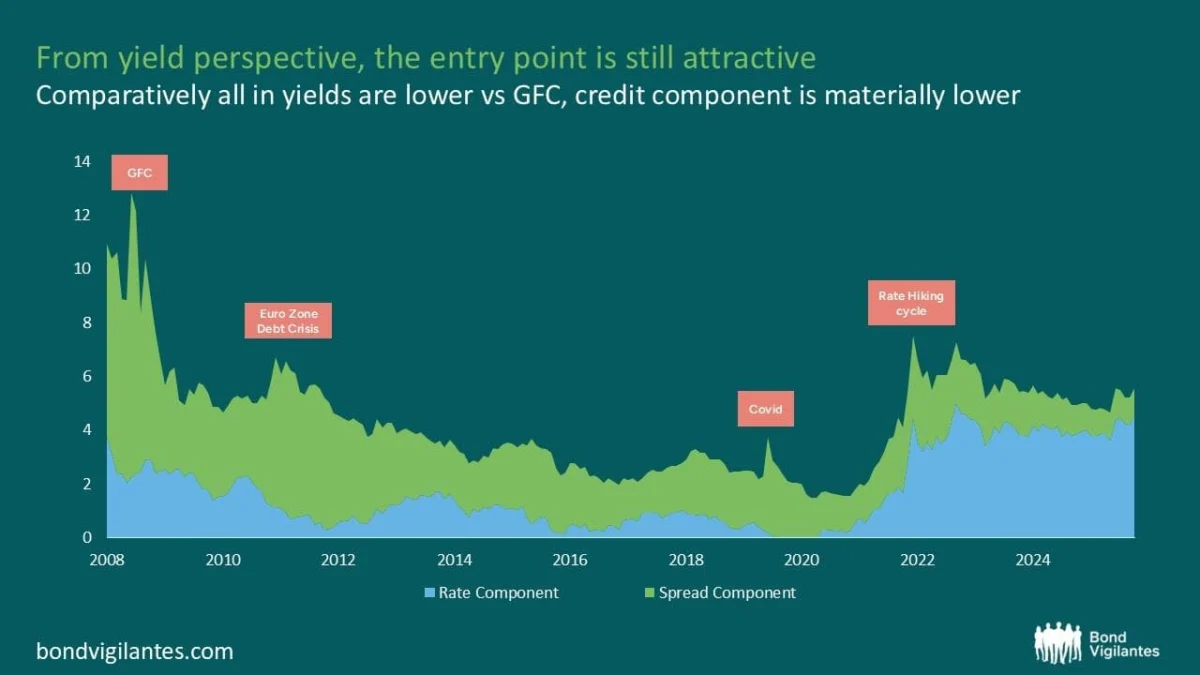
Today, nearly two decades after the CPDO debacle, financial markets exhibit many of the same ingredients that fostered such dangerous innovations. Liquidity remains plentiful, fueled by years of accommodative monetary policies. Credit spreads, while experiencing some recent fluctuations, are generally tight by historical standards, leading to compressed expected returns across many asset classes. This environment reignites the age-old "search for yield" dilemma, where investors, facing low returns from traditional, safer investments, are compelled to take on more risk to meet their return targets.
This quest for higher returns has, according to analysts, led to a new generation of financial innovation and increased leverage. While not identical to CPDOs, contemporary examples include the burgeoning market for leveraged exchange-traded funds (ETFs), single-stock ETFs, and even leveraged single-stock ETFs. These products, much like their predecessors, aim to manufacture enhanced returns in an environment where underlying assets offer diminishing prospects. The temptation, as Ryan points out, is to assume that recent benign market experience provides a reliable guide to the future, ignoring the historical cyclicality of credit markets and the potential for sudden, severe repricing.
The underlying mindset, then and now, revolves around an inverted problem-solving approach. Rather than objectively assessing, "What is the likely return on this investment, and is it sufficient compensation for the risks involved?" many investors, particularly institutional ones with specific return mandates, instead ask, "This investment does not return enough. How do I increase the return to an acceptable level?" This subtle but crucial distinction shifts the focus from prudent risk assessment to aggressive return manufacturing, often at the expense of understanding hidden, non-linear risks that only reveal themselves under stress.
Risk Perception, Models, and the "Unlikely vs. Inconvenient" Divide
A core lesson from the CPDO experience is how risk perception itself can be distorted. Years of stable conditions led market participants to narrow the range of risks considered plausible. This narrowed perspective became deeply embedded in the sophisticated models used to price and rate financial products. Severe spread widening, for instance, was assigned vanishingly small probabilities, not because it was impossible, but because it was deemed too unlikely to matter for practical purposes. This created a dangerous blind spot: the difference between a risk that is statistically unlikely and one that is simply inconvenient to consider or model.
When market conditions inevitably shifted, reality brutally exposed this distinction. The models, built on assumptions of continued stability, failed to account for the actual dynamics of a stressed market. This cognitive bias, often termed "extrapolation bias," leads market participants to overweight recent performance and underestimate the potential for significant deviations from the norm.
As a colleague of Ryan noted in a 2025 blog post, "While investors may recognise the risk correctly – no cognitive failure – but acting on that view can be commercially painful." This phenomenon contributes to expensive markets remaining expensive for longer than fundamental analysis might suggest, as those who dare to bet against the trend face short-term underperformance. Eventually, however, the market reprices with extreme volatility when "everybody suddenly finds the courage to shout ‘the king has no clothes!’"
Beyond CPDOs: Other Echoes of Unlearned Lessons
The CPDO story is not an isolated incident; it’s a recurring pattern in financial history. Other examples underscore this tendency to forget past lessons:

- Covenant Stripping in High Yield: During periods of abundant liquidity and a fervent search for yield, high-yield bond investors have repeatedly abandoned protective covenants designed to safeguard bondholders in the event of distress. Subsequent default cycles inevitably remind everyone why those protections were essential, often too late.
- The Yen Carry Trade: For years, the yen carry trade was celebrated as a lucrative strategy, involving borrowing in low-interest-rate yen and investing in higher-yielding currencies. However, as leverage built up and positioning became crowded, what seemed like a manageable risk transformed into a violent and costly unwind when market conditions shifted, leading to sudden and sharp movements in exchange rates.
- Leveraged ETFs: The proliferation of leveraged and inverse ETFs, including those focused on single stocks, presents a modern incarnation of this risk. While offering magnified returns or hedges in specific market conditions, their complex structures and daily rebalancing mechanisms can lead to significant and unexpected losses, particularly during volatile periods or extended trends that run counter to their design.
These instances highlight a systemic issue: the enthusiasm for investment strategies often morphs into a dependence on them, leading to a dangerous build-up of leverage and crowded positioning that amplifies risks when the market inevitably turns.
The Shifting Sands of Risk Transmission
A common refrain since the GFC is that the financial system is now stronger. This is undoubtedly true in many respects. Banks are generally better capitalized, balance sheets are cleaner, and many of the vulnerabilities directly responsible for the 2008 crisis have been addressed through stricter regulations and oversight. However, Ryan cautions that "investors often focus on the transmission mechanism they fixed and overlook the ones they did not."
Risk, he argues, is ultimately transmitted through the owners of that risk. If a leveraged investment experiences a significant drop in value, necessitating additional collateral, investors rarely sell the asset that has already collapsed. Instead, they sell what they can – often healthy, liquid assets that have not yet fallen. This behavior means that distress spreads not because securities are directly linked in a complex web, but because the investors holding diverse portfolios are interconnected. A problem in one segment of the market can trigger a chain reaction of forced selling across seemingly unrelated asset classes, creating systemic risk through liquidity shocks. This highlights that while regulatory efforts have strengthened specific institutional nodes, the broader ecosystem of investor behavior and capital allocation remains a potent, if less visible, conduit for systemic instability.
Conclusion: A Cycle Unbroken?
The CPDO experience serves as a potent reminder that markets are often most vulnerable precisely when confidence is at its peak. When liquidity is abundant, credit spreads are tight, and financial innovation is flourishing, the perception of risk can become significantly smaller than the reality. It encourages a dangerous complacency, where fundamental market risks are dismissed as improbable rather than accepted as inherent.
Perhaps the most critical question for today’s investors is not "What specific event might cause credit spreads to widen?" but rather "Are we prepared to accept that credit spreads can widen, regardless of current forecasts?" From today’s historically tight valuations, betting against the possibility of meaningful spread widening is a significant risk.
Gordon Brown, the former UK Prime Minister, famously claimed to have "ended boom and bust" – a claim that events soon proved hubristic. The current market environment prompts a similar question: Are today’s investors equally confident that the credit cycle has finally been defeated, or are we once again witnessing the quiet accumulation of risks, obscured by the seductive promise of innovative returns, just waiting for the next inevitable turn of the cycle? The lessons of 2008, particularly those embodied by the rise and fall of CPDOs, remain profoundly relevant as a cautionary tale against hubris and the perennial temptation to seek something for nothing in the financial markets.

