
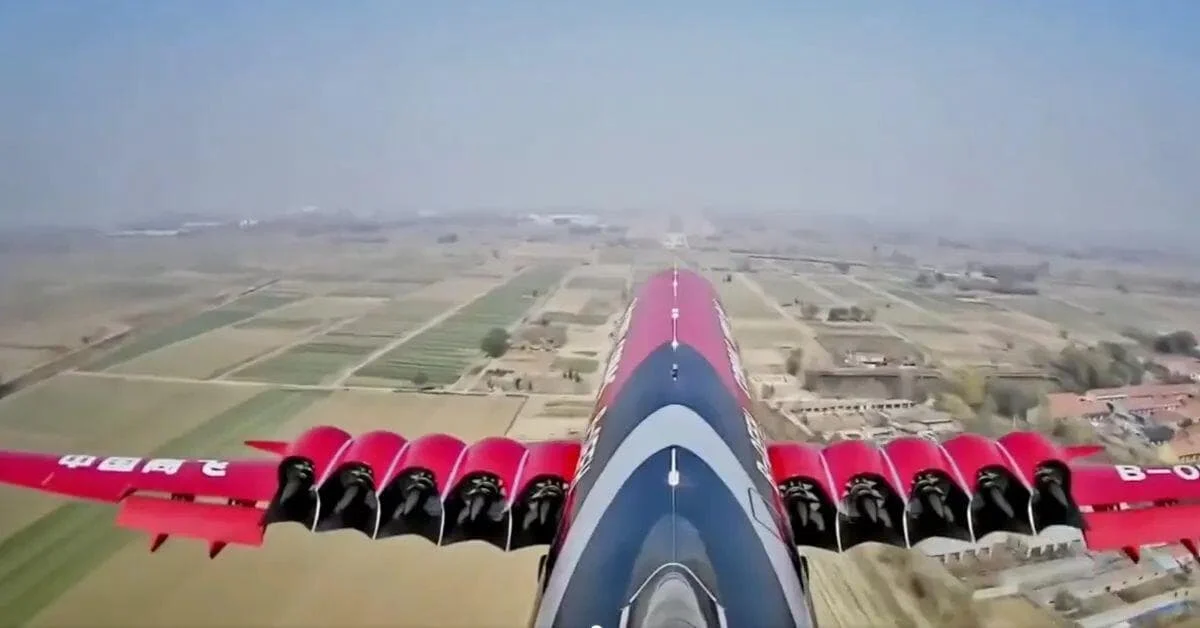
China’s state-owned planemaker, the Commercial Aircraft Corporation of China (COMAC), marked a significant milestone in global aviation on Saturday with the first manned flight of its all-electric CE-25A commuter airliner. The groundbreaking flight, which took place over Binzhou in Shandong Province, saw two pilots and a flight-test engineer onboard the 19-seat, battery-powered aircraft. This crucial step, reported by Xinhua, underscores China’s accelerating efforts in electric aviation and its broader strategic push for technological self-reliance.
A Landmark Achievement in Binzhou
The maiden crewed journey of the CE-25A was a meticulously planned operation, following an extensive period of unmanned testing. On Saturday, with a crew of three – two pilots at the controls and a flight-test engineer monitoring systems – the innovative aircraft ascended into the skies above Binzhou. State broadcaster CCTV reported the flight lasted 16 minutes and 38 seconds, covering a distance of 60.4 kilometers (approximately 37.5 miles). COMAC confirmed that the aircraft performed flawlessly, meeting all performance expectations during its historic flight. This successful manned test is a powerful declaration of China’s commitment to developing advanced, sustainable aviation technologies and positions the nation as a formidable player in the nascent electric aircraft market. The flight symbolizes a pivotal transition from conceptual design and autonomous validation to practical, crewed operation, bringing the prospect of emissions-free regional air travel closer to reality.
The CE-25A: Design and Specifications of an Electric Pioneer
The CE-25A represents COMAC’s inaugural venture into electric commercial aircraft, designed as a 10-tonne class airframe primarily for "intercity hops." This segment of aviation targets shorter regional routes, where the current limitations of battery energy density are less prohibitive. The aircraft is engineered to accommodate 19 passengers, a capacity that makes it suitable for connecting smaller cities or serving feeder routes to larger hubs. Its stated performance metrics include a cruising speed of 300 km/h (approximately 186 mph), a cruising altitude of 2,400 meters (around 7,874 feet), and a projected range of 400 kilometers (roughly 250 miles).
A distinctive feature of the CE-25A’s design is its propulsion system: ten electric ducted fans, symmetrically arranged with five on each side, mounted atop the wing. This configuration offers several potential advantages. Ducted fans are generally more efficient at certain airspeeds and can reduce noise compared to open propellers, making them potentially more appealing for operations near urban areas. Their integration into the wing structure could also offer aerodynamic benefits and potentially improve safety by enclosing moving parts. The selection of electric ducted fans highlights an innovative approach to electric propulsion, moving beyond conventional propeller-based designs often seen in smaller electric aircraft demonstrators. The entire system is powered by advanced batteries, with leading Chinese battery giant CATL playing a crucial role as a development partner, alongside Shanghai Jiao Tong University and other key collaborators. This synergistic partnership leverages CATL’s expertise in high-capacity, robust battery solutions, critical for the demanding requirements of aviation.
A Chronology of Development and Public Unveiling
The CE-25A’s journey from concept to crewed flight has been marked by a methodical and relatively swift development timeline, albeit with a degree of discretion until its advanced stages. The public first glimpsed the design as a conceptual model at the China International Import Expo (CIIE) in Shanghai in November 2023. At that time, COMAC pitched a slightly more ambitious range of 400 to 500 kilometers, suggesting ongoing optimization during the development process.
Following its conceptual debut, the physical prototype rapidly moved through testing phases. The aircraft achieved its first autonomous flight on February 2, demonstrating its foundational flight capabilities without human intervention. This initial success paved the way for a rigorous validation program, during which the CE-25A logged an impressive 19 uncrewed validation flights. These autonomous tests would have been crucial for gathering extensive data on aerodynamic performance, power management, control systems, and battery efficiency under various flight conditions, allowing engineers to refine the aircraft’s software and hardware before risking human lives.
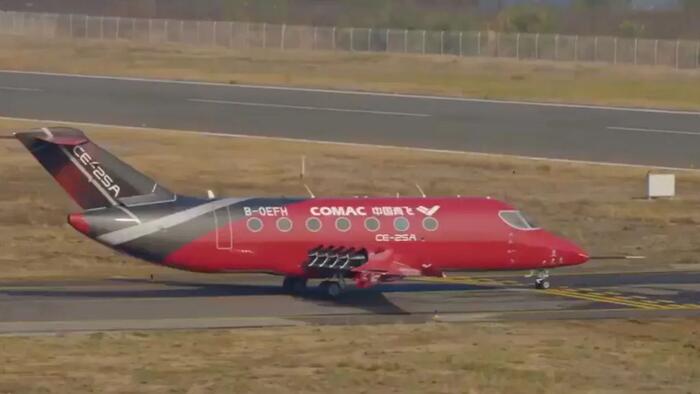
The existence of a full-size, operational airframe largely remained out of the international public eye until late October, when photographs of a distinctive red-and-black CE-25A, bearing the civil registration B-0EFH, began circulating online. This unexpected reveal generated considerable interest among aviation enthusiasts and industry observers, confirming the rapid progress China was making in this sector. The culmination of these efforts was the recent manned flight on Saturday, a critical step that officially transitions the aircraft from a testing platform to a contender for future commercial service. Concurrently, the Civil Aviation Administration of China (CAAC) has formally accepted COMAC’s application for a type certificate, initiating the rigorous airworthiness review process required before the aircraft can be certified for commercial operation.
Overcoming the Energy Density Challenge: Batteries and Range
The inherent challenge in electric aviation, particularly for passenger transport, lies in the energy density of batteries compared to conventional jet fuel. Kerosene-based jet fuel boasts an energy density vastly superior to even the most advanced lithium-ion batteries. This fundamental physical constraint directly impacts an electric aircraft’s range and payload capacity. The CE-25A’s stated range of 400 kilometers (250 miles) and cruising speed of 300 km/h (186 mph) are, by traditional aviation standards, modest.
To put this into perspective, a comparable turboprop aircraft like the Beechcraft 1900, which also carries 19 passengers, typically offers a range of approximately 700 kilometers (435 miles) at cruising speeds around 520 km/h (323 mph). This significant performance gap highlights the trade-offs inherent in current battery-electric designs. However, the CE-25A is explicitly designed for "intercity hops," suggesting a strategic focus on shorter routes where its range is sufficient and its environmental benefits can be maximized. For routes like connecting two nearby provincial capitals or islands to the mainland, a 400-kilometer range is entirely viable.
The partnership with CATL, the world’s largest battery maker, is critical here. CATL’s advanced battery technologies are at the forefront of improving energy density, charging speeds, and thermal management – all crucial factors for aviation applications. While current battery technology imposes limitations, continuous advancements in materials science and battery architecture are expected to progressively narrow this performance gap. COMAC and CATL are likely investing heavily in research and development to enhance battery capabilities, striving for lighter, more powerful, and safer energy storage solutions that can eventually support longer-range electric aircraft. The CE-25A serves as a vital testbed for these evolving technologies, providing real-world operational data to inform future iterations and larger designs.
China’s Strategic Push for Aviation Self-Reliance
The development and successful manned flight of the CE-25A are deeply embedded within China’s broader national strategy for technological self-reliance, particularly in critical sectors like aviation. COMAC, as a state-owned enterprise, is at the vanguard of this ambition, having already made strides with its C919 narrow-body jetliner, which aims to compete with Boeing and Airbus in the mainstream commercial aviation market. However, the C919’s reliance on a significant number of Western-made components, particularly engines and avionics, has exposed COMAC to geopolitical vulnerabilities. As reported in October, the US Commerce Department has reportedly been slowing export licenses for aircraft parts bound for China and limiting shipments to COMAC, ostensibly to prevent stockpiling and to exert pressure amid escalating geopolitical tensions.
In this context, the CE-25A represents a conscious pivot towards greater domestic content and supply chain resilience. The choice of CATL, China’s own battery champion, as the power partner is a clear strategic move to reduce dependence on Western suppliers, particularly in an era of increasing technological decoupling. This approach ensures that a core component – the propulsion system’s energy source – is indigenously developed and manufactured, safeguarding the program from external supply chain disruptions. Furthermore, COMAC is pursuing the CE-25A’s airworthiness certification through China’s Civil Aviation Administration (CAAC), rather than relying on certifications from Western bodies like the FAA (U.S.) or EASA (Europe). This independent regulatory pathway further solidifies China’s autonomy in developing and deploying its aviation technologies, establishing its own standards and processes. This strategy not only fosters domestic industrial growth but also positions China as a potential standard-setter in emerging aviation fields.
Global Landscape of Electric Aviation: A Contrasting Approach
The global race for electric aviation is characterized by diverse approaches and varying degrees of success. While China, through COMAC, is aggressively pushing forward with a full-scale, manned electric commuter aircraft, some prominent Western initiatives in the same class have encountered significant hurdles or have been re-evaluated. For instance, Sweden’s Heart Aerospace initially conceptualized the 19-seat battery-powered ES-19 but later shifted its focus to larger hybrid-electric designs, acknowledging the challenges of pure battery-electric solutions for greater range and payload. Similarly, NASA’s ambitious X-57 Maxwell electric demonstrator program, designed to explore distributed electric propulsion, was canceled in 2023 without achieving its primary flight objectives.

These differing trajectories highlight a fundamental contrast in development philosophies and regulatory environments. Western electric aviation projects often grapple with stricter regulatory frameworks, the complexities of integrating new technologies into existing air traffic management systems, and a more fragmented industry landscape driven by private capital and diverse stakeholder interests. China, on the other hand, benefits from a state-backed, centrally coordinated approach that can mobilize vast resources, streamline decision-making, and potentially accelerate development cycles, even if it entails greater financial risk. The ability to leverage domestic champions like CATL, coupled with a national strategic imperative, allows China to "press ahead" where others might pause due to market uncertainties or technological bottlenecks. This divergence suggests that while the ultimate goal of sustainable aviation is shared, the paths to achieving it are varied, with China charting a distinct course.
Market Potential and Environmental Promise
The CE-25A’s design for "intercity hops" positions it to tap into a significant and underserved market segment within China. With its vast geography and growing urban centers, China has a substantial need for efficient, low-cost regional connectivity. Electric aircraft, with their potentially lower operating costs (due to cheaper electricity compared to jet fuel and reduced maintenance for electric powertrains) and zero direct emissions, could revolutionize regional air travel. They offer the promise of linking smaller cities and remote regions more effectively, stimulating local economies and providing greater accessibility for citizens.
Beyond economic advantages, the environmental benefits are profound. The CE-25A, as an all-electric aircraft, produces no direct carbon emissions during flight, aligning perfectly with global and national efforts to combat climate change. China has set ambitious goals for carbon neutrality, and the adoption of electric aviation can significantly contribute to decarbonizing the transportation sector. Furthermore, electric aircraft are inherently quieter than their fossil-fuel-powered counterparts, a crucial advantage for operations into or out of airfields closer to populated areas. Reduced noise pollution can lead to fewer operational restrictions and improved community acceptance around airports, fostering sustainable expansion of regional air networks. The CE-25A, therefore, is not merely a technological demonstration but a potential cornerstone for a greener, more integrated transportation system in China.
The Path Ahead: Certification and Commercialization
While the manned flight is a monumental achievement, the journey to commercial service for the CE-25A is still extensive. The acceptance of COMAC’s type certificate application by the Civil Aviation Administration of China (CAAC) marks the official beginning of a stringent airworthiness review process. This process involves detailed evaluations of the aircraft’s design, manufacturing quality, flight performance, safety systems, and operational procedures to ensure it meets all regulatory requirements for passenger transport. This phase can be lengthy and complex, often requiring numerous additional test flights, modifications, and comprehensive documentation.
For the CE-25A to move from a testbed to a commercially viable product, several critical factors must be addressed. No launch customer, price, or service date has been announced, indicating that COMAC is likely focused on the technical and regulatory hurdles before committing to commercialization specifics. Key challenges include establishing the necessary ground infrastructure for charging and maintenance at regional airports, developing pilot training programs for electric aircraft, and securing public trust and acceptance for this new form of air travel. Furthermore, scaling production to meet potential demand and managing the lifecycle of advanced battery packs will be significant undertakings. The lessons learned from the CE-25A will undoubtedly inform COMAC’s future electric aviation projects, potentially leading to larger electric or hybrid-electric designs with extended ranges as battery technology continues to mature.
Conclusion: A Glimpse into the Future of Flight
The successful manned flight of COMAC’s CE-25A represents more than just a single technological triumph; it is a clear signal of China’s determined stride into the future of aviation. By pressing ahead with an all-electric commuter airliner, leveraging its domestic industrial might with partners like CATL, and navigating its own regulatory pathways, China is carving out a unique and influential position in the global electric aviation landscape. While challenges remain, particularly concerning battery energy density and the extensive certification process, the CE-25A stands as a tangible symbol of a world increasingly moving towards sustainable, quieter, and potentially more efficient air travel. This landmark event not only underscores China’s ambition to lead in advanced manufacturing but also offers a compelling glimpse into a future where the skies are cleaner, and regional connectivity is transformed.

