
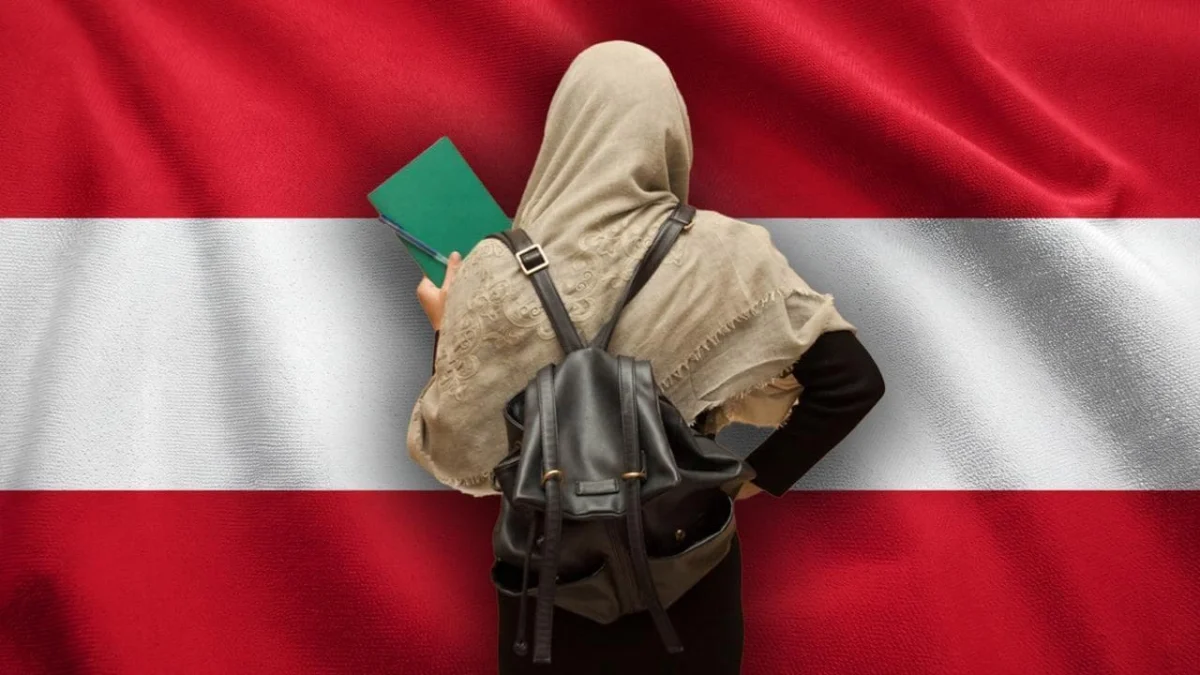
Vienna, Austria – Austria’s new nationwide prohibition on "traditional Muslim" head coverings, including hijabs and burqas, for girls under the age of 14 in both public and private schools, has officially come into force as of September 7, 2026. The implementation began in the federal states of Vienna, Lower Austria, and Burgenland, coinciding with the commencement of the new academic year. The remaining Austrian states are slated to adopt the ban in the subsequent week. This contentious measure, championed by the government as a crucial policy for child protection and the advancement of gender equality, has been met with immediate and palpable resistance from Muslim communities and has already triggered the first formal legal challenge.
The policy’s rollout was promptly followed by visible acts of defiance. Reporters from the Austrian news outlet Heute observed young girls arriving at an Islamic primary school in Vienna on the first day of the ban, still wearing headscarves, often accompanied by their mothers. One child was noted wearing a pink hijab, meticulously coordinated with her dress, while two slightly older students entered the school premises in simple hijabs without parental escort. The immediate response from school officials regarding the application of the ban within private Islamic institutions remained unclear, highlighting the early complexities of enforcement.
Legislative Journey and Previous Constitutional Hurdles
The current ban represents the latest chapter in Austria’s ongoing struggle to define the role of religious symbols in public life, particularly within its educational system. A precursor to this legislation was a similar ban enacted in 2019, which specifically targeted headscarves for children under the age of 10. However, that earlier law was ultimately struck down by the Constitutional Court in 2020. The Court ruled that the previous ban violated Austria’s constitutional duty of religious neutrality, arguing that by specifically targeting a garment predominantly worn by Muslim girls, it was discriminatory and disproportionately affected one religious group. This judicial precedent loomed large over the drafting of the current, expanded legislation.
In the wake of the 2020 ruling, the government, dominated by the conservative Austrian People’s Party (ÖVP) and initially supported by the liberal NEOS party in the current legislative push, embarked on crafting a new law. The aim was to extend the age limit to 14, believing that by doing so, it would fall within a legal framework deemed more constitutionally sound, potentially arguing that girls under 14 lack the full capacity for autonomous religious decision-making. The legislative process for the current ban saw intense debate within the Austrian parliament. While the ÖVP and NEOS largely supported the measure, the Green Party stood in firm opposition. Green politician Sigi Maurer vociferously criticized Education Minister Christoph Wiederkehr, accusing him of "creating new conflicts and offloading them onto the teachers," effectively suggesting that the minister intended to "foist the role of police officers onto them."
Education Minister Christoph Wiederkehr of the liberal NEOS party has publicly acknowledged the inherent uncertainty surrounding the law’s eventual fate at the Constitutional Court, stating candidly, "You can never be completely certain." He further elaborated that the government and the education ministry had "carried out very intensive consultations" to meticulously draft a constitutionally compliant text, aiming to circumvent the pitfalls of the previous legal challenge. Nevertheless, the swift and direct legal challenge launched by the Islamic Religious Community in Austria (IGGÖ) indicates that these consultations may not have fully assuaged concerns about religious freedom.
Government Rationale: Child Protection and Gender Equality
The Austrian government has articulated its rationale for the ban primarily through the lenses of child protection and gender equality. Proponents argue that the headscarf, particularly when worn by young girls, is not a freely chosen expression of faith but rather a symbol of societal or familial pressure, potentially impeding a child’s development and integration into mainstream Austrian society.
Integration Minister Claudia Bauer of the conservative ÖVP party has been a prominent voice in this discourse, describing the headscarf as "a sign of oppression and a means of controlling girls from the earliest childhood." This perspective frames the state’s intervention as a protective measure, safeguarding young girls from practices perceived as restrictive or harmful to their autonomy and equal opportunities. Chancellor Christian Stocker has also weighed in on the broader implications, advocating for a constitutional ban on political Islam and unequivocally stating his desire not to "live in an Islamic state." Such statements underscore a deeper political and cultural concern within segments of the Austrian government regarding the perceived influence of certain interpretations of Islam on national identity and secular values.
The right-wing Freedom Party of Austria (FPÖ), currently the most popular political party in the country according to recent polls, holds an even more stringent stance towards migrants and Islam. FPÖ politician Ricarda Berger emphatically declared that there is "no place for political Islam in Austria, and certainly not in our schools." The FPÖ’s platform goes beyond the current age-restricted ban, advocating for a general prohibition on all headscarves and face coverings in schools, extending to both students of all ages and teachers alike. This position reflects a broader European trend among populist right-wing parties seeking to reinforce secularism and national identity through restrictions on religious attire in public spaces.
Voices of Opposition and the Impending Legal Battle

The immediate resistance to the ban underscores the deep divisions it has exposed within Austrian society. The Islamic Religious Community in Austria (IGGÖ), recognized as the largest Islamic organization in the country, has been at the forefront of condemning the ban. Carla Amina Baghajati, a spokesperson for the IGGÖ, issued a strong statement denouncing the law as discriminatory. "We believe it unjustifiably restricts the fundamental right to freedom of religion and disproportionately affects Muslim girls," Baghajati asserted. She further argued that "rather than protecting children, it singles out a specific religious practice and risks excluding the very children it claims to support," highlighting the paradox of a policy intended for integration potentially leading to marginalization.
True to their word, the IGGÖ has pledged full support to families who choose to challenge the law at the Constitutional Court. A formal request for annulment was, indeed, filed on the very first day the ban took effect, signaling the community’s determination to fight the measure through legal channels. This swift action sets the stage for a significant judicial confrontation, mirroring the legal battles seen in other European nations grappling with similar issues.
Beyond organized religious bodies, the practical implications of the ban have also drawn criticism from within the education system. Paul Kimberger, chairman of the teachers’ union, expressed significant concerns about the challenges facing educators. He noted that some communities had already declared their intent to resist the ban, and predicted that certain conversations with parents regarding compliance "will probably have limited success." This sentiment highlights the immense pressure placed upon teachers, who are now tasked with enforcing a policy that is deeply divisive and touches upon sensitive issues of religious freedom and personal identity. The fear of "real conflict arising in the coming months" within school environments is a tangible concern for those on the front lines of implementation.
Student groups on the left-wing political spectrum have also voiced their opposition, organizing protests against the ban. A poignant image from February captured the sentiment of many young people: an 11-year-old girl demonstrating against the proposed ban, holding a banner that, translated into English, read, "My headscarf, my decision." This powerful slogan encapsulates the argument that the ban infringes upon personal autonomy and the right to express one’s religious identity, even for minors, particularly when supported by parental consent.
Enforcement Mechanisms and Societal Impact
The enforcement of the ban is structured in a multi-tiered approach, beginning with dialogue rather than immediate punitive action. The law mandates that schools initiate conversations involving the student and her legal guardians in instances of non-compliance. Should violations persist, the involvement of child-protection services is triggered, escalating the intervention. As a last resort, parents found to be in repeated violation of the ban face potential fines ranging from €150 to €800. This graduated scale of enforcement is intended to provide opportunities for compliance before resorting to penalties, yet it places a significant additional burden on teachers and school administrations, who are already under considerable strain.
The ban’s implementation carries profound societal implications. Austria, a country with a significant Muslim minority – estimated to be around 8% of its total population, making it one of the largest religious communities after Catholics – has seen increasing public debate on integration, national identity, and the role of Islam. For many within the Muslim community, the headscarf is an integral part of their religious and cultural identity, a symbol of piety and modesty. The ban is perceived by many as a direct attack on their religious freedom and an act of alienation, potentially fostering a sense of being targeted and marginalized within their own country. Critics argue that rather than fostering integration, such policies could deepen existing divides and lead to a feeling of ‘otherness’ among Muslim youth.
This Austrian legislation is not an isolated phenomenon but rather part of a broader European discourse on secularism, integration, and the visibility of religious symbols in public spaces. Countries like France have long-standing secular laws (laïcité) that ban conspicuous religious symbols, including headscarves, in public schools. Germany has seen varying regional approaches, with some states permitting headscarves for teachers while others prohibit them. Denmark and Belgium have also grappled with similar restrictions, particularly concerning face coverings. Austria’s move thus aligns with a trend among some European nations to assert state authority over religious expression, especially in educational settings, often driven by concerns over integration, gender equality, and national identity.
The Constitutional Court: The Final Arbiter
The legal battle ahead is widely anticipated to be both complex and protracted. The previous 2020 Constitutional Court ruling, which dismissed an earlier, narrower ban, set a critical precedent. While the Court had previously dismissed premature challenges to the new law in July on procedural grounds (as it had not yet entered into force), that barrier has now been removed with its official implementation.
The Constitutional Court of Austria stands as the ultimate arbiter in this dispute. Its decision will hinge on a careful balancing act between the state’s asserted interest in child protection and gender equality, and the fundamental right to freedom of religion, as enshrined in both Austrian and international law. The Court will need to meticulously examine whether the expanded age limit to 14 sufficiently addresses its previous concerns about religious neutrality and discrimination, or if it still disproportionately targets a specific religious group without adequate justification. The outcome will have far-reaching consequences not only for Muslim communities in Austria but also for the broader debate on religious freedom, secularism, and integration across Europe. The 11-year-old’s banner, "My headscarf, my decision," may well resonate through the hallowed halls of justice as the Constitutional Court prepares to deliver its definitive judgment on this highly sensitive issue.

