
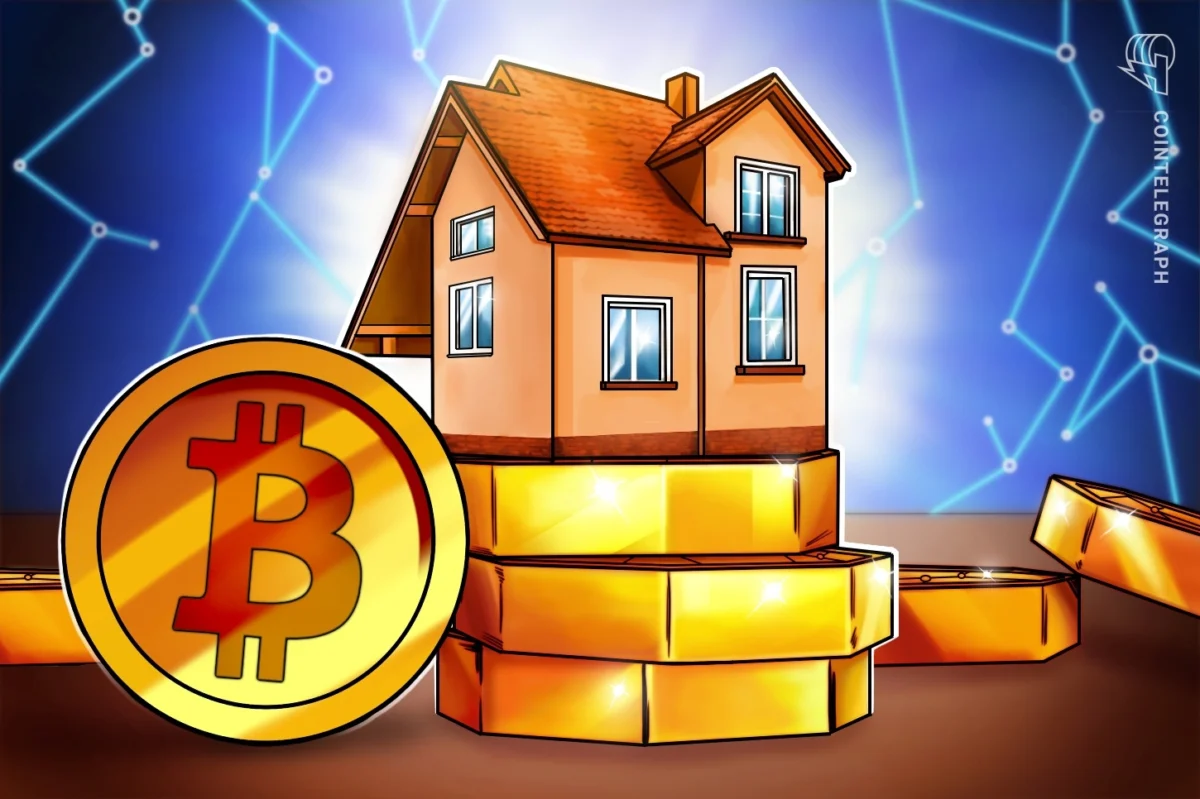
In a significant development for the intersection of real estate finance and digital assets, Better Mortgage and Coinbase have officially launched their innovative Bitcoin-backed mortgage product, making it broadly available to homebuyers across the United States. This groundbreaking offering allows individuals to leverage their Bitcoin holdings as collateral for a down payment on a home without the necessity of selling their cryptocurrency. The announcement, made on Wednesday, signals a growing acceptance and integration of digital assets within traditional financial sectors, particularly in the high-stakes arena of homeownership.
The Mechanics of the Bitcoin-Backed Mortgage
The product, which has transitioned from an early-access program to full general availability, functions by pairing a standard Fannie Mae-backed home loan with a separate down payment loan. The critical innovation lies in how this down payment loan is secured: by the borrower’s Bitcoin (BTC). According to details provided by Coinbase’s Help Center, prospective homeowners must pledge Bitcoin valued at a minimum of 250% of the down payment loan amount. This ensures a substantial buffer against potential price volatility. The pledged Bitcoin is then transferred to Better Mortgage’s secure custodial account, managed through Coinbase Prime, a platform designed for institutional-grade digital asset custody.
A key feature designed for borrower convenience is the unified repayment structure. Both the primary mortgage and the down payment loan share identical interest rates and amortization terms. Consequently, borrowers will manage these obligations through a single, consolidated monthly payment. This simplification aims to reduce the administrative burden and potential confusion often associated with multiple loan structures. Once the primary mortgage is fully repaid or successfully refinanced, the pledged Bitcoin is returned to the borrower, provided all loan terms have been met.
Addressing Volatility and Risk
The inherent volatility of cryptocurrency markets is a primary concern for any lender considering such products. Better Mortgage and Coinbase have implemented specific measures to mitigate this risk. Importantly, declines in Bitcoin’s price alone will not trigger margin calls or necessitate changes to the mortgage terms. This provides a degree of protection for borrowers, acknowledging the fluctuating nature of digital asset values. However, a critical safeguard for the lender exists: if a borrower becomes delinquent on their mortgage payments for 60 days, Better Mortgage reserves the right to liquidate the pledged Bitcoin to cover outstanding debts. This provision ensures that the lender’s capital is protected in cases of sustained default.
To be eligible for this program, borrowers must be U.S. residents and possess a verified Coinbase account. Beyond the digital asset requirement, all applicants must still meet Better Mortgage’s rigorous underwriting standards, which include assessments of creditworthiness, income verification, and other traditional financial criteria. For existing Coinbase One members, there’s an added incentive: a 1% rebate on the mortgage amount, capped at $10,000, which can be applied towards closing costs and fees. This partnership aims to leverage the existing user base and trust built by Coinbase, while Better Mortgage brings its expertise in mortgage origination and servicing.
A Broader Trend: Digital Assets in U.S. Mortgage Underwriting
The launch of the Bitcoin-backed mortgage by Better Mortgage and Coinbase is not an isolated event but rather a significant milestone within a broader, evolving landscape where digital assets are increasingly being considered in U.S. mortgage underwriting processes. This trend has been gaining momentum, influenced by both technological advancements and regulatory shifts.
Regulatory Underpinnings and Future Directives
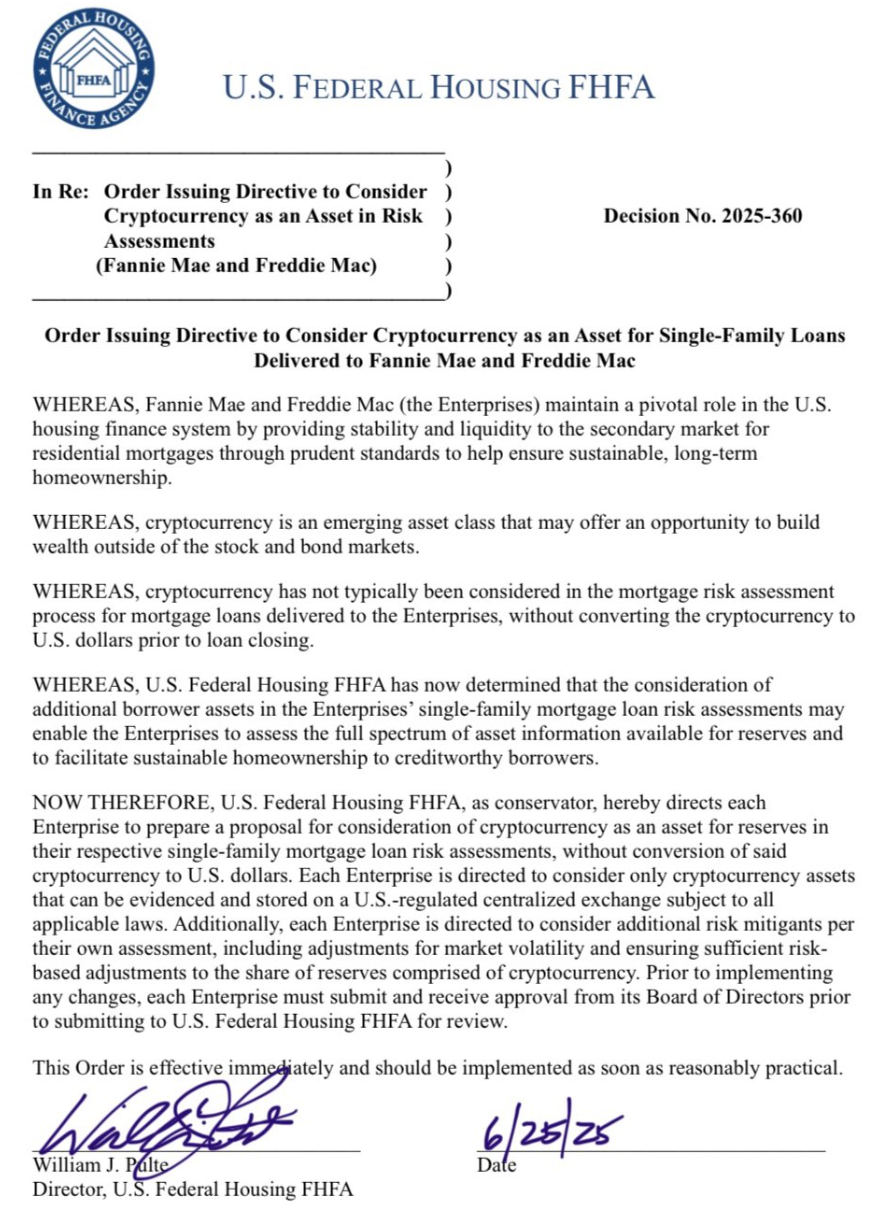
A pivotal moment in this integration was the directive issued in June 2025 by the Federal Housing Finance Agency (FHFA). The FHFA instructed Fannie Mae and Freddie Mac, two government-sponsored enterprises (GSEs) that play a crucial role in the secondary mortgage market, to develop proposals for incorporating cryptocurrency held on U.S.-regulated centralized exchanges into their single-family mortgage risk assessments. Crucially, this directive specified that such assets should be considered without requiring conversion to U.S. dollars. This bypasses the traditional need to liquidate digital assets into fiat currency, a step that often incurred tax liabilities and market timing risks for borrowers.
Furthermore, the FHFA’s directive mandated that Fannie Mae and Freddie Mac explore robust risk-mitigation strategies to address the inherent volatility of cryptocurrencies. Any proposed changes to their underwriting guidelines were required to be submitted to their respective boards for approval before being forwarded for FHFA review. This measured approach underscores a commitment to responsible innovation, ensuring that the stability and integrity of the mortgage market are maintained.
Industry Moves Toward Crypto Acceptance
Beyond the GSEs, other major players in the mortgage industry have also begun to embrace digital assets. In January of this year, Newrez, a prominent mortgage lender and servicer, announced its intention to recognize certain cryptocurrency holdings when evaluating mortgage applications. This policy, which took effect in February, applies to both home purchases and refinancing scenarios, signaling a growing recognition of digital assets as a legitimate form of wealth that can be used to qualify for home financing. These developments collectively indicate a significant shift in how the U.S. mortgage industry perceives and utilizes digital assets, moving beyond a speculative fringe to a more integrated financial tool.
Market Context: High Housing Prices and Evolving Consumer Needs
The expansion of Bitcoin-backed home financing occurs against a backdrop of persistent high U.S. housing prices. While there have been some moderating trends, the median sales price of a new U.S. home remains elevated. Data compiled by the Federal Reserve Bank of St. Louis, drawing from the U.S. Census Bureau and the Department of Housing and Urban Development, indicates that the median sales price of new homes hovered around $400,000 in 2026. Although this figure represents a slight decrease from its peak in 2022, it remains historically high, making the down payment a significant hurdle for many prospective homebuyers.
In this environment, innovative financing solutions that allow individuals to tap into their existing wealth, including digital assets, become increasingly valuable. The ability to use Bitcoin as collateral without selling it preserves potential future appreciation and allows individuals to participate in the housing market without liquidating assets that may have significant long-term value. This is particularly appealing to a demographic that has embraced cryptocurrencies and may hold substantial wealth in these assets.
Historical Context and Early Stages
The journey to this general availability began with an announcement in March, when Better Mortgage and Coinbase first revealed their intention to launch a token-backed mortgage. The initial phase involved an early-access program, allowing a select group of users to test the product and provide feedback. This iterative approach is common in the financial technology sector, enabling companies to refine their offerings and address any unforeseen challenges before a wider rollout. The success of this pilot program paved the way for the current broad accessibility.
Analysis of Implications
The widespread availability of the Bitcoin-backed mortgage carries several important implications:
- Increased Accessibility to Homeownership: For individuals holding significant amounts of Bitcoin, this product can unlock pathways to homeownership that might have otherwise been inaccessible due to the need to liquidate assets.
- Legitimization of Digital Assets: By integrating Bitcoin into a core financial product like mortgages, this initiative further legitimizes digital assets as a recognized form of wealth and collateral.
- Potential for Broader Adoption: If successful, this model could inspire other financial institutions to develop similar products, accelerating the integration of digital assets into mainstream finance.
- Risk Management Innovation: The product’s structure, particularly its approach to volatility and delinquency, offers a case study for how traditional finance can adapt to the unique characteristics of digital assets.
- Regulatory Scrutiny: As more such products emerge, regulatory bodies will likely increase their scrutiny, ensuring consumer protection and market stability. The FHFA’s proactive stance suggests a willingness to adapt regulations to accommodate these new financial instruments.
Challenges and Future Outlook
Despite the promising developments, challenges remain. The volatility of Bitcoin, while mitigated by the 250% collateralization requirement and specific delinquency protocols, still presents a risk factor. Borrowers need to be fully aware of the potential for their collateral to be liquidated if they fall significantly behind on payments. Education and transparency will be paramount.
Furthermore, the broader adoption of such products will depend on continued regulatory clarity and the evolution of the digital asset market itself. As the market matures and becomes more stable, and as regulatory frameworks become more comprehensive, the integration of digital assets into traditional finance is likely to accelerate. The Better Mortgage and Coinbase product is a significant step in this direction, demonstrating a tangible application of digital wealth in achieving a major life goal: homeownership.
The collaboration between a forward-thinking mortgage lender like Better Mortgage and a leading cryptocurrency exchange like Coinbase highlights a growing synergy between established financial services and the burgeoning digital asset economy. As more Americans hold digital assets, innovative solutions that bridge the gap between these two worlds will become increasingly crucial for financial empowerment and wealth building. This Bitcoin-backed mortgage product is a testament to that evolving financial landscape.

