
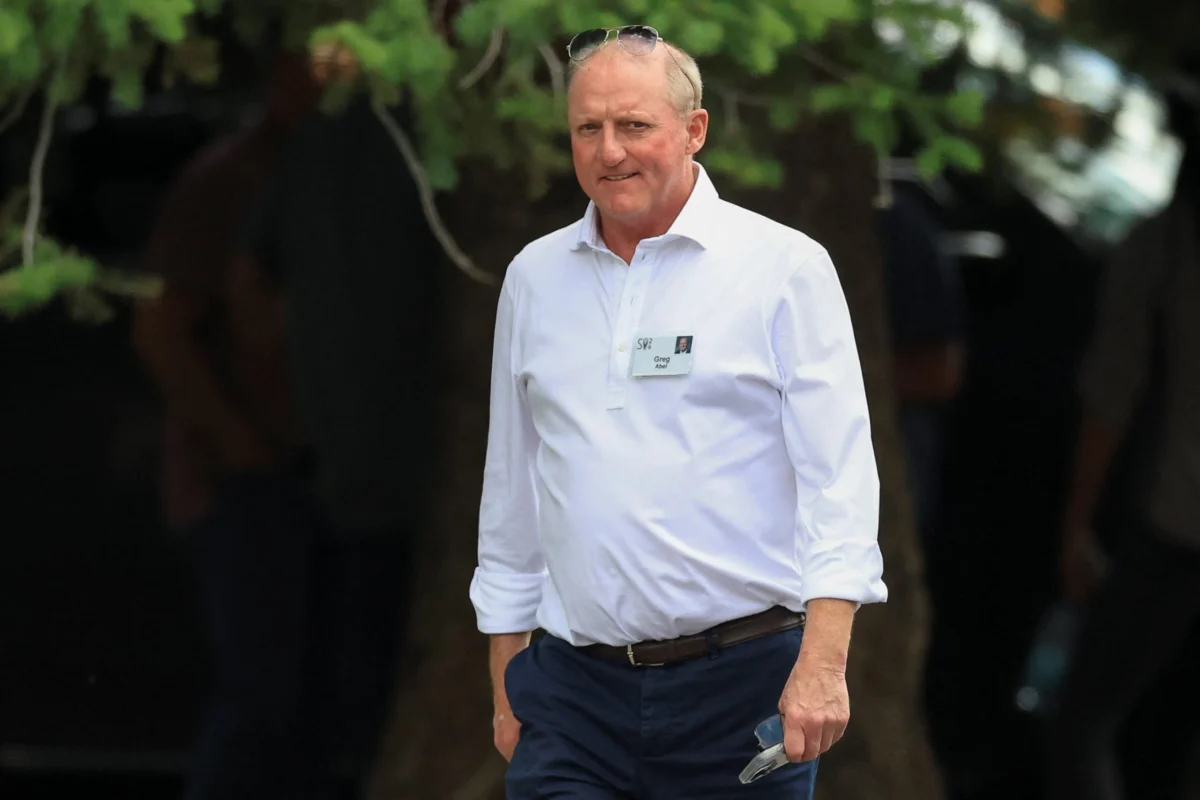
Berkshire Hathaway, the Omaha-based conglomerate now firmly under the leadership of CEO Greg Abel, executed a series of calculated maneuvers in its vast stock portfolio during the third quarter of 2026, augmenting key positions while judiciously trimming others, reflecting a strategic response to a volatile global economic landscape. These adjustments, revealed in the company’s latest regulatory filings, signal a distinct yet continuous investment philosophy as the diversified holding company adapts to evolving market dynamics and geopolitical pressures.
The Abel Era: A New Chapter for Berkshire Hathaway
The third quarter of 2026 marked a significant period for Berkshire Hathaway, representing one of the first full quarters where the investment decisions and strategic direction were predominantly steered by Greg Abel. Abel formally succeeded legendary investor Warren Buffett, 96, as CEO at the beginning of 2026, a transition that had been years in the making following his appointment as Vice Chairman of non-insurance operations in 2021. While Buffett continues to serve as Chairman and remains deeply involved in major capital allocation decisions, controlling approximately 13% of Berkshire’s common stock even after a recent substantial donation of $5.5 billion to nonprofit foundations in mid-November 2026, Abel’s operational oversight and increasing influence on portfolio management are becoming more evident. Investors and market analysts have keenly observed these initial moves, seeking insights into the nuances of investment strategy under the new leadership, comparing them against the long-established tenets of value investing championed by Buffett. Abel, known for his pragmatic and analytical approach honed through decades managing Berkshire’s energy operations, is widely expected to maintain the core principles of long-term value creation and disciplined capital allocation, albeit with a potential openness to new sectors and opportunities previously less emphasized.
Strategic Ascent in the Skies: Boosting Delta Stake Amid Turbulence
Among the most notable actions was Berkshire Hathaway’s decision to significantly increase its stake in Delta Air Lines, boosting its holding by a robust 12%. This aggressive move saw the conglomerate scoop up an additional 7.13 million shares, elevating its position in the Atlanta-based carrier to a formidable $5.37 billion by the close of the third quarter. This investment comes against a backdrop of considerable turbulence in the airline sector, demonstrating a classic Berkshire "buy the dip" strategy.
Macroeconomic Headwinds: The U.S.-Iran Conflict and Fuel Costs
The third quarter of 2026 proved particularly challenging for the global airline industry, primarily due to an unforeseen escalation of geopolitical tensions. The U.S.-Iran conflict, which intensified markedly during this period, sent crude oil prices soaring, consequently driving up jet fuel costs to unprecedented levels. Brent crude, for instance, witnessed a sustained rally, often trading above $100 per barrel for extended periods in Q3, significantly impacting airline operating expenses. The International Air Transport Association (IATA) reported an average increase of over 25% in global jet fuel prices quarter-over-quarter, translating directly into thinner profit margins and heightened operational uncertainty for carriers worldwide. This surge in fuel costs, which typically accounts for 25-30% of an airline’s total operating expenses, forced many airlines to re-evaluate their capacity, pricing strategies, and even flight routes. The broader S&P 500 Airlines Index registered a decline of over 15% during Q3, reflecting the pervasive pressure.
Delta’s Resilience and Berkshire’s Contrarian Bet
Delta Air Lines was not immune to these industry-wide headwinds. Its shares tumbled 11% in the third quarter, marking its worst quarterly performance since the first quarter of 2025, when the stock had plunged a dramatic 28% amidst a severe economic downturn. In early October, Delta further underscored the challenging environment by cutting its full-year earnings forecast, explicitly citing the surge in fuel costs as the primary culprit. The carrier’s Q3 earnings report, released just after the quarter’s close, showed robust passenger demand but a notable squeeze on profitability due to the elevated fuel expenses, with adjusted pre-tax income falling short of analyst expectations. Despite these immediate pressures, Berkshire’s decision to deepen its investment signals a profound long-term confidence in Delta’s operational strength, management, and its ability to navigate temporary setbacks. This move echoes Warren Buffett’s historical penchant for investing in strong businesses during periods of distress, anticipating eventual recovery. It also harks back to Berkshire’s renewed interest in the airline sector in the mid-2010s, a notable departure from Buffett’s long-standing skepticism about the industry’s capital-intensive nature and cyclicality, though that interest was largely divested during the COVID-19 pandemic. The subsequent rebound in Q4 2026 has already validated this contrarian stance, with Delta shares up 3.8% so far in the fourth quarter, outperforming the S&P 500, which dropped 3.1% over the same period. Over the past month, Delta’s stock has surged nearly 15%, rewarding Berkshire’s timely investment.
Pruning Financial Holdings: Bank of America Adjustments
Concurrently with its aggressive buying in the airline sector, Berkshire Hathaway strategically trimmed its long-held position in Bank of America, reducing its holding by nearly 6%. This divestment translated to the sale of more than $1.6 billion worth of stock, a significant rebalancing act within its substantial financial portfolio.
Navigating Monetary Tightening and Soaring Yields
The third quarter of 2026 was characterized by a relentless surge in interest rates and persistently high inflation, creating a complex and often challenging environment for the financial sector. The U.S. Consumer Price Index (CPI) remained stubbornly elevated, hovering above 4% year-over-year throughout Q3, far exceeding the Federal Reserve’s target. This sustained inflationary pressure cemented expectations for continued aggressive monetary policy tightening by the Federal Reserve. The Fed, having already embarked on a series of rate hikes, signaled further increases, with the Federal Open Market Committee (FOMC) raising the federal funds rate by another 50 basis points in September, pushing the target range to 5.75%-6.00%. This hawkish stance, aimed at curbing inflation, had a profound impact on bond markets. The 30-year Treasury bond yield, a key benchmark for long-term borrowing costs, surged dramatically, briefly breaching 5.6% in September—its highest level since 2002. Such rapid increases in long-term yields can exert pressure on banks in several ways: it can depress the value of existing bond portfolios held by financial institutions, increase funding costs for some bank liabilities, and potentially slow down loan demand as higher rates make borrowing more expensive for consumers and businesses.
Rebalancing the Financial Portfolio
Bank of America, a bellwether for the banking sector, faced considerable pressure during this period, with its shares falling more than 4% in the third quarter. While rising interest rates generally benefit banks by expanding net interest margins (the difference between what banks earn on loans and pay on deposits), the speed and magnitude of the rate increases, coupled with fears of an impending economic slowdown, introduced significant uncertainty. Higher rates also increase the risk of loan defaults in certain segments and can cool off economic activity, thereby reducing demand for new loans. Berkshire’s decision to trim its Bank of America stake, while substantial in dollar terms, is likely viewed by analysts not as a loss of confidence in the bank itself, but rather as a tactical reallocation of capital within a dynamic market. It could represent profit-taking after a period of strong performance or a strategic move to reduce exposure to a sector facing significant macroeconomic headwinds and potential regulatory scrutiny. Despite the sale, Bank of America unequivocally remains a cornerstone of Berkshire Hathaway’s portfolio, with the conglomerate’s remaining stake valued at an impressive $24.8 billion at the end of the third quarter, underscoring its continued importance as a top holding.
New Ventures and Expanded Commitments: Bending Spoons and Lennar
Beyond the headline-grabbing moves in Delta and Bank of America, Berkshire Hathaway also quietly initiated a new position and significantly expanded another, showcasing a diversified approach to capital deployment.
Venturing into Tech: The Bending Spoons Initiative
In a move that has garnered particular attention from market observers, Berkshire Hathaway initiated a position in Bending Spoons, an Italian technology company renowned for its suite of popular mobile applications. This investment marks a relatively rare foray for Berkshire into the pure-play technology sector, traditionally a domain less favored by Buffett due to its rapid innovation cycles and difficulty in establishing enduring competitive moats. Bending Spoons, founded in 2013, has grown to become one of Europe’s leading app developers, with a portfolio including popular editing tools like "Splice" and "Remini," and productivity apps. The decision to invest in Bending Spoons could be interpreted as a reflection of Greg Abel’s growing influence and a potential broadening of Berkshire’s investment horizons to include high-growth, innovative companies with proven business models. While the exact size of the initial stake was not disclosed in detail, its inclusion in Berkshire’s portfolio suggests a belief in the company’s long-term potential in the digital economy, possibly identifying it as a ‘toll bridge’ in the app ecosystem.
Bolstering Housing Exposure: The Lennar Investment
Concurrently, Berkshire nearly doubled its stake in homebuilder Lennar, a move that significantly bolstered its exposure to the U.S. housing market. Lennar, one of the nation’s largest home construction companies, operates across multiple states and caters to various market segments. The increased investment comes at a time when the housing sector was navigating complex crosscurrents. While rising mortgage rates (influenced by the broader surge in Treasury yields and Fed policy) typically cool demand by making homeownership less affordable, the underlying supply shortages in many U.S. markets continued to provide a floor for home prices. Furthermore, demographic shifts, particularly the millennial generation entering prime home-buying years, suggested a robust long-term demand curve. Berkshire’s increased stake in Lennar indicates a strong conviction in the resilience of the U.S. housing market, perhaps betting on the ability of established homebuilders like Lennar to thrive despite higher interest rates, benefiting from strong underlying demand, efficient operations, and a potentially stabilizing interest rate environment in the future. The investment could also reflect a belief that despite short-term fluctuations, real estate and homeownership remain fundamental components of the American economy, offering long-term value appreciation.
Interpreting Berkshire’s Q3 Strategy Under New Leadership
The sum total of Berkshire Hathaway’s investment activities in Q3 2026 paints a picture of a dynamic portfolio management approach, blending traditional value investing principles with a pragmatic eye on emerging opportunities and evolving market conditions. The aggressive accumulation of Delta shares amidst significant industry headwinds underscores a classic contrarian play, identifying a strong underlying business temporarily undervalued due to external, cyclical factors. This move aligns perfectly with Buffett’s often-quoted advice to be "fearful when others are greedy, and greedy when others are fearful." The trimming of Bank of America, while significant, appears to be a prudent rebalancing act within a sector facing considerable macroeconomic uncertainty, rather than a bearish outlook on the specific institution. It reflects an active management strategy to optimize returns and manage risk across the vast portfolio. The initiation of a position in Bending Spoons, a tech-centric company, and the substantial increase in Lennar, a homebuilder, demonstrate a willingness to diversify into sectors that might offer different growth profiles or serve as hedges against various economic conditions. The Bending Spoons investment, in particular, suggests a potential slight pivot or expansion of Berkshire’s investment universe under Greg Abel, indicating a pragmatic embrace of technology companies that have demonstrated consistent profitability and strong user engagement.
Market Reactions and Future Outlook
While Berkshire Hathaway typically refrains from providing detailed explanations for its quarterly portfolio adjustments outside of regulatory filings, these moves are closely scrutinized by market analysts and investors worldwide. The consensus among financial commentators often views such adjustments as strategic realignments, reflecting the conglomerate’s assessment of current market valuations, industry prospects, and macroeconomic risks. The strong performance of Delta shares post-Q3 has already affirmed the prescience of that particular contrarian bet. The broader implications suggest that under Greg Abel, Berkshire Hathaway is maintaining its disciplined, long-term investment philosophy, but with a potential for greater agility and a broader scope in identifying value across different sectors. As global economic conditions continue to evolve, influenced by geopolitical events, inflationary pressures, and central bank policies, Berkshire Hathaway’s strategic shifts in its Q3 2026 portfolio provide valuable insights into how one of the world’s most influential investment vehicles is positioning itself for sustained growth and resilience in an increasingly complex financial landscape. The investment community will undoubtedly continue to watch closely for subsequent filings to glean further understanding of the ongoing evolution of the Oracle of Omaha’s enduring legacy under its new steward.

