
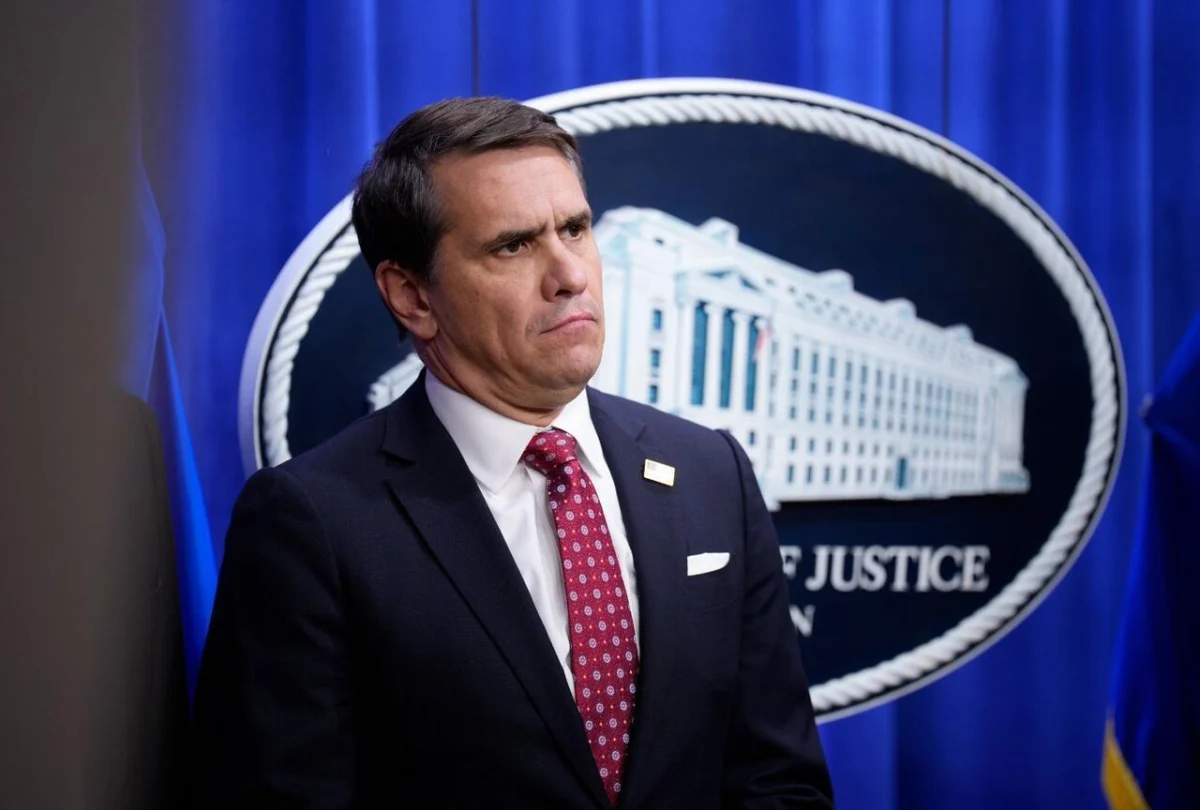
In a stark escalation of political tensions between the executive and legislative branches, Attorney General Todd Blanche on Sunday, November 8, 2026, publicly declined to rule out the prosecution of Democratic lawmakers. His comments, made during an appearance on CNN’s State of the Union, followed a direct directive from President Trump, issued the previous day, to the Justice Department to investigate what he termed a "criminal act" perpetrated by Democrats. This development signals a potentially unprecedented clash over the boundaries of congressional oversight and the independence of the Justice Department, setting a contentious tone for the incoming legislative session.
The Genesis of the Confrontation: Post-Midterm Oversight Pledges
The current confrontation stems directly from the aftermath of the recent midterm elections, which saw a shift in congressional power dynamics. With Democrats poised to assume control of key committees in the House of Representatives, a wave of aggressive investigative pledges against the Trump administration and its allies immediately followed election night. These pledges, intended to fulfill Congress’s constitutional oversight responsibilities, were met with fierce resistance from the executive branch, which viewed them as politically motivated attacks and potential overreach.
One of the most prominent and provocative statements came from Representative Robert Garcia (D-CA), who is slated to become the incoming chairman of the influential House Oversight and Government Reform Committee. On election night, November 4, 2026, Garcia issued a statement that quickly became a flashpoint. In his official remarks, he referred to President Trump’s family as "The Trump Crime Family" and directly advised Republicans to "lawyer up." This blunt message, widely disseminated, was interpreted by many as setting an aggressive and uncompromising tone for the new House’s oversight agenda, signaling a departure from traditional, albeit often partisan, investigative approaches.
The sentiment expressed by Rep. Garcia was not isolated. Across various media platforms and public statements, numerous Democratic lawmakers outlined ambitious plans for wide-ranging investigations. These proposed inquiries targeted alleged improprieties within the Trump administration, the president’s business dealings, the conduct of his cabinet officials, and the financial activities of his family and corporate associates. The scope of these anticipated investigations, even before the new Congress convened, suggested an intent to delve into nearly every facet of the previous administration’s operations, leading to concerns from Republicans about potential political harassment and a weaponization of congressional authority.
President Trump’s Swift and Forceful Response
The escalating rhetoric from Democrats prompted a rapid and forceful counter-response from former President Trump. On Saturday, November 7, 2026, Trump took to his Truth Social platform to denounce the Democrats’ actions, characterizing them as a coordinated effort to intimidate and punish political opponents. In a series of posts, he alleged that Democrats were threatening "a lot of people, including the Attorney General of the United States, and others, with Impeachment and many other forms of punishment." He asserted that these threats were being made "even though they admit they have no reason to do so, and there have been no impeachable acts committed, or even thought of, by the victims of this illegal process."
Trump escalated his accusations by labeling the Democrats’ actions as "extortion at the highest level," demanding that they "should be held accountable for this." He further claimed that Democrats were targeting Republican donors, whom he described as "some of the most respected people anywhere in the World, with imprisonment, and many other levels of punishment, just because they happen to be Republicans, or Republican supporters." Concluding his condemnation, Trump declared, "This is Weaponization and Lawfare at another level."
In a particularly pointed segment of his social media diatribe, Trump specifically named Senator Elissa Slotkin (D-MI), accusing her of threatening young individuals who hold Republican viewpoints. His message culminated in an unequivocal demand for punitive action against those he accused of political intimidation: "The imprisonment should be against these EXTORTIONISTS, and Republicans should get smart, fast!" This direct call for the imprisonment of political adversaries by a former president marked a significant departure from conventional political discourse and immediately raised alarms about the potential politicization of the justice system.
Attorney General Blanche’s Public Deliberation
Against this backdrop of heightened partisan animosity, Attorney General Todd Blanche appeared on CNN’s State of the Union the following day, Sunday, November 8, 2026. Host Dana Bash directly confronted Blanche with President Trump’s order and inquired whether the Justice Department intended to act on it, and what specific criminal conduct the President might be referring to.
Blanche, while carefully navigating the constitutional complexities, did not dismiss the President’s concerns. He acknowledged the constitutional authority of Congress to conduct oversight but argued that the recent statements from Democratic lawmakers had transcended legitimate oversight into the realm of outright threats. "Well, what we have seen over the past several days and even over the past several weeks are outright threats, many – many by elected members of Congress and some senators against anybody that’s conservative and anybody that happens to be a Republican," Blanche stated. He reiterated concerns about threats targeting Republican donors and even college students considering careers in conservative institutions or a future Trump administration.
The Attorney General expressed particular alarm that these discussions of investigations and impeachments were occurring "with no basis, no facts" even before the Democrats officially assumed power. While acknowledging Congress’s oversight role, Blanche questioned the true intent behind the Democrats’ aggressive rhetoric. "You honestly think that all they’re doing is talking about their oversight obligations when they’re talking about going after basically every member of the Cabinet, they’re talking about impeachments, they’re talking about going after companies, private companies who happen to have made investments in this country over the past couple of years?" he posed rhetorically. He clarified, "That is not oversight. I welcome oversight."
When pressed by Bash on whether he would investigate the lawmakers and if their conduct constituted a crime, Blanche’s response was carefully worded but significant: "So, yes, there could be." He emphasized the importance of free speech, allowing criticism of the President, himself, and the administration. However, he drew a line, stating, "But when the threats become so vile and so dangerous that you are telling people in college that they better be careful if they want to work in the Trump administration because somebody will come after them, at some point, you have to draw the line."
While Blanche did not specify any particular criminal statute or confirm the initiation of an investigation, his refusal to rule out prosecution marked a serious moment. He also committed the Justice Department to providing legal defense to officials facing congressional scrutiny, explicitly naming Stephen Miller, a former White House chief of staff and one of the officials Rep. Garcia had advised to "lawyer up." The Attorney General concluded his warning to congressional Democrats with an ominous tone: "I would be very worried if I was a member on that committee." He directly referenced Garcia’s election night statement, saying, "You have an incoming chairman threatening without — they’re not even in charge yet — saying ‘Lawyer up’ to anybody in particular… if that doesn’t bother you, if that doesn’t bother your viewers, then we really need to kind of wake up in this country, because it certainly bothers me."
Constitutional Framework and Legal Implications
The core of this dispute lies in the delicate balance of power enshrined in the U.S. Constitution, particularly concerning congressional oversight and the separation of powers. Article I of the Constitution grants Congress the authority to legislate, and inherent in this power is the ability to conduct investigations and oversight to inform legislative action, expose waste, fraud, and abuse, and hold the executive branch accountable. This oversight function is crucial for democratic governance.
However, this authority is not without limits. Courts have generally held that congressional investigations must serve a legitimate legislative purpose and cannot be solely for the purpose of exposing private affairs or harassing political opponents. The First Amendment protects freedom of speech, including the speech of lawmakers, which is generally afforded broad protection. Nevertheless, legal precedents indicate that speech can lose its protection if it constitutes a "true threat," incites violence, or directly obstructs justice or constitutes extortion. The challenge for the Justice Department, should it pursue any action, would be to demonstrate that the lawmakers’ statements crossed these high legal thresholds, moving beyond political rhetoric to criminal conduct.
The principle of prosecutorial discretion is also central to this discussion. The Attorney General, as the chief law enforcement officer, has broad authority to decide whether to initiate investigations and bring charges. However, this discretion is expected to be exercised impartially, free from political influence, to uphold the rule of law. President Trump’s direct "order" to the Justice Department, coupled with Blanche’s subsequent public comments, raises significant questions about the perceived independence of the Justice Department, a cornerstone of its credibility. Critics argue that such directives and public warnings risk politicizing the department and using its power to silence political opposition, thereby undermining democratic norms.
Reactions and Broader Implications
Predictably, the Attorney General’s remarks were met with immediate and strong reactions from both sides of the political spectrum. Representative Garcia, directly targeted by Blanche’s warning, swiftly rejected the intimidation. In a subsequent interview on State of the Union, he declared, "They can come after us however they want. We’re not going to be intimidated." Garcia unequivocally stated that Blanche’s actions constituted a "threat" aimed at stopping his committee from conducting "real oversight" and reaffirmed his commitment to investigate alleged wrongdoing involving the Trump administration, the President’s family, and corporate allies.
From the Democratic perspective, Blanche’s comments were widely condemned as an attempt to weaponize the Justice Department to shield the executive branch from legitimate congressional scrutiny. Many Democratic lawmakers and political observers expressed outrage, viewing it as an affront to the separation of powers and a dangerous precedent that could chill legislative speech. Legal scholars specializing in constitutional law largely cautioned against such actions, emphasizing the high bar for prosecuting lawmakers for their public statements and warning of the profound implications for the checks and balances system.
Conversely, Republicans and staunch Trump supporters lauded Blanche’s stance, portraying it as a necessary defense against what they perceive as politically motivated harassment and an abuse of congressional power. They echoed Trump’s claims of "extortion" and "lawfare," arguing that Democrats’ aggressive rhetoric had crossed a line into actionable threats. This faction believes that accountability should apply to all, including members of Congress, especially when their statements are perceived as undermining due process or threatening private citizens.
The immediate implications of this standoff are profound. As Rep. Garcia prepares to lead the Oversight Committee when the new Congress convenes in January, the stage is set for an intensely adversarial relationship between the legislative and executive branches. The threat of potential prosecution, however remote, could introduce an unprecedented level of tension into congressional investigations, potentially forcing lawmakers to weigh their words more carefully or, conversely, stiffening their resolve against perceived intimidation.
Beyond the immediate political skirmish, this incident carries broader implications for American democracy. It reignites long-standing concerns about the politicization of the Justice Department and the erosion of public trust in institutions meant to be impartial. Should the Justice Department indeed pursue investigations into lawmakers for their public statements, it would establish a contentious precedent that could fundamentally alter the dynamics of executive-legislative interaction for years to come. The delicate balance of power, a cornerstone of the U.S. governmental system, faces one of its most severe tests as the lines between legitimate oversight, political rhetoric, and potential criminal conduct become increasingly blurred. The coming months will reveal whether this confrontation leads to a constitutional crisis or a reassertion of established norms governing the conduct of all branches of government.

