
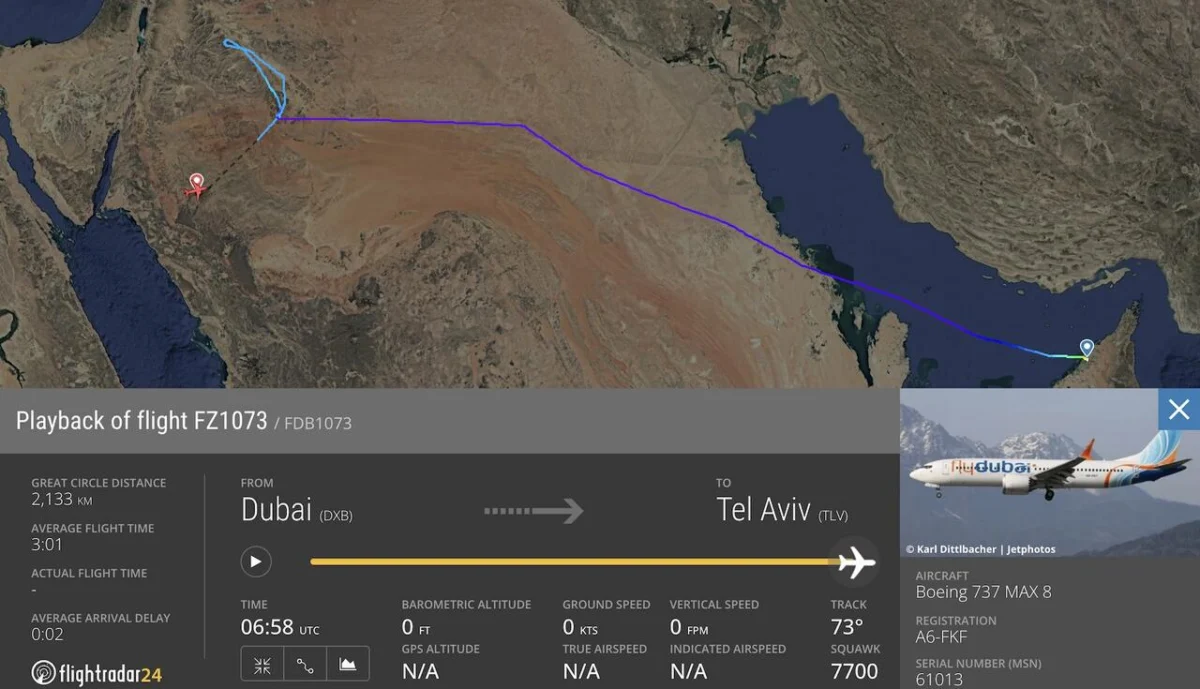
The United Arab Emirates’ state news agency WAM has officially reported that Attorney General Hamad Saif Al Shamsi confirmed investigations into the recent Flydubai incident revealed the Omani co-pilot, identified as Hamam Al Hamami, attempted to carry out a "terrorist attack" by assaulting the captain with a crash axe and seizing control of the passenger jet. This grave revelation casts a long shadow over the incident involving Flydubai flight FZ1073, which was en route from Dubai to Tel Aviv. The Attorney General’s statement marks a critical turning point in understanding the full scope and intent behind the mid-air horror that unfolded approximately one week before the solemn third anniversary of the October 7 attacks.
Official Confirmation of Terrorist Intent
Attorney General Al Shamsi unequivocally stated, "Investigations into the incident involving Flydubai flight FZ1073 found that the co-pilot had attempted to carry out a terrorist attack." This declaration came after extensive preliminary findings, indicating a deliberate and malicious intent to cause harm and potentially bring down the aircraft. The co-pilot is accused of attempting to overpower Captain Smit Machchhar, utilizing a crash axe – a standard piece of cockpit emergency equipment – to gain control of the aircraft. This premeditated act, if successful, could have resulted in a mass casualty event, sending shockwaves through the global aviation community and escalating regional tensions.
A Chronology of Mid-Air Crisis
The harrowing incident occurred on Wednesday, September 30, 2026, aboard Flydubai flight FZ1073, a Boeing 737-800 aircraft. The flight had departed Dubai International Airport (DXB) and was proceeding on its routine path towards Ben Gurion Airport (TLV) in Tel Aviv, Israel. Approximately an hour into the flight, as the aircraft cruised at an altitude of over 30,000 feet, the co-pilot allegedly initiated his assault on Captain Machchhar.
Initial reports, later substantiated by official statements, indicated a violent struggle within the cockpit. During this critical period, the aircraft experienced an alarming and rapid loss of altitude, plunging approximately 18,000 feet in a span of less than 30 seconds. Flightradar24 data graphically illustrated this terrifying descent, showing the jet dropping from 30,875 feet to 16,750 feet within a mere 29 seconds (between 05:22:07 and 05:22:36 UTC). This drastic change in altitude would have been acutely felt by the 174 passengers and crew members on board, inducing extreme fear and chaos.
Remarkably, passengers and cabin crew, displaying extraordinary courage and presence of mind, intervened to subdue the assailant. Their swift and decisive action prevented what could have been an even more catastrophic outcome. Following the successful neutralization of the threat, the remaining flight crew regained control of the aircraft and declared an emergency. The pilot, or potentially a senior first officer who took over, then initiated a diversion to the nearest suitable airport. The passenger jet was rerouted to Tabuk Regional Airport (TUU) in northwestern Saudi Arabia, where it made an emergency landing without further incident. Images circulating online, reportedly from Tabuk, showed visible damage to the upper tail of the aircraft, suggesting the severity of the in-flight struggle and potential maneuvers undertaken during the crisis.
The Aircraft and Route Context
Flydubai flight FZ1073 was operated by a Boeing 737-800, a widely used single-aisle aircraft known for its reliability on medium-haul routes. The particular flight carried 174 individuals, comprising passengers and crew. The Dubai-Tel Aviv route is a relatively new but significant air corridor, established following the signing of the Abraham Accords in August 2020. These accords normalized relations between Israel and several Arab nations, including the UAE, paving the way for direct flights, increased tourism, and economic cooperation. Flydubai and El Al, Israel’s national airline, were among the first carriers to establish direct air links, symbolizing a new era of regional connectivity and reconciliation. The route has since become a popular link for business travelers, tourists, and individuals with family connections across the newly opened borders. The target destination, Tel Aviv, further underscores the geopolitical sensitivity surrounding the incident.

Ongoing Investigations and International Cooperation
Attorney General Al Shamsi emphasized that the investigation remains active and comprehensive. Authorities are meticulously working "to uncover all the circumstances of the incident, its motives, and related connections, in addition to completing technical examinations and examining physical and digital evidence." This multi-faceted approach aims to piece together the assailant’s intentions, potential affiliations, and any external influences that might have contributed to his actions. The examination of physical evidence from the cockpit, coupled with digital forensics from the aircraft’s systems and the co-pilot’s personal devices, will be crucial in building a complete picture.
On the Israeli side, Prime Minister Benjamin Netanyahu has affirmed that Israel is actively investigating whether the co-pilot acted under the direction of any external entity or group. Netanyahu issued a stern warning, stating that "anyone involved in the terror plot would pay a ‘heavy price’." This declaration signals Israel’s commitment to holding accountable not only the perpetrator but also any individuals or organizations found to have orchestrated or supported the attack. The cooperation between UAE and Israeli security and intelligence agencies is expected to be robust, given the shared interest in counter-terrorism and aviation security. Saudi Arabian authorities are also cooperating, having facilitated the emergency landing and likely providing initial assistance and security at Tabuk airport.
Immediate Fallout: Flight Cancellations and Passenger Stranding
The immediate aftermath of the incident saw significant disruptions to air travel between the UAE and Israel. Flydubai promptly announced the cessation of all flights on the Israel route, citing security concerns and the need for a thorough review of their protocols. This precautionary measure, while necessary, had an immediate impact on passengers.
Concurrently, Israel’s national airline, El Al, followed suit, canceling its scheduled flights between Tel Aviv and Dubai. This joint suspension of services left a substantial number of travelers stranded in both countries. Many Israeli citizens found themselves unable to return home from the UAE, facing uncertain travel arrangements and logistical challenges. Similarly, individuals in Israel planning to travel to the UAE for business or leisure had their plans abruptly halted. The cancellations highlighted the fragility of the newly established air links in the face of such a severe security breach and underscored the economic and human impact of the incident. Both airlines are likely to be working on contingency plans and revised security assessments before resuming operations on this critical route.
Broader Implications for Aviation Security and Regional Stability
The Flydubai incident carries profound implications for global aviation security and the delicate geopolitical landscape of the Middle East.
- Enhanced Cockpit Security: This event will undoubtedly prompt a rigorous re-evaluation of cockpit security measures worldwide. While current protocols are stringent (reinforced cockpit doors, limited access), the fact that a co-pilot could attempt such an act from within the cockpit demands renewed scrutiny. Airlines and aviation regulators might consider new protocols for crew vetting, psychological evaluations, and in-flight monitoring, particularly for routes deemed sensitive. The use of a crash axe, a tool intended for emergency egress, as a weapon also raises questions about the placement and accessibility of such equipment.
- Crew Vetting and Mental Health: The incident highlights the critical importance of comprehensive psychological evaluations and continuous monitoring of airline crew members. The rigorous screening processes typically in place for pilots and co-pilots will likely be reviewed and potentially strengthened to identify any potential indicators of radicalization, mental instability, or other threats.
- Impact on UAE-Israel Relations: While the Abraham Accords have fostered significant progress, this incident poses a test to the nascent relationship. Both nations have a vested interest in demonstrating their resilience against terrorism and maintaining the integrity of their newfound cooperation. The prompt and unified condemnation of the attack, along with pledges for thorough investigation and accountability, will be crucial in mitigating any long-term damage to bilateral ties.
- Regional Geopolitical Context: The timing of the attack, just a week before the third anniversary of the October 7 attacks, is highly significant. It serves as a stark reminder of ongoing regional tensions and the persistent threat of terrorism. The perpetrator’s Omani nationality, while not necessarily indicative of state involvement, adds another layer of complexity to the regional dynamics, though Oman has also maintained diplomatic relations with Israel and has not been implicated in the attack by official sources. The incident underscores the need for continued vigilance and cooperation among regional powers to counter extremist ideologies.
- Economic Consequences: The suspension of flights will have immediate economic repercussions for Flydubai and El Al, as well as for the tourism and business sectors reliant on these routes. The long-term impact will depend on how quickly confidence can be restored through enhanced security measures and transparent communication.
Moving Forward
The Flydubai FZ1073 incident is a grim reminder of the persistent and evolving threats facing civil aviation. The swift action of the flight crew and passengers, coupled with the ongoing comprehensive investigations by UAE and Israeli authorities, is critical to understanding the full scope of this attempted terrorist act. As the global aviation community grapples with the implications, there will be an inevitable push for reviewing and strengthening security protocols, crew vetting processes, and international intelligence sharing. The incident serves as a stark testament to the bravery of those who intervened and the unwavering commitment required to safeguard the skies from those who seek to sow terror and destruction. The outcome of the investigations will shape future aviation security policies and undoubtedly influence the trajectory of regional cooperation in the face of shared threats.

