
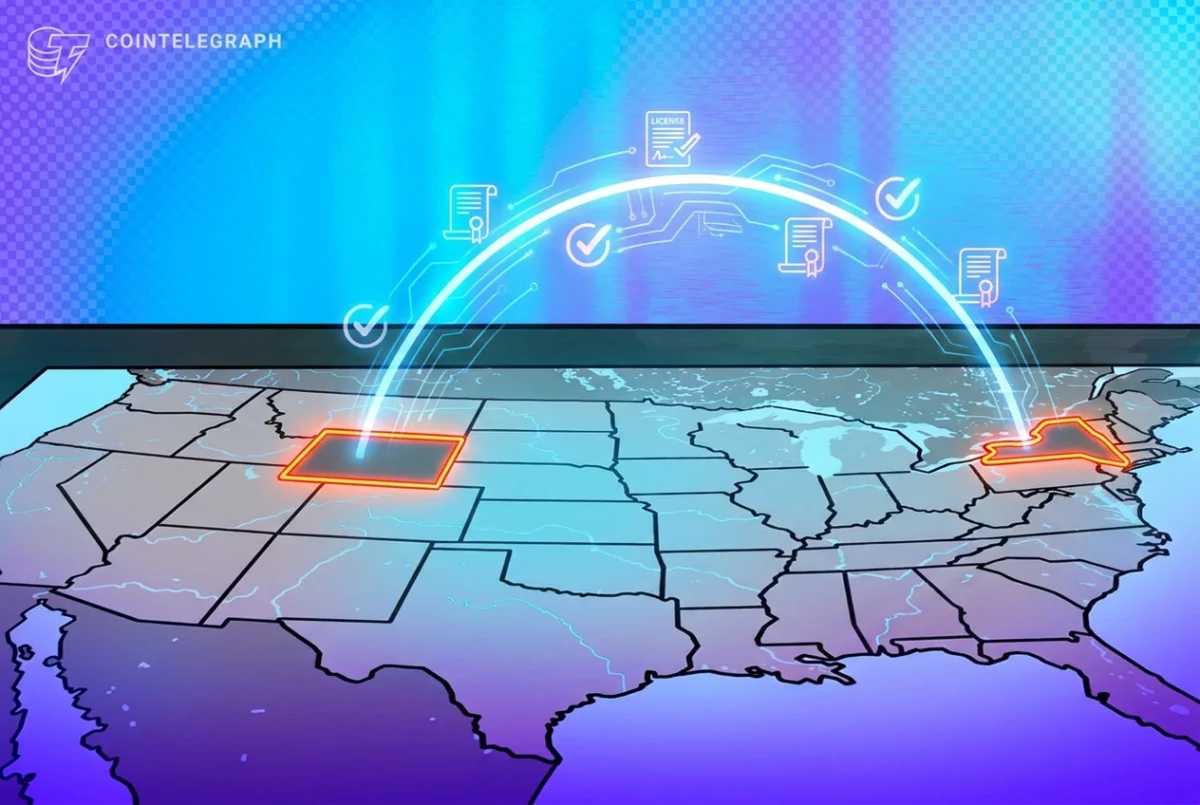
New York and Wyoming financial regulators have signed an agreement to coordinate oversight of crypto companies operating across both states, including licensing, examinations, and potential enforcement actions. This landmark Memorandum of Understanding (MOU) signifies a crucial step toward creating a more unified and predictable regulatory landscape for the burgeoning digital asset industry, potentially setting a precedent for other state-level collaborations.
A New Era of Inter-State Regulatory Cooperation
The agreement, formally announced on a Thursday by the New York State Department of Financial Services (NYDFS) and the Wyoming Division of Banking, establishes a framework for collaboration that will impact firms already holding licenses or seeking approval in either jurisdiction. The core objective is to streamline processes, reduce redundant burdens on compliant businesses, and enhance the effectiveness of regulatory oversight in a rapidly evolving sector.
Historically, the approach to cryptocurrency regulation in the United States has been a patchwork of federal and state initiatives, often leading to a complex and sometimes conflicting web of requirements for companies operating nationwide. New York, with its stringent BitLicense regime established in 2015, has been known for its rigorous licensing standards, demanding significant compliance from virtual currency businesses. Wyoming, conversely, has actively positioned itself as a crypto-friendly jurisdiction, enacting pioneering legislation and creating specialized banking charters, such as the Special Purpose Depository Institution (SPDI), designed to accommodate digital asset businesses. This MOU bridges these distinct regulatory philosophies, aiming to leverage the strengths of both states.
Key Provisions and Operational Framework
The MOU outlines several key areas of cooperation designed to foster efficiency and shared understanding. Under the agreement, regulators will engage in the sharing of analytical insights and historical examination data. This exchange is intended to expedite the application review process for companies seeking to operate in both states, as well as for existing licensees looking to expand their footprint.
Furthermore, the pact mandates the coordination of examination schedules. This means that companies subject to oversight in both New York and Wyoming can anticipate synchronized or joint examinations, reducing the frequency of disruptive audits and inquiries from multiple regulatory bodies. This proactive approach aims to minimize operational friction for businesses that are already navigating complex compliance requirements.
A particularly significant provision is the establishment of an expedited pathway for certain established firms. Companies that have held a valid license or charter in one of the signatory states for at least three years and have a clean record, free from any enforcement actions, may qualify for a streamlined review process when seeking approval in the other state. The MOU indicates that the second regulator will aim to render a decision within a six-month timeframe, offering a tangible benefit for proven and compliant businesses.
Building Transparency and Shared Intelligence
Beyond operational efficiencies, the MOU also formalizes protocols for sharing vital supervisory information. This includes the exchange of supervisory reports, market trend data, and crucial notifications regarding potential enforcement actions. This commitment to transparency and shared intelligence is vital for identifying and addressing emerging risks within the crypto ecosystem effectively.
The regulators have committed to periodically sharing investigative information, a move that can enhance their collective ability to monitor market conduct and detect potential illicit activities. Importantly, the agreement allows for flexibility in enforcement actions. Regulators may choose to undertake enforcement actions jointly, in a coordinated manner, or separately, depending on the specific circumstances and the jurisdiction of primary concern. This ensures that regulatory power remains robust while allowing for nuanced approaches.
A Timeline of Evolving Regulatory Approaches
The genesis of this agreement can be traced back to the growing recognition among state regulators of the need for greater harmonization in supervising the digital asset sector. The rapid growth of the cryptocurrency market, coupled with increasing investor interest and the emergence of new business models, has presented significant challenges for regulators tasked with protecting consumers and maintaining financial stability.
- 2015: New York establishes its BitLicense, setting a high bar for crypto company licensing.
- Early 2020s: Wyoming actively passes legislation to create a favorable regulatory environment for digital assets, including the SPDI charter.
- Mid-2020s: Increased dialogue between state regulators, including NYDFS and Wyoming Division of Banking, on the challenges of cross-state crypto oversight.
- Present Day: Formalization of the MOU, marking a significant milestone in inter-state regulatory cooperation.
This chronological progression highlights a maturing understanding of the digital asset landscape and a growing consensus on the need for collaborative solutions.
Supporting Data and Industry Context
The global cryptocurrency market capitalization, though volatile, has seen substantial growth over the past decade. While specific figures fluctuate daily, the market has at times reached trillions of dollars in valuation, indicating the significant economic activity that necessitates robust regulatory oversight. The number of crypto-related businesses seeking licenses and approvals across various jurisdictions has also grown exponentially.
According to data from the U.S. Securities and Exchange Commission (SEC) and other financial watchdogs, the complexity of digital asset offerings, from initial coin offerings (ICOs) to decentralized finance (DeFi) protocols, has presented unique challenges for traditional regulatory frameworks. State-level regulators have been at the forefront of developing tailored approaches, recognizing the need for innovation alongside consumer protection.
The BitLicense regime in New York, for instance, has been a point of contention for some in the industry, with critics arguing it can be overly burdensome. However, proponents, including NYDFS, assert that its rigorous standards are essential for ensuring the integrity of financial markets and safeguarding consumers. Conversely, Wyoming’s proactive approach, including the creation of SPDIs, has been lauded by many in the crypto community for fostering innovation and providing a clear regulatory pathway for digital asset custodians and issuers. This MOU aims to synthesize the strengths of both these approaches.
Reactions and Inferred Implications
While direct quotes from all parties may not be immediately available, the signing of such an agreement typically garners positive reactions from industry stakeholders who have long advocated for regulatory clarity and consistency. Companies operating in both New York and Wyoming are likely to welcome the streamlined processes and reduced compliance burdens.
Inferred Industry Reaction: Industry groups and associations focused on digital assets are expected to express support for the MOU, viewing it as a positive step towards a more coherent regulatory environment. They will likely highlight the potential for reduced operational costs and increased predictability, which can encourage further investment and innovation within the sector.
Inferred Consumer Impact: For consumers, a more coordinated regulatory approach could lead to greater confidence in the crypto companies they interact with. Enhanced oversight and the potential for joint enforcement actions can offer stronger protections against fraud and misconduct, thereby fostering a safer investment environment.
Broader Regulatory Implications: This agreement could serve as a blueprint for other states looking to collaborate on crypto regulation. As the digital asset landscape continues to evolve, the need for inter-state cooperation will likely become more pronounced. This New York-Wyoming pact demonstrates a pragmatic approach to addressing these challenges at the state level, potentially influencing federal regulatory discussions as well.
Analysis: A Pragmatic Step Towards Harmonization
The MOU between New York and Wyoming is a significant development, reflecting a pragmatic recognition by state regulators that the borderless nature of digital assets necessitates collaborative oversight. By pooling resources, sharing data, and coordinating examinations, both states are aiming to enhance their regulatory effectiveness without stifling innovation.
The expedited review process for established firms is a particularly astute move. It incentivizes companies to adhere to high compliance standards over time and rewards them with greater efficiency when seeking to expand. This could lead to a bifurcation in the market, where well-regulated and compliant firms find it easier to navigate the regulatory landscape, while newer or less compliant entities face greater scrutiny.
The potential for joint enforcement actions is also a critical component. It signals a united front against bad actors and ensures that regulatory breaches are addressed decisively, regardless of where the primary regulatory authority lies. This strengthened enforcement capability can deter misconduct and bolster market integrity.
Ultimately, this agreement represents a nuanced approach to a complex regulatory challenge. It acknowledges the differing regulatory philosophies of the two states while prioritizing the common goal of fostering a safe and innovative digital asset ecosystem. As more firms operate across state lines, such inter-state collaborations are likely to become increasingly common, shaping the future of crypto regulation in the United States.
Cointelegraph remains committed to independent, transparent journalism. This news article is produced in accordance with Cointelegraph’s Editorial Policy and aims to provide accurate and timely information. Readers are encouraged to verify information independently.

