
As Chinese President Xi Jinping arrived in Washington today for a state visit, the diplomatic agenda was widely anticipated to navigate the intricate balance between cooperation and competition, particularly in critical technological domains. While discussions on global challenges like AI safety were expected to find common ground, the underlying tension of the technology race proved immediately evident. Just as the high-level talks commenced, reports emerged from the Financial Times indicating that Beijing has initiated a comprehensive survey of Broadcom networking equipment within its state-controlled data centers, signaling a significant escalation in China’s "domestic chips for domestic use" campaign. This move, unfolding concurrently with President Xi’s visit, starkly illustrates the formidable challenge of separating strategic economic competition from broader diplomatic engagements between the world’s two largest economies.
The Diplomatic Backdrop: AI Safety Amidst Tech Rivalry
President Xi’s visit to Washington was framed against a backdrop of complex U.S.-China relations, marked by ongoing trade disputes, geopolitical rivalries, and an intensifying technological competition. High on the agenda for both leaders was the burgeoning field of Artificial Intelligence. There was a cautious optimism, as Bloomberg reported, that the two nations might indeed "find common ground on AI safety," acknowledging the global imperative to manage the risks associated with this rapidly advancing technology. However, this potential for collaboration coexists uneasily with deeply entrenched national interests in technological supremacy. The sentiment in both capitals is clear: while safety is a shared concern, neither side is prepared to cede ground in the relentless global technology race, particularly in foundational areas like advanced semiconductors and networking infrastructure. This inherent contradiction underscores the fragility of any collaborative efforts and the persistent shadow of strategic competition.
Beijing’s Strategic Audit: Targeting Broadcom Switches
Right on schedule with this geopolitical dynamic, the Financial Times revealed that China’s State-owned Assets Supervision and Administration Commission (SASAC) has spent recent weeks conducting an extensive audit. SASAC, the powerful state body responsible for overseeing China’s vast network of state-owned enterprises (SOEs), meticulously surveyed the penetration rate of Broadcom switching gear across state-controlled data centers. The findings of this audit were striking: sources familiar with the matter indicated that the penetration rate of Broadcom switches among these critical national infrastructure components could be as high as 90 percent. This exceptionally high reliance on a single foreign supplier, especially one from a geopolitical rival, has evidently triggered alarm bells within Beijing’s strategic planning circles.
The exercise by SASAC is far from a mere statistical undertaking; it serves as a critical preparatory step for more assertive policy actions. These initial findings are expected to pave the way for SASAC to issue "informal guidance" to state data centers. While the term "informal" might suggest a lack of binding authority in Western contexts, in China, such guidance from a powerful central agency like SASAC typically carries the full weight and expectation of a formal, mandatory order. This mechanism allows Beijing to steer the procurement decisions of its vast state apparatus without necessarily issuing explicit, public directives that could invite international scrutiny or formal trade complaints. The implicit message is unambiguous: state-owned entities are expected to significantly reduce their dependence on foreign, particularly American, technology suppliers in strategic sectors.
The Unsung Hero of AI: Why Switches Are Critical Now
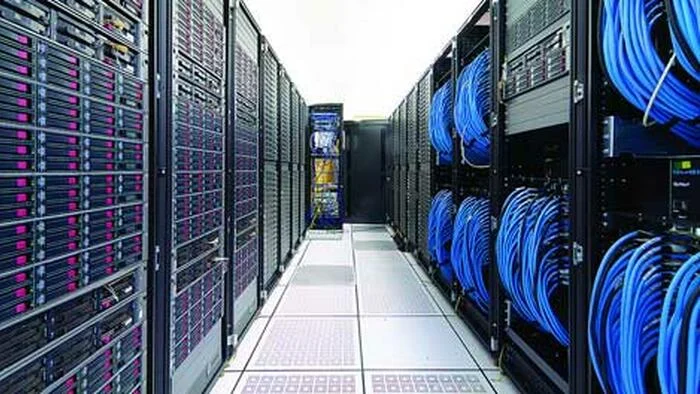
In the frenetic pace of the AI boom, much of the public and media attention rightly focuses on the cutting-edge AI accelerators—the powerful GPUs and NPUs that perform the complex computations required for training large language models and other sophisticated AI applications. However, behind every cluster of thousands of these powerful chips lies an equally critical, though often overlooked, component: the network switch. These switches are the circulatory system of modern data centers, determining whether 10,000 accelerators can communicate seamlessly and efficiently, working together as a single, coherent training cluster, or merely sit idle as 10,000 very expensive, power-consuming heaters. Without high-performance, reliable networking switches, even the most advanced AI chips cannot realize their full potential.
Broadcom’s merchant Ethernet silicon has long dominated this crucial networking layer worldwide, establishing a near-monopoly in the high-end data center switch market. While other major players like Nvidia and Huawei also offer high-end switches in China, the landscape for foreign suppliers has been increasingly constrained. Nvidia, a key competitor in the AI chip space, has already faced significant restrictions, effectively barring its advanced networking products from state-backed data centers due to U.S. export controls. This leaves Broadcom as arguably the last major American supplier deeply embedded in China’s ambitious state-led AI infrastructure build-out, making it a prime target for Beijing’s self-reliance initiatives. The current timing of the SASAC investigation underscores the urgency with which China seeks to indigenize every critical component of its AI supply chain.
Beyond Penetration Rates: Scrutinizing Market Practices
SASAC’s inquiry extends beyond simply counting installed units; it is also scrutinizing Broadcom’s sales practices and market conduct within China. According to the FT report, the agency is investigating whether Broadcom leveraged its dominant market position to engage in potentially anti-competitive practices, such as bundling products or imposing stringent purchase commitments—reportedly up to tens of thousands of switch chips. Such terms could effectively limit the ability of major Chinese network equipment vendors, such as H3C and Ruijie Networks, to procure components from alternative suppliers, including domestic champions like Huawei. H3C and Ruijie are particularly significant players, as they are preferred vendors on procurement lists that channel billions of dollars in annual public-sector IT spending.
This line of questioning and investigative approach bears a striking resemblance to Beijing’s tactics last year when it launched an anti-monopoly probe into Nvidia. That investigation notably found that Nvidia had breached anti-monopoly law concerning its acquisition of Mellanox, a company specializing in high-performance networking solutions. The historical precedent of the Mellanox case highlights Beijing’s consistent strategy: use anti-monopoly regulations as a tool to address perceived market dominance by foreign tech firms, particularly when that dominance is seen as hindering the growth of domestic alternatives. This suggests that the Broadcom probe is not an isolated incident but rather a continuation of a broader policy framework aimed at fostering indigenous technological growth and reducing reliance on foreign entities.

Financial and Strategic Stakes for Broadcom
For Broadcom, the implications of SASAC’s actions, even if initially informal, are significant. According to its latest 10-K filing, shipments to China, including Hong Kong, accounted for 17% of Broadcom’s FY2025 revenue, translating to approximately $10.9 billion out of a total of $63.9 billion. This figure, while substantial, already represented a decrease from 20% a year earlier, indicating a trend of reduced exposure. It is also important to note that a significant portion of this "ship-to" China revenue accounts for components sent to contract manufacturers in China for assembly into products destined for non-Chinese customers. Therefore, the "true" Chinese end-demand for Broadcom’s products is likely smaller, though still considerable.
The immediate market reaction to the news was relatively subdued, with Broadcom’s stock (AVGO) rising by about 0.5% on the headline. This suggests that traders may not anticipate a severe, immediate impact on the company’s profit and loss statement. However, market observers and industry analysts are quick to point out that while the near-term financial hit might appear modest, the strategic cost for Broadcom could be far more substantial. The Chinese domestic switching market is projected to become a multi-billion-dollar opportunity, driven by the country’s aggressive investment in AI infrastructure. By moving to restrict Broadcom’s presence, Beijing is effectively carving out this rapidly expanding and strategically critical market for domestic suppliers, thereby limiting Broadcom’s long-term growth prospects in a key global market. This policy shift represents a significant strategic setback, regardless of the immediate revenue impact.
China’s Self-Reliance Push: A Broader Canvas
The actions against Broadcom are not isolated but rather form part of a much larger, cohesive strategy by Beijing to achieve technological self-reliance across the entire semiconductor and AI stack. Recent research from Goldman Sachs vividly illustrates how rapidly this domestic stack is being filled in. China’s efforts span multiple layers, from foundational AI accelerators to foundry services, memory production, interconnect technologies, and now, critical networking switches. The explicit policy timeline and observable supply-side developments paint a clear picture of an accelerated, comprehensive push for indigenous capabilities.
On the supply side, Chinese tech giant Huawei has emerged as a central figure in this drive. At its recent Huawei Connect event, the company unveiled an ambitious roadmap for its Ascend AI accelerator series, projecting the release of the Ascend 960 in 2027, the 970 in 2028, and the 980 in 2029. Beyond individual chips, Huawei also showcased its Atlas 960 SuperPoD, a powerful system capable of linking 4,096 Network Processing Units (NPUs) through its proprietary UnifiedBus interconnect. This "in-house" networking capability further solidifies Huawei’s end-to-end domestic solution for AI infrastructure, directly competing with Western offerings. The rapid adoption of Huawei’s solutions is already evident, with reports indicating that leading Chinese AI firms like DeepSeek plan to deploy at least 160,000 Ascend 950DTs. Interestingly, Huawei has reportedly raised prices for its 950DTs by 60%, citing "tight component supply," a clear indicator that pricing power is not an exclusive domain of American tech giants.
The Cost of Indigenization: Energy Efficiency and Capacity Constraints
While China’s progress in building out its domestic tech stack is undeniable, it comes with certain trade-offs. Industry experts consulted by the Financial Times noted that Huawei’s switches, while functional, are generally less energy-efficient than Broadcom’s counterparts. This translates directly into higher power consumption and, consequently, increased electricity bills for data center operators utilizing the domestic gear. This observation aligns with Goldman Sachs’ broader analysis of China’s domestic semiconductor industry, particularly concerning its leading foundry, SMIC. The research highlighted that with utilization rates exceeding 95% and no immediate price cuts in sight, "domestic" currently also means "capacity-constrained and not cheap." The pursuit of self-reliance, therefore, entails higher operational costs and potentially slower performance compared to globally optimized, foreign-sourced alternatives.
However, China has a strategic answer to the energy dilemma: unparalleled power generation capacity. Unlike many Western nations, particularly the United States, which face challenges in expanding their electrical grids, China has aggressively built out its power infrastructure. With an installed capacity of 4000 gigawatts (GW) and growing at an impressive 20% annually, China possesses a formidable advantage. In contrast, the United States stands at approximately 1200 GW, with growth largely flat and critical regions like PJM and ERCOT nearing capacity. This vast and expanding electrical capacity enables China to absorb the higher energy demands of less efficient domestic hardware without facing the severe grid constraints that might cripple similar ambitions elsewhere. It reflects a comprehensive national strategy where infrastructure development is seamlessly integrated with industrial policy to support strategic technological goals.
Broader Implications: Reshaping the Global Tech Landscape
The unfolding situation with Broadcom is more than just a commercial challenge for a single company; it represents a pivotal moment in the ongoing U.S.-China technology competition and carries profound implications for the global tech landscape. U.S. export controls, initially conceived to slow China’s progress in advanced AI hardware and maintain a generational lead, have undoubtedly created obstacles. However, they have also inadvertently provided Beijing with both a compelling reason and the necessary political cover to accelerate its long-standing ambition of replacing every layer of the technology stack with domestically produced alternatives. From accelerators and foundry services to memory, interconnects, and now networking switches, China is systematically building out its indigenous capabilities.
While each layer of this emerging Chinese-made stack may currently run slower and hotter than its U.S. counterpart, its crucial attribute is its origin: it is Chinese-made. This strategic autonomy, even at a performance premium, is deemed essential for national security and economic resilience by Beijing. For U.S. suppliers like Broadcom, the market share lost in China this year, though perhaps numerically modest, is likely to shrink further as the "domestic chips for domestic use" campaign gains momentum. Goldman Sachs’ projected 69% Compound Annual Growth Rate (CAGR) for China’s domestic tech market vividly describes a rapidly expanding opportunity, one from which U.S. suppliers are increasingly being shut out. This trajectory points towards an increasingly bifurcated global technology ecosystem, where geopolitical competition not only dictates market access but actively reshapes supply chains and fosters parallel, self-sufficient technological spheres. The era of a truly integrated global tech supply chain, particularly in strategic sectors like AI and advanced computing, appears to be rapidly receding.

