
Details of the Incident and Conflicting Accounts
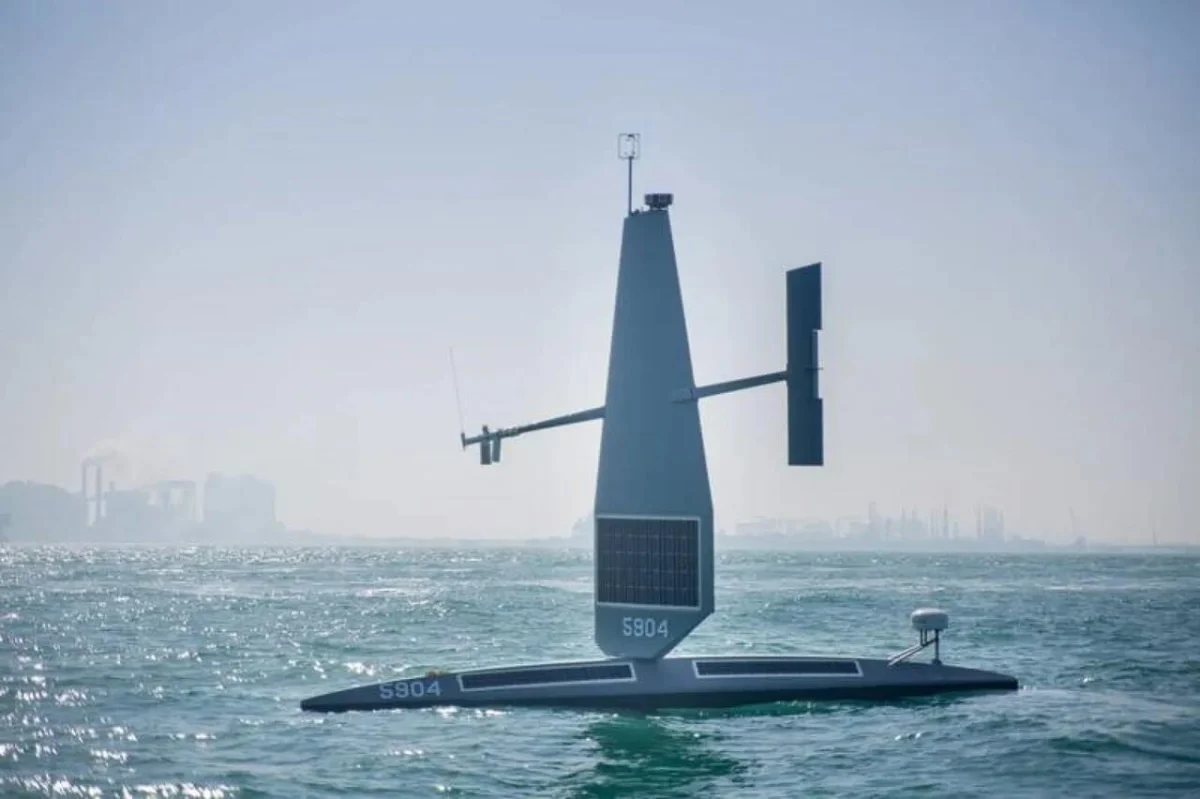
According to statements from U.S. officials, the incident unfolded on Monday when an unmanned surface vessel (USV), likely a Saildrone Explorer, was operating in international waters within the Strait of Hormuz. U.S. Central Command (CENTCOM) reported that Iranian small boats, identified as belonging to the IRGC, approached the USV with the clear intent to take possession of it. In response to this attempted seizure, U.S. forces intervened, ultimately leading to the destruction of the Iranian craft. Captain Tim Hawkins, a CENTCOM spokesman, confirmed the attempted seizure, stating, "Iranian small boats recently attempted to take possession of a U.S. unmanned surface vessel, but they were unsuccessful after CENTCOM forcefully responded." He further noted that the intercept was not successful, and the surface drone remains under the operation of U.S. forces.
Iranian state media, however, presented a starkly different narrative. Reports emerging from Tehran on Monday described the incident as a U.S. attack on "fishing boats" off the port city of Kargan and near Larak Island. Iran’s semi-official Mehr News Agency quoted a source named Nafisi, stating that an unspecified number of fishermen were missing and that search-and-rescue operations were underway. This discrepancy in accounts—one portraying an act of aggression against a military drone and the other describing an attack on civilian vessels—highlights the deep mistrust and propaganda warfare that characterizes U.S.-Iran relations. Videos, purportedly from the Iranian side and circulating widely on social media, appeared to show damage to a surface drone, though it remained unclear whether this footage definitively depicted the exact incident or a prior occurrence. One such video, shared by Al Jazeera English, quoted the IRGC claiming its navy struck a US-operated surface drone at the entrance of the Strait of Hormuz, asserting they had "thwarted an aggressive mission" using the sailboat-shaped device.
This specific confrontation is considered "unusual" by maritime monitors due to the involvement of small boats targeting an unmanned vessel, rather than the more frequently observed interactions involving larger tankers or direct encounters between manned naval vessels. Nonetheless, it underscores the persistent and multifaceted nature of the tensions in the Strait.
The Strategic Importance of the Strait of Hormuz
The Strait of Hormuz is not merely a geographical feature; it is a geopolitical linchpin, a narrow passage connecting the Persian Gulf to the Arabian Sea and the broader Indian Ocean. Its strategic significance cannot be overstated, primarily due to its role as the world’s most important oil transit chokepoint. Approximately one-fifth of the world’s total petroleum liquids consumption, and roughly one-third of the world’s liquefied natural gas (LNG), passes through this 21-mile-wide channel. On average, around 21 million barrels of oil per day (bpd) traverse the Strait, originating from major oil producers such as Saudi Arabia, Iran, Iraq, Kuwait, Qatar, and the United Arab Emirates. Any disruption, even perceived, in the free flow of shipping through this waterway sends immediate ripples through global energy markets, often leading to spikes in crude oil prices and heightened anxiety among international consumers and economies.
For Iran, control or at least significant influence over the Strait of Hormuz is a cornerstone of its national security and foreign policy. It views the Strait as a strategic asset that can be leveraged in times of heightened tension with Western powers, particularly the United States. Threats to close or impede traffic through the Strait have been a recurring feature of Iranian rhetoric, serving as a deterrent against perceived external aggression or economic pressure, such as international sanctions.
A Chronology of Escalation and Unmanned Systems

The recent incident is far from isolated; it fits into a broader, troubling pattern of confrontations between the U.S. and Iran in the Gulf region. The relationship has been particularly fraught since the U.S. withdrawal from the Joint Comprehensive Plan of Action (JCPOA), commonly known as the Iran nuclear deal, in 2018, and the subsequent re-imposition of crippling sanctions on Iran.
- 2018-2019: Following the U.S. withdrawal from the JCPOA, tensions rapidly escalated. There were a series of mysterious attacks on oil tankers in the Gulf of Oman, which the U.S. and its allies attributed to Iran, though Tehran denied involvement. Iran also shot down a U.S. RQ-4 Global Hawk surveillance drone over the Strait of Hormuz in June 2019, claiming it had violated Iranian airspace—a claim the U.S. disputed.
- 2020: The assassination of Iranian Major General Qasem Soleimani in a U.S. drone strike in January 2020 sparked severe retaliation from Iran, including missile attacks on Iraqi bases housing U.S. troops. Maritime incidents continued, albeit with varying intensity.
- Ongoing Naval Encounters: "Almost daily hostile confrontations" have been reported between Iranian and U.S. naval forces, particularly in the narrow confines of the Strait of Hormuz and the Persian Gulf. These often involve close approaches by IRGC fast boats to U.S. warships, which the U.S. Navy characterizes as "unsafe and unprofessional."
- Drone Warfare: Both sides have increasingly relied on unmanned aerial vehicles (UAVs) and, more recently, unmanned surface vessels (USVs) for surveillance, reconnaissance, and even attack capabilities. The U.S. 5th Fleet has been actively operating various types of unmanned systems, including the Saildrone Explorer, to enhance maritime domain awareness. Iran, for its part, has developed a sophisticated drone program and has a track record of interfering with, capturing, or downing U.S. aerial drones. The original article notes that "the Iranians have downed, captured, or disabled dozens of aerial UAVs throughout the over six-month long conflict. Many have been expensive MQ-9 Reaper drones." This highlights Iran’s proficiency and willingness to engage with unmanned technologies, making the attempted seizure of a USV a logical, albeit escalatory, progression.
The current U.S. administration, like its predecessor under President Trump, has maintained a robust military presence in the region, asserting the principle of freedom of navigation and deterring Iranian aggression. President Trump, whose presidency is referenced in the initial statement, oversaw a period of "maximum pressure" on Iran, contributing significantly to the current climate of high tension.
Official Responses and International Silence
The immediate official responses have been limited to the direct parties involved. U.S. Central Command’s swift confirmation and detailed account stand in contrast to Iran’s state-controlled media, which often frames such events through a lens of national defense and victimhood. The silence from broader international bodies or regional allies is notable but not entirely unexpected. Major international maritime organizations typically issue advisories rather than direct condemnations in such ambiguous circumstances, while regional states like Saudi Arabia or the UAE, though deeply concerned by Iranian actions, often prefer to let the U.S. take the lead in responding to direct confrontations in the Strait.
Energy markets, however, are highly sensitive to such news. While the immediate impact of this specific incident on oil prices might be contained due to ample global supply and strategic reserves, a pattern of such events can introduce a "risk premium" into prices, reflecting the increased likelihood of future disruptions. Analysts at major energy consultancies would likely be evaluating the long-term implications for shipping insurance costs and investment decisions in the region.
Broader Impact and Implications
The drone confrontation in the Strait of Hormuz carries several significant implications:
- Escalation Risk: The most immediate concern is the potential for miscalculation. In a highly charged environment, a minor incident can quickly spiral into a larger conflict, especially when conflicting accounts obscure the truth and propaganda fuels nationalistic sentiments. The destruction of Iranian boats, even small ones, by U.S. forces is a direct act of military engagement that Iran will likely view as a hostile act.
- Freedom of Navigation: The U.S. consistently emphasizes its commitment to upholding freedom of navigation in international waters. Iran’s attempts to interfere with U.S. unmanned vessels challenge this principle and could be seen as an attempt to assert greater control over the Strait, a move that would be unacceptable to the international community given the Strait’s global importance.
- Role of Unmanned Systems: The incident highlights the growing role of unmanned systems in modern naval warfare. These assets offer persistent surveillance and can operate in hazardous environments, but they also introduce new dynamics to confrontations. Their less-than-human status might, paradoxically, make them targets for adversaries seeking to test boundaries without directly engaging manned vessels, yet their destruction or capture can still trigger severe responses.
- Deterrence vs. Provocation: The U.S. response aims to demonstrate resolve and deter further Iranian aggression. However, from Iran’s perspective, such actions might be perceived as provocations, hardening its stance and potentially leading to more assertive, rather than less, behavior.
- Diplomatic Stalemate: This incident further complicates any prospects for renewed diplomatic engagement between Washington and Tehran, particularly concerning the stalled nuclear deal negotiations. Such confrontations erode trust and make de-escalation efforts exceedingly difficult.
As President Trump’s legacy of "maximum pressure" continues to shape U.S. policy towards Iran, and as Iran continues to pursue its regional agenda, the Strait of Hormuz remains a critical flashpoint. The repeated clashes underscore the urgent need for robust de-escalation mechanisms and clearer communication channels to prevent what could otherwise become a devastating regional conflict with global economic repercussions. The international community watches with bated breath, hoping that cooler heads will prevail in this strategically vital, yet increasingly dangerous, waterway.

