
A chilling recollection of relentless cold, a constant, debilitating chill that permeated every waking and sleepless moment, defines Ammar al-Baluchi’s enduring memory of his clandestine detention. Held in a cell, often nearly naked, under the unblinking glare of fluorescent lights, he famously likened his experience to "living in a refrigerator." This harrowing account emerges from the depths of what is believed to be a secret CIA prison in Bucharest, Romania, a facility formally known as "Detention Site Black." For two decades, Romania has vehemently denied its role in the CIA’s post-9/11 rendition, detention, and interrogation program, even as a mountain of evidence, including court filings from Guantanamo Bay and international human rights rulings, paints a starkly different picture. The impending trial of al-Baluchi and others accused in connection with the 9/11 attacks, now slated for 2028, thrusts the controversial legacy of these black sites, and the complicity of host nations, back into the global spotlight, demanding long-overdue answers to questions of torture, accountability, and justice.
The Horrors Within "Detention Site Black"
Ammar al-Baluchi, identified as the nephew of self-declared 9/11 mastermind Khalid Sheikh Mohammed, was among a small group – estimated between six and a dozen men – believed to have been subjected to brutal interrogation techniques within the walls of "Detention Site Black" between 2003 and 2005. The conditions detailed in Guantanamo court filings are nothing short of horrific, painting a grim tableau of systemic abuse designed to break detainees. Beyond the pervasive cold and constant artificial light, common practices included prolonged solitary confinement, extreme sleep deprivation often involving forced standing in shackles for days on end, repeated dousing with icy water, and forced shaving. Interrogators euphemistically logged physical assaults as "attention grasps" and "facial holds," masking the violent nature of these "enhanced interrogation techniques" (EITs).
A stark visual testament to these abuses emerged in 2024, when Baluchi’s lawyers released a photograph depicting him stripped naked, believed to be the first published image – among tens of thousands – of a "war on terror" detainee in a CIA black site. This image, a powerful symbol of the program’s dehumanizing nature, underscores the claims made by legal counsel. Ben Keith, a British barrister representing Baluchi outside the US legal system, unequivocally stated to Middle East Eye, "We know they were tortured horrifically. It’s not always possible to say which bit of torture took place because they were tortured for days and weeks, but you don’t detain somebody in a black site with the purpose of just talking to them." This sentiment cuts to the core of the controversy: the explicit intent behind the design and operation of these facilities was to extract information through coercive and often torturous means.
A Quarter-Century Quest for Justice: The Long Road to Trial
More than two decades after the September 11, 2001, attacks, which irrevocably reshaped global geopolitics and launched the devastating "War on Terror"—responsible for at least 940,000 direct fatalities in Afghanistan and Iraq alone—a semblance of judicial progress has finally been announced. A US military judge has at last set a trial date for Ammar al-Baluchi, Khalid Sheikh Mohammed, Walid bin Attash, and Mustafa al-Hawsawi: June 5, 2028. This long-awaited development comes after over a decade of legal stagnation, during which the case has been ensnared in complex disputes over admissible evidence, national security secrecy, and, most critically, the legality of using confessions obtained under torture before the men ever reached Guantanamo Bay.
Lieutenant Colonel Michael Schrama, the fifth military judge to preside over this labyrinthine case, now faces the monumental task of navigating these profound legal and ethical challenges. The central question of whether torture-tainted evidence can be introduced runs directly through the basement of the Bucharest facility, where the accused are believed to have suffered their ordeal. In a significant ruling in April 2025, a Guantanamo military judge determined that statements Baluchi provided to the FBI in 2007 were involuntary and, therefore, inadmissible. The court explicitly cited "torture and cruel, inhuman and degrading treatment" inflicted upon him during his CIA custody, specifically acknowledging his detention in Romania as a contributing factor. The judge concluded that even the "modestly changed confinement circumstances" at Guantanamo were insufficient to eradicate the "lingering taint" of the severe abuses he endured prior to his transfer. This ruling sets a critical precedent, affirming the legal consequences of the CIA’s black site operations and potentially complicating future prosecutions where similar evidence exists.
The CIA’s Global Black Site Network and Romania’s Role
The Bucharest site was not an isolated anomaly but a cog in a broader, clandestine machinery operated by the CIA in the years following 9/11. This network of secret prisons, spanning three continents and including facilities in Thailand, Poland, Lithuania, and Romania, formed the backbone of the agency’s controversial rendition, detention, and interrogation (RDI) program. The program, designed to detain and interrogate high-value terror suspects outside traditional legal frameworks, was formally disbanded in 2009 amid mounting international condemnation and revelations of severe human rights abuses.
Romania’s involvement began to take shape well before the Bucharest facility became operational. According to court documents and reports from non-governmental organizations like the Rendition Project, the CIA solidified its agreement with Romanian authorities to host a black site in mid-October 2002. By January 2003, internal CIA communications from its Bucharest station already reflected discussions on how to demonstrate "deep appreciation" for Romania’s anticipated cooperation and support. This appreciation, as later revealed, came with a substantial price tag. The Rendition Project’s 2019 report indicated an initial payment of $8 million, followed by "millions more," highlighting the financial incentives offered to host countries. By the autumn of 2003, the first group of five prisoners had reportedly arrived at the newly established site, marking the grim commencement of its operations.
A "Gesture of Courtesy" with a Price Tag: Political Motivations and Deniability
The decision by Romanian authorities to host a CIA black site was deeply intertwined with the country’s post-Cold War geopolitical aspirations, particularly its fervent desire to join NATO and integrate with Western alliances. Former Romanian President Ion Iliescu, in a 2015 interview with Der Spiegel, confirmed the broad outlines of the arrangement. He recounted a request received "around the turn of the year 2002, 2003" from "our US allies" for "a site." Iliescu stated that he approved the request "in principle" as "a gesture of courtesy ahead of our accession to Nato," deliberately choosing not to inquire about the specifics. He maintained, "We did not interfere with the activities of the USA on this site," dismissing the request as a "minor issue" for a head of state. This approach exemplifies a strategy of deliberate ignorance, allowing for plausible deniability while reaping the geopolitical benefits of cooperation with a powerful ally.
The operational details, according to Iliescu, were managed by Ioan Talpes, his national security adviser at the time. Talpes, in a candid 22014 interview with Der Spiegel, admitted discussing "a more intense cooperation" with the CIA from 2003, understanding it involved the detention of individuals at "one or two locations in Romania." He personally approved the leasing of a government building to the American intelligence agency. Talpes was even more direct in Romanian media, stating that his country "did not have the interest to know what the Americans were doing" at the site it provided, framing it as a demonstration of trust to Washington. Crofton Black, a former investigator with the Rendition Project, who meticulously tracked the CIA’s network through flight logs and declassified documents, suggested that Romania "made the decision [to host the black site] because it was in their interest, and thought the US would cover for them." This highlights the transactional nature of these arrangements, where strategic alliances were forged at the expense of human rights.
Unmasking the Location: Bucharest’s Secret Basement

Despite the official denials, independent investigations and judicial inquiries have consistently pointed towards the existence and specific location of the Romanian black site. Swiss Senator Dick Marty, whose 2007 report to the Council of Europe provided one of the earliest and most comprehensive independent reconstructions of the CIA’s black-site network, concluded that while "very few people" in host countries likely knew of the centers, "the highest state authorities were aware of the CIA’s illegal activities on their territories." His report specifically named Romania and Poland as hosts of secret CIA detention facilities. Subsequent research by the Rendition Project expanded the list of informed Romanian officials beyond Iliescu and Talpeș to include Traian Basescu, who succeeded Iliescu as president in 2004. Efforts by Middle East Eye to reach Basescu for comment were unsuccessful.
Crucially, the 2019 Rendition Project report revealed that after September 2004, Romanian officials received formal briefings from the US ambassador and the CIA’s Bucharest station chief on the program, in a presentation that "clearly described" the use of torture. Black confirmed, "It’s definitively the case – the allegations of torture, the money, the people who were held there – it’s definitively the case that that’s Romania in the court files."
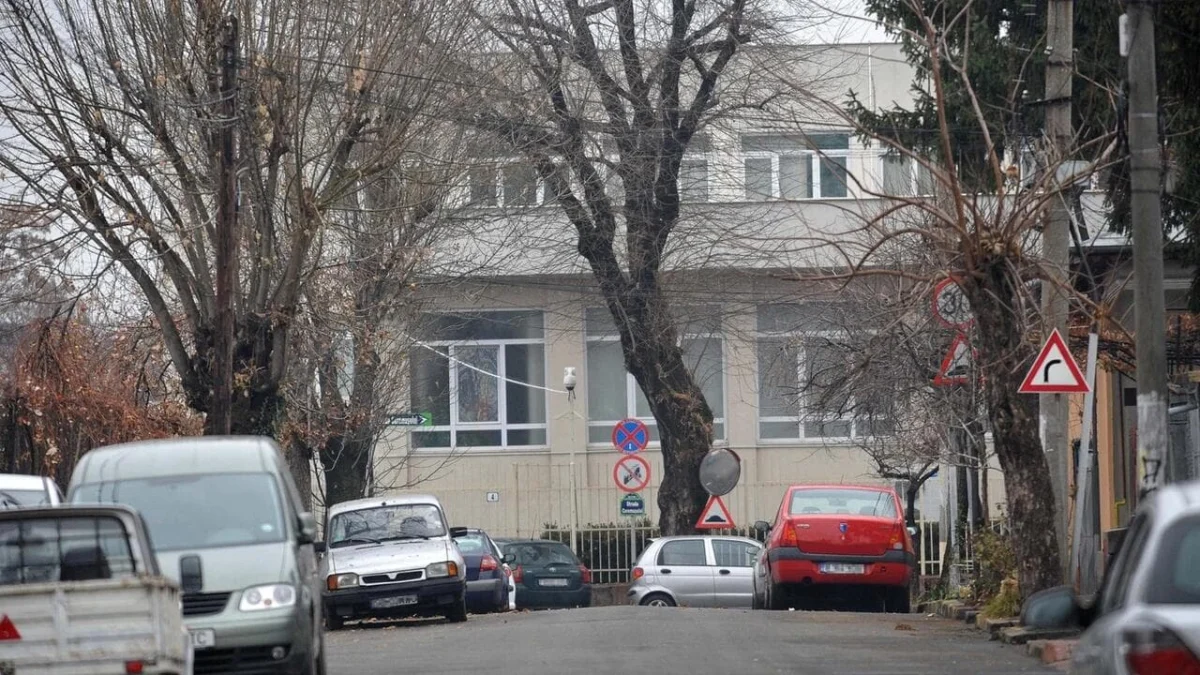
Unlike black sites in Lithuania and Poland, which were typically situated in more remote locations, Romania’s facility is believed to have been centrally located within Bucharest. A 2011 investigation by AP and ARD Panorama narrowed down the site to a specific government building: the National Registry Office for Classified Information, known as Orniss. This building is situated on a quiet, leafy street in northern Bucharest, near a set of train tracks. Orniss, however, has consistently "categorically denied" any speculation, rejecting any association with "the so-called CIA detention centers."
Despite these denials, concurring testimonies in court records have provided chilling details of the conditions inside the facility. The site reportedly comprised six prefabricated cells, painted white and tiled with impact-resistant glass. Disturbingly, the cells themselves were mounted on springs, a deliberate architectural feature engineered to keep detainees slightly off-balance and disoriented, exacerbating their psychological torment. The facility’s alternate moniker, "Bright Light," derived from the continuous, round-the-clock fluorescent illumination, further underscores the sensory deprivation and psychological manipulation inherent in its design.
Broader Accounts of Abuse: The Case of Abd al-Rahim al-Nashiri
Ammar al-Baluchi was not the only high-value detainee subjected to these brutal conditions in Bucharest. Abd al-Rahim al-Nashiri, accused of orchestrating the October 12, 2000 bombing of the USS Cole, is also believed to have been held in Romania between April 2004 and November 2005. His case ultimately reached the European Court of Human Rights (ECHR), leading to a landmark ruling in 2018 that held Romania accountable. The ECHR found that Nashiri’s detention in Romania involved an "extremely harsh" regime, characterized by blindfolding, total isolation, constant exposure to loud noise and unbroken light, and the imposition of leg shackles during all movements. The Court’s findings, supported by related records, also documented severe sleep deprivation, painful stress positions, repeated slapping, and, shockingly, instances of forced rectal feeding. The ECHR’s unequivocal ruling served as a damning indictment of Romania’s complicity and a powerful affirmation of the abuses committed on its soil.
The Senate’s Damning Verdict on "Enhanced Interrogation"
The effectiveness and ethical justification of the CIA’s "enhanced interrogation" program have been rigorously scrutinized, most notably in the comprehensive 2014 US Senate Intelligence Committee report. This exhaustive report concluded that the CIA’s EITs, as implemented in the black sites, did not yield unique, life-saving intelligence that could not have been obtained through other, lawful means. The report further revealed that the CIA detained at least 119 individuals in its secret program, with a minimum of 39 subjected to EITs, often without proper authorization. Crucially, the Senate found that the CIA systematically misled oversight bodies and the public regarding the program’s brutality and efficacy, and that there was a shocking lack of accountability for the abuses committed. This report fundamentally undermined the post-9/11 narrative that such extreme measures were necessary and effective, highlighting instead a pattern of systematic human rights violations and institutional deception.
Two Decades of Denial and Impunity
Despite the mounting body of evidence, international rulings, and detailed reports, Romania’s official position for two decades has remained one of steadfast denial. In response to an inquiry from Middle East Eye, the country’s foreign intelligence service stated that "the matters had already been thoroughly examined by the competent judicial authorities, both nationally and within international bodies," declining further comment. This position stands in stark contrast to the ECHR’s 2018 ruling, which explicitly found that Romania had violated Nashiri’s rights by allowing his torture and by failing to adequately investigate the abuses. The Court unequivocally established that a secret detention center had operated in Romania and that Romanian authorities had "cooperated in the preparation and execution" of the CIA’s rendition and detention program, fully aware of its nature and purpose, even if not privy to every specific detail.
In the wake of the ECHR ruling, Romania’s response was not to initiate a thorough investigation but, astonishingly, to close its domestic criminal inquiry. A case opened in 2012 following a complaint from Nashiri’s lawyers, represented by the Open Society Justice Initiative, had by 2014 been formally classified as an inquiry into unlawful deprivation of liberty and torture. However, the initial complaint sought far broader charges, including complicity in murder, unlawful arrest, abuse of office, and failure to report a crime. Prosecutors significantly narrowed these allegations. The investigation ultimately languished, with no meaningful steps taken. By 2016, the statute of limitations on the alleged crimes had expired because no investigative actions had been taken to suspend the clock, and no suspect had ever been formally identified. In March 2021, Romania’s public prosecutor’s office formally closed the file, classifying the perpetrator as "unknown," despite claiming the use of international cooperation mechanisms to gather evidence.
This closure drew "profound regret" from the Council of Europe’s Committee of Ministers in 2021, which criticized Romania for failing to demonstrate that it had used all possible means to establish the facts, three years after the Strasbourg ruling mandated such action. Ben Keith, Baluchi’s counsel, reiterated that senior Romanian officials acted with direct intent in 2003 and 2004 to facilitate the CIA’s detention, torture, and eventual transfer of Baluchi to Lithuania. "We know from the ruling in al-Nashiri the Romanians knew about it; they might have not known exactly what was happening, but they facilitated the CIA to create a black site to torture these men," Keith asserted. "Our contention is that Romania not only facilitated the CIA black site but knew they were being used to torture individuals." Requests for comment from Romania’s Ministry of Foreign Affairs, Ministry of Justice, and domestic intelligence service (SRI) were met with silence or a lack of legal standing to address the claims.
The Enduring Legacy of the Black Sites
With a trial date now firmly set for June 2028, the confessions extracted under torture at CIA "black sites," including the facility in Bucharest, have become a central and deeply problematic element of the 9/11 case. The admissibility of such evidence, tainted by grave human rights violations, poses a fundamental challenge to the integrity of the US military justice system and its commitment to due process. Furthermore, the role of governments that knowingly allowed the CIA to operate these secret detention and interrogation sites on their territory remains a profound and unresolved issue of international law and state accountability.
The legacy of the black sites extends far beyond individual cases. It represents a dark chapter in the "War on Terror," one characterized by the erosion of legal norms, the systematic violation of human rights, and a persistent struggle for transparency and justice. For Romania, its continued refusal to acknowledge what happened in its basement, despite an overwhelming body of evidence and international condemnation, casts a long shadow over its human rights record and its standing within the international community. As Crofton Black aptly summarized, "There’s been years of compelling evidence that Romania hosted a black site, and the more it has grown, the government continued to deny it was involved. It’s ridiculous, it’s nonsense." The upcoming trial will undoubtedly reignite these debates, forcing a reckoning with the uncomfortable truths of a global conflict whose legal and ethical reverberations continue to be felt decades later.

