

Brian and Michael, two 34-year-old professionals residing in central Connecticut, are currently navigating a complex financial landscape characterized by high-interest consumer debt, rising rental costs, and the long-term objective of transitioning into residential property ownership. Having maintained a domestic partnership since 2013, the couple represents a significant demographic of mid-career professionals who, despite earning a substantial combined income, find their upward mobility constrained by historical debt and the inflationary pressures of the post-pandemic economy. Their situation serves as a primary case study for financial recovery strategies, highlighting the intersection of public sector employment benefits, the volatility of the Northeastern rental market, and the importance of disciplined capital allocation.

Profile of the Subjects and Income Dynamics
The household’s financial foundation is built upon dual incomes derived largely from the public and non-profit sectors. Michael serves as a project coordinator for a state behavioral health agency focused on youth services, supplemented by a secondary role as a disability leadership coordinator and advocate. His professional focus is informed by personal experience as a brain injury survivor, adding a layer of mission-driven stability to his career trajectory. Brian operates as a quality assurance manager for a state-run hospital, a role he transitioned into from the private non-profit sector.
The couple’s combined gross annual income is approximately $167,544, yielding a net take-home pay of $109,455.42 after taxes, healthcare premiums, and mandatory retirement contributions. This puts the household well above the median income for Connecticut, which the U.S. Census Bureau estimated at approximately $88,429 in 2022. However, despite this robust earning power, the couple reports significant financial anxiety, largely stemming from a lack of liquid savings and a recurring cycle of consumer debt.

Chronology of Financial Stressors (2022–2023)
The current financial predicament of the household can be traced to a series of disruptive events occurring between late 2022 and mid-2023. Prior to this period, Brian and Michael resided in a 600-square-foot studio apartment with a monthly rent of $945. This low-overhead living arrangement allowed for the successful repayment of Brian’s $58,000 in student loan debt—a significant milestone that should have positioned the couple for homeownership.
However, the timeline was derailed by two primary factors:

- Forced Relocation: The couple was required to vacate their long-term residence, forcing them into a volatile 2023 rental market. They eventually secured a two-bedroom, two-bathroom apartment in a refurbished industrial mill. While the new space offers 12-foot ceilings and modern amenities, it increased their monthly rent from $945 to $2,000—a 111% increase in housing costs.
- Unplanned Veterinary Expenses: During the relocation period, the couple managed the health crises of two new kittens, which, following the death of their previous cat, Rex, resulted in significant unplanned veterinary bills and prescription dietary requirements.
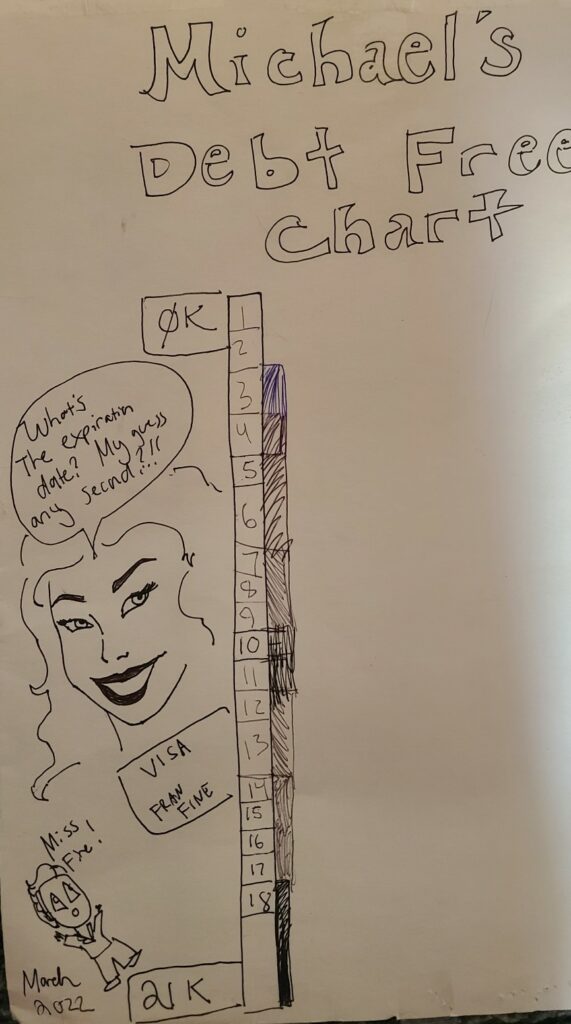
These events, coupled with Brian’s reported history of "exorbitant" consumer spending, led to the accumulation of $28,259 in credit card debt. This debt is currently spread across three primary accounts, some of which are nearing the expiration of 0% introductory interest rate periods.
The Debt Landscape and Interest Rate Vulnerabilities
The household’s debt is structured in a way that poses an immediate threat to their long-term solvency if not addressed before the fourth quarter of 2023. The breakdown is as follows:

- Primary Visa (SCU): $16,057 at 0% interest, expiring in November 2023, after which the rate climbs to 17.99%.
- Visa Platinum (Navy Federal): $9,700 at 10.99% interest.
- Secondary Visa (Navy Federal): $2,503 at 0.99% interest, also expiring in November 2023, jumping to 17.74%.
The total debt of $28,259 represents roughly 25% of their annual net income. While not insurmountable, the psychological weight of this debt is compounded by the couple’s lack of an adequate emergency fund. With only $9,000 in combined liquid savings, they possess just over one month of operating expenses, leaving them vulnerable to further "emergency" spending that could trigger additional high-interest borrowing.
Expert Financial Assessment and Recovery Strategies
Financial analysts, including Elizabeth Willard Thames, have reviewed the couple’s trajectory and proposed a multi-phased recovery plan. The consensus is that while the couple’s debt is significant, their high income provides a "math-based" solution that can be executed within a relatively short timeframe.
The Spending Detox and Capital Reallocation
The first recommendation involves a rigorous "spending detox." By categorizing all expenses into Fixed, Reduceable, and Discretionary, the couple can identify significant leaks in their cash flow. Currently, the household spends approximately $96,414 annually. Analysis suggests that by eliminating discretionary spending—such as dining out ($2,400/year), home goods ($2,400/year), and personal care/gifts ($5,280/year)—the couple could redirect approximately $1,370 per month toward debt principal.
When added to their existing monthly debt payments of $2,000, the couple could potentially apply over $4,400 per month toward their balances. At this rate, the entire $28,259 debt could be liquidated in approximately 6.5 months, effectively clearing the ledger by early 2024.

The Emergency Fund Priority
Following the elimination of high-interest debt, the secondary priority is the establishment of a robust emergency fund. In the context of Connecticut’s high cost of living and the couple’s aging vehicles (a 2007 Mercedes and a 2007 Subaru, both with high mileage), a standard three-to-six-month reserve is deemed essential. Based on a lean budget of $6,665 per month, the couple should aim for a cash reserve of at least $20,000 to $40,000 before aggressively pursuing a home down payment.
Retirement Assets and Public Sector Benefits
A bright spot in the household’s financial profile is the strength of their retirement vehicles, particularly Brian’s access to the "triple crown" of public sector benefits: a 403(b), a 457(b), and a state pension.

Brian’s pension, if he maintains his trajectory until 2054, is projected to provide a monthly payout of $4,150. Furthermore, the 457(b) plan offers a unique advantage for early retirement, as funds can often be withdrawn penalty-free upon separation from service, regardless of age. Michael also maintains a healthy 401(k) with a 4% employer match. However, with only $91,250 in total assets at age 34, they are slightly behind the recommended benchmark of having one times their annual salary saved by age 30. To mitigate this, experts suggest Brian prioritize maximizing his 457(b) contributions to lower the couple’s taxable income while accelerating compound growth.
Career Advancement and the Master’s Degree Debate
A point of contention in the couple’s long-term plan is Brian’s desire to pursue a graduate degree. From a purely journalistic and analytical perspective, the Return on Investment (ROI) of such a degree must be scrutinized. Given Brian’s current stable position in a state-run hospital and the generous nature of his existing benefits, a Master’s degree would only be financially justifiable if it guaranteed a significant and immediate salary increase that outweighs the tuition costs and the opportunity cost of the time spent studying.

In an era of rising educational costs, many financial consultants advise against "educational detours" unless they are a prerequisite for a specific promotion. For Brian, the focus remains on leveraging his current success into higher-tier administrative roles within the state system, which may value experience over additional credentials.
Broader Economic Outlook and Implications
The case of Brian and Michael reflects broader trends affecting the American "squeezed" middle class. According to data from the Federal Reserve, total U.S. household debt reached $17.05 trillion in 2023, with credit card balances seeing the most significant jumps. The couple’s struggle to transition from renting to owning is also emblematic of the Connecticut real estate market, where inventory remains low and interest rates have remained elevated compared to the previous decade.

Furthermore, the couple’s reliance on state-funded pensions and Social Security highlights a growing concern among millennials regarding the long-term viability of these programs. While Brian’s pension appears secure, the "precarious status of Social Security" mentioned in their report is a common driver of the "fear of falling behind" that many professionals in their 30s experience.
Conclusion: The Roadmap to 2033
To achieve their ten-year goals of homeownership, marriage, and business ownership, Brian and Michael must move from a reactive financial posture to a proactive one. The transition requires a psychological shift from "shame-based" spending to "goal-aligned" allocation.

The data suggests that if the couple adheres to a strict debt-repayment schedule through the end of 2023 and prioritizes a liquid emergency fund in 2024, they could realistically enter the housing market by 2025 or 2026. By leveraging Brian’s public sector benefits and Michael’s side-hustle income, the couple has the potential not only to become debt-free but to build a lasting legacy of financial independence. Their story is a reminder that for high-earning professionals, the obstacle to wealth is often not the income itself, but the absence of a disciplined framework to manage it.

