
The global financial technology landscape is set to converge on New York City as FinovateFall 2026 prepares to open its doors on September 9 at the Marriott Marquis Times Square. This year’s iteration of the premier fintech showcase arrives at a pivotal moment for the industry, as traditional financial institutions and agile startups navigate a complex environment defined by rapid artificial intelligence integration, shifting regulatory frameworks, and evolving consumer expectations. With more than 2,000 senior-level decision-makers expected to attend, including a significant contingent of over 1,000 representatives from major banks and financial institutions, the conference is positioned to serve as the definitive barometer for the sector’s health and direction heading into the final quarter of the year.
The event’s scale reflects a robust recovery and expansion in the fintech sector. Organizers have confirmed a roster of 72 live demonstrations, a format that has become the hallmark of the Finovate series. Unlike traditional trade shows that rely on slide decks and theoretical pitches, Finovate requires participants to showcase their technology through live, high-pressure demos. This rigorous standard ensures that the 2,000 delegates—representing the highest echelons of venture capital, institutional banking, and technological development—witness tangible solutions rather than speculative concepts.
Chronology and Strategic Structure of the Event
The 2026 conference is structured to maximize high-level engagement through a tiered scheduling approach. While the main program commences on September 9, the strategic groundwork begins a day earlier. On September 8, the conference will host two exclusive pre-event summits: the Leaders+ forum and the Credit Union Spotlight. These sessions are designed to address the specific needs of niche but influential segments of the financial ecosystem.
The Leaders+ pre-event is tailored for C-suite executives and senior strategists who are tasked with steering multi-billion dollar organizations through the "Permacrisis" of the mid-2020s. This forum focuses on long-term resilience, digital sovereignty, and the ethical implications of autonomous banking systems. Concurrently, the Credit Union Spotlight addresses the unique challenges faced by member-owned institutions. With more than 300 representatives from credit unions and community banks expected to attend the main conference, this specialized track provides a vital space for discussing how smaller institutions can leverage "Fintech-as-a-Service" (FaaS) to compete with global tier-one banks.
Following these specialized sessions, the core of FinovateFall runs from September 9 through the conclusion of the week. The agenda is meticulously divided between the signature seven-minute demo blocks and a series of keynote addresses and panel discussions. These sessions feature a slate of industry veterans and disruptors who will analyze the data-driven shifts occurring across the global markets.
Supporting Data and Participant Demographics
The demographics of the 2026 attendee list provide insight into the current priorities of the financial world. Of the 2,000 expected delegates, approximately 50% are senior decision-makers from banks and established financial institutions. This high ratio of "incumbents" suggests a continued appetite for partnership-led innovation rather than the "disruption-only" model that characterized the previous decade.
The presence of over 300 delegates from community banks and credit unions is particularly noteworthy. Industry data suggests that community-based lenders are currently undergoing a massive digital overhaul to retain younger demographics. According to recent sector reports, investment in digital banking interfaces by community-level institutions has grown by 18% year-over-year, a trend that is mirrored in the high registration numbers for FinovateFall’s Credit Union Spotlight.
Furthermore, the 72-demo roster is curated from hundreds of applicants, representing a diverse cross-section of the industry. Preliminary data indicates that 40% of the presenting companies are focusing on Artificial Intelligence (AI) and Machine Learning (ML) for risk assessment and fraud detection, while 25% are showcasing advancements in embedded finance and "invisible" payment rails. The remaining 35% are distributed across wealth management tech (WealthTech), regulatory technology (RegTech), and sustainable finance solutions.
Industry Context and the New York Hub
The selection of the Marriott Marquis in Times Square as the venue is a calculated move that underscores New York City’s enduring status as the world’s primary financial hub. Despite the rise of remote work and the growth of fintech clusters in Austin, Miami, and London, the concentration of capital and regulatory authority in Manhattan remains unparalleled.
The 2026 event takes place against a backdrop of stabilizing interest rates and a renewed focus on "profitable innovation." In the preceding two years, the fintech sector moved away from the "growth at all costs" mentality that defined the 2020-2021 period. Today’s market demands efficiency, clear paths to monetization, and seamless integration with existing banking cores. FinovateFall serves as the marketplace where these requirements are tested. For the 1,000+ bankers in attendance, the primary goal is identifying solutions that reduce operational overhead while enhancing the customer experience (CX)—a dual necessity in an era where consumer loyalty is increasingly fluid.
Inferred Stakeholder Perspectives and Market Reactions
While official statements from individual banks are typically reserved for post-event announcements, the prevailing sentiment among participating institutions is one of cautious optimism. Analysts suggest that large-scale banks are looking for "plug-and-play" solutions that can bypass the traditional three-to-five-year development cycles of internal IT departments.
"The volume of senior-level banking executives attending Finovate this year indicates that the ‘build vs. buy’ debate has largely shifted toward ‘partner and integrate,’" notes one industry observer familiar with the event’s trajectory. "Banks are no longer trying to out-innovate startups in every niche; they are looking for the best-in-class tools to augment their existing infrastructure."
From the perspective of the 72 demoing companies, the stakes are equally high. For a startup, a successful seven-minute demo at Finovate can lead to immediate pilot programs with Tier 1 banks or significant Series A and B funding rounds. Venture capitalists (VCs) attend the event to scout for "real-world" applications of emerging tech, moving beyond the whitepapers to see how software performs under the scrutiny of potential institutional clients.
Broader Impact and Technological Implications
The implications of the technologies debuted at FinovateFall often ripple through the economy for years. In previous iterations, the conference has been the launching pad for innovations in mobile check deposits, biometric authentication, and real-time cross-border payments.
In 2026, the focus is expected to shift toward "Hyper-Personalization." As financial institutions gain access to more sophisticated data analytics, the ability to offer individual customers tailored financial products in real-time—such as a specific loan offer at the exact moment of a purchase or an automated investment adjustment based on geopolitical shifts—becomes a reality. The 72 demos are expected to showcase how AI can move from a "chatbot" interface to a foundational layer of the banking experience.
Additionally, RegTech is anticipated to be a major theme. As global regulators increase their scrutiny of digital assets and data privacy, banks are seeking automated solutions to ensure compliance across multiple jurisdictions. The ability to automate "Know Your Customer" (KYC) and Anti-Money Laundering (AML) protocols is no longer a luxury but a prerequisite for survival in a highly regulated global market.
Logistics and Preparation for Delegates
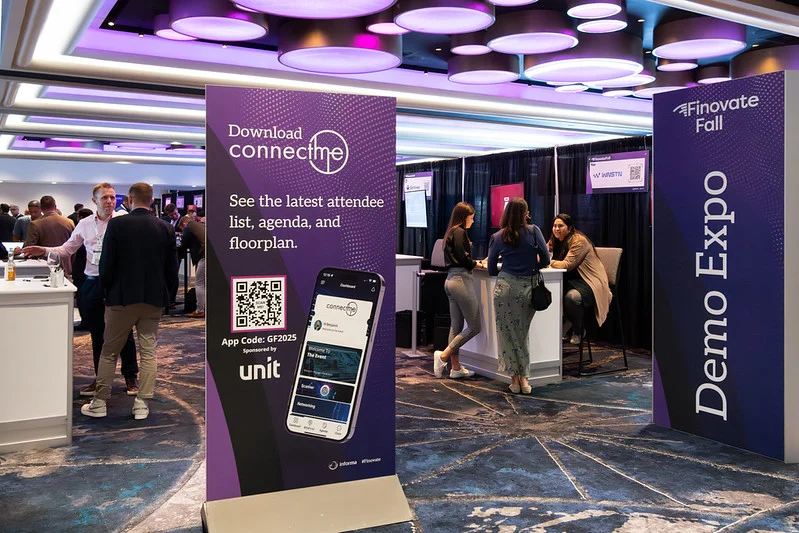
To facilitate the massive volume of networking required, organizers have implemented a "Connect Yourself" digital framework, allowing delegates to schedule meetings and exchange information via a dedicated mobile platform. This digital integration is essential for a conference where the ratio of attendees to presenters is nearly 28 to 1.
The guide provided to delegates emphasizes the importance of the pre-event sessions on September 8 for those looking to engage in deeper strategic discussions before the high-energy demo days begin. With the event less than a week away, the Marriott Marquis is preparing to accommodate the logistical demands of over 2,000 high-profile visitors, ensuring that the environment is conducive to both the theatricality of the live demos and the privacy required for high-stakes deal-making.
Conclusion: The Road Ahead for Fintech
As the fintech community descends upon Times Square, the focus remains on the practical application of technology to solve systemic financial challenges. FinovateFall 2026 is more than a trade show; it is a strategic assembly that will likely dictate the technological roadmap for the 2027 fiscal year. The presence of 1,000 bank executives and 300 credit union leaders ensures that the innovations showcased will have a direct path to implementation, affecting how millions of consumers interact with their money.
By blending the expertise of veteran keynote speakers with the raw innovation of 72 live demos, the conference provides a comprehensive view of the financial future. In a world where technology and finance are now inextricably linked, the events unfolding at the Marriott Marquis next week will serve as a critical milestone in the ongoing evolution of the global economy.

