
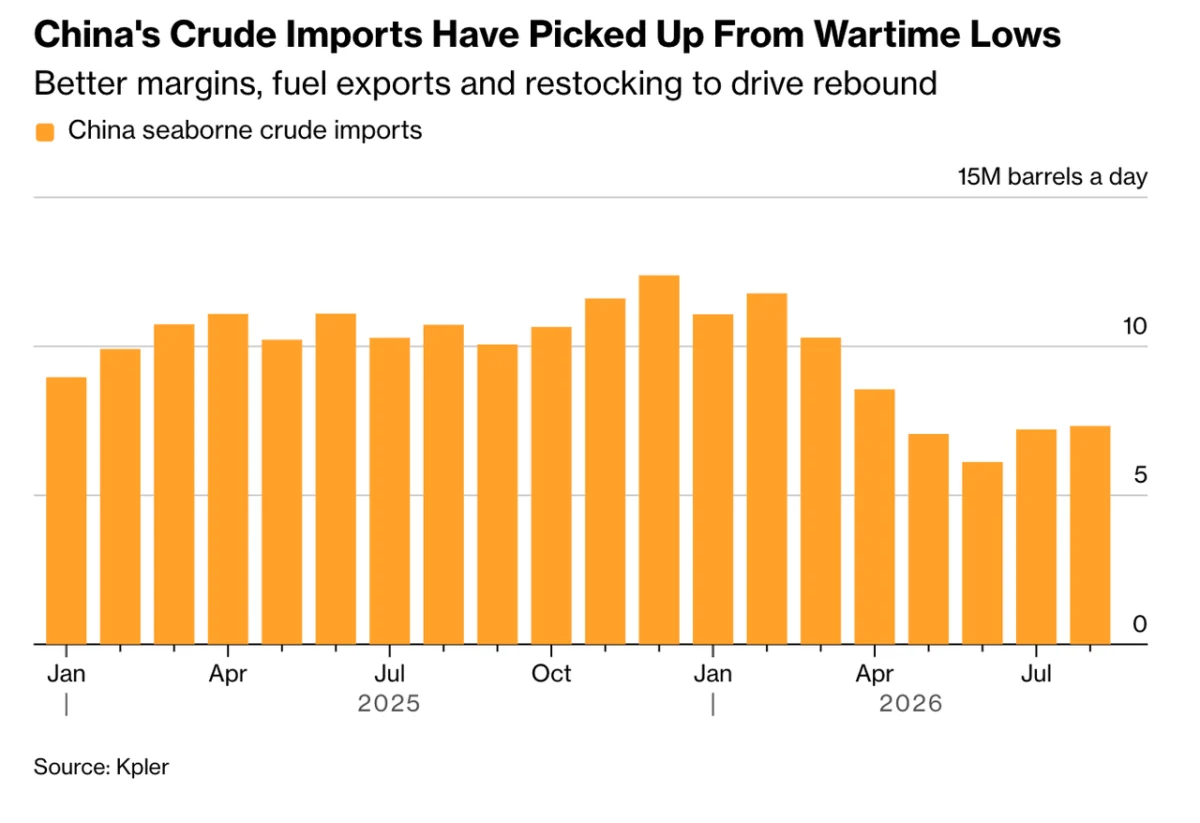
A dramatic turnaround in China’s oil demand, following a period of significant contraction, is now exerting substantial upward pressure on global crude prices. This shift comes at a critical juncture, as geopolitical tensions in the Middle East, particularly the "actively kinetic" phase impacting the Strait of Hormuz, have already strained global supply chains and removed considerable volumes of Iranian crude from the market. The confluence of these factors has pushed benchmark prices like Brent crude to levels not seen in months, threatening to breach the $100 per barrel mark.
For much of the recent past, specifically through what appears to have been 2023 and early 2024 (correcting an apparent typographical error in the original text which stated "2026"), the global oil market experienced a paradox: despite major disruptions in the critical Strait of Hormuz — a chokepoint through which roughly a fifth of the world’s total oil consumption passes — and a theoretical global supply deficit estimated at 10-15 million barrels per day (mmb/d), crude prices failed to soar as might have been expected. This unusual market stability was largely attributed to a precipitous plunge in Chinese oil demand.
The reasons behind this initial slump in China, the world’s largest oil importer, were multi-faceted. A sharp slowdown in the Chinese economy, evidenced by a significant recapitalization of its banking sector amounting to a massive $56 billion — a move reminiscent of financial crisis interventions — suggested deep-seated economic challenges. This economic deceleration likely curtailed industrial activity, transportation, and overall energy consumption. Simultaneously, there was speculation that China was aggressively drawing down its strategic petroleum reserves (SPR), effectively using stored oil to meet domestic needs rather than relying on fresh imports, further dampening external demand. Data from the period confirmed this trend, with Chinese oil imports plummeting to an eight-year low, and local product refining rates unexpectedly cratering to what were then considered all-time lows. These indicators unequivocally signaled a substantial decrease in the nation’s appetite for crude.
The Reversal: China’s Demand Surge and Market Impact
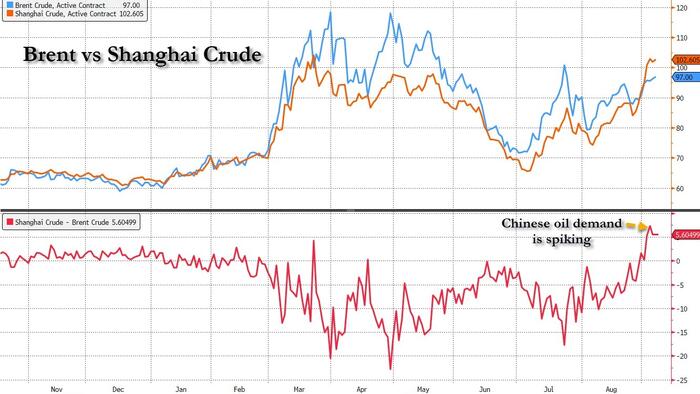
However, the dynamics have shifted decisively in recent weeks. A key indicator of this reversal has been the dramatic transformation in the Brent-Shanghai crude spread. Previously, this spread had traded at a negative differential, reaching as low as -$20 in late April, reflecting the weakness in Chinese demand relative to international benchmarks. This negative spread meant that Shanghai crude was significantly cheaper than Brent, indicating an oversupply or lack of buying interest in the Chinese market.
In a stark reversal, Shanghai crude prices have surged dramatically, now trading just shy of their highest level since the onset of the intense phase of the Iran war, comfortably above $100 per barrel. More critically, Shanghai crude is now commanding a sizable premium over Brent, signaling that the period of subdued Chinese demand is conclusively over. This premium indicates strong domestic buying interest and a willingness to pay more for immediate supply, a stark contrast to the previous months.
The renewed Chinese buying spree is far from subtle. Bloomberg reports confirm that China is aggressively bidding up crude prices across diverse markets, including Africa, Canada, and Latin America. This intensified competition for alternative supplies is a direct consequence of the ongoing disruptions at the Strait of Hormuz and severely limited Iranian crude exports due to the stringent US blockade. This global scramble is creating significant challenges, particularly for smaller Chinese independent refineries, often referred to as "teapots," which historically relied on heavily discounted Iranian crude. These very refineries, which were forced to shut down just months prior due to insufficient domestic demand, are now facing intense pressure to secure cost-effective feedstock.
The immediate impact on global benchmarks has been pronounced. Brent crude, which had been trading below $90 for an extended period, recently rose above $97 per barrel for the first time in over a month and is now threatening to break past the $100 mark, a level it hasn’t consistently held since May. This upward trajectory is directly linked to China’s return as a dominant buyer in the international market, a significant departure from its previous role in restraining crude oil prices.
Geopolitical Undercurrents and Supply Disruptions

The backdrop to this demand surge is a deeply unstable geopolitical landscape. The "actively kinetic" phase of the Iran war, a term used to describe heightened military activity and tensions, has repeatedly threatened and at times effectively halted shipments through the Strait of Hormuz. This vital waterway, connecting the Persian Gulf with the Arabian Sea, is indispensable for global oil trade. Any disruption there sends immediate shockwaves through energy markets, given the sheer volume of crude and refined products that traverse it daily.
Furthermore, the US blockade on Iranian oil exports has been highly effective in curtailing the flow of Iranian crude to global markets. This policy, aimed at pressuring Tehran, has removed millions of barrels per day from the international supply, forcing buyers, including China, to seek alternatives elsewhere. The situation remains volatile, as evidenced by recent reports of an attack on Saudi Aramco’s Jizan oil facilities, underscoring the persistent risk of supply disruptions in the region. Such incidents intensify the global race for replacement supplies, making the task of securing crude increasingly expensive for nations like China.
The Global Scramble for Alternative Supplies
The intensity of China’s renewed buying is clearly reflected in the premiums being paid for various crude grades worldwide. Traders speaking to Bloomberg have highlighted significant spikes. For instance, Congo’s Djeno crude, a preferred grade for some Chinese refiners, was reportedly offered at premiums as high as $20 a barrel over ICE Brent, a substantial increase from approximately $15 a couple of weeks prior. This upward trend in premiums indicates fierce competition and a willingness by Chinese buyers to pay top dollar to secure barrels.
Beyond Africa, Chinese buyers are also actively acquiring large tanker loads of crude from North and South America, including Canada, Brazil, and Argentina. The increased demand from China has also contributed to lifting prices for Russia’s ESPO crude, a popular grade in Asian markets, with Chinese refiners reportedly paying record premiums. Similarly, broader Asian buying sprees, driven in part by China’s actions, are pushing Dubai crude futures, another key Asian benchmark, towards the $100 per barrel threshold.

While Chinese seaborne crude imports, currently trending towards 10 million barrels per day, are still below pre-war levels, the sharp increase in the Shanghai crude spread strongly suggests an aggressive ramp-up in imports. This dynamic implies that the global competition for alternative supplies is likely to intensify further, potentially leading to continued upward pressure on prices.
Refinery Dynamics and Market Drivers
The rebound in crude imports in China is fundamentally driven by improved refinery economics and a concerted effort to rebuild inventories. According to Liao Na, founder of GL Consulting, "China’s robust buying lately is largely driven by refiners taking advantage of decent margins." Improved processing margins, coupled with the resumption of fuel exports from China, are providing strong incentives for refiners to increase their crude purchases. Additionally, commercial restocking activities are contributing to the heightened demand. Liao noted, "Active restocking by commercial players has also helped, but it’s not necessarily a sign of stronger underlying demand that’s supporting the recovery." This distinction is crucial, suggesting that while current buying is strong, it may be partially driven by opportunistic inventory management rather than solely by fundamental economic growth.
The situation is particularly challenging for China’s smaller, independent refiners, the "teapots." These refiners traditionally relied heavily on discounted crude from sources like Iran and Venezuela. However, the Trump administration’s efforts to "rewire global energy markets" through sanctions have severely eroded access to these traditional supply channels. With the collapse of these cost-effective sources, teapots face immense pressure to compete for more expensive alternative crudes, potentially squeezing their margins and forcing some out of the market if they cannot adapt to the new pricing environment.
Expert Perspectives and Market Forecasts

Market analysts are closely watching these developments. Daan Struyven, co-head of global commodities research at Goldman Sachs, acknowledges China’s ability to adjust its purchases in response to price fluctuations, which could help moderate sudden spikes in crude prices. However, he also issued a stark warning: Brent crude could rally to as much as $120 a barrel if attacks on shipping in the Middle East escalate. "Events over the last few days do suggest that the risk of shipping disruptions broadening and intensifying is an important one," Struyven stated in an interview on Bloomberg TV.
In light of these escalating geopolitical risks, Goldman Sachs has offered a strategic recommendation for investors looking to hedge against another oil spike. Struyven suggests "going long in global natural gas and refined-oil products," specifically diesel. He explained, "While we see meaningful upside to crude oil prices, we do recommend to investors to hedge geopolitical risks by going long in global natural gas and refined-oil products," adding that "The supply shocks are bigger than in the crude market." This advice points to the potential for refined products and natural gas to experience even greater price volatility than crude oil itself in the event of further supply disruptions.
Broader Economic and Geopolitical Implications
The resurgence of Chinese oil demand, combined with persistent geopolitical instability, carries significant implications for the global economy and energy security. Higher oil prices translate into increased costs for transportation, manufacturing, and consumer goods worldwide, potentially fueling inflation and dampening economic growth in other regions. For energy-importing nations, the rising cost of crude could strain national budgets and exacerbate trade imbalances.
Furthermore, the intense competition for non-OPEC+ crude supplies from regions like Africa and the Americas could reshape global trade routes and alliances. Countries that once relied on Middle Eastern crude may increasingly diversify their sourcing, potentially altering geopolitical dynamics in the long term. The pressure on independent refiners in China also highlights the structural shifts occurring within the world’s largest refining sector, with potential consolidation or a greater reliance on state-owned enterprises capable of securing more diverse and robust supply chains.

The current market environment underscores the delicate balance between supply, demand, and geopolitical stability. China’s pivotal role as a swing buyer has once again been demonstrated, first in moderating prices through reduced demand, and now in driving them higher through its renewed appetite. As long as geopolitical tensions persist and supply remains constrained, the global oil market is likely to remain highly volatile, with the $100 per barrel mark serving as a critical psychological and economic threshold.

