
What began as a simple five-star review for a heated vest last winter quickly spiraled into a profound, nine-month exploration of consumer psychology, economic incentives, and the subtle manipulations of modern digital platforms for Mr. Money Mustache (MMM), the renowned financial independence advocate. His unsolicited entry into Amazon Vine, an exclusive program offering complimentary products in exchange for reviews, provided an unexpected lens through which to examine the true costs of perceived "freebies" and the powerful behavioral nudges that can hijack even the most disciplined frugality.
A Serendipitous Invitation and the Lure of the "Free"

The journey commenced after MMM, known for his staunch anti-consumerist philosophy, posted a positive review for a heated vest purchased on Amazon. His satisfaction with the product and a genuine desire to share his experience with others led to the review. Shortly after submission, an email from Amazon arrived, extending an invitation to join Amazon Vine. This program, familiar to MMM through the "Vine Voices" tag on product reviews, promised access to free products on the condition that at least 80% of ordered items were reviewed.
Initially, the proposition seemed innocuous, even beneficial. "Hey, that’s cool," MMM recounted his initial thought. "Who doesn’t like free stuff? Especially since I’ve already been writing product reviews out of the goodness of my heart – why not be rewarded for it?" Without extensive deliberation, he accepted the terms and conditions, embarking on an experiment that would ultimately challenge his long-held principles of conscious consumption and financial independence.
The Initial Upsides: Strategic Savings and Business Benefits

The initial phase of MMM’s Vine tenure did indeed align with some of his original intentions. He had hoped to procure items he would genuinely need and purchase anyway, thereby saving money. This objective was partially met, yielding several thousand dollars in tools and materials crucial for his construction business and the ongoing development of the MMM-HQ Coworking space. These acquisitions, including light fixtures, plumbing parts, and an EV charger, represented tangible savings and practical utility. Furthermore, a secondary motivation for joining was to conduct a real-world experiment to document and share insights on his popular blog, a goal that this very article fulfills.
Beyond personal and business gains, MMM also extended the benefits to his community. Friends and coworkers from MMM-HQ were invited to participate, requesting and reviewing items of their choosing, which they then kept. This collaborative approach aimed to distribute the "bounty" and share the often-humorous experience of navigating the eclectic product offerings. Notable acquisitions during this period included a uniquely designed Eagle shirt, featured in a Mustachianism music video, and a substantial supply of artificial plants, which, despite their principal tackiness, proved highly effective for challenging-to-water courtyard garden areas at the HQ.
However, as the months progressed and MMM diligently worked towards upgrading his account from Vine Silver to Vine Gold by completing 80 reviews, a subtle disquiet began to emerge. The seemingly advantageous system started to reveal its psychological underpinnings, subtly nudging him towards behaviors that contradicted his core values.

The Unseen Hand of Behavioral Science: Scarcity Brain and the Online Casino Effect
MMM’s experience with Amazon Vine became a vivid case study in behavioral economics, particularly echoing the principles outlined in Michael Easter’s book, Scarcity Brain. Easter’s work explores how modern platforms, from gambling sites to social media, exploit two fundamental weaknesses in human evolutionary programming: perceived scarcity and unpredictable rewards. Amazon Vine, as MMM discovered, masterfully incorporates both.
The Vine platform operates like a digital slot machine, its "exclusive reviewers only" website presenting a constantly fluctuating inventory. Each login offered a different array of items, some genuinely useful, many others bewilderingly niche or superfluous. This variability—sometimes a treasure, often junk—created a powerful variable reinforcement schedule, a hallmark of addictive systems. The fear of missing out (FOMO) on a genuinely valuable item ("the good stuff disappears fast!") compelled daily logins and relentless scanning, even when no specific need existed. This cyclical behavior, driven by the anticipation of an unpredictable reward, mirrored the compulsive checking associated with gambling or social media feeds.

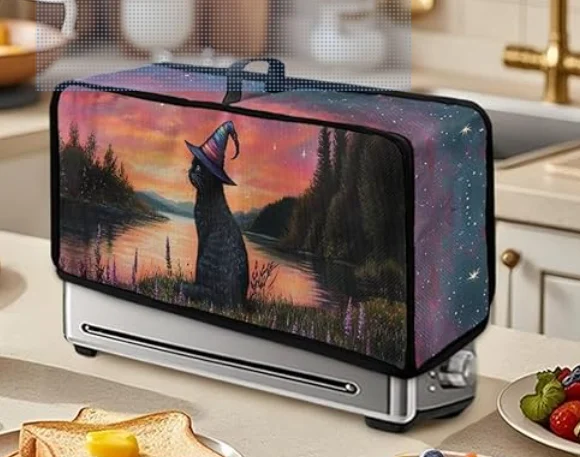
The product catalog itself exemplified this unpredictable reward mechanism. Reviewers might sift through endless pages of "pink plastic disposable party plates" or a "toaster cover with a cat wearing a witch hat," only to occasionally stumble upon a high-value item like a contractor-grade extension cord, quality light fixtures, or even an EV charger. This intermittent reinforcement strengthened the habit loop, keeping reviewers engaged despite the low hit rate for truly desirable items.
The Downfall of Frugality: Overconsumption and Environmental Impact
The insidious nature of the Vine program eventually became apparent. MMM found himself checking the Vine page daily, not out of necessity, but out of habit and the addictive pull of potential "scores." The constant influx of packages led to an overflowing recycling bin, a direct contradiction to his long-standing commitment to minimizing waste and environmental impact. His son and girlfriend, noticing the proliferation of frivolous purchases, began to playfully mock his consumerism, prompting him to discreetly conceal incoming boxes to avoid scrutiny.

This period marked a "consumerism bender," where the allure of "free" overridden his ingrained frugality instincts. The time spent sifting through products, ordering, unpacking, photographing, and writing reviews—a process he streamlined into weekly batch sessions—was time he would have preferred to dedicate to more meaningful pursuits. The realization dawned that for every questionable item acquired, he was contributing to manufacturing pollution and packaging waste, undermining the very ethos of his blog.
Recovery and the Reclamation of Autonomy
Eventually, MMM entered a recovery phase. He recognized that his Vine engagement had become a form of "laziness and procrastination," an easy online activity masquerading as productivity, distracting him from the activities that genuinely enriched his life. The intrinsic value he placed on physical activity, progress on construction projects, and focused creative work—like writing his blog—ultimately served as anchors to pull him back from the gravitational pull of the Vine program.

The program’s inherent frustrations also contributed to his disengagement. The deliberately "reviewer-unfriendly features," such as a subpar search function and the absence of filtering options, highlighted the program’s disregard for reviewers’ time. These design choices, aimed at forcing comprehensive browsing, reinforced the perception of reviewers as mere cogs in a larger machine. Furthermore, the "hilariously bureaucratic AI-based evaluation system," which often flagged innocuous reviews for arbitrary "Community Standards" violations without explanation, added a layer of tedious, unrewarding work. This reminded him of his previous "Uber Driving experiment," where he observed countless inefficiencies but lacked the authority to implement improvements.
The True Cost: Taxes and the Price of "Free"
A critical, often overlooked aspect of Amazon Vine is the tax implication. The program stipulates that participants receive a 1099-NEC form for the retail value of all "free" items received, making them taxable income. For MMM, with a marginal tax rate of approximately 25%, this meant an initial tax burden of up to $1,750 on an estimated $7,000 worth of items received in 2025.

However, a crucial piece of information, shared by astute readers, revealed a potential mitigation strategy: in many cases, the estimated value of reviewed products can be marked down by 80% before declaring it. This adjustment acknowledges the diminished resale value of an item once it has been opened, used for review, and potentially documented. Applying this rule drastically reduced MMM’s potential tax liability from $250 on "pure nonsense" to a mere $50, underscoring the complexities of valuing these "free" goods. While approximately 75% of his acquisitions were legitimate business expenses (construction supplies for jobs or HQ renovations), effectively converting into real income, the remaining portion highlighted the financial penalty for impulsive, unnecessary acquisitions.
Broader Implications: The Gig Economy and "Fuck You Money"
MMM’s Vine experience resonated deeply with his understanding of the modern workforce, particularly the gig economy. The program, with its set tasks, rigid rules, and lack of reviewer agency, mirrored the experience of many conventional jobs. It underscored the value of "Fuck You Money" – the financial independence that allows individuals the freedom to choose their work, define their terms, and avoid being subjected to systems they didn’t create or can’t influence. His preference for "being the boss" after two decades of financial independence was starkly reinforced by this foray into what felt like low-wage, bureaucratic labor.

The saga also offered a parallel to the "One More Year Syndrome," a phenomenon MMM frequently observes where financially independent individuals continue working beyond necessity, often due to ingrained habits, fear of the unknown, or a subtle addiction to the structured rewards of employment. The compulsive checking of Vine for "scores" mirrored the habitual engagement with work, even when the underlying motivation had shifted from necessity to psychological conditioning.
Epilogue: A Return to Badassity
In the wake of this insightful experiment, MMM did not formally cancel his Amazon Vine account. Instead, he employed a "Keystone Habit" trick, redirecting the browser bookmark for the Vine page to his "Badassity Tracker"—a personal chart designed to promote daily productive habits. Now, clicking the former Vine link serves as a prompt to engage in physical exercise, effectively overriding the temptation to browse for new "freebies."

This candid recounting of his Vine experience, while potentially violating the program’s non-disclosure terms ("the first rule of Vine is to not talk about Vine"), serves a greater purpose. It offers a valuable, real-world lesson in habits, addiction, and the pervasive influence of modern platforms on consumer behavior. MMM’s journey underscores the importance of continuous self-reflection, questioning one’s assumptions and patterns, and actively seeking feedback from trusted individuals. As he frequently emphasizes, perfection is not the goal; rather, it is the consistent effort to make small, deliberate course corrections that ultimately shape a more fulfilling and aligned life journey.
The heated vest, the innocuous starting point of this nine-month odyssey, remains a beloved and functional item, serving its purpose of keeping MMM warm in a cooler house. But the true lasting impact of his Amazon Vine experience is a renewed vigilance against the subtle seductions of convenience and perceived value, and a deepened appreciation for the hard-won autonomy that financial independence affords.

