
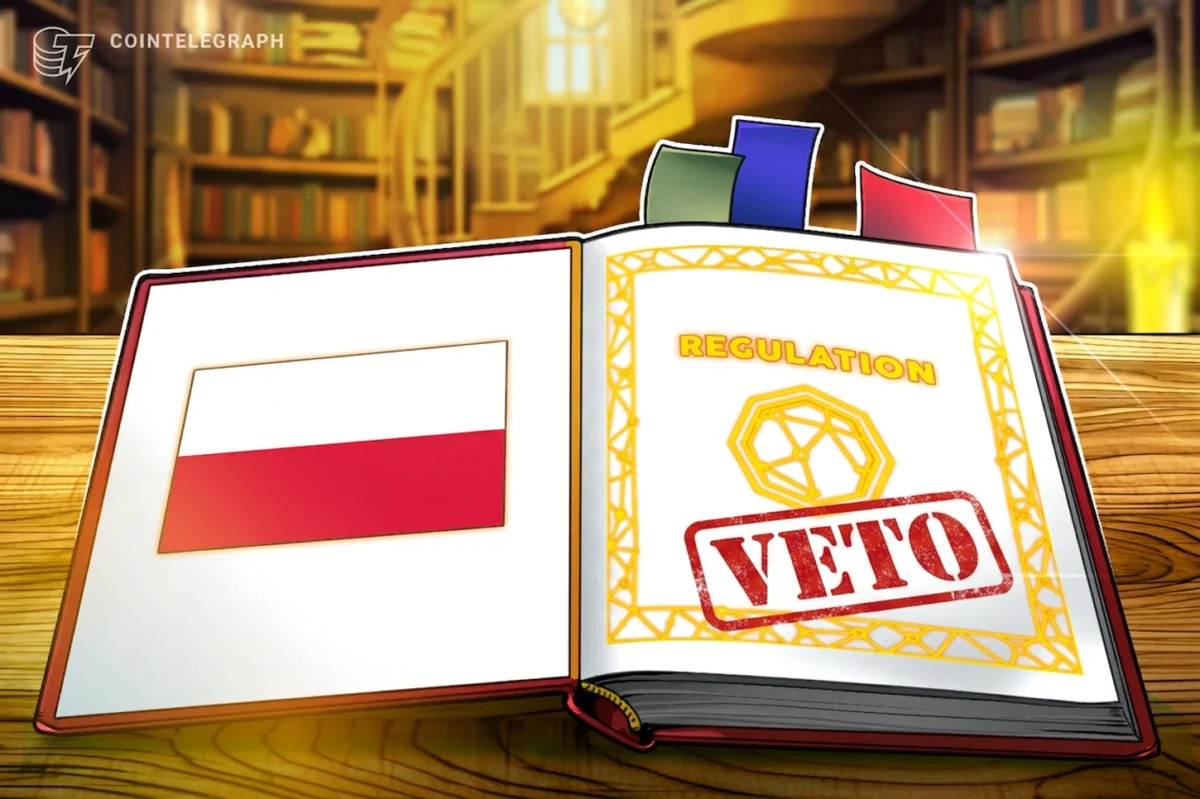
Polish lawmakers have once again failed to muster the supermajority required to override President Andrzej Duda’s veto of legislation designed to bolster oversight of the nation’s cryptocurrency market. The Sejm, Poland’s lower house of parliament, on Friday voted 241 in favor of overriding the veto, with 198 against and three abstentions. This fell significantly short of the 266 votes necessary, marking the latest setback in a protracted regulatory dispute that has left Poland without a designated authority to implement the European Union’s landmark Markets in Crypto-Assets Regulation (MiCA).
This latest legislative defeat comes at a critical juncture, as the country grapples with an escalating scandal involving the defunct cryptocurrency exchange Zondacrypto. The exchange’s Estonian operator has been declared bankrupt, and Prime Minister Donald Tusk has pointed to an expanding criminal investigation, citing alleged corruption and attempts to influence political figures, as a compelling reason for stricter crypto market supervision. The repeated vetoes by President Duda, who has thrice rejected similar crypto legislation, underscore a fundamental disagreement over the scope and nature of regulatory intervention, with the President expressing concerns that the proposed rules would excessively burden the industry and infringe upon fundamental freedoms.
A Legislative Impasse: The Road to the Latest Veto
The legislative journey to establish a robust framework for crypto asset supervision in Poland has been fraught with challenges. The bill that faced its most recent presidential veto was intended to transpose the EU’s MiCA regulation into national law. MiCA, a comprehensive regulatory framework for crypto-assets, aims to harmonize rules across member states, enhance investor protection, and ensure market integrity. A key component of the proposed Polish legislation was the designation of the Polish Financial Supervision Authority (KNF) as the primary supervisory body for the crypto market.
However, President Duda has consistently voiced objections to the bill. His primary arguments have centered on concerns about overregulation, the potential for excessive administrative burdens on businesses, and the extent of authorities’ powers, particularly regarding website blocking. In previous vetoes, he had cited the need for a more balanced approach that fosters innovation while ensuring consumer protection, suggesting that the proposed measures were too draconian. His office has indicated support for crypto regulation in principle but has found the specific provisions of the legislative proposals to be problematic.
The KNF, acknowledging the ongoing impasse, issued a statement on Friday confirming that Poland currently lacks a designated national authority responsible for supervising the cryptoasset market. This situation is particularly significant as MiCA has already come into effect across the European Union, creating a regulatory vacuum in Poland that could potentially lead to companies seeking regulatory arbitrage in other EU jurisdictions or operating with a degree of uncertainty.
The Zondacrypto Scandal: Fueling the Regulatory Fire
The protracted debate over crypto regulation has been significantly amplified by a deepening scandal involving Zondacrypto, once a prominent cryptocurrency exchange operating in Poland. The exchange’s Estonian operator, BB Trade Estonia, was officially declared bankrupt by an Estonian court in August, with the first creditors’ meeting scheduled for September 17. This bankruptcy has triggered investigations into alleged fraud and money laundering, with Polish prosecutors estimating that losses linked to Zondacrypto amount to no less than 350 million Polish zlotys (approximately $95 million).
The investigation into Zondacrypto has taken a politically charged turn, with Prime Minister Donald Tusk revealing excerpts of testimony from a key witness. These revelations suggest potential links between the exchange and attempts to influence politicians, particularly those associated with the previous government. Tusk disclosed allegations of a 2 million Polish zloty (approximately $550,000) payment arrangement involving a foundation connected to former Justice Minister Zbigniew Ziobro. Furthermore, the witness reportedly claimed that an unnamed individual had promised to secure a presidential pardon in the event of a conviction.
These allegations have intensified the pressure on the government to implement stricter regulatory measures for the crypto sector. Prime Minister Tusk has used these disclosures to argue for more robust oversight, framing the issue as a matter of national security and clean governance. The ongoing criminal investigation also involves the 2022 disappearance of Sylwester Suszek, the founder of BitBay, which was later rebranded as Zondacrypto. Prosecutors merged this case with the Zondacrypto fraud probe in July, indicating the scale and complexity of the alleged illicit activities. The charging of the Polish Olympic chief in connection with the Zondacrypto probe further highlights the far-reaching implications of the scandal.
Broader Implications and the Path Forward
The failure to override President Duda’s veto has several significant implications for Poland’s financial landscape and its position within the European Union’s regulatory architecture.
- Regulatory Uncertainty and Investment Climate: The continued absence of a clear national regulatory framework for crypto assets creates an environment of uncertainty for both domestic and international investors. Companies operating in or looking to enter the Polish crypto market may face difficulties in navigating compliance requirements, potentially hindering innovation and investment. The delay also leaves Polish consumers less protected from the risks associated with unregulated crypto activities.
- MiCA Implementation Challenges: Poland’s inability to designate a supervisory authority for crypto assets means it is not fully compliant with the EU’s MiCA regulation, which has overarching implications for market access and cross-border operations within the bloc. This could place Polish entities at a disadvantage compared to their counterparts in other member states that have successfully implemented the regulation.
- Political Ramifications: The intertwined nature of the crypto regulatory debate and the Zondacrypto scandal has become a focal point of political discourse. The government’s push for stricter regulations is being framed as a response to alleged corruption and a commitment to financial integrity. The opposition, however, may view the veto as a defense of individual liberties and a protection against overreach by state authorities. This dynamic is likely to shape future political battles and potentially influence electoral outcomes.
- Evolving Global Regulatory Landscape: The challenges faced by Poland are not unique. Many jurisdictions are grappling with how to effectively regulate the rapidly evolving crypto space. The Zondacrypto scandal serves as a stark reminder of the potential for illicit activities within the sector and the critical need for robust oversight. As global regulatory frameworks continue to develop, Poland’s delayed response could impact its ability to influence international standards and maintain its competitiveness.
The current situation highlights a fundamental tension between the desire to foster technological innovation and the imperative to safeguard financial stability and protect consumers from fraud and illicit activities. The repeated vetoes by President Duda suggest that a legislative consensus remains elusive. Future attempts to pass crypto legislation will likely require significant compromises and a careful recalibration of the proposed measures to address the President’s concerns while still meeting the objectives of enhanced market oversight.
The unfolding Zondacrypto investigation, with its allegations of corruption and large-scale financial malfeasance, is expected to exert continued pressure on policymakers. The Prime Minister’s public disclosures underscore the gravity of the situation and the political will to pursue accountability. It is plausible that the government may attempt to frame future legislative proposals as a direct response to the findings of the criminal investigation, potentially garnering broader support for stricter measures.
The Polish Financial Supervision Authority’s confirmation of the lack of a designated supervisor underscores the practical consequences of the legislative deadlock. The KNF, as a key financial regulator, is likely to be at the forefront of efforts to establish an effective supervisory regime once a legislative framework is in place. Its role will be crucial in implementing and enforcing the provisions of MiCA and ensuring a secure and transparent crypto market in Poland.
In conclusion, Poland’s crypto market finds itself in a precarious regulatory limbo. The presidential vetoes, coupled with the escalating Zondacrypto scandal, have created a complex and politically charged environment. The path forward will require a delicate balancing act, navigating the divergent views on regulation, addressing the public’s demand for accountability, and ultimately, establishing a framework that can effectively integrate Poland into the European Union’s harmonized approach to crypto-asset regulation while fostering a responsible and secure market. The coming months are likely to be crucial in determining the future trajectory of crypto regulation in Poland.

