
The burgeoning PropTech sector, characterized by rapid innovation and fierce competition, faces a critical juncture: the development of robust, reliable real estate data infrastructure. While essential for delivering trustworthy property analytics and investment insights, the internal construction of such systems can be a protracted and resource-intensive endeavor. This often leads to a significant delay in time-to-market, a critical disadvantage in today’s fast-paced digital landscape. Consequently, a growing number of PropTech companies are turning to strategic partnerships with specialized data providers, leveraging Real Estate Data APIs as a more efficient and scalable alternative to in-house development.
The decision to "build versus buy" when it comes to data infrastructure is a pivotal one for any growing technology company. In theory, an in-house solution offers unparalleled control and customization. However, the practical realities of acquiring, cleaning, normalizing, and continuously maintaining nationwide property data present formidable challenges. These include substantial upfront investments in engineering talent, data licensing agreements, and ongoing operational overhead. What begins as a promising product feature can quickly transform into a complex, long-term operational responsibility, diverting valuable resources away from core product innovation.
The Hidden Costs and Time Sinks of Building In-House Data Infrastructure
The allure of complete control over data pipelines and analytics is often overshadowed by the significant hidden costs and the inherent delays associated with building an internal real estate data infrastructure. Developing the necessary expertise to collect, validate, and normalize vast quantities of property data across diverse markets demands specialized skill sets that are both in high demand and expensive to acquire. This includes data engineers, analysts, and compliance specialists, all of whom require significant time to onboard and become fully productive.
The process itself is inherently time-consuming. Sourcing data from disparate sources, often governed by varying licensing terms and update cycles—such as fragmented Multiple Listing Service (MLS) databases across different regions—can take months. Ensuring data consistency and accuracy across thousands of locations, especially when incorporating rental analytics and short-term rental performance metrics, requires continuous effort. This meticulous work directly impacts product development timelines, pushing back the launch of critical features and delaying measurable progress.
A comparative analysis of building versus partnering reveals stark differences in speed and cost:
| Factor | Building Internally | Partnering via API (e.g., Mashvisor) |
|---|---|---|
| Time to Launch | 6-12+ months | Weeks |
| Upfront Cost | High hiring & infrastructure | Predictable, usage-based |
| Data Maintenance | Internal responsibility | Managed by API provider |
| Coverage Expansion | Slow & manual | Immediate scalability |
| Engineering Focus | Data pipelines | Product innovation |
This table highlights the significant advantage in speed and resource allocation offered by API partnerships. The substantial time investment required for internal data infrastructure development means that companies are essentially dedicating a year or more to a foundational element that, while crucial, may not be their core competitive differentiator. In today’s dynamic PropTech market, such extended implementation periods can lead to lost market share and a diminished competitive edge.
Navigating the Complexities of Data Licensing, Compliance, and Maintenance
The U.S. real estate market is notoriously fragmented. Each state, and often each county or local jurisdiction, has its own data governance and access protocols. Navigating these complexities, particularly the intricacies of MLS data licensing, is a substantial undertaking. Ensuring compliance with varying data usage rights, privacy regulations, and reporting requirements across multiple markets adds another layer of operational burden.
Furthermore, the inclusion of rental analytics and short-term rental performance data, akin to what specialized APIs like Airbnb data APIs provide, introduces further complexity. Maintaining accurate, up-to-date datasets that reflect dynamic rental yields, occupancy rates, and market trends across a vast number of locations requires constant vigilance. Without dedicated, specialized teams focused solely on this task, data accuracy can falter, eroding user trust and impacting the reliability of the platform’s insights. This is a continuous cycle, demanding ongoing investment in technology and personnel, which can become unsustainable for rapidly scaling businesses.
The 12-Month Time-to-Market Hurdle and the Shift Towards Partnerships
The challenge of a 12-month (or longer) implementation timeline for essential data infrastructure is a significant risk for PropTech firms. This extended period means delaying customer acquisition, foregoing early revenue streams, and potentially missing crucial market windows. Competitors who can deliver value faster are likely to capture market share. This reality has prompted a strategic shift: companies are increasingly looking for ways to access sophisticated real estate data without the immense undertaking of building it themselves. The solution lies in integrating existing, robust solutions and reallocating engineering resources to areas that directly enhance product differentiation and customer experience.
This trend underscores the growing importance of strategic partnerships. The question then becomes: what does a practical collaboration with a dedicated real estate data provider entail?
The Power of a Real Estate Data API Partnership: Unlocking Speed and Scalability with Mashvisor
Recognizing the inherent difficulties and costs associated with building internal data infrastructure, many PropTech companies are opting for a more agile and reliable alternative: a real estate data API partnership. This approach allows businesses to seamlessly integrate pre-existing, meticulously structured datasets directly into their platforms. Data acquisition and management, once a significant engineering hurdle, transforms into an empowering capability that fuels product innovation.
Seamless Plug-and-Play API Integration for Rapid Deployment
Mashvisor’s Real Estate Data API is engineered for straightforward integration, providing immediate access to a comprehensive suite of property analytics, rental insights, and investment metrics without the need for building complex data pipelines. PropTech platforms can leverage standardized API endpoints that deliver consistent, analytics-ready information. This streamlined approach significantly reduces development complexity. Instead of wrestling with data aggregation and normalization, integration efforts can focus on connecting these powerful data streams to existing product workflows, accelerating the journey from concept to deployment.
For developers and product managers, this means spending less time on data infrastructure and more time on crafting user experiences and innovative features. Comprehensive documentation, including detailed API specifications, is readily available, outlining available endpoints, datasets, and integration capabilities, enabling technical teams to quickly assess and implement the necessary connections.
Unified Access to Property, Rental, and Short-Term Rental Analytics
A key advantage of partnering with an established real estate data provider like Mashvisor is access to a broad and deep spectrum of data. Mashvisor consolidates traditional property data with detailed insights into rental performance and short-term rental (STR) analytics. This unified approach allows platforms to deliver richer market intelligence through a single, powerful API. The Mashvisor API typically encompasses a wide array of critical data points, including:
- Property Details: Comprehensive information on individual properties, including features, size, location, and ownership history.
- Market Trends: Data on average property values, price appreciation, and sales volume across various geographic areas.
- Rental Income Projections: Estimated monthly rental income based on comparable properties and market demand.
- Occupancy Rates: Historical and projected occupancy rates for both long-term and short-term rentals.
- Investment Metrics: Key performance indicators such as cash-on-cash return, cap rate, and potential ROI for investment properties.
- Short-Term Rental Performance: Data on daily rates, booking trends, and revenue potential for properties listed on platforms like Airbnb.
- Neighborhood and Area Analysis: Insights into local amenities, school districts, crime rates, and demographic data that influence property value and rental demand.
By consolidating these diverse data layers into a single system, businesses can avoid the operational overhead and potential inconsistencies associated with managing multiple vendors or disparate datasets. This unified data approach ensures that users receive comprehensive, reliable analytics from a single, trusted source.

Purpose-Built for PropTech Platforms and Real Estate Marketplaces
Mashvisor’s data API is specifically tailored for businesses that prioritize product enhancement and customer value over becoming data infrastructure experts. The API functions as a foundational layer of intelligence rather than a standalone interface. This architecture empowers partners to maintain complete control over their brand identity, user experience (UX), and overall product strategy. Simultaneously, they benefit from scalable, continuously updated datasets that are essential for delivering competitive analytics. This approach positions Mashvisor as a leading real estate data API solution for companies seeking efficient, reliable data integration without the burden of lengthy development cycles.
Moreover, these partnerships fundamentally alter the timeline for launching and scaling new features.
Accelerating Time-to-Market: Launching Features in Weeks, Not Months
In the PropTech realm, speed is not merely an advantage; it is often a prerequisite for survival and success. Markets evolve at an unprecedented pace, user expectations are constantly rising, and competitors are continually introducing novel features. Integrating a real estate investment data API directly addresses this need for agility, enabling companies to transition from concept to market-ready product with remarkable speed.
Streamlining Product Development Cycles
By granting immediate access to curated, ready-to-use datasets, API integration allows development teams to bypass the laborious months spent on data sourcing, cleaning, and validation. Engineers can instead dedicate their efforts to building sophisticated, user-facing tools powered by accurate and reliable property analytics. This dramatic reduction in the time-to-market for real estate platforms empowers companies to rapidly test new ideas, launch innovative analytics tools, and iterate based on invaluable user feedback, rather than being constrained by infrastructure limitations.
A comparative view of data access strategies highlights this efficiency:
| State | Internal Build | Mashvisor API Integration |
|---|---|---|
| Data Sourcing | Months | Immediate access |
| Infrastructure Setup | Extensive | Minimal |
| Testing | Long cycles | Faster iteration |
| Feature Launch | Delayed | Fast |
Scalable Growth Without Infrastructure Overhaul
Business expansion, such as entering new geographic markets or serving an exponentially larger user base, presents significant challenges for companies that have built their data infrastructure internally. In contrast, solutions designed for scalability, like API partnerships, allow companies to expand their operational reach instantaneously. Mashvisor’s nationwide real estate data coverage enables platforms to grow geographically without introducing additional operational complexity or requiring extensive re-engineering of their data systems.
The economic model for such partnerships is also designed to be scalable. A usage-based pricing structure ensures that costs align directly with actual data consumption, allowing companies to manage their expenses effectively as their business scales. This financial predictability is invaluable for startups and growing enterprises alike.
Empowering Engineering Teams to Focus on Core Product Value
When data infrastructure is handled by a specialized partner, internal engineering teams are freed to concentrate on strategic initiatives that drive differentiation. This includes enhancing user experience, pioneering new analytical capabilities, and optimizing the overall customer journey—all critical factors for sustained growth. This operational efficiency is a primary motivator for businesses choosing an API data partnership model for their real estate platforms. The ability to build and launch products faster, coupled with the assurance of data accuracy, compliance, and long-term scalability, creates a powerful competitive advantage.
Ensuring Compliance, Coverage, and Scale Without Operational Overhead
While rapid product launches are crucial, sustained success hinges on data quality, reliability, and compliance. Real estate platforms must deliver consistent, accurate data to maintain customer trust. Building and maintaining these standards internally can become an increasingly complex and costly undertaking as a business grows.
A strategic data partnership with Mashvisor addresses these critical concerns head-on:
Comprehensive Nationwide Real Estate Data Coverage
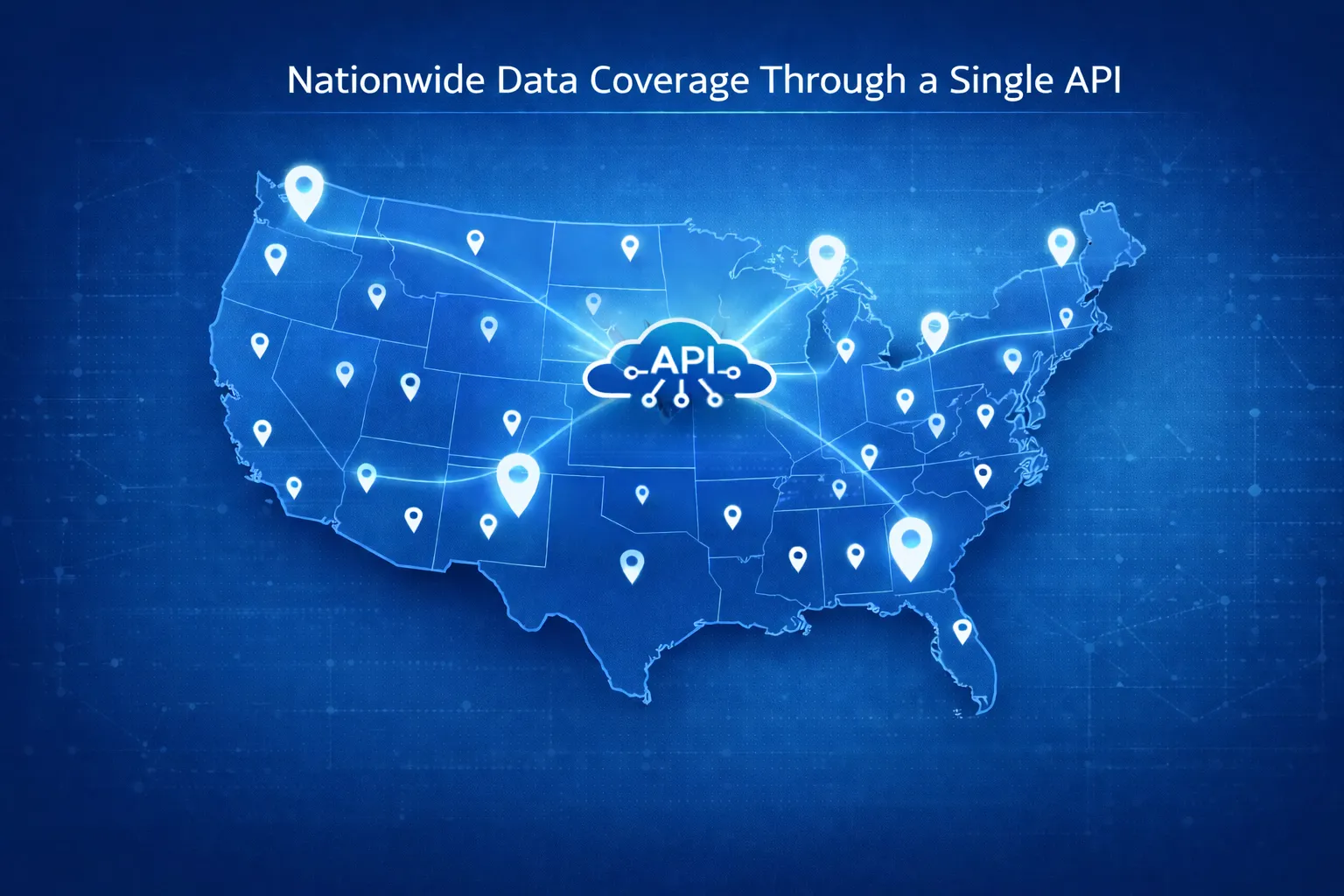
This type of partnership eliminates the need to painstakingly assemble datasets on a market-by-market basis. Mashvisor provides nationwide coverage, enabling platforms to offer their users consistent insights across diverse locations without the burden of managing multiple vendors or complex integrations. This unified data structure ensures that market analytics remain comparable, a fundamental requirement for data-driven tools serving a broad user base at scale.
Continuous Data Updates and Proactive Maintenance
The real estate market is in perpetual motion. Listings are updated, rental performance fluctuates, and market conditions evolve weekly. Maintaining accurate internal datasets demands continuous monitoring, validation, and updates. Through a partnership with Mashvisor, the heavy lifting of data aggregation, normalization, and updating is managed externally. Partners receive structured datasets that are immediately ready for analysis, significantly reducing their operational burden. This consistent delivery of reliable data enables teams to provide dependable long-term rental and short-term rental analytics without dedicating internal resources to these complex tasks.
Simplified Compliance and API Data Licensing
Data compliance is an often-underestimated aspect of product development that becomes paramount as a business scales. Managing API data licensing, permissions, and usage requirements across numerous disparate data sources can introduce significant legal and operational risks. A well-structured data integration partnership mitigates these risks. Companies can rely on an infrastructure designed to proactively manage licensing considerations and ensure data standardization, allowing their internal teams to focus on core product development and strategic growth initiatives.
With the foundational elements of reliability, comprehensive coverage, and robust compliance addressed, the next logical question is: which specific companies stand to gain the most from such a strategic partnership?
The Primary Beneficiaries of a Mashvisor Data Partnership
While a wide array of real estate industry businesses can benefit from Mashvisor’s API, the value proposition is particularly strong for PropTech companies and platforms focused on data-driven insights.
PropTech Startups: Rapid MVP Launch and Validation
Startups operate under immense pressure to validate their business models and achieve product-market fit swiftly. Building internal datasets can severely impede early development and consume scarce engineering resources. Leveraging PropTech API solutions, such as Mashvisor’s, allows startups to bypass the need for an in-house data team and launch minimum viable products (MVPs) with professional-grade insights in a fraction of the time. This accelerates their ability to test market demand, onboard early adopters, and refine their offerings based on real-world usage.
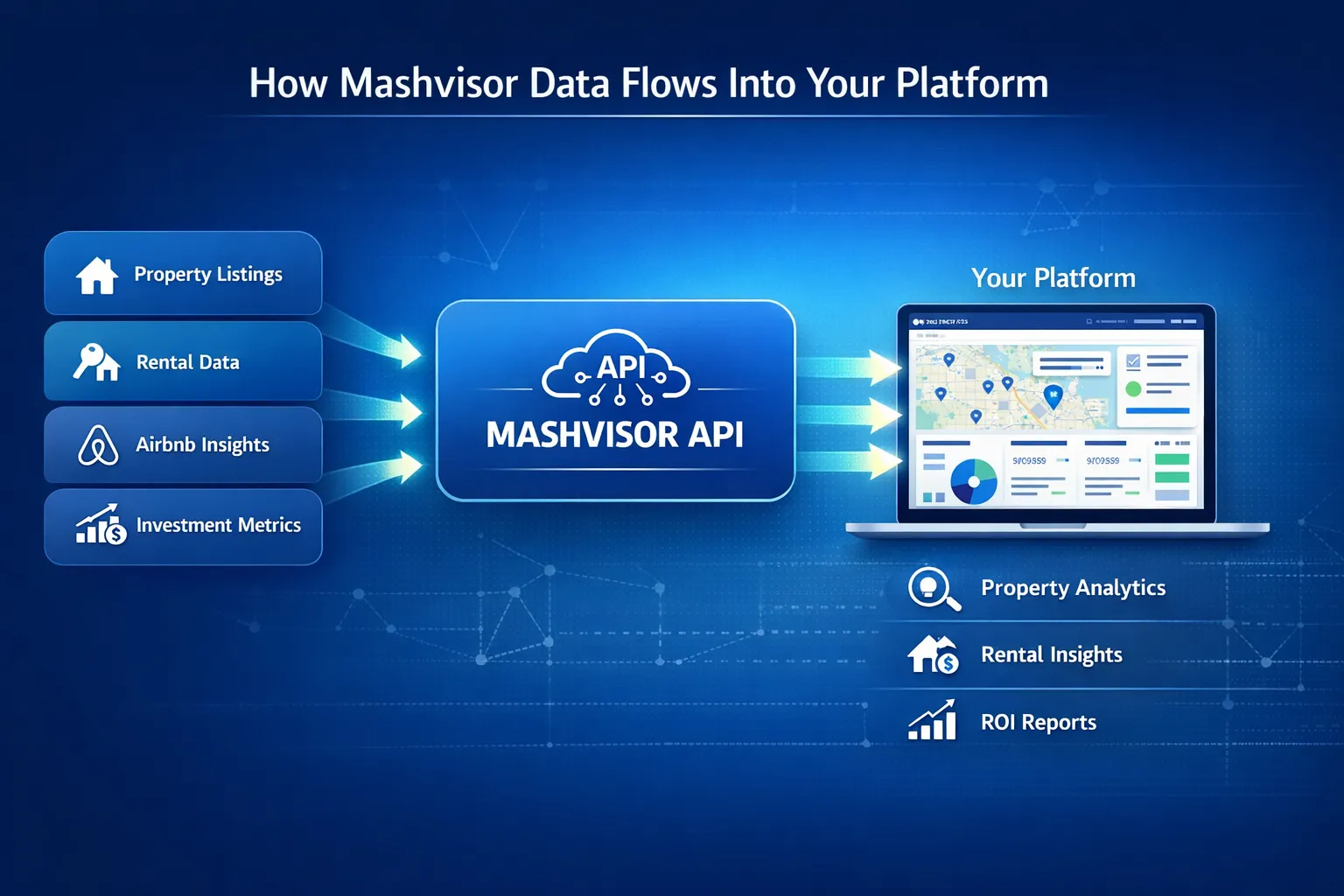
A notable mini-case study illustrates this impact: One PropTech startup successfully launched a short-term rental (STR) deal validation engine in under 48 hours by integrating Mashvisor’s API. Instead of dedicating months to building data pipelines, sourcing nationwide listings, and normalizing rental performance data, their engineering team focused exclusively on product development and user experience. This allowed for rapid market validation and user acquisition without the significant overhead of building a data team or negotiating multiple data licenses.
Real Estate Marketplaces: Enhancing Value Beyond Listings
Property marketplaces and listing platforms are increasingly competing on the depth of insights they provide, not just the quantity of inventory. Integrating analytics powered by a trusted real estate API provider enables these platforms to offer significantly more value to their users. This can include detailed investment potential assessments, projected rental income figures, and comparative market analysis, moving beyond simple property listings to become indispensable tools for informed decision-making.
Investment Platforms and SaaS Tools: Delivering Advanced Analytics
Platforms catering to real estate investors, brokers, and property managers require sophisticated property analytics across multiple markets. An API integration allows these businesses to deliver crucial metrics such as return on investment (ROI), rental yield projections, and comprehensive market performance insights through a single, unified interface. This facilitates scalable product growth while maintaining a high standard of data consistency and quality.
AI and Analytics Platforms: Integrating Property Intelligence Seamlessly
Artificial intelligence (AI) and advanced analytics platforms are increasingly turning to API data partnerships as a strategic method for integrating structured datasets into their models and dashboards. Rather than building entirely new data pipelines from scratch, companies can leverage Mashvisor’s standardized outputs and broad market coverage to incorporate real estate intelligence into their recommendation engines, forecasting tools, and analytics applications with minimal additional infrastructure investment.
A summary of typical users and their primary benefits highlights the widespread applicability:
| Platform Type | Main Benefit |
|---|---|
| PropTech Startups | Faster MVP launch, market validation |
| Property Marketplaces | Enhanced user value, competitive edge |
| Investment Platforms/SaaS | Deep investment insights, scalability |
| AI Platforms | Seamless integration of structured data |
Who This Partnership is NOT For
While the benefits are substantial, a real estate data API partnership with Mashvisor may not be the ideal solution for every entity. It is generally not suited for:
- Companies seeking to build a core competency in data aggregation and management as their primary business model.
- Organizations requiring highly bespoke, granular data that is not available through standard API offerings.
- Businesses that have no immediate need for real estate data or are in the very nascent stages of conceptualization without immediate development plans.
Mashvisor’s offering is strategically designed for teams focused on building production-grade tools, platforms, and workflows that depend on reliable, continuously updated data to serve their end-users effectively.
The Bottom Line: Strategic Partnerships Drive Growth and Efficiency
A real estate data API partnership with Mashvisor offers a compelling alternative to the arduous process of building and maintaining proprietary data infrastructure. By integrating production-ready datasets, businesses gain access to scalable analytics, comprehensive national market coverage, and dependable property intelligence without the significant operational overhead. The usage-based pricing model ensures that companies pay only for the data they utilize, making it a cost-effective solution that scales with their business needs.
Ultimately, by entrusting data aggregation, updates, and infrastructure management to a specialized provider, companies empower their engineering teams to concentrate on core product development and strategic growth initiatives. This symbiotic relationship fosters innovation, accelerates time-to-market, and ensures that businesses can deliver high-value, data-driven solutions in the competitive PropTech landscape.
For companies contemplating their data stack strategy, a direct conversation with data experts can illuminate the most effective path forward. Whether an API partnership is the immediate solution or a future consideration, understanding how it aligns with product roadmaps and launch timelines is crucial for strategic planning.
Frequently Asked Questions
What Is a Real Estate Data API Partnership?
A real estate data API partnership involves integrating market and property datasets directly into a company’s products through an API, bypassing the need to build and maintain in-house data infrastructure. This facilitates faster access to analytics and reduces engineering and operational complexity.
Why Partner with Mashvisor Instead of Building Your Own Real Estate Data Team?
Building an internal data system demands substantial time, significant hiring efforts, and continuous maintenance. Partnering with a specialized provider like Mashvisor delivers ready-to-use datasets and enables faster product launches with considerably lower overhead and operational burden.
How Long Does a Real Estate API Integration Take?
Most API integrations can be completed within a couple of weeks, though the exact timeline depends on the complexity of the integrating product. This is significantly faster than the months typically required to develop internal data pipelines from scratch.
What Does the Mashvisor API Provide?
The Mashvisor API offers a comprehensive suite of property data, including rental income estimates, investment metrics, and short-term rental insights. It covers both current data and historical data spanning up to 36 months.
Who Should Use a Real Estate Analytics API?
PropTech startups, real estate marketplaces, investment-focused SaaS platforms, and advanced analytics tools are among the primary beneficiaries of a real estate analytics API like Mashvisor’s.
Can Startups Afford a Real Estate Data API Partnership?
Yes, Mashvisor’s usage-based access model allows startups to scale their data costs in alignment with actual data consumption. This affordability makes the real estate data API accessible even for early-stage platforms with limited budgets.

