
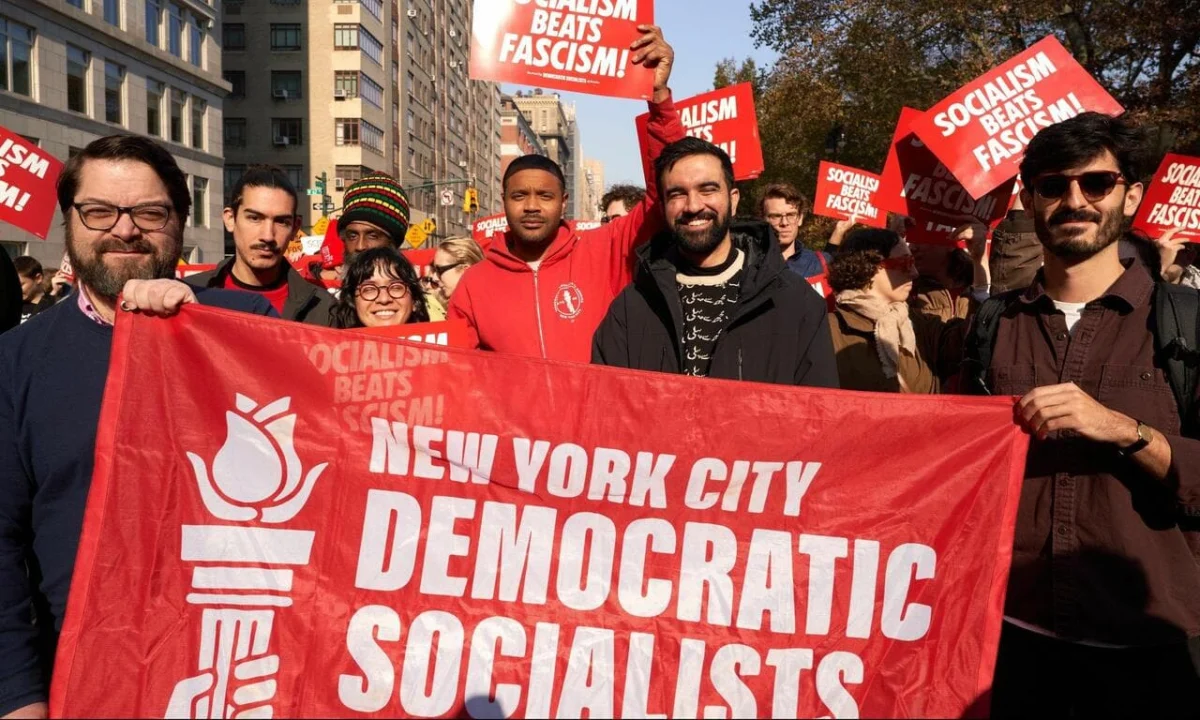
A recent investigation by the New York Post has cast a spotlight on the personal real estate holdings of prominent figures within New York City’s Democratic Socialists of America (NYC-DSA), revealing that two of its leading members reside in Brooklyn apartments that critics contend are far removed from the economic realities faced by the working-class Americans they advocate for. This latest exposé forms part of an ongoing audit by the publication into the personal finances of key individuals in the organization, which has notably influenced the political landscape of New York, including the rise of figures like Assemblymember Zohran Mamdani. The revelations have ignited a renewed debate about the perceived ideological consistency of socialist leaders, particularly concerning wealth, property ownership, and the housing crisis gripping one of the world’s most expensive cities.
Unveiling the Discrepancy: Luxury Living Amidst Socialist Advocacy
The New York Post‘s recent reports detail the housing situations of two high-ranking NYC-DSA members: Julie Swoope, chair of the group’s steering committee, and Olivia Gonzalez Killingsworth, its labor coordinator. Their living arrangements and financial backgrounds, as presented, appear to starkly contrast with the organization’s platform, which explicitly calls for a "redistribution of land from the landowners to the landless" and the expropriation of property from capitalists for the benefit of the working class. This perceived dichotomy has drawn sharp criticism from political opponents and prompted questions regarding the practical application of socialist principles by those who champion them.
Julie Swoope, a central figure in the NYC-DSA’s leadership, reportedly purchased a one-bedroom co-op in Brooklyn in 2021 for $510,000. This property, located mere blocks from the verdant expanse of Prospect Park, was acquired outright, without the need for a mortgage. The listing for Swoope’s apartment reportedly highlighted desirable features such as "skyline views and great closet space," amenities that typically signify a certain level of comfort and financial stability beyond the reach of many average New Yorkers. For context, the median price for a one-bedroom co-op in Brooklyn in 2021 hovered around $450,000 to $550,000, making Swoope’s purchase align with the upper-middle segment of the market, a price point often unattainable for individuals without significant personal wealth or substantial family support.
Further complicating the narrative is the background of Swoope’s family. The Post cited an obituary indicating that her mother, artist Gail Cunningham Swoope, spent years traveling aboard a live-aboard sailboat and was a member of the New Smyrna Beach Boat and Ski Club. Such details, while not directly tied to Julie Swoope’s personal finances, are presented as contributing to an image that deviates from a purely working-class upbringing, a common foundation often associated with socialist movements. The implication is that a privileged background might have provided the financial cushioning necessary for an outright property purchase in a competitive market like New York City.
A Multi-Million Dollar Transaction and a Swift Reinvestment

The case of Olivia Gonzalez Killingsworth, elected as the NYC-DSA’s labor coordinator in 2025, presents an even more pronounced financial narrative. Killingsworth, who also operates her own bookkeeping business and has a background as an actor and singer, was involved in the sale of a significant property in September 2022. She sold an Upper West Side triplex, located in a brownstone building just a block from Central Park, for a substantial $2.4 million. This two-bedroom, three-bathroom unit represents a segment of the New York real estate market that is unequivocally luxurious, with average triplex prices in the Upper West Side easily ranging into the multi-million-dollar category.
The Post‘s investigation further revealed that Killingsworth did not acquire this high-value property through market purchase but rather inherited it from her aunt, Elizabeth, who passed away in 2018. The sale was executed alongside other relatives, implying a collective benefit from a substantial estate. Just two days after the multi-million-dollar sale, on September 14, 2022, Killingsworth completed the purchase of a one-bedroom apartment in Brooklyn for $521,000. This swift sequence of events – liquidating an inherited, multi-million-dollar Manhattan property and immediately reinvesting a portion of the proceeds into another New York apartment – has been highlighted as particularly problematic by critics. It suggests a financial maneuverability and access to capital that is a "fantasy" for the majority of working-class New Yorkers who struggle to afford even modest rental accommodations, let alone outright property ownership.
A Pattern Emerges: The "Running Audit" and Previous Revelations
These latest disclosures are not isolated incidents but rather the third in a series of similar reports by the New York Post, creating what the publication terms a "running audit" of the NYC-DSA’s top brass. Less than two weeks prior to the reports on Swoope and Killingsworth, the Post had revealed that NYC-DSA co-chair Gustavo Gordillo, a Yale-trained sculptor who identifies as a "union electrician," resides in a $1.5 million Bed-Stuy townhouse. This property, it was reported, was purchased and renovated by his parents’ LLC.
The revelation concerning Gordillo led to immediate repercussions, including a Department of Buildings stop-work order on the property due to permitless renovations and a subsequent $2,500 fine. This incident further fueled criticisms of perceived hypocrisy, particularly given Gordillo’s public persona and the organization’s focus on advocating for labor rights and equitable housing. The cumulative effect of these three distinct reports regarding the group’s highest-ranking officials has prompted the Post to conclude that it makes "three for three among the group’s top brass" in terms of housing situations that appear to contradict their stated ideological commitments.
The Broader Context: NYC’s Unforgiving Housing Market
To fully grasp the significance of these revelations, it is crucial to understand the challenging housing landscape of New York City. NYC consistently ranks among the most expensive cities in the world for both renters and homeowners. The median rent for a one-bedroom apartment in Brooklyn, for instance, often exceeds $3,000 per month, demanding a significant portion of an average resident’s income. Purchasing property requires substantial upfront capital for down payments, closing costs, and a steady income stream to cover mortgages, property taxes, and maintenance fees.

For the working class in New York City, defined by income brackets often ranging from $40,000 to $80,000 annually for a single individual, the prospect of owning a half-million-dollar co-op, let alone a multi-million-dollar brownstone, is indeed a distant dream. Many struggle with rent burden, living in overcrowded conditions, or facing the constant threat of displacement. The DSA’s platform, which explicitly calls for radical changes to housing policy, including the "redistribution of land" and the expropriation of property, directly addresses these systemic inequities. However, when the leaders advocating for such policies are perceived to benefit from the very system they criticize, it creates a powerful narrative of incongruity.
Reactions and Implications: "Daddy’s Savings Account"
The public and political reaction to these revelations has been swift and critical. New York City Councilwoman Vickie Paladino (R-Queens) encapsulated much of the sentiment, stating, "Once again we’re finding out why DSA actually stands for Daddy’s Savings Account. Selling a multimillion-dollar Manhattan Triplex to go play pretend bohemian with your rich comrades in Brooklyn is a luxury working-class New Yorkers will never have." This pointed critique highlights the perception that the leaders are detached from the economic struggles of their purported constituents, enjoying privileges that allow them to navigate the real estate market in ways inaccessible to most.
The term "champagne socialist" or "limousine liberal" has historically been used to describe individuals who advocate for socialist or progressive policies while personally enjoying considerable wealth and an affluent lifestyle. These latest reports have invigorated this critical archetype, suggesting a disconnect between rhetoric and reality that could undermine the credibility of the NYC-DSA.
For the NYC-DSA, these revelations pose significant challenges. Internally, they could spark debates about leadership accountability, transparency, and the potential for a perceived ideological dilution. While individual wealth does not inherently preclude someone from advocating for socialist ideals, the optics of leaders owning or inheriting expensive properties, especially when the organization explicitly calls for radical property redistribution, can be damaging. It provides ammunition for political opponents to dismiss their policy proposals as hypocritical or disingenuous.
Externally, the impact on public perception could be substantial. The DSA has made considerable inroads in New York City politics, electing several members to state and city offices. Their success has, in part, been built on a narrative of fighting for the common person against entrenched interests and economic inequality. If their leaders are seen as embodying the very privileges they seek to dismantle, it could erode public trust, alienate potential working-class supporters, and make it harder to rally support for their ambitious policy agenda, particularly on housing.
A Deeper Look at DSA’s Housing Platform

The Democratic Socialists of America’s housing platform is multifaceted and ambitious, reflecting a commitment to fundamentally restructure the relationship between people and property. Key tenets include:
- Social Ownership of Housing: Advocating for a significant portion of housing to be removed from the speculative private market and placed under public or collective ownership. This could involve expanding public housing, establishing community land trusts, and supporting tenant cooperatives.
- Rent Control and Tenant Protections: Pushing for stronger rent control measures, eviction moratoriums, and other legal protections to prevent displacement and ensure housing stability for tenants.
- Ending Homelessness: Proposing comprehensive programs to address homelessness, including increased funding for shelters, supportive housing, and services for individuals experiencing housing insecurity.
- Redistribution of Land: As cited by the Post, the platform includes a call for "a redistribution of land from the landowners to the landless," which in practice could involve progressive land value taxes, eminent domain for public use, and the acquisition of properties for socialized housing initiatives.
- Public Banking: Supporting the creation of public banks that could finance affordable housing projects and provide mortgages at lower rates, bypassing traditional private financial institutions.
The contrast between these sweeping, system-altering proposals and the personal acquisition of half-million-dollar co-ops or the inheritance and liquidation of multi-million-dollar triplexes highlights a fundamental tension. While individuals within a movement may not be expected to live in abject poverty, the perception of significant personal wealth and engagement with the private property market, especially in ways that reflect privilege, can create a credibility gap when advocating for the radical restructuring of that very market.
Conclusion: An Ongoing Test of Credibility
The revelations regarding the housing situations of Julie Swoope, Olivia Gonzalez Killingsworth, and Gustavo Gordillo represent more than just isolated financial disclosures. They form part of a broader narrative that challenges the perceived authenticity and consistency of leadership within the NYC-DSA. In a city where housing affordability is a crisis for millions, the personal wealth and property holdings of prominent socialist advocates are under intense scrutiny.
As the New York Post continues its "running audit," the NYC-DSA faces an ongoing test of its credibility and its ability to reconcile the personal circumstances of its leaders with its far-reaching ideological goals. The debate over "champagne socialists" is not new, but in the context of New York City’s stark economic inequalities and the DSA’s growing political influence, it carries significant weight, potentially shaping public perception and the future trajectory of the democratic socialist movement in one of America’s most pivotal urban centers. The organization will need to navigate these criticisms carefully, either by offering transparent explanations or by reaffirming its commitment to its core principles in a manner that resonates authentically with the working-class communities it seeks to champion.

