
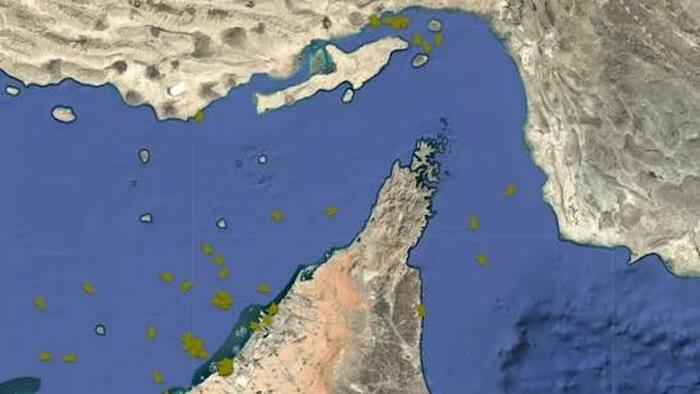
In a significant development breaking weeks of relative calm on the military front, American forces conducted targeted strikes against Iranian missile launchers on Larak Island on Sunday. The operation, confirmed by a senior American official via Axios and corroborated by CENTCOM, was reportedly a preemptive measure to neutralize an immediate threat, with Revolutionary Guard forces observed preparing to launch rockets carrying sea mines toward the critically important Strait of Hormuz. This action underscores the persistent volatility in the US-Iran relationship, even as the White House has previously signaled a strategic pivot towards intensified economic warfare over direct military engagement. However, recent statements from President Trump have consistently reiterated that military options remain firmly on the table and will be deployed as deemed necessary to safeguard regional and international interests.
The incident marks the first confirmed US strike against an Iranian target in several weeks, injecting a renewed sense of urgency into a conflict often characterized by sporadic tit-for-tat exchanges. Larak Island, strategically positioned near the entrance to the Strait of Hormuz, is a crucial choke point for global oil shipments. The alleged intent by the Revolutionary Guard to deploy sea mines in such a vital waterway represents a serious escalation, threatening international shipping lanes and potentially disrupting a significant portion of the world’s crude oil supply. The successful interdiction of this threat highlights the ongoing vigilance of US forces in the region and their commitment to maintaining freedom of navigation through the strait.
Background to Persistent Tensions and Strategic Crossroads
The broader context of this strike is rooted in years of escalating tensions between Washington and Tehran, particularly since the US withdrawal from the Joint Comprehensive Plan of Action (JCPOA), commonly known as the Iran nuclear deal, in 2018. Following the withdrawal, the Trump administration initiated a "maximum pressure" campaign, reimposing and intensifying sanctions designed to cripple Iran’s economy and compel it to renegotiate a more comprehensive agreement addressing its nuclear program, ballistic missile development, and regional proxy activities.
This economic pressure has been consistently met with Iranian defiance, often manifesting in various forms of destabilizing actions in the Persian Gulf. These have included attacks on oil tankers, drone incidents, and previous attempts to interfere with maritime traffic. The Strait of Hormuz, through which approximately 20% of the world’s petroleum liquids pass daily, has frequently been the epicenter of these confrontations. Both nations have deployed significant military assets to the region, leading to a precarious standoff where miscalculation could rapidly escalate into a broader conflict. While the US has often preferred to exert pressure through economic sanctions, the military option has always remained a critical component of its deterrence strategy, explicitly affirmed by President Trump on multiple occasions. The current strike serves as a stark reminder of this enduring reality, demonstrating a willingness to use force when perceived red lines are crossed or immediate threats emerge.
A Chronology of Escalation and Economic Strangulation
The period leading up to Sunday’s strike has been marked by a complex interplay of military posturing, diplomatic maneuvering, and intensifying economic hardship within Iran.
Recent Military Engagements and Tensions:
- Late 2025 – Early 2026: A series of minor skirmishes and near-miss incidents involving naval vessels in the Persian Gulf, alongside drone incursions over international waters, kept regional tensions simmering.
- June 2026: A widely reported incident where Iranian speedboats harassed a US naval convoy near the Strait of Hormuz, prompting defensive maneuvers and warnings.
- August 2026: Prior to Sunday’s strike, intelligence reports indicated an uptick in Iranian Revolutionary Guard Corps (IRGC) naval activity, particularly around strategic islands like Larak, raising concerns about potential disruptive actions.
Intensification of Economic Pressure:
- Early 2026: The US Treasury Department announced further rounds of sanctions targeting sectors of Iran’s economy previously less impacted, including specific petrochemical companies and financial institutions involved in illicit trade.
- June 2026: Key European allies, under significant US pressure, scaled back their remaining trade ties with Iran, further isolating Tehran from international markets.
- July 2026: Reports from international monitoring agencies began to quantify the severe impact of the blockade, noting significant drops in Iran’s oil exports and a corresponding depletion of its foreign currency reserves.
This environment of heightened military readiness combined with an unrelenting economic blockade has set the stage for the current situation. The US strike on Larak Island comes not in a vacuum, but as part of a sustained pressure campaign, both kinetic and economic, aimed at altering Iran’s strategic calculus.
Iran’s Deepening Internal Crisis: Economic Rupture and Fuel Shortages
While the immediate military action captures headlines, the underlying "war" for Iran’s stability is increasingly being fought on the economic front. Despite earlier efforts by the Iranian regime to downplay the impact of US sanctions, recent admissions from Iranian leaders themselves paint a grim picture. They now openly acknowledge that the US blockade has crippled approximately 35% of the nation’s total exports and imports. This translates to a massive reduction in trade volume, severely impacting the availability of essential goods and raw materials for domestic industries. Concurrently, domestic prices for consumer goods and staples have reportedly skyrocketed by 60% or more, eroding the purchasing power of ordinary Iranians and fueling widespread discontent.
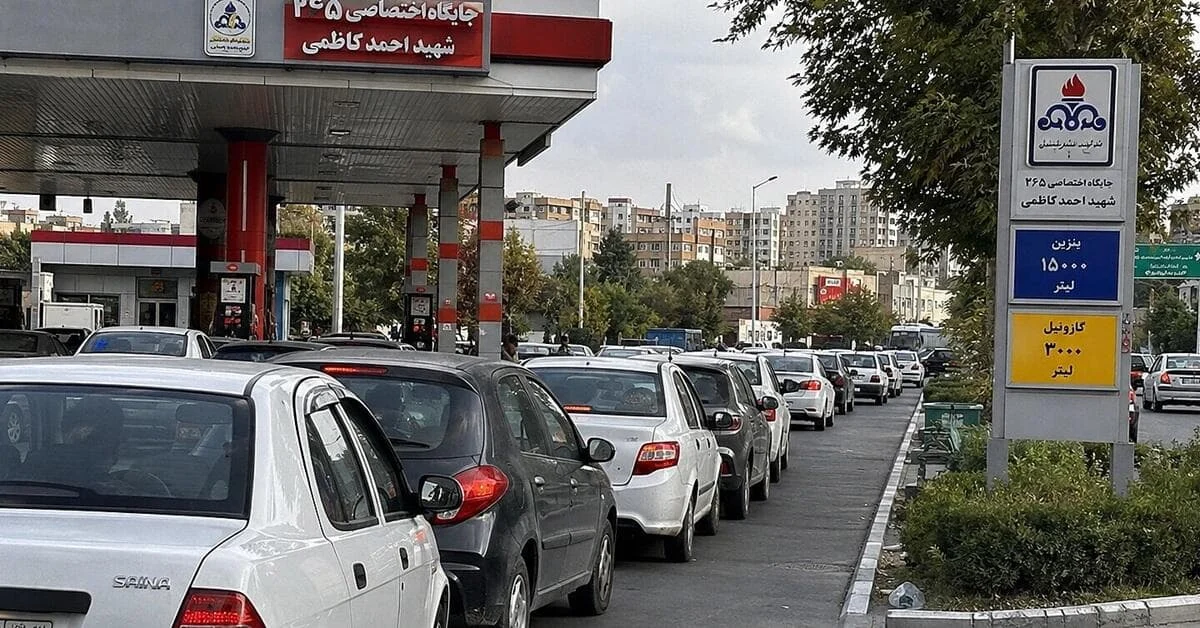
The most immediate and palpable manifestation of this economic crisis is the severe gasoline shortage gripping the country. Initial reports of localized fuel issues have escalated into a nationwide crisis, with widespread evidence hitting social media platforms showing mass queues at gas stations across major cities and rural areas. Panic among citizens is palpable as rationing measures have been officially introduced, severely impacting daily life and commercial activities.
Energy officials in Tehran have acknowledged a staggering daily gasoline deficit of approximately 15 million liters. More critically, they have warned that the nation’s strategic fuel reserves have plummeted into "dark red" territory, a colloquial but alarming term indicating dangerously low levels. This situation is particularly perplexing given Iran’s considerable indigenous refining capacity. The country boasts ten main operating oil refineries, alongside the large Persian Gulf Star condensate refinery, which stands as its biggest gasoline producer. Theoretically, Iran possesses the infrastructure to produce its own domestic gasoline supply.
However, the reality is more complex. While Iran can refine crude oil, it has historically relied on imports for certain refined products to meet specific demands or to compensate for inefficiencies in its refining sector. The US blockade has effectively choked off these foreign sources of refined products. Moreover, a more profound issue may be at play: the sanctions might have forced Iran to shut down a significant number of its oil wells due to a lack of storage capacity for its unexported crude. The technical implications of such shutdowns are severe; depending on the type of well, a prolonged closure can cause extensive and irreversible damage, preventing new production for years to come. This suggests that Iran’s current fuel crisis is likely rooted in a dual problem: a restricted supply of refined products and a fundamental issue with its crude oil extraction and storage capabilities, exacerbated by the inability to sell its oil internationally.
Strategic Dynamics: The Strait of Hormuz and Shifting Tones
The recent US strike and Iran’s internal economic woes unfold against the backdrop of critical strategic developments in the Strait of Hormuz. In a remarkable turnaround, traffic through the Strait has reportedly surged by nearly 400% in the last two weeks. This dramatic increase signals a potential normalization or a significant shift in shipping patterns, possibly indicating that international shippers are either more confident in the security of the strait or are rushing to transport goods before further escalation. This surge could also reflect a deliberate strategy by the US and its allies to ensure continued maritime commerce despite Iranian threats, perhaps through enhanced escort operations or increased naval presence, effectively challenging any Iranian attempts at a blockade. If this increased traffic is sustained, it would represent a significant strategic loss for Iran, diminishing its leverage over global energy markets and demonstrating the ineffectiveness of its threats.
The internal pressures have undeniably forced a notable shift in Iran’s diplomatic posture. Only a month ago, the regime maintained a defiant stance, dismissing the impact of sanctions and vowing resilience. However, the recent admissions of economic damage and the unfolding humanitarian crisis due to fuel shortages have prompted a significant change in tone. Iranian leaders have recently called for a return to the standards set by the Memorandum of Understanding (MOU) agreement with the US, signaling a potential openness to dialogue and de-escalation that was absent previously. Concurrently, Tehran has also intensified its accusations against the US, formally pursuing alleged "war crimes" through legal channels and arguing vehemently that the blockade constitutes a humanitarian crisis, directly impacting the well-being of its citizens. This dual approach – seeking a path to diplomacy while simultaneously condemning US actions – highlights the immense pressure the regime is under.
Official Responses and Broader Implications
United States:
The US Central Command (CENTCOM) confirmed the strike, reiterating its commitment to regional stability and freedom of navigation. While specific details beyond those reported by Axios remain limited, the operation aligns with President Trump’s stated policy of maintaining all options, including military force, to protect American interests and deter Iranian aggression. Administration officials are likely to frame this strike as a defensive, proportionate response to an imminent threat, rather than an escalation, emphasizing the goal of preventing disruption to global trade. The White House will likely continue to advocate for the effectiveness of its "maximum pressure" campaign, arguing that economic sanctions are successfully forcing Iran to reconsider its regional behavior, while military actions serve as a necessary deterrent.
Iran:
Tehran’s official response to the strike is anticipated to be one of strong condemnation, likely accusing the US of violating its sovereignty and escalating regional tensions. The Revolutionary Guard Corps (IRGC) may deny the intent to deploy sea mines or attempt to downplay the significance of the US action. However, the admissions of economic hardship and calls for renewed dialogue indicate a growing internal acknowledgment of their precarious position. While rhetorical defiance is expected, Iran’s options for meaningful retaliation are increasingly constrained by its internal crises and the overwhelming military superiority of the US and its allies in the region. Any direct retaliatory action would carry significant risks of further escalation, which the beleaguered regime might be keen to avoid given its domestic challenges.
International Community:
The international community will likely react with a mix of concern and calls for de-escalation. While many nations share concerns about Iran’s destabilizing activities and nuclear ambitions, there is also widespread apprehension about the potential for a wider conflict in the Persian Gulf, which could have devastating global economic repercussions, particularly for oil prices. Allies of the US will likely express support for efforts to secure international shipping, while countries more critical of US policy may voice concerns about the unilateral use of force and the humanitarian impact of sanctions.
Analysis and Outlook: A Tipping Point?
The recent US strike on Larak Island, coupled with the deepening economic and fuel crisis within Iran, suggests that the conflict may be approaching a critical juncture. The "maximum pressure" campaign, while undeniably inflicting severe pain on the Iranian economy and its populace, has not yet achieved its stated goal of forcing a fundamental change in regime behavior or a comprehensive renegotiation of the nuclear deal. Instead, it has led to a protracted standoff, punctuated by dangerous military encounters.
The strategic implications for Iran are profound. If the blockade and internal economic pressures continue for another few months, the financial damage could indeed become irreversible, potentially leading to a collapse of key industries, widespread unemployment, and a lasting degradation of essential infrastructure. Repairing resource flows and rebuilding the economy could take years, even decades. For the Islamic Regime, mere survival may not be enough if the economy it oversees effectively dies. This situation raises serious questions about the long-term stability of the regime and the potential for internal unrest, which could either force a capitulation to US demands or lead to an unpredictable internal upheaval.
From the US perspective, the challenge remains to calibrate its pressure campaign to achieve desired outcomes without triggering an uncontrolled escalation. The balance between military deterrence and economic coercion is delicate. While the Larak Island strike demonstrates a clear willingness to act militarily when necessary, the ultimate goal appears to remain a diplomatic resolution, albeit one achieved under duress. The surge in Strait of Hormuz traffic, if sustained, represents a significant strategic win for the US and its allies, demonstrating their ability to neutralize Iranian threats to global commerce.
The "fog of war" continues to complicate objective analysis, with propaganda and conflicting information spreading rapidly through traditional and social media channels. However, the tangible "facts on the ground" – the crippling economic data, the visible fuel shortages, and the shifting tone from Tehran – collectively paint a picture of a regime under immense and unprecedented pressure. The coming weeks and months will be crucial in determining whether this pressure leads to a negotiated settlement, further military escalation, or a fundamental internal transformation within Iran. The stakes, both regionally and globally, could not be higher.

