

The economic trajectory of millennial professionals in the post-pandemic landscape is increasingly defined by a dichotomy of high earning potential and significant consumer liabilities, as evidenced by the financial profile of a prominent household in central Connecticut. Michael and Brian, both 34, represent a demographic of state employees navigating the complexities of the 2023 fiscal environment. With a combined gross annual household income of approximately $167,544, the couple faces the challenge of reconciling a robust income stream with $28,259 in high-interest consumer debt and a recent 111% increase in housing costs. Their situation highlights the broader regional trends in the New England real estate market and the critical role of employer-sponsored retirement structures in long-term wealth preservation.

Regional Economic Context and Housing Transitions
The financial narrative of the Connecticut subjects is anchored by a significant transition in their living arrangements, reflecting the tightening rental market in the Northeast. For eight years, the couple occupied a 600-square-foot studio apartment with a monthly rent of $945. However, following an unplanned displacement in late 2022, they relocated to a two-bedroom, two-bathroom unit in a refurbished industrial mill. This move resulted in a monthly rent of $2,000, effectively doubling their housing expenditure and altering their debt-to-income ratio.
This transition mirrors broader data from the Connecticut Department of Housing, which has noted a persistent shortage of affordable units and a rise in "luxury" industrial redevelopments. In central Connecticut, the demand for "age-appropriate" housing—characterized by separate home offices and dining areas—often forces professionals into higher-tier rental brackets, potentially delaying milestones such as homeownership. For Michael and Brian, the move was further complicated by the loss of their longtime pet and subsequent veterinary expenses for new kittens, illustrating how personal crises can disrupt even well-compensated households.

A Decade of Financial Evolution: 2013–2023
The couple’s financial history over the past decade is marked by significant achievements in debt reduction followed by a resurgence of consumer liabilities. Since beginning their relationship in 2013, Brian successfully eliminated $58,000 in student loan debt, a feat that aligns him with the top tier of millennial debt-reduction statistics. Professionally, both have secured stable roles within the public sector: Brian serves as a quality assurance manager for a state-run hospital, while Michael operates as a project coordinator for a state behavioral health agency and maintains a secondary role as a disability leadership coordinator.
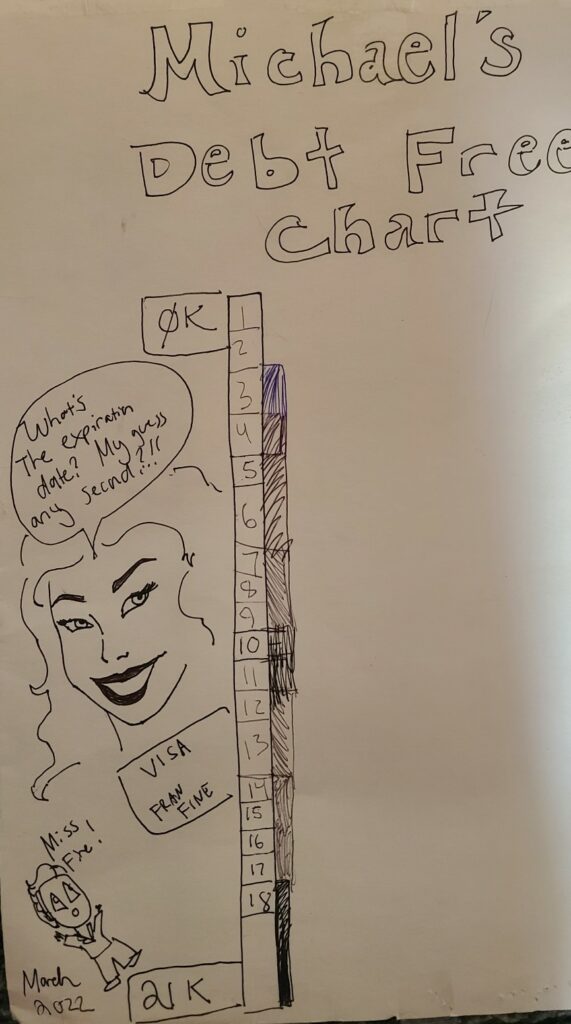
Despite these professional gains, the couple reports a recurring cycle of "debt-payoff-debt." The 2022–2023 period proved particularly volatile, as moving costs and emergency veterinary bills led to a combined consumer debt load of $28,259. This debt is distributed across three primary accounts:

- Brian’s SCU Visa: $16,057 (0% interest until November 2023, then 17.99%).
- Michael’s Visa Platinum: $9,700 (10.99% interest).
- Brian’s Navy Federal Visa: $2,503 (0.99% interest until November 2023, then 17.74%).
The looming "interest rate cliff" in November 2023 serves as a pivotal deadline for their current fiscal strategy, as the expiration of promotional rates could add hundreds of dollars in monthly interest charges.
Analytical Breakdown of Assets and State-Sponsored Benefits
While the couple expresses concern regarding their "adulting" milestones, an objective analysis of their balance sheet reveals a strong foundation, primarily due to their status as state employees. Their total assets are valued at $91,250, but the true value of their position lies in the "triple crown" of retirement security available to public sector workers in Connecticut.

Retirement Account Portfolio
- Michael’s 401k: $36,992 (Vanguard Target Retirement 2055).
- Brian’s Pension Fund: Projected at $4,150 monthly upon retirement in 2054.
- Brian’s 457b and 403b: Combined value of $9,275.
- HSAs and IRAs: Approximately $6,518.
Financial analysts often point to the 457b plan as a superior vehicle for early retirement, as it allows for penalty-free withdrawals upon separation from service, regardless of age. When combined with a defined-benefit pension and Social Security, the couple is statistically better positioned for retirement than the average American household in their age bracket. However, their liquid savings—totaling approximately $9,000—cover only one month of their current $8,035 monthly expenditure, indicating a lack of a sufficient emergency buffer.
Expenditure Analysis and Utility Costs in the Northeast
A significant factor in the couple’s monthly budget is the high cost of living in Connecticut, particularly regarding utilities. They report an average monthly electricity bill of $235, despite switching to third-party suppliers. Connecticut consistently ranks among the states with the highest residential electricity rates in the continental U.S., largely due to transmission costs and the regional energy mix.
Their monthly expenditures break down into several key categories:
- Fixed Costs: Rent ($2,000), Internet ($107), and insurance.
- Transportation: Brian’s car repairs and commuting costs average $1,064 per month, reflecting the maintenance demands of a high-mileage 2007 Mercedes C280.
- Discretionary Spending: The couple spends approximately $1,100 monthly on eating out, gifts, home goods, and personal care.
Economic experts suggest that for households seeking to pivot from debt repayment to homeownership, the "discretionary" category represents the most immediate opportunity for capital reclamation.

Professional Recommendations and Strategic Implications
Financial consultants reviewing the case study have emphasized a "mathematical" rather than "moral" approach to debt management. The primary recommendation involves a rigorous "spending detox" to capitalize on the couple’s $109,455 net annual income. By eliminating discretionary spending, the household could theoretically direct $4,456 per month toward their liabilities, achieving total debt freedom within seven months.
The Graduate School Debate
A point of internal contention for the couple is Brian’s interest in pursuing a master’s degree. From a purely fiscal standpoint, analysts advise against graduate education unless it is tied to a guaranteed salary increase that exceeds the cost of the degree and the opportunity cost of the time spent studying. Given Brian’s existing pension-track state role, the ROI of further academic credentials requires careful scrutiny to avoid a resurgence of student loan debt.

Path to Homeownership
The couple’s goal of owning a home in a more rural setting is contingent upon three sequential steps:
- Total elimination of high-interest consumer debt.
- Expansion of the emergency fund to cover 3–6 months of expenses (approximately $25,000–$40,000).
- Accumulation of a down payment that accounts for Connecticut’s high property tax rates.
Broader Socioeconomic Implications for Millennial Professionals
The case of Michael and Brian is emblematic of a broader socioeconomic phenomenon where high-earning millennials feel "behind" their peers due to a lack of tangible assets like real estate. This "wealth dysmorphia" is often exacerbated by the visibility of peers’ successes on social media and the rising cost of traditional markers of adulthood.

Furthermore, the psychological impact of debt—described by both subjects as a source of "shame"—can lead to a "feast or famine" cycle of spending. Journalistic analysis of millennial financial habits suggests that moving toward a "comfortable middle" is essential for long-term stability. For this Connecticut couple, the transition from a 600-square-foot studio to a luxury mill apartment was a necessary step for their mental health and professional productivity, yet it requires a recalibration of their saving habits to ensure it does not come at the expense of their future homeownership.
As the couple approaches their 10-year anniversary in November 2023, their ability to execute an aggressive debt-payoff strategy will determine their economic mobility for the next decade. Their story underscores the reality that in the current economic climate, high income is not a substitute for disciplined cash-flow management, but it does provide a powerful engine for recovery when paired with a strategic plan.

