
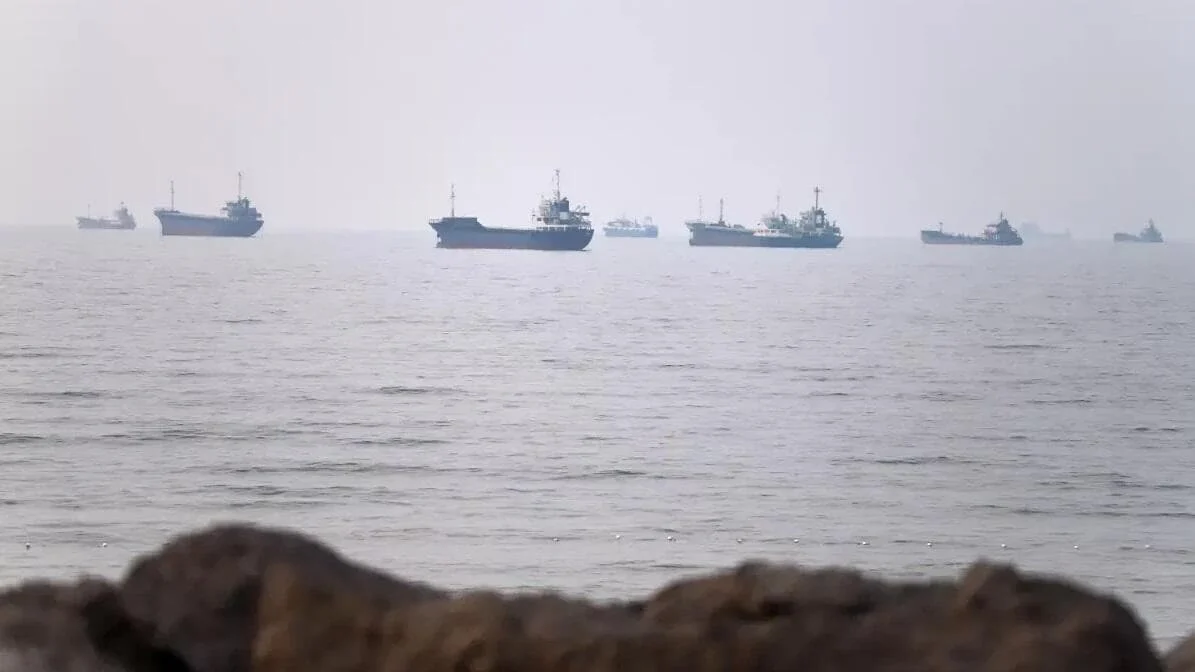
In a significant escalation of rhetoric, Iranian Parliament Speaker Mohammad Bagher Ghalibaf declared on August 28 that the future of oil exports from the Persian Gulf hinges on an "all or none" principle, asserting that if Iran is prevented from exporting its oil, no other regional country will be able to do so either. Ghalibaf explicitly linked the security of West Asia to the withdrawal of US forces from the region, stating, "The equation of this war is clear: either all or none! In a region where we don’t sell oil, no one else will sell oil either." He further emphasized the critical connection between national security and infrastructure integrity, adding, "If our security is not ensured, no infrastructure will be safe."
The Strategic Importance of the Strait of Hormuz
Ghalibaf’s pronouncements underscore the immense strategic importance of the Strait of Hormuz, a narrow waterway connecting the Persian Gulf to the Arabian Sea and the open ocean. It is the world’s most crucial oil transit choke point, through which approximately 20% of the world’s petroleum liquids and a significant portion of global liquefied natural gas (LNG) pass. According to the U.S. Energy Information Administration (EIA), about 21 million barrels per day (b/d) of crude oil, condensates, and refined petroleum products transited the Strait in 2018, making it vital for global energy security. Any disruption to this flow has immediate and profound implications for international oil prices, shipping insurance rates, and the stability of global energy markets. The Strait’s geography, with its narrowest point being only 21 nautical miles wide, makes it particularly vulnerable to geopolitical tensions and potential blockades.
Iranian Stance: ‘All or None’ and Security Imperatives
The Iranian Parliament Speaker’s "all or none" declaration represents a direct challenge to international efforts to isolate Iran economically through sanctions, particularly targeting its oil exports. This rhetoric is not new; Iranian officials have historically threatened to disrupt or close the Strait of Hormuz in response to severe sanctions or military threats. However, Ghalibaf’s statement on August 28, reiterating that "the situation in the strait will not return to what it was before the war," suggests a hardened position and a potentially irreversible shift in regional dynamics. This stance implies that Iran views its own economic access to global markets as inextricably linked to the free flow of oil for all other nations in the Persian Gulf. Should Iran’s ability to export oil be curtailed, it implicitly reserves the right to challenge or impede the passage of oil from other regional producers, a move that would have catastrophic global economic consequences. The linkage between Iran’s security and the safety of "no infrastructure" further broadens the scope of potential retaliatory actions, extending beyond maritime assets to include critical land-based energy infrastructure in the region.
US Military Presence and CENTCOM’s Claims
Ghalibaf’s comments were made in direct response to assertions by US Central Command (CENTCOM) chief Admiral Brad Cooper. Admiral Cooper had claimed that US forces had achieved full control of the Strait of Hormuz and effectively halted Iranian oil exports, a statement viewed by Tehran as a provocative misrepresentation of facts and a challenge to Iran’s sovereignty and maritime influence. The United States maintains a significant military presence in the Persian Gulf, primarily through the U.S. Fifth Fleet, headquartered in Bahrain, which regularly conducts patrols and exercises in the region. This presence is ostensibly aimed at ensuring freedom of navigation and deterring aggression. However, Iran views the US military presence as a destabilizing force and a direct threat to its national security, frequently calling for the withdrawal of foreign forces from West Asia. The long-standing naval confrontations and incidents in the Gulf, including seizures of oil tankers and drone engagements, underscore the precarious balance of power and the constant risk of miscalculation between the two nations.
Washington’s Escalating Economic Warfare: "Operation Economic Outcast"
The backdrop to Ghalibaf’s strong statement is Washington’s unveiling of a new, comprehensive sanctions package dubbed "Operation Economic Outcast." This initiative marks a significant intensification of the US "maximum pressure" campaign against Iran, which began in 2018 following the US withdrawal from the Joint Comprehensive Plan of Action (JCPOA), also known as the Iran nuclear deal. The "maximum pressure" strategy aimed to compel Iran to renegotiate a broader agreement covering its nuclear program, ballistic missile development, and regional influence by severely crippling its economy.
"Operation Economic Outcast" appears to be a multi-faceted approach designed to further isolate Iran from the global financial system and stifle any remaining avenues for its international trade, particularly oil sales. While specific details of the new package were not fully disclosed in the original report, the name itself suggests a strategy of complete economic ostracization. The US Treasury Department frequently targets Iranian entities, individuals, and financial institutions involved in petroleum, petrochemicals, shipping, and banking, often citing concerns related to terrorism financing, human rights abuses, and proliferation activities. These sanctions typically aim to cut off Iran’s access to the international banking system, deter foreign companies from doing business with Iran, and limit its ability to earn hard currency, thereby impacting its capacity to fund its government and various strategic programs. The effectiveness of such sanctions relies heavily on compliance from other nations and international financial institutions.
Iran’s Official Rebuttal: Condemnation and Legal Challenges
In response to "Operation Economic Outcast," Iran’s Foreign Ministry issued a scathing statement on the same day, August 28, urging all states to refuse to enforce the new US sanctions package. The ministry warned that compliance with these measures would render any government "complicit in violating international law and the sovereign equality of states." This strong diplomatic rebuke underscored Iran’s position that US unilateral sanctions represent a profound breach of international legal norms.
The ministry condemned the package as an act of "economic terrorism," a term frequently used by Iranian officials to describe the impact of US sanctions on its civilian population. It argued that the sanctions revealed "the criminal intent of those who designed and implemented it to inflict suffering on the Iranian people and deprive Iranian citizens of their fundamental human rights; therefore, it is tantamount to an international crime and a crime against humanity." This framing seeks to elevate the issue beyond a mere trade dispute to a matter of human rights and international criminal law, aiming to garner international sympathy and opposition to US policies.
Furthermore, Tehran reiterated its long-standing argument that the US was "weaponizing the dollar" to pressure other governments into backing its policies on Iran, asserting that this practice breaches the UN Charter and the principle of non-intervention in the internal affairs of sovereign states. The UN Charter, particularly Article 2(4), prohibits the threat or use of force against the territorial integrity or political independence of any state, and Iran argues that economic coercion of this magnitude constitutes a form of force.
The Foreign Ministry also pointed out that the sanctions defy the International Court of Justice (ICJ) order of October 3, 2018. In that ruling, the ICJ, the principal judicial organ of the United Nations, unanimously ordered the United States to lift any sanctions that impede the free flow of humanitarian goods, including food, medicine, and medical equipment, into Iran. The ICJ’s provisional measures were issued in response to a case brought by Iran alleging that US sanctions violated a 1955 Treaty of Amity, Economic Relations, and Consular Rights between the two countries. Iran contends that "Operation Economic Outcast" and previous sanctions packages directly contravene this binding international legal directive, exacerbating the humanitarian situation for ordinary Iranian citizens.

The Weaponization of the Dollar and Sovereignty Concerns
The Iranian Foreign Ministry’s accusation that the US is "weaponizing the dollar" highlights a growing concern among several nations regarding the extraterritorial application of US law and the dominance of the US dollar in global finance. The dollar’s status as the world’s primary reserve currency and the predominant currency for international trade and financial transactions grants the US Treasury immense power. Most international dollar-denominated transactions clear through the US financial system, giving Washington leverage to impose its sanctions regime globally. This allows the US to penalize foreign banks and companies that deal with sanctioned entities, even if those transactions occur outside US territory.
This practice has led to accusations from various countries that the US is using its financial power to dictate foreign policy to sovereign states, undermining principles of national sovereignty and international law. For Iran, this "weaponization" means that even countries that wish to maintain trade relations with Tehran risk being cut off from the US financial system, facing massive fines, or having their assets frozen. This forces many international actors to choose between complying with US sanctions or losing access to the dollar-denominated global economy, thus creating a chilling effect on legitimate trade with Iran. The Iranian ministry tied this economic warfare to a broader "US-Israeli offensive against Iran over the past year and a half," suggesting a coordinated effort, and criticized the UN and its members for their perceived failure to confront these violations, which it argued has produced "a highly dangerous pattern of lawlessness."
Historical Context of US-Iran Tensions and Sanctions
The current standoff is deeply rooted in decades of strained relations between the United States and Iran, exacerbated by the 1979 Islamic Revolution and the subsequent hostage crisis. US sanctions against Iran have a long history, initially imposed for terrorism sponsorship and human rights abuses, and later expanded to target its nuclear program. The JCPOA, signed in 2015 by Iran and the P5+1 (China, France, Germany, Russia, the United Kingdom, and the United States), offered Iran sanctions relief in exchange for verifiable curbs on its nuclear activities. This agreement represented a brief period of de-escalation.
However, in May 2018, the Trump administration unilaterally withdrew from the JCPOA, arguing it was insufficient to address Iran’s broader malign activities. This withdrawal marked the beginning of the "maximum pressure" campaign, which reimposed and expanded sanctions, severely crippling Iran’s economy and significantly reducing its oil exports, which had briefly rebounded under the nuclear deal. Figures from the International Monetary Fund (IMF) indicated that Iran’s economy contracted significantly following the re-imposition of sanctions, with oil exports plummeting from over 2.5 million barrels per day before 2018 to as low as 200,000-300,000 b/d at various points. This economic pressure has led to soaring inflation, a depreciating currency, and widespread economic hardship within Iran, while failing to achieve a new, broader agreement with Tehran.
Previous statements from Iranian officials, such as former Foreign Minister Abbas Araghchi, who reportedly described Trump’s "Economic D-Day" campaign as delivering "nothing but further defeat" and a distraction from a US debt crisis, illustrate Iran’s narrative of resilience against economic pressure. Similarly, Deputy Foreign Minister Kazem Gharibabadi’s assertion that the turn to economic war followed Washington’s failure to achieve its military objectives, and that the US was now "begging its allies for help while claiming Iran was on the brink of collapse," reflects Tehran’s public posture of defiance and strength despite the economic challenges.
Broader Regional and Global Implications
The escalating rhetoric and the imposition of new sanctions carry significant regional and global implications. For the global oil market, any perceived threat to the Strait of Hormuz immediately translates into higher oil prices and increased volatility, impacting consumers and economies worldwide. Shipping companies face higher insurance premiums and potential rerouting costs, adding to the expense of international trade.
Regionally, the tensions exacerbate existing proxy conflicts and rivalries, particularly between Iran and its Gulf Arab neighbors, many of whom are US allies. The call for US withdrawal by Iran could intensify regional power struggles and create a security vacuum that could be filled by various state and non-state actors, potentially leading to further instability. The "highly dangerous pattern of lawlessness" cited by Iran’s Foreign Ministry could manifest in increased maritime incidents, cyberattacks, or even direct military confrontations.
Globally, the situation highlights the fragility of international legal frameworks when confronted with unilateral actions by powerful states. The disregard for an ICJ ruling and the broad application of extraterritorial sanctions challenge the principles of multilateralism and the rule of international law. This could encourage other nations to develop alternative financial systems or de-dollarize their trade to reduce vulnerability to US sanctions, potentially fragmenting the global financial architecture in the long term.
Expert Analysis and Future Outlook
Analysts suggest that Ghalibaf’s "all or none" declaration is a clear signal of Iran’s resolve to resist economic strangulation and maintain its leverage in the region. It functions as a deterrent, warning that further pressure on Iran’s oil exports could trigger a response that impacts the entire global oil supply. While direct military confrontation in the Strait of Hormuz remains a high-risk scenario that both sides generally seek to avoid, the continuous cycle of sanctions and counter-threats increases the potential for miscalculation.
Diplomatic pathways appear increasingly challenging. Iran insists on the lifting of all US sanctions as a precondition for any negotiations regarding its nuclear program or regional activities, while the US demands that Iran cease what it deems as destabilizing actions. The international community faces the difficult task of de-escalating tensions, upholding freedom of navigation, and preserving a rules-based international order amidst a deepening geopolitical chasm between Washington and Tehran. The enduring standoff over the Persian Gulf’s vital oil flows and the presence of foreign forces in West Asia promises continued volatility and uncertainty for global energy security and regional stability.

