
Boulder, CO – A recent nine-month experiment by Mr. Money Mustache, the acclaimed financial independence advocate known for his frugal lifestyle and candid commentary, has shed light on the subtle yet powerful psychological mechanisms employed by online platforms, specifically Amazon’s exclusive Vine Voice program. What began as an innocent foray into receiving free products in exchange for reviews quickly evolved into a revealing case study on consumer behavior, the hidden costs of "free," and the pervasive influence of platform design on even the most disciplined individuals.
The Genesis of an Experiment

The journey began last winter when Mr. Money Mustache, whose real name is Pete Adeney, posted a five-star review for a heated vest purchased on Amazon. His satisfaction with the product and willingness to share his positive experience led to an unexpected invitation: "Congratulations! You’ve been selected to join Amazon Vine for writing helpful reviews!"
Aware of the Amazon Vine program, which grants select reviewers, known as "Vine Voices," access to a diverse array of products at no upfront cost in exchange for a commitment to review at least 80% of ordered items, Adeney initially viewed the invitation as a fortuitous opportunity. "Who doesn’t like free stuff?" he reportedly thought, believing it would be a logical extension of his existing practice of writing product reviews purely out of goodwill. With minimal hesitation, he accepted the terms and conditions, unaware of the profound behavioral shifts this decision would precipitate over the subsequent months.
Initial Benefits and Unforeseen Detours

Adeney’s primary motivation for joining Vine was twofold: to save money on items he genuinely needed and would have purchased anyway, and to conduct a real-world experiment to document the experience for his widely-read blog. On the financial front, the program delivered tangible savings. He estimates saving "at least a few thousand dollars" on tools and materials essential for his construction business and the MMM-HQ Coworking space. This outcome aligned with his initial goal of leveraging the program for practical utility.
However, the perceived benefits soon became entangled with an array of unforeseen consequences. The subtle combination of nudges and incentives embedded within the Amazon Vine system proved remarkably effective in "hijacking" his well-established frugality instincts. This led him down a path of significant time expenditure on tasks he deemed less valuable and, more critically, towards an accumulation of items that contradicted his core values of minimalism and environmental consciousness.
Behavioral Economics in Action: The "Online Casino Effect"

Mr. Money Mustache’s experience offers a compelling, real-world illustration of principles outlined in behavioral science literature, notably Michael Easter’s "Scarcity Brain." Easter’s work explores how modern gambling platforms, marketing strategies, and social media algorithms exploit inherent human weaknesses: the craving for novelty and the pursuit of unpredictable rewards.
Adeney recognized that the Vine program meticulously replicates these dynamics:
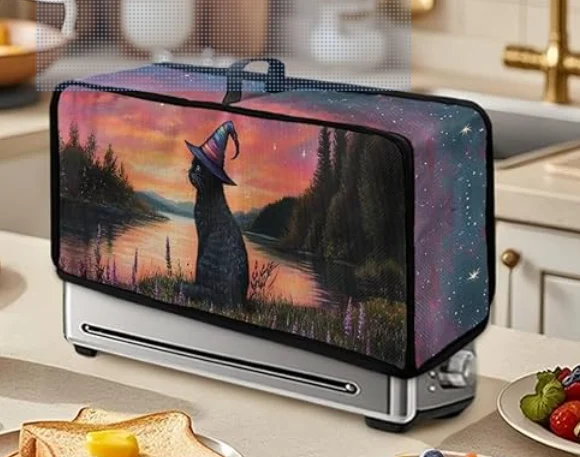
- Unpredictable Rewards: The inventory on the exclusive "reviewers-only" Vine website constantly refreshes, offering an unpredictable stream of items. One day, searches for "porcelain plates" might yield only "pink plastic disposable party plates" or a "toaster cover with a cat wearing a witch hat." The next, genuinely valuable items like "super nice light fixtures, tools and plumbing parts, an EV charger, and even some clothing" might appear. This intermittent reinforcement mirrors the variable-ratio schedule used in slot machines, creating a powerful incentive for repeated engagement.
- Constant Novelty and Scarcity: The ever-changing selection ensures a continuous sense of novelty, while the limited availability of desirable items fosters a perception of scarcity. Users are encouraged to "order it before it’s too late," activating urgency and fear of missing out (FOMO), a well-documented cognitive bias.
- Progression and Gamification: The program’s tiered structure, from Vine Silver to Vine Gold (achieved by completing 80 reviews), adds a gamified element. The pursuit of the "Gold" status, despite its limited practical advantages, provided a clear, albeit arbitrary, goal that further incentivized engagement.
This "Scarcity Brain" effect led Adeney to check the Vine page daily, even when he had no specific needs. The occasional discovery of a truly useful item served to reinforce the habit, creating a self-perpetuating cycle of browsing, ordering, and reviewing. He even involved friends and coworkers, sharing the "bounty" and the often-humorous experience of reviewing peculiar products, such as a "super-realistic artificial plants" for the MMM HQ courtyard or a "USB rechargeable, magnetic EagLamp."

The Environmental and Personal Toll of "Free"
As the experiment progressed through spring and summer, the hidden costs began to surface. Adeney found himself spending valuable time photographing and batch-writing reviews, a task he would rather have avoided. More significantly, the influx of products directly contradicted his long-held environmental values. "For every questionable item I got, I was creating pollution and trash from its manufacturing and packaging – directly contradicting the main values of my life and my reason for writing this blog," he stated. Despite this glaring inconsistency, the ingrained habit proved difficult to break.
During the peak of what he described as a "consumerism bender," the signs of excess were undeniable. Packages arrived almost daily, overflowing his recycling bin with cardboard. The sheer volume and occasional frivolity of his acquisitions prompted laughter from his son and girlfriend, leading him to discreetly conceal incoming boxes to avoid scrutiny – a clear indicator of discomfort with his own behavior.

Navigating Recovery and Rediscovering Autonomy
Eventually, Mr. Money Mustache entered a "recovery stage." He recognized that the Vine habit had become a form of "laziness and procrastination," a convenient distraction from more meaningful endeavors. He realized that true joy stemmed from activities like daily workouts, progress on construction projects, and using his computer as a creative tool rather than an entertainment device.
Several factors aided his disengagement. The sheer volume of "trinkets" he had to sift through to find genuinely useful items became frustrating, leading to a sense of exasperation rather than excitement. He also noted the deliberately "reviewer-unfriendly features" of the Vine platform, such as poor search functionality and the absence of filtering or sorting options, which he interpreted as a deliberate design choice to maximize browsing time at the expense of reviewer efficiency. The "hilariously bureaucratic AI-based evaluation system," which arbitrarily flagged factual reviews for "Not meeting our Community Standards" without explanation, further underscored the impersonal and unrewarding nature of the "work."

These experiences crystallized a profound realization for Adeney: for many, this bureaucratic, rule-bound, and inefficient system closely resembles typical employment. "You are given a bunch of tasks and a bunch of rules to follow, in a system you didn’t create and don’t get much say in changing," he reflected, drawing parallels to his 2017 "Uber Driving experiment." These insights reinforced his deep appreciation for autonomy and the freedom afforded by financial independence, encapsulated in his concept of "Fuck You Money."
The Tax Man’s Cut: The "Gotcha" of "Free" Products
Beyond the psychological and environmental costs, the Amazon Vine program carries a tangible financial implication often overlooked by participants: taxation. Amazon tracks the Estimated Value (EV) of all products received and issues a 1099-MISC form at the end of the year, declaring the retail value of the items as taxable income.

For 2025, Mr. Money Mustache’s account showed an estimated value of approximately $7,000 in goods. At his marginal tax rate of roughly 25%, this initially suggested a potential tax bill of up to $1,750. He noted that about 75% of this value was for commercial use (construction supplies for his business or HQ renovations), effectively converting the "free" items into real income rather than a pure tax burden. However, he estimated about $1,000 worth of "pure nonsense" for which he anticipated owing $250 in taxes – a "penance" for impulsive ordering.
A subsequent "exciting update" from his readers, however, revealed a common strategy to mitigate this tax liability. In many cases, the estimated value can be marked down by 80% before declaration, under the rationale that opening and reviewing a product significantly reduces its resale value. This adjustment would reduce his tax bill on the "nonsense" items to approximately $50, offering a measure of financial relief but not diminishing the core lessons learned.
Epilogue: A Shift Towards "Badassity"

While Mr. Money Mustache has not formally canceled his Amazon Vine account, he has effectively disengaged using a "Keystone Habit" trick. He remapped his browser bookmark for the Vine page to his "Badassity Tracker," a personal chart of daily habits. Now, clicking the bookmark directs him to a reminder to engage in physical exercise, effectively overriding the temptation to browse for new products.
He acknowledges that publicly discussing the Vine program, potentially violating its non-disclosure terms, could lead to his account’s cancellation – an outcome he would find amusing. His experience, however, transcends the specifics of Amazon Vine. It serves as a potent metaphor for the "One More Year Syndrome" observed in the FIRE community, where individuals continue working despite having achieved financial independence, often trapped by similar psychological drivers.
Ultimately, Mr. Money Mustache’s Vine saga reinforces a central tenet of his philosophy: continuous self-reflection and questioning one’s assumptions and patterns. He emphasizes the importance of seeking feedback from trusted individuals and consistently striving for "a slightly better path." In a world increasingly designed to exploit behavioral biases, understanding these mechanisms and consciously redirecting one’s habits remains a critical step towards genuine autonomy and a life well-lived.

(Note: The heated vest that initiated this journey remains a cherished item, particularly as cooler weather returns, continuing to provide warmth in a cooler home. Mr. Money Mustache’s blog utilizes affiliate links for product recommendations, including those mentioned in this article.)

