
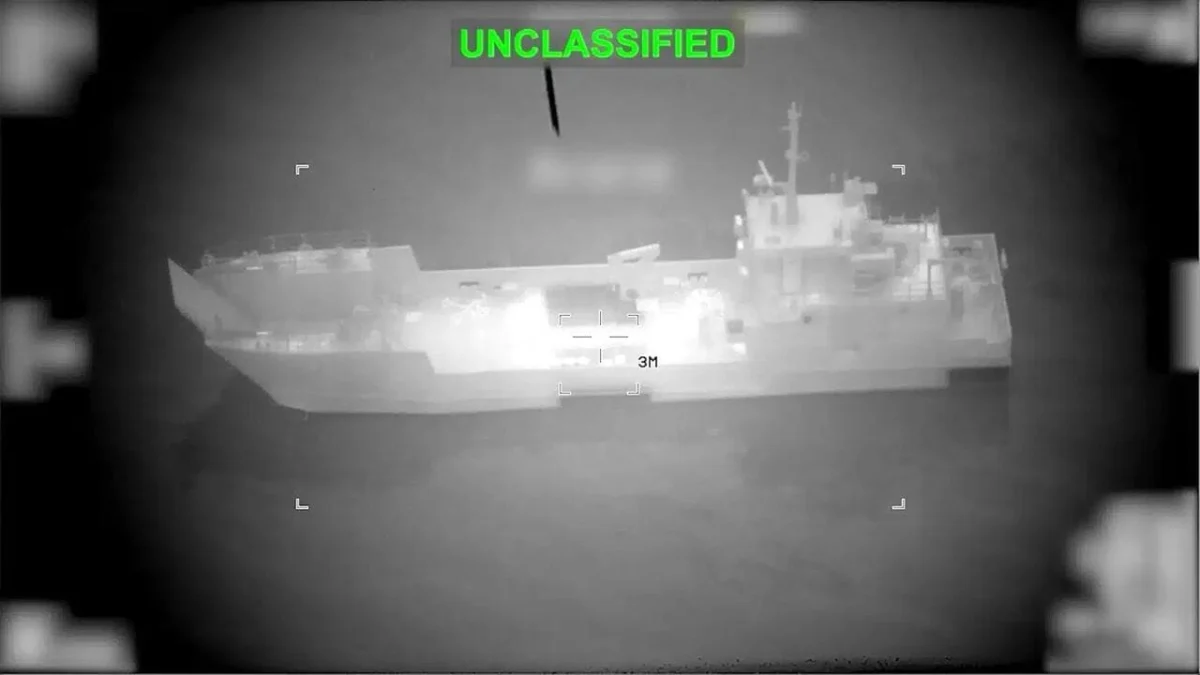
President Donald Trump took to Truth Social on Tuesday to announce a significant development in the strategically vital Strait of Hormuz, declaring that all mines have been removed or detonated from its international waters. This pronouncement signals a dual-pronged approach from Washington, combining assertive military deterrence with an intensified economic "strangulation" policy targeting the Islamic Republic, marking a pivot from prior military operations to a comprehensive siege strategy.
"I have just been informed by the United States Navy that all mines have been removed and/or detonated from within the International Waters of the Strait of Hormuz," the President wrote on Tuesday. His post continued with a stark warning: "Iran has been notified that any ship or boat placing new mines will be immediately and systematically destroyed. There is a Zero Tolerance policy on mine placement in full force and effect." This firm declaration underscores Washington’s intent to maintain unimpeded maritime passage through the crucial chokepoint, crucial for global energy supplies. The President further emphasized the comprehensive surveillance capabilities employed, stating, "Through Space Force, we are watching every square inch of the Strait, as we are, also, with Pickaxe Mountain and the already destroyed three other Nuclear sites. There is a Zero Tolerance policy on mine placement in full force and effect. Thank you for your attention to this matter!"
The Strategic Imperative of the Strait of Hormuz
The Strait of Hormuz, a narrow waterway separating Iran and Oman, is arguably the world’s most critical oil transit chokepoint. Approximately one-fifth of the world’s total petroleum liquids consumption, or about 21 million barrels per day (b/d) in recent years, passes through this strait. This includes nearly all oil exports from Saudi Arabia, Iran, Iraq, Kuwait, Qatar, and the United Arab Emirates. Any disruption to this flow has immediate and profound impacts on global energy markets, leading to price spikes and significant economic instability. Beyond crude oil, substantial volumes of liquefied natural gas (LNG) also transit the Strait, originating primarily from Qatar, the world’s largest LNG exporter. The Strait’s strategic importance makes it a perennial flashpoint in regional and international geopolitics, particularly concerning Iran’s historical threats to close it in response to sanctions or military aggression. The U.S. Fifth Fleet, headquartered in Bahrain, is primarily responsible for protecting commercial shipping in the region, conducting extensive maritime security operations, including mine countermeasure (MCM) missions.
A Chronology of Escalation and "Maximum Pressure"
The current declarations by President Trump are the latest in a series of escalating tensions between the United States and Iran, which intensified following the U.S. withdrawal from the Joint Comprehensive Plan of Action (JCPOA), commonly known as the Iran nuclear deal, in May 2018. The Trump administration subsequently reimposed and significantly expanded sanctions on Iran, initiating a "maximum pressure" campaign aimed at crippling Iran’s economy and forcing it to renegotiate a more restrictive nuclear agreement and cease its regional destabilizing activities.
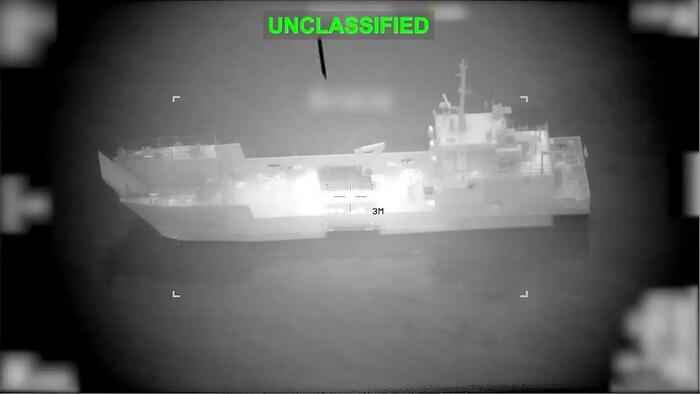
- 2019 Tanker Attacks: Throughout 2019, the Strait of Hormuz and surrounding waters witnessed a series of mysterious attacks on oil tankers, which the U.S. and its allies attributed to Iran. These incidents included limpet mine attacks on vessels off the coast of Fujairah, UAE, and drone attacks that damaged several tankers. These events underscored the vulnerability of maritime shipping in the region and led to increased naval patrols and heightened security alerts.
- Drone Shootdowns: In June 2019, Iran shot down a U.S. RQ-4 Global Hawk surveillance drone, claiming it had violated Iranian airspace. The U.S. countered that the drone was in international airspace. This incident brought the two nations to the brink of military conflict, with President Trump reportedly approving and then calling off retaliatory strikes at the last minute.
- Seizure of Vessels: Iran has also engaged in the seizure of foreign-flagged vessels, notably the British-flagged Stena Impero in July 2019, in what it claimed were retaliatory actions or responses to maritime violations. These actions further highlighted the precarious security situation for commercial shipping.
- Ongoing Naval Presence: Throughout this period, the U.S. Navy, in coordination with regional partners, has maintained a robust presence, conducting freedom of navigation operations and escorting commercial vessels. U.S. officials, along with reports in Axios and other outlets, have consistently touted U.S. Navy assistance for a steady, albeit small, "stealth" stream of tankers still transiting the Strait each day, often under the protective umbrella of fighter jet monitoring operations near the Omani coastline. Axios, for instance, claimed that last week 15 million barrels of oil exited the waterway on a single day, indicating that despite risks, vital commerce persists.
The "Zero Tolerance" Policy: Operationalizing Deterrence
President Trump’s declaration of a "Zero Tolerance" policy on mine placement marks a significant hardening of Washington’s stance. The immediate and systematic destruction of any vessel attempting to place new mines represents a clear red line. This policy would necessitate advanced surveillance capabilities and rapid response mechanisms.
- Mine Countermeasures (MCM) Capabilities: The U.S. Navy operates a sophisticated array of MCM assets, including dedicated mine countermeasure ships (MCMVs), unmanned underwater vehicles (UUVs), remotely operated vehicles (ROVs), and specialized EOD (Explosive Ordnance Disposal) dive teams. These assets are designed to detect, classify, and neutralize various types of naval mines, from moored and bottom mines to more advanced intelligent mines. The successful removal and/or detonation of existing mines, as announced by the President, would have involved a complex, multi-faceted operation, likely utilizing a combination of these technologies and personnel.
- Space Force Monitoring: The mention of Space Force actively monitoring "every square inch of the Strait" indicates the deployment of advanced satellite intelligence, surveillance, and reconnaissance (ISR) capabilities. Satellites can provide wide-area surveillance, tracking vessel movements, identifying suspicious activities, and potentially detecting objects or changes on the water’s surface that could indicate mine-laying operations. This integrated approach, combining naval assets with space-based intelligence, aims to create an unprecedented level of situational awareness and deterrence.
- Implications of "Immediate Destruction": The threat of "immediate and systematically destroyed" carries significant weight. It implies a pre-authorized, rapid engagement protocol for any vessel identified as attempting to deploy mines. This policy aims to remove any ambiguity regarding U.S. intentions and deter potential Iranian actions by imposing an unacceptable cost. However, such a policy also carries inherent risks of miscalculation or escalation if a vessel is misidentified or if an incident occurs under ambiguous circumstances.
The Economic "D-Day" and Secondary Sanctions
Coupled with this assertive military posture is an intensified economic strategy. Details of an economic "D-Day" against Iran were reportedly rolled out by administration officials, signifying an intent to completely isolate Iran from the world economy. This comprehensive economic assault threatens secondary sanctions against any third-party country that does not comply with the new, stringent Iran restrictions.
- Scope of Economic Sanctions: The "economic D-Day" likely refers to an expanded regime of sanctions targeting Iran’s remaining economic lifelines, including its financial sector, shipping, industrial metals, and petrochemical industries. The goal is to maximize economic pain, limit Iran’s revenue streams for its nuclear and missile programs, and force a change in its behavior.
- The China Conundrum: A major question mark remains whether Washington would genuinely pursue secondary sanctions against China for violating the new Iran restrictions. China is Iran’s largest oil customer and a significant trading partner. President Xi Jinping is reportedly set to be hosted at the White House just weeks away, making the timing of any confrontational stance on sanctions enforcement against Beijing particularly sensitive. Any move to sanction Chinese entities or individuals for Iran trade could significantly strain U.S.-China relations, impacting broader economic and geopolitical cooperation. The potential economic fallout for global markets if the U.S. were to engage in a trade war with China over Iran sanctions would be substantial.
- Humanitarian Concerns: Critics of the "maximum pressure" campaign have consistently raised concerns about the humanitarian impact of broad economic sanctions on the Iranian populace, arguing that they disproportionately affect ordinary citizens by limiting access to essential goods, medicines, and financial services.
Regional Repercussions and Diplomatic Challenges
The heightened tensions and explicit threats have significant regional repercussions, particularly concerning Oman’s traditional role as a mediator.
- Threat Against Oman: A shocking statement from President Trump to Fox News journalist Trey Yingst revealed a direct threat against Oman: "If Oman gets in the way, we’ll bomb the sh*t out of them." This unprecedented public threat against a long-standing U.S. partner and regional mediator stems from Iran’s assertion that the Oman-brokered Hormuz management plan cuts the U.S. out of the process. Oman has historically played a delicate balancing act, maintaining good relations with both the U.S. and Iran, and often serving as a discreet channel for de-escalation and negotiation. A direct threat against Muscat severely complicates future diplomatic efforts and could destabilize regional alliances.
- Reactions from Gulf States: Other Gulf Arab states, while generally supportive of U.S. efforts to counter Iranian influence, remain wary of direct military confrontation that could destabilize the region and impact their own economies. Their reactions would likely be a mix of cautious endorsement of security measures and quiet calls for de-escalation and diplomatic solutions.
- International Maritime Community: The international maritime monitor organizations and pundits, while acknowledging the temporary calm and the reported decline in direct attacks on foreign vessels in recent days, remain skeptical about the long-term stability of the situation. The fact that many ships must still turn off their transponders if they choose to risk passage highlights the persistent perception of danger. The international shipping community prioritizes freedom of navigation and would welcome any measures that genuinely secure the Strait, but would also be concerned by the potential for miscalculation and escalation inherent in a "zero tolerance" policy. International bodies like the International Maritime Organization (IMO) would likely reiterate calls for adherence to international law and safe passage for all vessels.
A Precarious Balance: The Path Forward
The situation in the Strait of Hormuz and the broader U.S.-Iran relationship remains precariously balanced. President Trump’s announcement of clear waters and a "zero tolerance" policy aims to project an image of decisive action and control, yet it is coupled with an aggressive economic strategy that risks further confrontation. While there is a temporary calm, with Iran reportedly not having targeted foreign vessels in at least the last couple of days, Trump’s message is clear: military options remain firmly on the table as a deterrent.
The dual approach – military deterrence and economic strangulation – is a high-stakes gamble. While designed to compel Iran to capitulate to U.S. demands, it also carries the significant risk of miscalculation, unintended escalation, and widespread regional destabilization. The effectiveness of the "Zero Tolerance" policy will depend on continuous, high-fidelity intelligence and the restraint of all parties. Similarly, the "economic D-Day" faces the immense challenge of global enforcement, particularly concerning major economic powers like China. The coming weeks, with high-level diplomatic engagements on the horizon, will be critical in determining whether this assertive posture leads to a desired de-escalation or pushes the region further towards the brink.

