
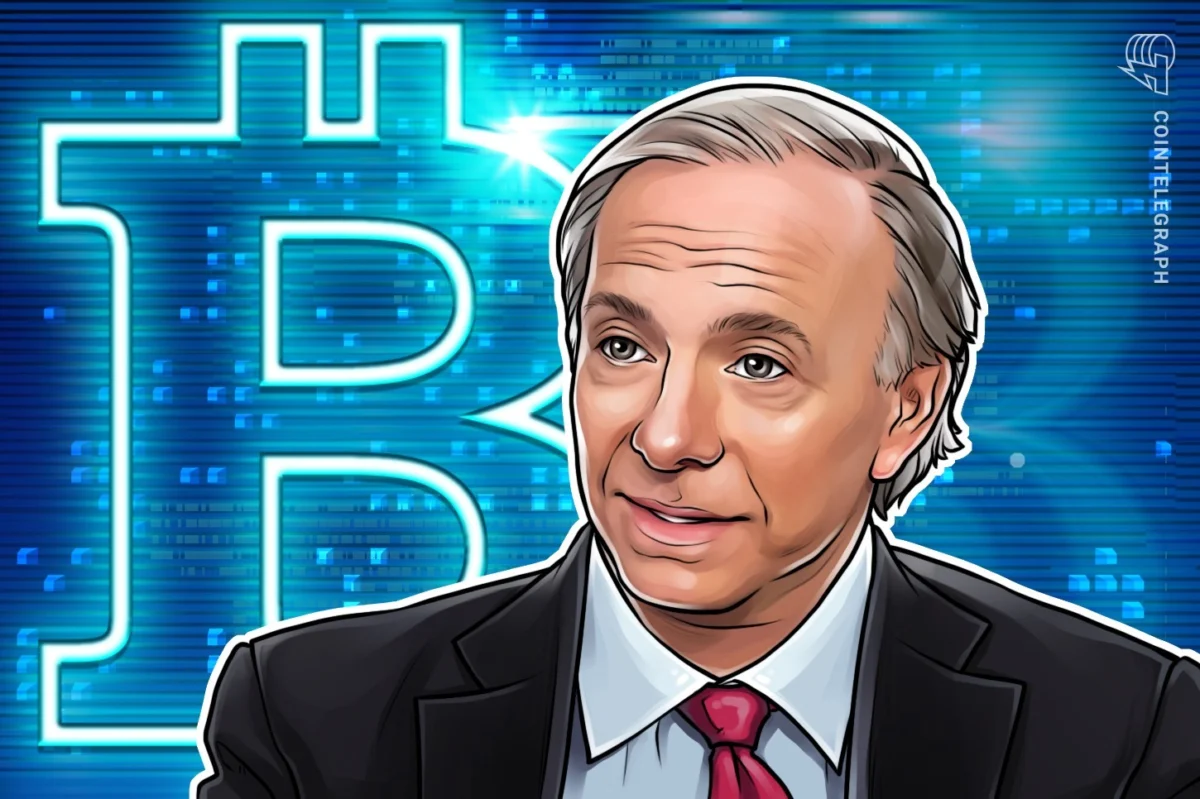
In a stark warning resonating through financial markets, Ray Dalio, the esteemed founder of Bridgewater Associates, one of the world’s largest hedge funds, has urged investors to strategically allocate a portion of their portfolios to gold and a "bit of Bitcoin" as a bulwark against an impending debt crisis in the United States. Dalio’s pronouncements, delivered via a recent LinkedIn post, signal a significant shift in his long-held views on cryptocurrency and highlight his deep-seated concerns about the trajectory of global economic stability, particularly concerning the fiscal health of the U.S.
Dalio’s Prescription for Portfolio Resilience
In his latest public commentary, Dalio posited that holding approximately 10% to 15% of one’s investment portfolio in gold could serve as a crucial risk-reduction strategy. He further elaborated on this recommendation by advocating for an overweighting of both gold and Bitcoin (BTC) relative to traditional debt assets, such as government bonds. This strategic pivot is driven by Dalio’s assessment of escalating risks stemming from a confluence of "internal political and external geopolitical conflicts."
The rationale behind Dalio’s advocacy for these alternative assets lies in their perceived ability to retain value and offer diversification benefits during periods of economic turmoil and inflationary pressures, which he believes are exacerbated by the current debt-laden landscape. Gold, historically recognized as a safe-haven asset, has long been a favored choice for investors seeking to preserve capital during uncertain times. Bitcoin, while a more recent entrant to the investment arena, has also been touted by some as a potential digital store of value, particularly in an environment where fiat currencies may face devaluation.
A Grim Timeline for U.S. Fiscal Health
Dalio’s prediction regarding the U.S. debt crisis is notably specific, albeit couched in probabilistic terms. "My guess, which I suppose will be a bad one, is that [a U.S. debt crisis] will come in three years, give or take two, if the course we’re on is not changed," he stated. This forecast, placing a potential crisis within a five-year window (2026-2028), underscores the urgency he perceives in the current fiscal situation. Such a timeline suggests that Dalio believes the existing trajectory of government spending, debt accumulation, and monetary policy is unsustainable and could precipitate a severe economic downturn.
The sheer scale of U.S. national debt is a critical backdrop to Dalio’s concerns. As of early 2024, the U.S. national debt has surpassed $34 trillion. This figure represents a substantial increase over the past two decades, fueled by factors including prolonged military engagements, tax cuts, and emergency spending measures during economic downturns and the COVID-19 pandemic. The Congressional Budget Office (CBO) has consistently projected that the debt-to-GDP ratio will continue to rise in the coming decades under current law, posing significant challenges for future fiscal flexibility and economic growth.
Evolution of Dalio’s Stance on Bitcoin
Ray Dalio, with an estimated net worth exceeding $15 billion according to Forbes, has not always been a vocal proponent of Bitcoin. Historically, he has expressed skepticism about Bitcoin’s ability to supplant gold as a primary store of value. His earlier reservations often centered on concerns about Bitcoin’s volatility, its nascent stage of development compared to the millennia-old history of gold, and potential vulnerabilities such as privacy issues and future threats from advancements in quantum computing, which could theoretically compromise its cryptographic underpinnings.
However, Dalio’s recent commentary indicates an evolving perspective. His current advocacy for including Bitcoin in investment portfolios, albeit in a limited capacity, echoes sentiments he expressed in July 2025. At that time, he disclosed that he held some Bitcoin, clarifying that it was "not much." He also recommended an allocation of up to 15% in both cryptocurrency and gold, suggesting a growing recognition of Bitcoin’s potential role in a diversified portfolio, particularly as a hedge against systemic financial risks.
This marks a notable departure from his earlier, more cautious stance. In 2022, prior to a significant downturn in the cryptocurrency market, Dalio had suggested that a "reasonable" allocation to Bitcoin would be between 1% to 2% of an investor’s portfolio. This earlier recommendation, while still acknowledging Bitcoin’s potential, was considerably more conservative than his current contemplation of a 10-15% allocation to gold and an unspecified but still significant portion to Bitcoin. The shift suggests that Dalio is increasingly viewing Bitcoin not just as a speculative asset but as a potential component of a defensive investment strategy, particularly in the face of macroeconomic headwinds.
Broader Context: The Debt Ceiling and Fiscal Debates
Dalio’s concerns are amplified by the recurring political and economic debates surrounding the U.S. debt ceiling. The debt ceiling is a legislative limit on the amount of national debt that can be issued. When the U.S. approaches this limit, it necessitates an act of Congress to raise or suspend it to allow the Treasury Department to issue new debt to meet existing obligations. These debates have often been contentious, leading to periods of heightened market volatility and uncertainty.
The implications of a failure to raise the debt ceiling could be catastrophic, potentially leading to a default on U.S. government debt, which would have far-reaching consequences for the global financial system. Even without a default, the brinkmanship associated with these debates can erode confidence in U.S. fiscal management and contribute to the kind of instability Dalio warns about.
Furthermore, the ongoing discussions about potential fiscal reforms, stimulus measures, and the long-term sustainability of entitlement programs like Social Security and Medicare all play into Dalio’s assessment of future economic risks. The increasing national debt not only raises concerns about the government’s ability to service its obligations but also about its capacity to respond to future economic shocks without exacerbating the debt problem.
Geopolitical Tensions and Their Economic Impact
Dalio’s emphasis on "external geopolitical conflicts" as a driver of risk is also highly pertinent. The current global landscape is marked by a series of interconnected geopolitical challenges, including the ongoing war in Ukraine, tensions in the Middle East, and strategic competition between major global powers. These conflicts can disrupt global supply chains, fuel inflation, lead to energy price volatility, and increase uncertainty for businesses and investors worldwide.
For instance, disruptions to energy markets, often a consequence of geopolitical instability, can directly impact inflation and economic growth. Similarly, trade tensions and protectionist policies can hinder international commerce and investment, further complicating the global economic outlook. The interconnectedness of the global economy means that geopolitical shocks can quickly translate into financial market reactions and economic slowdowns, underscoring the need for investors to consider a range of potential risks.
The Role of Central Banks and Monetary Policy
The actions of central banks, particularly the U.S. Federal Reserve, are also a critical factor in Dalio’s analysis. In recent years, central banks have employed unconventional monetary policies, including quantitative easing and near-zero interest rates, to stimulate economies. While these measures can provide short-term relief, they have also contributed to asset price inflation and raised concerns about the long-term consequences for financial stability and the value of currencies.
The Federal Reserve has been engaged in a process of monetary tightening, raising interest rates to combat inflation. However, the pace and extent of this tightening can have significant implications for economic growth and the cost of servicing government debt. A delicate balancing act is required to bring inflation under control without triggering a severe recession. Dalio’s comments suggest a concern that the current policy path may not be sufficient to avert a crisis or that the cumulative effect of past policies has already set the stage for future problems.
Reactions and Expert Opinions
While direct reactions from specific market participants to Dalio’s latest pronouncements were not immediately available, his views carry significant weight in the financial world. As a seasoned investor and founder of a major hedge fund, Dalio’s insights are closely watched. It is probable that his call for increased allocation to gold and Bitcoin would prompt discussions among institutional investors, financial advisors, and individual investors seeking to navigate a complex economic environment.
Other financial experts have also voiced concerns about the U.S. debt trajectory. Analysts from various investment banks and economic think tanks have published reports highlighting the risks associated with high and rising levels of government debt, including potential impacts on interest rates, economic growth, and the U.S. dollar’s status as the world’s primary reserve currency.
Implications for Investors and the Global Economy
Dalio’s advice to consider gold and Bitcoin as portfolio hedges has several implications:
- Diversification: It emphasizes the importance of diversifying beyond traditional asset classes, particularly during periods of heightened uncertainty.
- Inflation Hedge: Gold has historically served as a hedge against inflation, and Dalio’s recommendation suggests he anticipates continued inflationary pressures or a loss of purchasing power for fiat currencies.
- Alternative Store of Value: His inclusion of Bitcoin, even with a caveat of "a bit," signifies a growing acceptance of its potential as an alternative store of value, especially in an environment where traditional financial systems might face strain.
- Risk Management: The core of Dalio’s message is risk management. By suggesting these assets, he is providing a potential framework for investors to protect their capital against systemic economic shocks.
The potential for a U.S. debt crisis, as envisioned by Dalio, would have profound implications not only for the American economy but for the entire global financial system, given the interconnectedness of markets and the dollar’s central role. A significant contraction in U.S. economic activity, a sharp depreciation of the dollar, or a sovereign debt default would trigger widespread market turmoil, potentially leading to a global recession.
Dalio’s call to action serves as a timely reminder for investors to reassess their portfolios and consider strategies that can provide resilience in the face of mounting economic and geopolitical challenges. While the exact timing and severity of any potential crisis remain uncertain, Dalio’s perspective from a leading figure in the investment world underscores the growing concerns about the sustainability of current fiscal policies and the imperative for proactive risk management.
Bridgewater’s Approach to Market Analysis
Bridgewater Associates is renowned for its "all-weather" investment philosophy, which aims to build portfolios that can perform well in a variety of economic conditions. The firm’s extensive research into economic cycles, historical crises, and the interplay of various global forces informs its investment strategies. Dalio’s recent pronouncements are consistent with Bridgewater’s long-standing practice of analyzing macro-economic trends and potential systemic risks to guide their investment decisions and advise their clients. Their proprietary economic models often focus on understanding the dynamics of debt cycles and their potential impact on asset prices and economic stability.
Concluding Remarks on Future Outlook
Ray Dalio’s latest assessment underscores a period of significant uncertainty for the global economy. The confluence of high debt levels, geopolitical tensions, and evolving monetary policies presents a complex challenge for investors. His recommendation to consider gold and Bitcoin as a defensive measure reflects a growing sentiment among some financial strategists that traditional investment paradigms may need to be re-evaluated in light of these unprecedented circumstances. Investors are therefore encouraged to conduct their own due diligence and consult with financial professionals to tailor their investment strategies to their individual risk tolerance and financial objectives. The coming years will likely be a critical test for the resilience of global financial systems and the effectiveness of various asset classes in preserving wealth.

