
Kyiv has openly declared an intensified strategy aimed at escalating military, diplomatic, and economic pressure on the Russian Federation, with the explicit goal of compelling a return to substantive peace negotiations and concluding the ongoing conflict by the autumn of 2026. President Volodymyr Zelensky has articulated a clear vision for a comprehensive, multi-pronged approach designed to hasten an end to hostilities, even while acknowledging the inherent difficulties and the Kremlin’s apparent intent to prolong the war. This ambitious timeline underscores a critical juncture in the conflict, as Ukraine seeks to leverage international support and innovative tactical measures to achieve a decisive shift in the strategic landscape.
A Strategic Imperative: The Race Against Time
President Zelensky, addressing a gathering of Ukrainian ambassadors in the capital, Kyiv, on Monday, outlined the autumn 2026 window as the target for achieving a cessation of the full-scale invasion. "We will try very hard to make this happen before winter, in the autumn," he stated, as reported by Ukrainian national media. This specific timeframe is not arbitrary; it reflects a deep understanding of the operational challenges posed by winter conditions, the potential for resource fatigue among allies, and the urgent need to mitigate the immense human and economic toll of the conflict. Military analysts frequently note that winter historically complicates large-scale offensive operations, limiting mobility, increasing logistical demands, and exacerbating humanitarian crises. Therefore, securing a resolution before the onset of another harsh winter is seen as a strategic imperative, aiming to prevent the conflict from settling into a protracted, attritional stalemate that could further drain resources and morale.
However, Zelensky was quick to temper expectations, adding a crucial caveat: "We clearly understand who we are dealing with and that Putin hopes to continue dragging out this war." This acknowledgment highlights the formidable challenge posed by Russia’s leadership, which, according to Kyiv, is actively preparing for a prolonged conflict. Zelensky explicitly stated, "He is preparing mobilization at home and new strikes. We see Russia’s true intentions, we are uniting our partners and putting pressure on the aggressor." This recognition frames Ukraine’s accelerated timeline not as an optimistic prediction but as a determined strategic objective requiring unprecedented efforts and sustained international solidarity.
The Multi-Pronged Pressure Campaign: Diplomacy, Economy, and Military
Ukraine’s revitalized strategy is built upon three interconnected pillars: heightened diplomatic engagement, reinforced economic sanctions, and escalated military pressure, including a novel approach termed "long-range sanctions." The objective, as articulated by President Zelensky, is to elevate these combined tools to "such a level of pressure that Russia is left with no alternative other than peace."
1. Intensified Diplomatic Offensive:
The gathering of Ukrainian ambassadors served as a critical platform for calibrating Kyiv’s global diplomatic efforts. The aim is to solidify international consensus against Russia’s aggression, expand the coalition of supporting nations, and isolate Moscow further on the world stage. This involves:
- Global Outreach: Strengthening bilateral ties, engaging with nations in the Global South, and advocating for Ukraine’s peace formula, which includes principles such as territorial integrity, withdrawal of Russian troops, and accountability for war crimes.
- International Forums: Continued active participation and advocacy within organizations like the United Nations, the G7, the European Union, and NATO to ensure sustained political, financial, and military support. Diplomatic efforts also focus on countering Russian disinformation campaigns and maintaining the narrative of Russia as the aggressor.
- Sanctions Enforcement: Working with allies to ensure robust implementation and enforcement of existing sanctions, while also exploring avenues for new restrictive measures against Russia’s key economic sectors and individuals.
2. Economic Pressure: Western Sanctions and Beyond:
Since the full-scale invasion began in February 2022, Western allies have imposed an unprecedented array of economic sanctions on Russia, targeting its financial institutions, energy sector, technology imports, and key oligarchs. These measures aim to degrade Russia’s capacity to finance its war efforts and maintain its military-industrial complex. While these sanctions have undoubtedly impacted the Russian economy, leading to a significant contraction of GDP, inflation, and difficulties in accessing advanced technologies, Russia has demonstrated a degree of resilience by reorienting trade towards non-Western partners and leveraging its vast natural resources.
Ukraine’s strategy calls for continued reliance on these allied economic measures, pushing for their expansion and more rigorous enforcement. The goal is to incrementally tighten the economic noose, making it increasingly costly and unsustainable for Moscow to continue the conflict. This includes efforts to cap oil prices, restrict access to critical components for military hardware, and target sectors previously less affected.
3. Escalated Military Pressure and "Long-Range Sanctions":
The military component of Ukraine’s strategy involves not only sustained defensive and offensive operations on the battlefield but also a strategic expansion of what President Zelensky refers to as "long-range sanctions." This term encapsulates a distinct operational approach: direct strikes on Russian military and industrial infrastructure that supports the war effort, alongside the conventional sanctions imposed by Western governments.
This concept represents a significant evolution in Ukraine’s operational strategy, aiming to disrupt Russia’s war-making capabilities at their source. By targeting logistics hubs, production facilities, and supply chains within Russia, Kyiv seeks to create tangible disruptions that directly impede the Kremlin’s ability to equip, supply, and sustain its forces on the front lines. This includes attacks on military depots, fuel storage facilities, and, increasingly, civilian infrastructure alleged to be repurposed or utilized for military logistics.
The Wildberries Case Study: A New Front in Economic Warfare
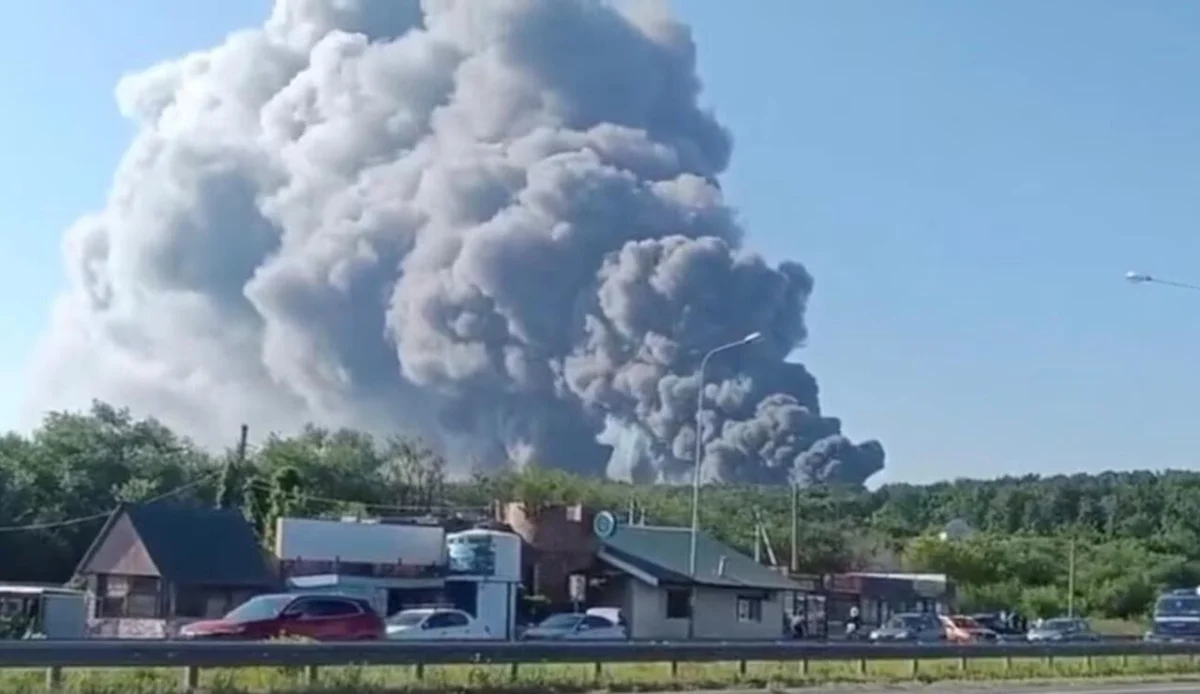
A prominent example of these "long-range sanctions" is the series of recent attacks on the logistics network of Wildberries, Russia’s largest online retailer. On Monday, August 3, 2026, yet another large Wildberries warehouse, this time located in the Vladimir region, erupted in flames, reportedly burning over an area of 100,000 square meters. This incident marks the third attack on the e-commerce company’s logistics infrastructure in a mere two weeks, and over a dozen similar attacks have been reported over the past month across various regions of Russia.
Chronology of Recent Attacks (Illustrative, based on provided context):
- Late July 2026: Initial reports emerge of fires and damage at Wildberries logistics centers in various Russian regions, with authorities often citing electrical faults or arson as causes, while Ukrainian sources hint at covert operations.
- Early August 2026 (Specific Incidents):
- Approx. August 1, 2026: A major incident reported at a Wildberries facility, possibly in a region near the Ukrainian border or a key logistical node. Details of the damage and disruption begin to circulate.
- Approx. August 3, 2026: The Vladimir region warehouse fire, covering 100,000 square meters, becomes a highly visible and financially impactful event. This incident, captured in widely shared social media footage, underscores the scale of disruption.
Rationale and Allegations:
President Zelensky has publicly alleged that these Wildberries warehouses are not merely commercial entities but are involved in providing Russian forces with critical military supplies. Specifically, he claimed they facilitate the acquisition of drone components, navigation equipment, and other military-grade items listed on its website. Furthermore, there have been credible reports from various intelligence sources and soldiers’ testimonials indicating that underequipped Russian soldiers have resorted to ordering basic supplies and non-standard military gear directly from online retailers like Wildberries to compensate for deficiencies in official military provisioning.
The targeting of a major civilian e-commerce giant like Wildberries represents a significant escalation, blurring the lines between military and civilian infrastructure in the context of economic warfare. While Russia frames these incidents as acts of terrorism, Ukraine views them as legitimate targets given their alleged role in supporting the invading forces.
Impact Assessment of "Long-Range Sanctions":
- Financial Losses: Forbes analysts have estimated the cumulative losses incurred by Russian businesses from Ukrainian strikes on logistics warehouses to be in the range of €2.3–3 billion. This figure, though potentially conservative, signifies a substantial economic blow, affecting supply chains, inventory, and operational continuity for a wide array of Russian companies.
- Operational Disruption: Beyond direct financial costs, the destruction of large warehouses causes significant logistical bottlenecks. It forces companies to reroute supply chains, seek alternative storage and distribution methods, and contend with increased insurance premiums and operational complexities. For military supplies allegedly flowing through these channels, this translates into delays, increased costs, and potential shortages at the front.
- Psychological and Economic Vulnerability: The repeated targeting of seemingly civilian infrastructure deep within Russia carries a potent psychological message: no part of the Russian economic apparatus supporting the war is entirely safe. This can erode public confidence, deter investment, and create an atmosphere of uncertainty, further pressuring the Kremlin.
- Resource Diversion: Responding to these attacks requires Russia to divert resources—emergency services, security personnel, and potentially military assets—to protect and repair domestic infrastructure, thus drawing focus and resources away from the front lines.
Russian Response and Counter-Narratives:
The Kremlin has consistently condemned such attacks as acts of terrorism, framing them as attempts by Ukraine to destabilize Russia and inflict harm on its civilian population. Russian state media and official channels typically attribute warehouse fires to negligence, technical malfunctions, or domestic sabotage, avoiding any acknowledgment of Ukrainian involvement. This narrative aims to maintain domestic stability, deny Ukraine any strategic success, and justify retaliatory measures.
President Putin’s strategy, as observed by Zelensky and many international analysts, appears centered on outlasting Western support for Ukraine and enduring the conflict until Kyiv’s resolve or its allies’ commitments falter. The reported preparations for further mobilization and new strikes underscore a commitment to a prolonged conflict, which directly challenges Ukraine’s ambition for a swift resolution. Russia’s response to "long-range sanctions" has included tightening air defenses, increasing security around critical infrastructure, and threatening further retaliatory strikes against Ukrainian cities and infrastructure.
Broader Implications and Strategic Outlook:
Ukraine’s intensified strategy carries profound implications for all parties involved:
- For Ukraine: This aggressive push demonstrates Kyiv’s unwavering determination to regain its territory and secure its sovereignty. It is a high-stakes gamble that relies heavily on sustained Western military and financial aid, as well as the ability to maintain internal unity and resilience. Success could lead to a favorable negotiating position, while failure could prolong the conflict under potentially less advantageous terms.
- For Russia: The escalating pressure, particularly the "long-range sanctions" on economic infrastructure, tests Russia’s internal stability, economic resilience, and military logistical capabilities. It forces the Kremlin to confront the direct costs of the war not just on the battlefield but also within its own borders, potentially increasing domestic dissent and complicating resource allocation.
- For the International Community: The strategy raises questions about the acceptable boundaries of warfare, the risk of escalation, and the long-term impact on global supply chains and economic stability. It also underscores the continued necessity of humanitarian aid and diplomatic efforts to de-escalate tensions and facilitate a peaceful resolution. The effectiveness of this strategy will largely depend on the unwavering support of Ukraine’s allies, who must continue to provide the necessary military equipment, intelligence, and financial assistance.
The ambitious goal of ending the war by autumn 2026, driven by a multi-faceted pressure campaign including innovative "long-range sanctions," marks a critical phase in the conflict. President Zelensky’s explicit articulation of this timeline reflects both a strategic urgency and a profound understanding of the immense challenges ahead. The coming months will reveal whether this escalated approach can indeed compel Russia to the negotiating table on terms acceptable to Ukraine, or if the conflict is destined to endure beyond the envisioned autumn deadline, continuing its devastating human and economic toll. The world watches as Ukraine embarks on this decisive push, hoping to turn the tide before another winter grips the war-torn nation.

