
Western Union, a long-standing titan in the global remittance industry, has openly acknowledged a significant downturn in its core business, directly attributing the decline to the tightened immigration policies of the Trump administration. During its Q2 2026 earnings call, Chief Financial Officer Matt Cagwin quietly, yet pointedly, highlighted the critical role of new migration in sustaining the company’s retail operations, stating, "New migration is the lifeline of our retail business. With borders closed, it is difficult to offset natural attrition… as consumers return home to their native countries." This candid admission underscores a profound shift impacting not only the financial giant but also the broader dynamics of international money transfers and the economies that heavily rely on them. The company’s stock plummeted by 15% following the release of these results, signaling investor concern over its future trajectory in a rapidly evolving geopolitical and technological environment.
The Q2 2026 Earnings Call: A Sobering Assessment
The earnings call for the second quarter of 2026 painted a challenging picture for Western Union. CFO Matt Cagwin’s remarks were echoed and amplified by CEO Devin McGranahan, who offered a stark assessment of the company’s predicament. McGranahan explicitly linked the revenue loss to prevailing immigration policies, noting that "remittances in the Americas have faced meaningful pressure that began in late 2024, driven by the changes in immigration policy." He further emphasized the difficulty in achieving "true growth without a meaningful change in immigration policy," indicating a deep dependency on open borders and consistent migration flows for the company’s profitability.
Specifically, the report revealed a decline in key corridors. Remittances from the U.S. to Mexico, a historically robust and vital route for Western Union, decreased by "a little over 3% on a transaction basis" in Q2 2026. This figure follows a previously reported annual decline of almost 5% for the entirety of 2025 in U.S. to Mexico remittances, signaling an accelerating trend rather than an isolated quarterly blip. The sustained and intensifying pressure on these corridors, particularly from the United States, represents a direct challenge to Western Union’s established business model, which has historically thrived on the consistent movement of people and the subsequent need for cross-border financial transfers.
Migration as the Economic Engine for Remittances
The executives’ statements clearly articulate that new migration is not merely a contributing factor but the fundamental "lifeline" of Western Union’s retail business. This concept highlights the intricate relationship between human mobility and the remittance industry. Migrants, upon settling in new countries, often send a portion of their earnings back to their families in their native countries. This flow of funds represents not only a significant economic lifeline for millions of households globally but also the core revenue stream for companies like Western Union.
When borders become less permeable, and new migration flows diminish, the natural attrition of existing migrant populations becomes a critical issue. Over time, some migrants may return to their home countries, some may achieve greater financial stability and seek alternative, potentially cheaper, transfer methods, while others may simply cease sending money. Without a steady influx of new migrants to replenish this customer base, the volume of transactions and the total value of remittances inevitably shrink. The Trump administration’s "markedly more hawkish" stance on immigration, characterized by stricter border enforcement, reduced visa issuance, and increased deportations, has directly impacted this "lifeline," leading to a contraction in the very source of Western Union’s profits.
Western Union’s Enduring Model Under Modern Scrutiny
Western Union’s business model has long been a subject of debate, particularly concerning its fee structures. Critics often describe the company as a "dominant vampire skimming absurd fees" due to its perceived lack of technological innovation compared to modern fintech solutions and its reliance on a vast physical agent network. While digital payment platforms like Venmo, Wise (formerly TransferWise), and Remitly have revolutionized domestic and international money transfers with lower fees and greater convenience, Western Union has largely maintained its market share through an extensive global footprint and, as implied by the original article, significant lobbying efforts.
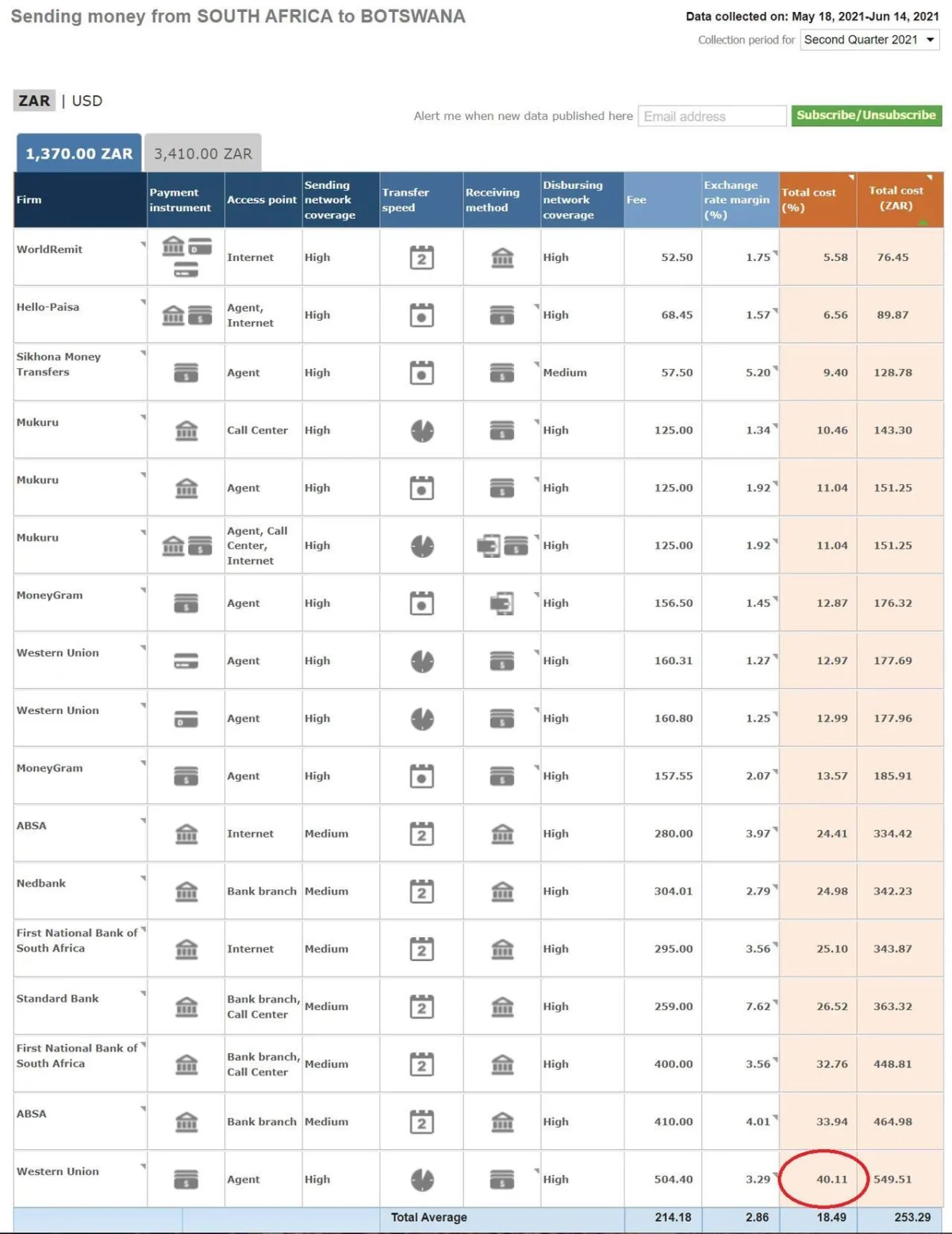
The company’s fee practices have drawn particular attention, especially in less competitive markets. A striking example cited in the earnings context highlights a transfer from South Africa to Botswana, where Western Union reportedly charges as high as 40.11% for a remittance of approximately $84 USD (data from the World Bank, Q2 2021). Such exorbitant fees, while not universal across all corridors, underscore a pricing strategy that capitalizes on a lack of alternatives or financial literacy among certain customer segments. For context, the World Bank’s target for global remittance costs is 3% of the amount sent, a benchmark far exceeded by Western Union in many instances.
This model, while historically successful, faces increasing pressure. The rise of digital-first competitors offering transparent, lower-cost, and faster transfers through mobile apps and online platforms has eroded Western Union’s competitive edge in terms of technological convenience and pricing. These newer players leverage digital infrastructure, bypassing the need for extensive physical networks and the associated overheads, thereby enabling them to offer more attractive rates. Western Union’s continued reliance on traditional cash-to-cash services and a physical agent network, while still serving an important demographic, puts it at a disadvantage in an increasingly digital world.
The Unprecedented Impact of Shifting U.S. Immigration Policies
The link between U.S. immigration policy and Western Union’s financial performance is undeniable. The Trump administration’s second term saw a continuation and intensification of policies aimed at significantly reducing both legal and illegal immigration. These policies included:

- Increased Border Enforcement: Enhanced physical barriers, deployment of military personnel, and increased surveillance along the U.S.-Mexico border.
- Stricter Asylum Rules: Limitations on who can apply for asylum and where, leading to longer processing times and higher rates of rejection.
- Reduced Visa Issuances: Tightening of various visa categories, impacting family reunification, work, and student visas.
- Expedited Deportations: Increased focus on identifying and deporting undocumented immigrants within the U.S.
- "Remain in Mexico" Policy (MPP): While initially implemented in a previous term, its continuation and expansion further limited new entries.
These measures collectively contributed to a dramatic shift in migration patterns. The United States experienced net negative migration last year (referring to the most recent data preceding Q2 2026), marking the first time in over half a century that more people left the country than entered it. This demographic reversal, a stark contrast to decades of consistent net positive immigration, directly correlates with the observed decline in remittance volumes. For an industry whose "lifeline" is new migration, such a macro-level demographic shift represents an existential threat.
The U.S.-Mexico remittance corridor, one of the busiest in the world, serves as a prime example of this impact. Mexico is the third-largest recipient of remittances globally, with the vast majority originating from the United States. In 2025, remittances from the U.S. to Mexico declined by nearly 5%, a significant blow to an economy where these funds constitute a vital source of foreign currency and support for countless families. The further 3% decline in transactions in Q2 2026 indicates a worsening trend, suggesting that the effects of these policies are deepening rather than abating.
Broader Economic and Social Implications
The decline in remittances carries significant economic and social implications, particularly for recipient countries like Mexico and many nations in Africa, Asia, and Latin America. Remittances often represent a substantial portion of a country’s Gross Domestic Product (GDP) and are crucial for poverty reduction, healthcare, education, and small business investment in many developing economies.
For Mexico, remittances are a cornerstone of many household economies, especially in rural areas. They help lift families out of poverty, improve living standards, and provide capital for local entrepreneurs. A sustained decline in these transfers can lead to:
- Reduced Household Income: Directly impacting the ability of families to meet basic needs, invest in education, or access healthcare.
- Decreased Foreign Exchange: Weakening the local currency and potentially increasing inflation.
- Stifled Economic Growth: Less capital circulating in local economies, affecting consumption and investment.
- Increased Poverty and Inequality: Exacerbating existing economic disparities.
While Western Union’s financial health is a corporate concern, the broader implications for the millions of people who rely on remittances are far more profound. The shift in migration patterns, driven by stricter policies, fundamentally alters the economic calculus for entire communities dependent on these cross-border financial flows.
The Future Trajectory: Adaptation or Continued Decline?
Western Union’s leadership has made it clear that a "meaningful change in immigration policy" is necessary for the company to return to "true growth." This statement, however, highlights a significant strategic vulnerability: relying on external political shifts beyond the company’s control. In a landscape where immigration policies can fluctuate dramatically with changes in government, this dependency poses a long-term risk.
The challenges facing Western Union are multifaceted:
- Geopolitical Risk: Direct exposure to the whims of immigration policy in major sending countries, particularly the United States.
- Technological Disruption: The ongoing rise of agile, digitally native fintech companies that offer more efficient and cost-effective services.
- Customer Expectations: A growing demand for instant, transparent, and low-cost transfers, which traditional models struggle to match.
- Market Saturation and Competition: Increasing competition in the digital space puts downward pressure on fees, impacting profitability.
To navigate this complex environment, Western Union would likely need to aggressively pivot its strategy. This could involve accelerating its digital transformation efforts, investing heavily in mobile platforms, reducing its fee structures to compete more effectively with digital rivals, and exploring new markets or services less reliant on traditional migration flows. Partnerships with mobile network operators or local financial institutions in recipient countries could also offer new avenues for growth and reach.
However, such a pivot requires substantial investment and a fundamental re-evaluation of its long-standing business model. The recent earnings report serves as a stark reminder that even established giants are not immune to the powerful confluence of geopolitical shifts and technological innovation. The coming years will be crucial in determining whether Western Union can adapt to these new realities or if its market dominance will continue to erode under the weight of a changing world.

