
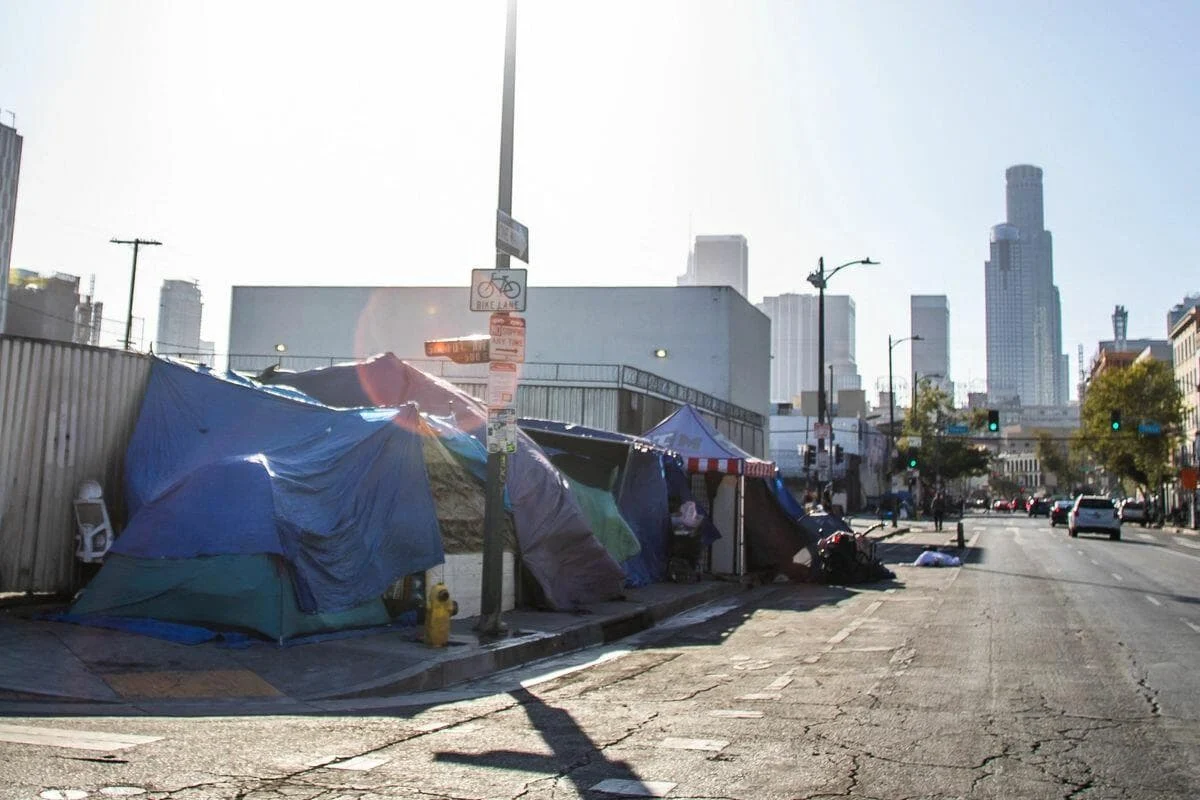
Los Angeles, California – A significant increase in homelessness across the city has ignited a fierce political debate between incumbent Mayor Karen Bass and her challenger in the upcoming November 3rd election, Councilmember Nithya Raman. The release of the 2026 Greater Los Angeles Homeless Count figures on July 24th revealed a concerning surge, marking the first increase in the unhoused population after two consecutive years of decline, prompting both mayoral contenders to criticize each other’s approaches to the persistent crisis. The renewed focus on this deeply entrenched issue sets the stage for a pivotal electoral contest, with public frustration over the visible humanitarian challenge reaching a critical point.
The Alarming Figures: A Snapshot of the Crisis
According to the comprehensive 2026 Greater Los Angeles Homeless Count, the city’s homeless population rose by 3.4 percent, reaching an estimated 45,194 individuals. More alarmingly, unsheltered homelessness—referring to individuals living in tents, vehicles, or other places not meant for human habitation—experienced an even sharper increase of nearly 8 percent. These statistics are derived from the annual point-in-time count conducted by the Los Angeles Homeless Services Authority (LAHSA), a joint city-county agency responsible for coordinating homelessness services. The methodology for this count involves thousands of volunteers fanning out across the vast county to tally individuals and families experiencing homelessness, providing a critical, albeit often underestimated, snapshot of the crisis. The reversal of the previous downward trend underscores the formidable challenges facing the region, despite substantial investments and various initiatives over recent years.
Political Firestorm: Mayoral Candidates Exchange Blame
The release of the new data immediately triggered a political skirmish. Councilmember Nithya Raman, who represents the Fourth Council District and is challenging Mayor Bass for a second term, seized upon the findings to launch a scathing critique of the city’s current leadership. Holding a news conference in Studio City on the afternoon the results were announced, Raman minced no words. "By now you’ve probably seen the reports: despite hundreds of millions of dollars spent—and repeated assurances that Los Angeles had turned a corner—unsheltered homelessness increased by nearly 8% in this city," Raman stated emphatically. She characterized the situation as "a moral outrage" and "a failure of leadership," directly implicating the current administration’s effectiveness.
Raman highlighted a stark contrast within her own district, noting that the Fourth Council District experienced a remarkable 49 percent decrease in unsheltered homelessness. She attributed this success to a meticulous, hands-on approach: "We track every case, break through the barriers holding up placements, connect people with housing and care, and stay involved until they are housed." Furthermore, her district saw a significant reduction in recreational vehicles (RVs) used as housing for unhoused individuals, with numbers dropping from 103 in 2023 to 38 in 2026, a substantial 63 percent decline. Raman pledged that, if elected, she would replicate this successful, results-oriented strategy citywide, asserting that homelessness is "not an unsolvable problem. It’s a mismanaged one."
Mayor Bass’s Defense and Counter-Attack
In immediate response, Mayor Bass’s campaign vehemently defended her administration’s efforts and fired back at Raman. Alex Stack, a spokesperson for Bass’s campaign, accused Raman of selectively claiming credit for successes in her district while conveniently overlooking her broader responsibilities as chair of the City Council’s Homelessness and Housing Committee. Stack’s statement highlighted that the city’s signature initiative, "Inside Safe," had brought 236 people in the Fourth Council District into interim housing since 2023. The Bass campaign further alleged that Raman had not attended a single Inside Safe operation in her district last year, implying a disconnect between her criticism and direct engagement with city-led solutions.
The campaign also pointed out that the reduction in RVs in Raman’s district involved towing, storage, and relocation operations orchestrated by the city’s homelessness teams, suggesting that Raman was taking credit for city-run services. "Nithya Raman is taking credit for the results of Inside Safe while campaigning against it," Stack asserted. He added, "While Raman takes credit for the city’s work in her district, ignoring the fact that she’s the chair of the Homelessness & Housing Committee for all of Los Angeles, Mayor Bass is working to move our city forward and address years of neglect." Mayor Bass, who previously served a three-year term on the LAHSA Commission, which concluded on June 30th and holds authority over budgetary, funding, planning, and program policies, has consistently campaigned on the "progress" made during her first term, particularly her administration’s success in moving unhoused individuals into temporary housing. She specifically cited an 11 percent reduction in unsheltered homelessness citywide since 2023 and the successful housing of more than 1,000 homeless veterans.
Inside Safe Under Scrutiny: Bass’s Signature Initiative
At the heart of the political debate is Mayor Bass’s marquee program, Inside Safe. Launched as a cornerstone of her strategy, Inside Safe aims to swiftly move people from encampments into interim housing, such as motels and hotels, with the ultimate goal of transitioning them into permanent housing. The program represents a significant investment of city resources, but its effectiveness and cost-efficiency have become points of contention.
Councilmember Raman has been a vocal critic of Inside Safe, arguing that it is "too costly" and has "failed to produce better results" commensurate with its expenditure. This criticism gained traction following an analysis by the Los Angeles Times, which revealed a troubling statistic: in the nearly four years since the program’s inception, approximately 41 percent of unhoused individuals who participated in Inside Safe had ultimately returned to homelessness. This finding suggests a significant challenge in achieving lasting solutions through the program’s current structure, fueling Raman’s argument for a more sustainable and less revolving-door approach. The high cost of temporary housing solutions, coupled with the difficulty in securing long-term placements and comprehensive support services, remains a significant hurdle for Inside Safe and similar initiatives.
Decades in the Making: The Root Causes of Los Angeles’s Homelessness
The homelessness crisis in Los Angeles is not a new phenomenon; it is a deeply rooted issue with decades of history, exacerbated by a confluence of systemic factors. For years, Los Angeles has grappled with an acute housing affordability crisis, where the median rent and home prices far outstrip the incomes of many residents. The severe shortage of affordable housing units, particularly for extremely low-income individuals, forces many into precarious living situations, where a single job loss or health crisis can quickly lead to homelessness.
Beyond housing, underlying societal issues contribute significantly. Mental health disorders and substance abuse are prevalent among the unhoused population, often complicating efforts to provide stable housing and support. While these issues are not universal among all experiencing homelessness, they represent critical barriers for a substantial segment. Economic disparities, stagnant wages for low-income workers, and a lack of robust safety nets further push vulnerable populations to the brink. Previous initiatives, such as Proposition HHH, a $1.2 billion bond measure approved by voters in 2016 to build permanent supportive housing, and Measure H, a quarter-cent sales tax approved by county voters in 2017 to fund homelessness services, have made inroads but have been insufficient to stem the tide of new individuals falling into homelessness. The COVID-19 pandemic also played a complex role, initially providing temporary housing solutions through programs like Project Roomkey, but also disrupting employment and increasing economic hardship for many.
The Intertwined Roles of City, County, and State
Addressing homelessness in a megalopolis like Los Angeles requires intricate coordination among multiple governmental layers, a process often fraught with challenges. Mayor Bass, seeking to deflect criticism, pointed fingers at both federal and county entities for contributing to the city’s struggles. In a statement, Bass squarely blamed the Trump administration for policies that she argued drove up the cost of living while simultaneously reducing federal funding for crucial safety net programs. These federal cuts, she contended, limited the city’s capacity to proactively address the crisis. Federal grants from agencies like the Department of Housing and Urban Development (HUD) are vital for funding homelessness prevention, outreach, and housing programs.
Bass also leveled criticism at Los Angeles County for a "lack of adequate services," which she identified as a contributing factor to the cyclical nature of homelessness. The county is primarily responsible for providing essential services such as mental health counseling, substance-abuse treatment, and other health and human services that are critical for stabilizing individuals once they are housed. Gaps in these services mean that even if someone finds temporary shelter, they may lack the comprehensive support needed to maintain stability, leading to a return to the streets. The state of California, through initiatives like the Homeless Housing, Assistance and Prevention (HHAP) program, allocates billions of dollars to cities and counties to combat homelessness. However, even these substantial state investments, while critical, face the immense scale of the problem and the high cost of living and construction in California. The intricate web of funding streams, bureaucratic processes, and differing priorities between city, county, and state often creates a fragmented response, hindering comprehensive and swift action.
Voices from the Spectrum: Broader Stakeholder Reactions
The public discourse surrounding homelessness extends beyond the immediate political rivals, encompassing a wide array of stakeholders with diverse perspectives. Roxanne Hoge, Chair of the Republican Party of Los Angeles County, offered a particularly sharp critique, placing the blame squarely on existing leadership and what she termed the "Homeless Industrial Complex." In an email to City News Service, Hoge asserted, "Every parent knows that you get more of behavior you reward. Karen Bass, Nithya Raman, Lindsey Horvath and the entire Homeless Industrial Complex comprised of NGOs and the California Democrat Party reward everything from criminal vagrancy, drug addiction, untreated mental illness and the takeover of public spaces. The results we see are the results they want." Her statement, referencing Los Angeles County Supervisor Lindsey Horvath and various non-governmental organizations, reflects a conservative viewpoint that often emphasizes law enforcement, personal responsibility, and a more punitive approach to public order, contrasting sharply with the progressive focus on housing-first and harm-reduction strategies.
Meanwhile, advocacy groups and many non-governmental organizations (NGOs) working on the front lines, while not explicitly taking sides in the mayoral race, often express frustration with the slow pace of systemic change. They frequently call for greater emphasis on permanent supportive housing, robust mental health and substance abuse treatment, and a more streamlined system for accessing benefits and services. Many emphasize the need for holistic solutions that address the root causes of homelessness rather than merely managing its symptoms. The business community, often impacted by encampments and the perception of declining public safety, also weighs in, generally advocating for effective and swift solutions that restore public spaces and foster economic stability.
The Road Ahead: Challenges and the Electoral Impact
The 2026 Homeless Count and the ensuing political debate represent a critical juncture for Los Angeles. The increase in homelessness, particularly unsheltered homelessness, signals that current strategies, despite their intentions and significant funding, are not yet sufficient to reverse the tide. For Nithya Raman, this moment presents a clear opportunity to galvanize voter support by positioning herself as the candidate offering a "new approach" that promises more effective and accountable solutions, leveraging her district’s localized successes as proof of concept. For Mayor Bass, who is seeking a second term, the challenge is to defend her administration’s record and convince voters that her policies, particularly Inside Safe, are making tangible progress despite the discouraging aggregate numbers. Her recent difficulties, including criticism over the slow cleanup of rotting food after a warehouse fire in Boyle Heights and concerns about a crisis communications consultant working for her office for free, add to the political pressures she faces.
The upcoming mayoral election will undoubtedly be heavily influenced by how voters perceive each candidate’s ability to tackle this complex humanitarian crisis. The public demands tangible results and sustainable solutions, not just ongoing debate. The city faces immense challenges, including the continuous struggle to increase the supply of affordable housing, ensure stable funding for comprehensive services, improve coordination across governmental and non-governmental agencies, and address the myriad root causes of homelessness. How Los Angeles chooses to move forward in addressing this crisis will not only define the tenure of its next mayor but also profoundly impact the lives of tens of thousands of its most vulnerable residents and the overall fabric of the city.

