
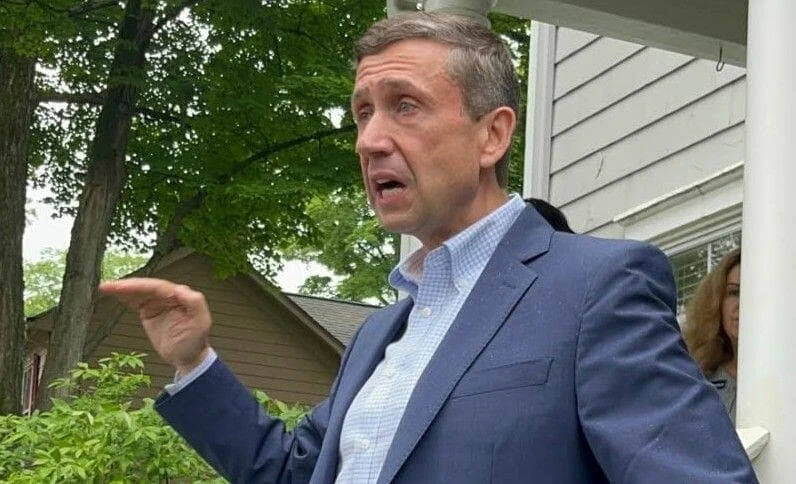
Reports indicate the Democratic National Committee (DNC) is facing substantial financial difficulties, operating with a reported $2 million deficit and compelling vendors to defer invoices until after upcoming election cycles. Simultaneously, DNC Chairman Ken Martin is reportedly under immense pressure, with recent accounts detailing an incident involving a thrown phone and a growing sense of paranoia regarding internal leaks. These revelations, emerging from comprehensive reports by the New York Times and NOTUS, paint a picture of an organization struggling with both its fiscal foundation and internal cohesion at a pivotal moment in American politics. The challenges come as the party gears up for the 2024 general election, where financial strength and organizational stability are paramount to success.
Financial Strain Unveiled: A Deep Dive into DNC’s Fiscal Woes
A New York Times report, published recently, brought to light the DNC’s precarious financial state, revealing a $2 million deficit that has prompted the committee to request vendors to delay submitting their invoices. This practice, while sometimes framed as standard negotiation, signals a significant cash flow problem for a national party apparatus typically expected to project financial robustness. The implications of such a request are multifaceted, potentially straining relationships with crucial service providers and impacting the efficiency of campaign operations, especially as the party navigates the complexities of a presidential election year and prepares for future cycles.
Further exacerbating these concerns is the DNC’s decision last year to use its Southeast Washington headquarters as collateral to secure a substantial $15 million line of credit. This move, unearthed through DC deed records by NOTUS, allowed the committee to bankroll various off-year races and operational expenses. While the DNC has historically leveraged its property in past cycles, this particular loan stands out as the largest off-year loan in the committee’s history, raising alarms among internal members who view it as a critical "flashing red light" regarding the party’s long-term financial health and strategy. The headquarters, a significant asset for the party, is only partially owned by the DNC, adding another layer of complexity to its financial maneuvers.
A History of Collateralization and Unprecedented Debt
The practice of using the DNC headquarters as collateral is not entirely new. Over the decades, national political committees, both Democratic and Republican, have occasionally used their physical assets to secure lines of credit, particularly during periods of intense fundraising pressure or strategic investment in campaign infrastructure. These loans often serve as a bridge, providing immediate liquidity for voter outreach, data acquisition, and staffing needs, with the expectation that robust fundraising will replenish coffers before repayment deadlines.
However, the sheer scale of the current $15 million loan, obtained "ahead of 2026" and described as the "biggest off-year loan in committee history," suggests a more profound and persistent financial challenge than previous cycles. Typically, such large-scale borrowing signals an urgent need for capital that cannot be met through conventional fundraising in a timely manner. This magnitude of debt can limit future financial flexibility, potentially tying up resources in loan repayments rather than direct campaign investments. It also raises questions about the effectiveness of current fundraising strategies and the broader donor landscape for the Democratic Party.
The DNC’s headquarters building, a prominent fixture in Washington D.C., represents not just a physical office space but also a symbolic asset for the party. Placing such an asset as collateral underscores the seriousness of the financial crunch and the lengths to which the committee is going to maintain its operational capacity. This situation also invites scrutiny into the DNC’s financial planning and risk management, especially given the cyclical nature of political fundraising and expenditure.
Voices from Within: Growing Discontent and Lack of Transparency
The internal reaction to these financial revelations has been one of concern and skepticism. An unnamed DNC member, speaking to NOTUS, expressed significant doubt regarding Chairman Ken Martin’s leadership, stating, "Ken gaslighting us about the DNC’s finances and not being transparent about the financial situation makes us doubt if he can oversee the DNC during the most important primary of our lifetime." This quote highlights a deeper issue of trust and transparency within the committee, suggesting that financial difficulties are not just external challenges but are also contributing to internal strife and questioning of leadership capabilities.
Such internal dissent, especially when voiced anonymously, often indicates a broader sentiment of unease that could impact party unity and morale. In a political organization, transparency regarding finances is crucial for maintaining donor confidence and ensuring that all stakeholders, from committee members to grassroots volunteers, feel invested in the party’s direction. A perceived lack of transparency can lead to disillusionment, potentially affecting fundraising efforts and volunteer engagement, both critical components for successful election campaigns.
A Stark Contrast: The Republican Financial Advantage
The DNC’s financial struggles are thrown into sharp relief when contrasted with the robust war chests of its Republican counterparts. The Republican National Committee (RNC) reportedly boasts a formidable $128.5 million in its coffers, providing a substantial advantage in terms of operational capacity, strategic advertising, and ground game investment. Beyond the RNC, former President Trump’s primary super PAC, MAGA Inc., closed out June with an estimated $400 million in the bank.
This significant disparity in fundraising capabilities between the two major parties has profound implications for the upcoming election cycles. A well-funded committee can invest heavily in voter registration drives, get-out-the-vote efforts, sophisticated data analytics, and impactful media campaigns. The ability to launch early and sustained advertising campaigns, particularly in swing states, can shape narratives and influence voter perceptions long before election day. Conversely, a financially constrained committee may find itself playing catch-up, forced to make difficult choices about where to allocate limited resources, potentially ceding ground in critical battleground areas. The financial health of national party committees is often seen as an indicator of party strength and donor enthusiasm, and the current figures suggest a significant imbalance favoring the Republicans.
DNC’s Official Stance: Downplaying the Alarm
In response to the burgeoning concerns, DNC officials have sought to downplay the severity of the situation. Roger Lau, the committee’s executive director, addressed the New York Times report by characterizing the request for vendors to hold invoices as "nothing more than standard negotiations with vendors over contracts and payment processes." This official stance aims to normalize the situation, presenting it as routine financial management rather than an indication of deeper distress.
However, this explanation faces skepticism, particularly from those within the party who see the scale of the debt and the unprecedented loan as clear indicators of a more serious issue. While negotiations with vendors are a common aspect of business, the context of a $2 million deficit and the collateralization of the party headquarters for a record loan suggest a situation that transcends mere standard practice. The DNC’s attempts to manage the narrative reflect an understanding of the potential damage that perceptions of financial instability can inflict on donor confidence and overall party morale.

Chairman Martin Under Scrutiny: Pressure and Internal Strife
Beyond the financial woes, Chairman Ken Martin is reportedly experiencing significant personal and professional pressure, leading to incidents that have drawn internal scrutiny. According to the New York Times, in early July, Martin allegedly threw his phone at the desk of a junior aide during an exasperated outburst, an incident that prompted a formal complaint to the DNC’s human resources department.
The details surrounding the phone-throwing incident have been described by half a dozen anonymous sources familiar with the matter. While none directly witnessed the event, there was reportedly some dispute over the exact aggression with which the phone was tossed, with some clarifying it was thrown at the desk rather than at the aide. Regardless of the precise dynamics, such an incident leading to an HR complaint points to a high-pressure environment and potential issues with workplace conduct at the highest levels of the DNC. The DNC, predictably, has refused to comment on the incident, a standard practice for internal personnel matters, but one that does little to quell speculation or address underlying concerns about leadership style.
This type of behavior, especially from a national committee chairman, can have ripple effects on staff morale and retention. A workplace where such incidents occur, particularly under high stress, can lead to a culture of fear or unease, impacting productivity and the overall effectiveness of the organization.
A Leader’s Mounting Pressure: Paranoia and the Battle Against Leaks
The pressure on Martin appears to be manifesting in other ways, with reports indicating he has developed a "growing sense of paranoia" about a potential internal push to remove him from his position. This paranoia is reportedly coupled with an intense preoccupation with preventing leaks from within the DNC, an issue he addressed directly and forcefully in a meeting in May.
During that meeting, Martin reportedly lamented, "It pisses me off when I see leaks out of this building. No more of that shit. No more." He further tied his personal success to that of the committee members, adding, "My success is your success. So the weaker I am, the weaker all of you are." These statements reveal a leader under siege, grappling with both external financial pressures and internal challenges to his authority and control.
The concern over leaks is understandable in any high-stakes political environment, as unauthorized disclosures can undermine strategy, damage reputations, and create disunity. However, a "paralyzed" focus on leaks, as reported, can also indicate a leadership style that fosters distrust rather than collaboration, potentially stifling open communication and critical feedback. This dynamic can create a cycle where paranoia about leaks leads to increased secrecy, which in turn can breed more discontent and, ironically, more leaks. It reflects a leadership team that is struggling to maintain a cohesive front, both internally and externally.
The Broader Political Context and Implications for 2024
The DNC’s financial and leadership challenges unfold against a backdrop of a highly polarized political landscape and a critical election cycle. The DNC plays a pivotal role in the Democratic Party’s infrastructure, responsible for a wide array of activities including fundraising for federal candidates, coordinating state party efforts, developing national campaign strategies, and investing in voter turnout initiatives. Its financial health directly impacts the party’s ability to execute these functions effectively.
In the lead-up to the 2024 general election, where the presidency, control of Congress, and numerous state-level offices are at stake, a financially struggling DNC could face significant hurdles. Reduced funding means fewer resources for advertising in swing districts, less robust ground game operations, and potentially limited investment in crucial data analytics that inform campaign targeting. This could leave Democratic candidates at a disadvantage against well-funded Republican campaigns.
Moreover, the internal strife and leadership concerns surrounding Chairman Martin could erode confidence among donors, party activists, and even potential candidates. A perception of instability at the top can deter large donors who seek to invest in efficient and well-managed organizations. It can also dampen the enthusiasm of volunteers and grassroots organizers, whose efforts are indispensable to any successful campaign. The timing of these revelations, so close to a major election, makes them particularly impactful, threatening to distract from the party’s broader message and objectives.
Looking Ahead: Challenges and Potential Pathways
The Democratic National Committee faces a formidable task in the coming months: addressing its financial shortfalls, restoring internal cohesion, and projecting an image of strength and stability ahead of the 2024 elections. This will likely require a multi-pronged approach.
From a financial perspective, the DNC will need to intensify its fundraising efforts, potentially exploring new donor bases or innovative fundraising strategies. Transparency about its financial situation, coupled with a clear plan for debt reduction, could help rebuild trust with existing and potential donors. Reviewing its expenditure patterns and identifying areas for efficiency will also be crucial.
On the leadership front, Chairman Martin faces the challenge of demonstrating effective management and fostering a more positive internal environment. Addressing the HR complaint and any underlying issues related to workplace conduct will be essential. Rebuilding trust among DNC members and staff, perhaps through clearer communication and a more inclusive decision-making process, could help mitigate the "paranoia" about leaks and foster a sense of unity.
Ultimately, the DNC’s ability to navigate these significant challenges will have direct implications for the Democratic Party’s performance in upcoming elections. Its success hinges not only on securing sufficient funds but also on projecting a unified and competent front to voters and stakeholders alike, proving that it can effectively lead the party through one of the most critical political periods in recent memory.

