
A dramatic shift in military effectiveness observed in the early months of 2026 has signaled a profound transformation in regional power dynamics, with intelligence analysts attributing Iran’s newfound precision strike capabilities to its adoption of China’s Beidou Satellite Navigation System (BDS). This strategic pivot follows a hypothetical 12-day conflict in June 2025, where Iranian missile and drone attacks against sophisticated Israeli and American electronic warfare systems were largely hampered by relentless GPS jamming and spoofing, severely limiting their guidance accuracy and overall effectiveness. However, by early 2026, reports indicated a stark reversal: Iranian precision strikes began to consistently penetrate advanced air defenses, hitting high-value targets across the Gulf region with unprecedented accuracy and surprising consistency. This development has not only reshaped the immediate military calculus but also raised significant questions about the future of Western security guarantees and the evolving global technological landscape.
The Genesis of a Strategic Necessity: The 1993 Yinhe Incident
The roots of this profound strategic shift can be traced back over three decades to a seemingly isolated maritime incident in 1993, an event that profoundly influenced China’s drive for an independent satellite navigation capability. In July 1993, the Chinese container ship, MV Yinhe, en route from China to Iran, found itself at the center of an international diplomatic crisis. The United States Central Intelligence Agency (CIA) accused the vessel of carrying precursor chemicals for chemical weapons production, specifically thiodiglycol and thionyl chloride, destined for Iran.
Under intense diplomatic pressure from Washington, Middle Eastern ports, including those in Saudi Arabia, refused entry to the Yinhe, effectively stranding the vessel in international waters in the Indian Ocean. The situation escalated dramatically when the US reportedly took an unprecedented step: disabling the ship’s access to the Global Positioning System (GPS). This act of denying navigation mid-ocean, forcing the vessel to drop anchor for weeks, was a profound demonstration of how critical infrastructure like GPS, though ostensibly for civilian use, could be weaponized by the controlling power. For China, a rising economic and military power, this incident was a searing humiliation and a stark revelation of its strategic vulnerability.
Despite weeks of international pressure and the subsequent inspection of the Yinhe’s cargo in Saudi Arabia by a joint Chinese and Saudi team, no chemical weapons precursors were found. The vessel was eventually cleared, but China received no apology or compensation for the prolonged delay, the damaged cargo, or the diplomatic affront. This experience solidified Beijing’s resolve to develop an indigenous, sovereign satellite navigation system that would be impervious to foreign control and manipulation. The "Yinhe incident" became a powerful catalyst, accelerating the development of what would eventually become the Beidou Satellite Navigation System.
Beidou’s Ascendancy: A Three-Decade Journey to Global Coverage
Following the 1993 incident, China initiated the ambitious Beidou project, driven by an imperative for strategic autonomy in positioning, navigation, and timing (PNT) services. The development unfolded in distinct phases:
Beidou-1 (Experimental Regional System)
Launched in 2000, Beidou-1 was an experimental regional system, primarily serving China and its immediate vicinity. It utilized geostationary Earth orbit (GEO) satellites, providing limited coverage but proving the foundational technologies. This initial phase demonstrated China’s capability to deploy and operate its own navigation satellites. While not a global system, it marked China’s first significant step away from complete reliance on foreign GNSS.
Beidou-2 (COMPASS – Regional Operational System)
Building on the lessons of Beidou-1, China began deploying Beidou-2, also known as COMPASS, in 2007. This phase aimed for a more robust regional operational system covering the Asia-Pacific. By the end of 2012, Beidou-2 had achieved full operational capability for the Asia-Pacific region, comprising a mix of GEO, inclined geosynchronous orbit (IGSO), and medium Earth orbit (MEO) satellites. This hybrid constellation provided enhanced accuracy and availability compared to its predecessor. This phase was crucial for demonstrating Beidou’s reliability and precision across a wider geographical area, laying the groundwork for global expansion.
Beidou-3 (Global Operational System)
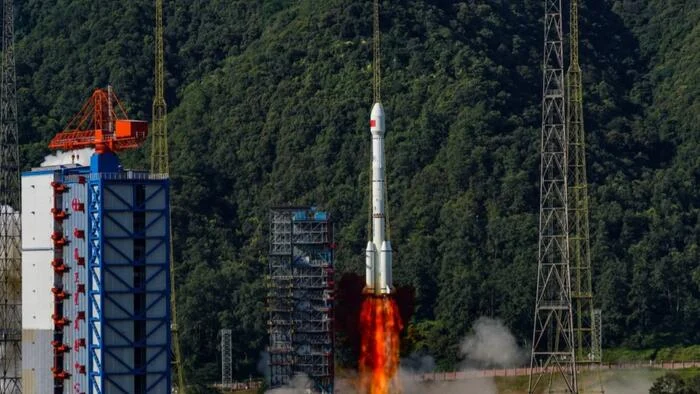
The most ambitious phase, Beidou-3, aimed for full global coverage. Initiated in 2009, the rapid deployment of Beidou-3 satellites saw a surge of launches, particularly between 2017 and 2020. The constellation was declared fully operational for global service on July 31, 2020, with a complete network of 35 satellites: 3 GEO, 3 IGSO, and 24 MEO satellites, alongside several older Beidou-2 satellites still in operation. This robust architecture ensures global coverage, high precision, and enhanced resilience.
Beidou’s Technical Superiority and Resilience
Today, Beidou-3 offers several distinct advantages, particularly in the Asia-Pacific region and for its global users. Its unique hybrid constellation, incorporating GEO, IGSO, and MEO satellites, provides superior coverage and signal availability, especially in high-latitude areas and urban canyons, where signals from MEO-only systems like GPS can be weaker. Beidou’s positioning accuracy is comparable to, and in some aspects surpasses, GPS, offering civilian services with decimeter-level accuracy and authorized military and high-precision applications with centimeter-level precision.
Furthermore, Beidou incorporates several advanced features that enhance its resilience against jamming and spoofing, which were key vulnerabilities exposed in the 2025 conflict. These include:
- Multiple Frequencies: Beidou transmits on multiple frequencies (B1, B2, B3), making it harder for jammers to disrupt all signals simultaneously and easier for receivers to filter out interference.
- Short Message Communication (SMC) Capability: Unlike GPS, Beidou integrates a unique two-way short message communication service, allowing users not only to receive positioning data but also to send short messages. This feature could be invaluable for military applications, allowing for command and control or status reporting even in contested environments.
- Active Positioning: Beidou-1 and Beidou-2 satellites incorporated an active positioning feature where users transmit a signal to the satellites, which then calculate and relay the user’s position. While primarily for regional use, it demonstrated an alternative PNT methodology.
- Robust Signal Structures: Beidou’s signals are designed with anti-jamming and anti-spoofing characteristics, leveraging advanced modulation techniques and encryption to protect against malicious interference.
This technological independence and advanced capabilities make Beidou a resilient alternative that cannot be unilaterally jammed or spoofed by Western powers, a crucial factor for nations seeking to reduce their reliance on US-controlled systems. According to a 2023 report by the China Satellite Navigation Office, Beidou is now integrated into critical infrastructure and commercial applications in over 165 countries, solidifying its global footprint.
Iran’s Strategic Adaptation: From Vulnerability to Precision
The lessons of the 2025 conflict were not lost on Tehran. The intense 12-day war vividly exposed the critical vulnerabilities of GPS-dependent systems when confronted with sophisticated electronic warfare tactics employed by Israeli and American forces. Iranian missiles and drones, which had previously demonstrated moderate accuracy, became largely ineffective as their guidance systems were repeatedly disrupted. The economic and military costs of these failures were substantial, prompting an urgent reassessment of Iran’s PNT strategy.
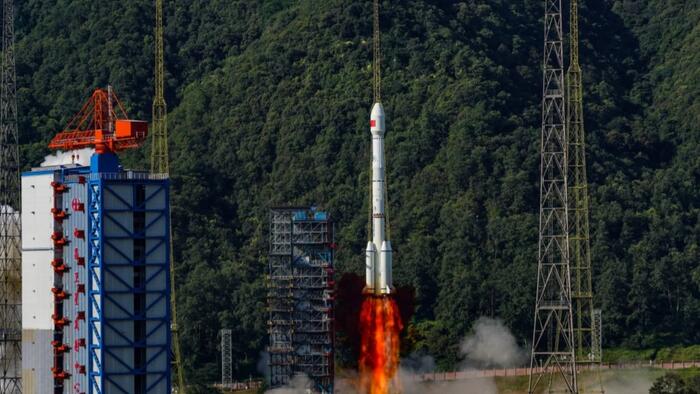
By late 2025, intelligence reports indicated a decisive move by Iran to integrate Beidou into its advanced military platforms. This rapid transition, completed by early 2026, saw the Chinese system being incorporated into Iran’s missile and drone arsenals, including its extensive ballistic and cruise missile programs, as well as its increasingly sophisticated unmanned aerial vehicles (UAVs). The integration was not merely a swap of receivers; it involved significant re-engineering of guidance systems and training for operators, underscoring the urgency and commitment from the Iranian leadership.
Reports emerging as early as March 2026 highlighted a dramatic improvement in Iranian military performance. Munitions that had been reliably thwarted by electronic countermeasures just months prior were now evading detection and striking their intended targets with alarming precision. This newfound accuracy allowed Iran to conduct surgical strikes against critical infrastructure and high-value military assets in Gulf countries, including those hosting US forces. This capability significantly undermined confidence in US security guarantees in the region, creating a perception of vulnerability that had not existed before.
Official Reactions and Inferred Positions
The ramifications of Iran’s Beidou adoption have triggered a cascade of reactions from key global players, though official statements often remain guarded due to the sensitive nature of military technology sharing.
United States Perspective
US defense officials and intelligence analysts have reportedly expressed significant concern over Iran’s enhanced capabilities. Initial intelligence assessments likely highlighted the sudden shift in Iranian precision strike effectiveness, tracing it back to the Beidou integration. While publicly acknowledging the challenge, US officials would likely emphasize the need for continued investment in counter-PNT technologies, multi-GNSS receivers, and alternative PNT solutions like inertial navigation systems (INS) or celestial navigation to mitigate reliance on any single satellite system. The underlying sentiment among strategic planners is a recognition that the 1993 decision to weaponize GPS, while effective in the short term, ultimately spurred China to create a robust alternative that now directly challenges US strategic interests. Statements would likely underscore the evolving nature of electronic warfare and the imperative to maintain a technological edge.
Chinese Perspective
China, for its part, would likely maintain a stance emphasizing the civilian and peaceful applications of its Beidou system, highlighting its role in global infrastructure development, disaster relief, and economic growth through the Belt and Road Initiative. While refraining from explicitly confirming military cooperation with Iran, Chinese officials would subtly reinforce Beidou’s capabilities as a sovereign, reliable, and independent PNT service available to partner nations. Public statements would likely focus on multilateral cooperation in space, the right of nations to develop their own technological infrastructure, and the benefits of a multi-polar world where no single power can unilaterally control critical global utilities. The strategic utility of Beidou in enhancing the sovereignty and security of friendly nations would be an implicit point of pride for Beijing.
Iranian Perspective
Iranian officials, while typically opaque about specific military technologies, would undoubtedly leverage the observed improvements in their precision strike capabilities as evidence of their nation’s growing self-reliance and technological prowess. Statements would likely emphasize Iran’s ability to overcome Western sanctions and technological embargoes, developing indigenous solutions or acquiring advanced foreign technologies to safeguard its national security. The narrative would underscore Iran’s strategic independence and its capacity to deter potential adversaries, attributing successes to robust defense strategies rather than explicitly detailing foreign technological assistance. The adoption of Beidou would be framed as a strategic move to ensure the resilience and effectiveness of Iran’s defense apparatus against any form of electronic warfare.
Broader Impact and Geopolitical Implications
The integration of Beidou into Iran’s military arsenal marks a watershed moment with profound geopolitical and military implications.
Erosion of US Technological Leverage
For decades, the US enjoyed a significant strategic advantage through its control of GPS, a dual-use technology that became indispensable globally. The ability to deny or degrade GPS signals served as a powerful, non-kinetic weapon. Iran’s shift to Beidou fundamentally erodes this leverage, demonstrating that a crucial US technological choke point can be bypassed. This forces the US to re-evaluate its long-term strategy concerning the weaponization of foundational technologies.
Rise of China’s Technological Influence
Beidou’s successful military application by a key strategic partner like Iran significantly bolsters China’s status as a global technological powerhouse. It validates China’s massive investment in its space infrastructure and positions Beidou as a viable, and for some, preferable, alternative to GPS. This move aligns with China’s broader "Digital Silk Road" initiative, extending its technological footprint and influence across the globe, particularly among nations seeking alternatives to Western systems.
Reshaping Regional Security Dynamics
In the Middle East, Iran’s enhanced precision strike capability complicates regional security. US and allied forces in the Gulf now face a more formidable and resilient adversary, potentially requiring a complete overhaul of air defense strategies and electronic warfare countermeasures. The increased risk to critical infrastructure and military assets could lead to a more cautious approach from regional actors and their Western allies, potentially altering the balance of power and increasing instability.
The Future of Strategic Alliances
The Beidou adoption strengthens the strategic alignment between China and Iran, demonstrating a tangible benefit of their burgeoning partnership. It also serves as a model for other nations that may seek to reduce their dependence on Western-controlled technologies, potentially leading to a fragmentation of global PNT systems along geopolitical lines. This could foster a new era of technological competition and cooperation, with countries choosing their PNT providers based on strategic alignment rather than purely technical merit.
Redefining Space as a Contested Domain
The incident underscores the increasing importance of space assets in modern warfare. Satellite navigation systems are now clearly recognized as critical military infrastructure, making them potential targets in future conflicts. This necessitates greater investment in space-based resilience, including anti-satellite capabilities, advanced on-board processing, and autonomous navigation systems that can function even in a GPS-denied or Beidou-denied environment.
In conclusion, the hypothetical events of 2025-2026, though a scenario, serve as a potent illustration of how a historical geopolitical slight in 1993 catalyzed China’s technological leap, leading to the development of Beidou. Iran’s subsequent adoption of this system has transformed its military capabilities, challenged long-held US strategic advantages, and fundamentally altered the geopolitical landscape. This paradigm shift highlights the profound and often unforeseen consequences of weaponizing dual-use technologies, proving that strategic humiliation can indeed inspire technological breakthroughs that ultimately reshape global power dynamics. The world is now navigating a new era where independent satellite navigation systems are not just a matter of convenience, but a cornerstone of national sovereignty and military might.

