
Jamie Dimon, the influential Chief Executive Officer of JPMorgan Chase & Co., has delivered a pointed warning to investors, asserting that current market valuations fail to adequately account for an escalating array of geopolitical and fiscal threats confronting the global economy. Speaking during an in-depth interview with Wilfred Frost for "The Master Investor Podcast," released late Monday, Dimon explicitly stated he would not be a buyer of either equities or long-dated U.S. Treasurys at their prevailing prices, signaling a significant divergence from the prevailing market optimism.
The veteran banking executive, whose public appearances frequently draw considerable attention due to his prominent role atop the world’s largest bank by market capitalization, underscored a growing list of concerns. These include the persistent conflicts in Ukraine and the Middle East, the escalating strategic rivalry between the United States and China, and the worldwide trend of increasing military expenditures. These geopolitical flashpoints, he argued, are exacerbated by mounting government deficits across major economies, creating a precarious global financial environment that he believes investors are currently underestimating.
"I do think those risks are probably bigger than other people think," Dimon remarked, emphasizing the potential for these multifaceted pressures to converge and trigger unforeseen market dislocations. When pressed on whether markets were underpricing the probability of a major shock, Dimon conceded the difficulty in precisely quantifying what risks are already reflected in asset prices. "It’s possible something’s baked in, but what’s not baked in is what actually happens," he elaborated, suggesting that while a baseline level of uncertainty might be priced, the actual impact and ripple effects of a significant event are often far more profound than initial expectations.
A Persistent Voice of Caution Amidst Market Buoyancy
Dimon’s latest pronouncements arrive at a time when financial markets, particularly in the U.S., have exhibited remarkable resilience and even exuberance. The S&P 500, a key benchmark for U.S. equities, has posted nearly a 10% return year-to-date, a performance driven by robust consumer spending, moderating inflationary pressures, and a widespread embrace of the artificial intelligence (AI) investment narrative. This market strength, characterized by investors’ willingness to largely look past ongoing wars, trade tariffs, and other global instabilities, stands in stark contrast to Dimon’s cautionary stance.
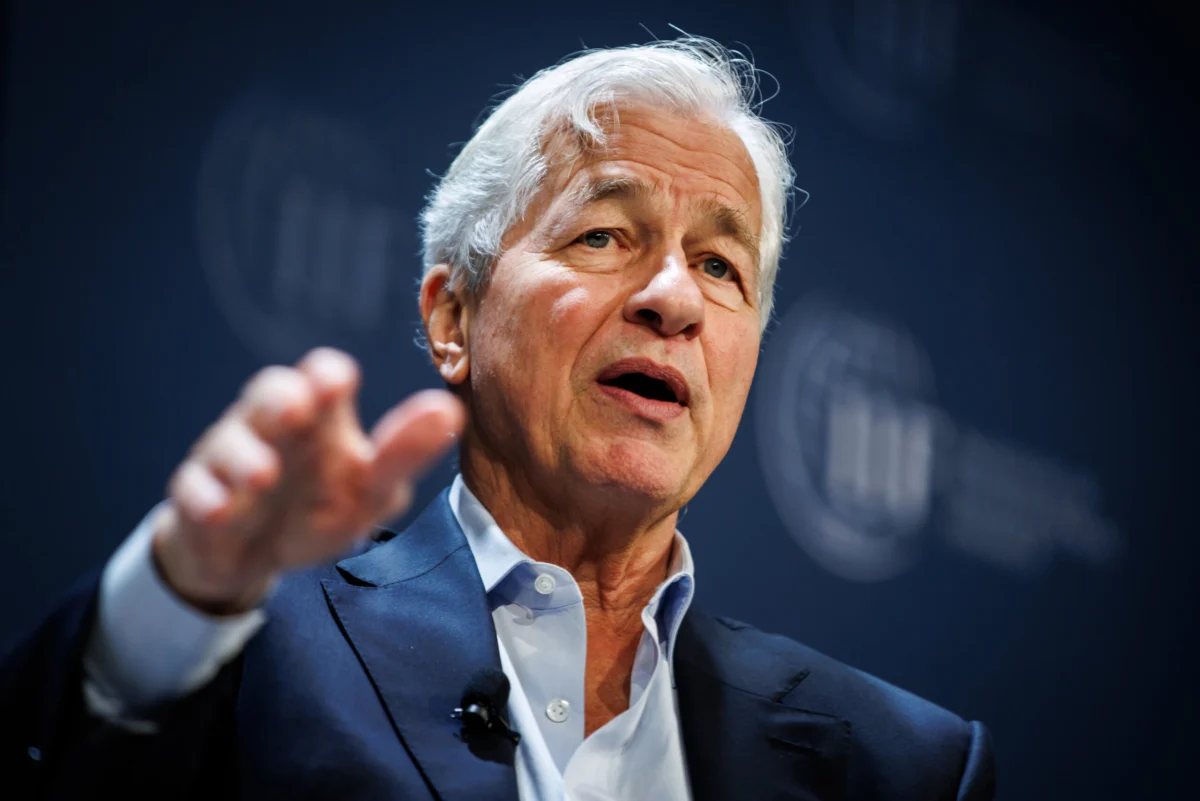
Just the previous week, JPMorgan Chase and its industry peers reported stellar quarterly results, largely powered by surging trading volumes and robust investment banking revenues. These strong earnings reinforced a narrative that the U.S. economy has weathered recent geopolitical turmoil more effectively than many analysts had anticipated, further fueling the market’s upward trajectory. The photo accompanying the initial report shows Dimon speaking at the 2025 Institute of International Finance annual membership meeting in Washington on October 16, 2025, providing a temporal context for his current insights and reflecting his engagement with global economic thought leaders.
Dimon, however, acknowledged a degree of increased global economic resilience, particularly noting a reduced dependence on traditional energy sources compared to previous decades. Yet, he was quick to caution that this resilience does not eliminate the possibility of a sudden and dramatic inflection point. "You may need more straws in the camel’s back to cause that tipping point," he analogized, adding, "Even this current war starting up again, maybe that’s not enough to do it." His metaphor vividly illustrates his concern that while individual shocks might be absorbed, a cumulative burden could lead to an abrupt collapse of confidence or stability.
The Looming Specter of Fiscal Reckoning
A significant pillar of Dimon’s argument centers on the persistent and growing U.S. budget deficits, which he believes will inevitably force a reckoning, potentially driving interest rates significantly higher. The U.S. national debt has surpassed an unprecedented $35 trillion, with annual deficits consistently running into the trillions. The Congressional Budget Office (CBO) has repeatedly warned about the unsustainable path of federal debt, projecting that under current policies, debt held by the public could reach 116% of GDP by 2034, far exceeding any previous historical peaks.
"My view is it will become a problem," Dimon asserted, predicting that the market’s tolerance for seemingly endless government borrowing will eventually wane. He foresees the re-emergence of "bond vigilantes" – investors who demand greater compensation for the perceived risk of financing the government’s burgeoning debt. This increased demand for yield would translate into higher interest rates across the economy, impacting everything from corporate borrowing costs to consumer mortgages, potentially stifling economic growth. Such a scenario would represent a significant shift from recent years where robust demand for U.S. Treasurys, often seen as a safe haven, helped keep borrowing costs relatively low despite expanding deficits.
A Cautious Stance on Key Asset Classes
Given his assessment of the macroeconomic landscape, Dimon’s advice on asset allocation was unequivocal. When directly asked if he would purchase long-dated Treasurys, he responded with a definitive, "Personally, no." He elaborated that even if inflation were to successfully fall back to the Federal Reserve’s long-term target of 2%, the 10-year Treasury bond yield should realistically be in the range of 4% to 4.5%. This projection suggests he sees little upside for Treasury prices from their current levels, implying that the risk-reward profile is unfavorable for investors seeking to profit from bond appreciation. For context, the 10-year Treasury yield has fluctuated significantly, but typically sits below this range in periods of perceived stability.

His caution extended equally to the broader equity market. While he would consider an individual stock if it presented "a great investment" based on its unique merits, Dimon stated he would not be a buyer of the broader market at its current valuations. This generalized warning suggests he perceives the overall market as overvalued, with current prices not fully reflecting the potential downside risks he has identified. His stance implicitly advocates for selective, fundamental-driven investing rather than broad market exposure, particularly in an environment he views as increasingly fragile.
Artificial Intelligence: Promise Tempered by Pragmatism
Dimon also offered a measured perspective on the current fervor surrounding artificial intelligence. He drew a compelling parallel between today’s AI spending boom and the nascent stages of the internet revolution. "The amount of money being spent is huge. Will it in total pay off? Probably, just like the internet did," Dimon acknowledged, recognizing the transformative potential of AI.
However, he tempered this optimism with a dose of historical realism. He pointed out that during the internet boom, many early, prominent players like Yahoo and Netscape eventually faded, while eventual titans such as Google and Facebook emerged later, often after initial waves of investment and speculation had subsided. "Will it pay off the way you expect and the timetable you expect? Definitely not," Dimon cautioned. His remarks suggest that while AI will undoubtedly reshape industries and generate immense value, the path to profitability for individual companies and the timeline for widespread economic impact will likely be far more complex and unpredictable than many investors currently anticipate. This perspective implies that the current AI-driven market rally may be susceptible to corrections as the true winners and losers become clearer over time.
Dimon’s Track Record: A History of Foresight
Jamie Dimon’s history as a financial leader is replete with instances where he has sounded alarms about impending economic challenges. Famously, in June 2022, he warned investors to "brace yourself for an economic hurricane" caused by a confluence of factors, including aggressive monetary tightening by the Federal Reserve and the geopolitical fallout from the war in Ukraine. While the U.S. economy has largely avoided a severe recession since then, many of the underlying pressures he identified have persisted or intensified. His warnings are often rooted in a deep understanding of financial markets, banking operations, and global macroeconomic trends, making them difficult for serious investors to ignore, even if market sentiment temporarily moves in a different direction.
His public statements, often delivered with a direct and unambiguous style, serve as a significant bellwether for institutional investors and policymakers alike. His consistent advocacy for prudent fiscal policy and his cautious outlook on asset bubbles reflect a long-term perspective honed through decades of navigating market cycles, including the 2008 financial crisis, during which JPMorgan Chase emerged relatively strong.
Broader Implications and The Road Ahead
Dimon’s latest warnings carry significant implications for both individual and institutional investors. His advice against buying broad equities and long-dated Treasurys challenges the conventional wisdom that often prevails in bull markets. It suggests that a more defensive posture, emphasizing capital preservation and selective investment, may be warranted in the coming period.
For policymakers, his focus on persistent budget deficits serves as a potent reminder of the long-term fiscal challenges facing the U.S. and other developed nations. The "bond vigilante" scenario he describes underscores the potential for market forces to eventually impose discipline if political will remains insufficient to address rising debt levels. This could necessitate difficult decisions regarding government spending, taxation, or both, with far-reaching consequences for economic growth and social programs.
Ultimately, Jamie Dimon’s comments serve as a powerful call for vigilance in an environment where many perceive relative stability. While markets may continue to defy his warnings in the short term, his deep-seated concerns about geopolitical fragmentation, fiscal unsustainability, and the unpredictable evolution of technological revolutions like AI offer a critical counter-narrative, urging investors to look beyond immediate gains and prepare for potential turbulence on the horizon. His stance emphasizes that while resilience has been demonstrated, the global economy is still navigating complex and potentially dangerous waters, demanding a sober assessment of risks that may currently be flying under the radar.

