
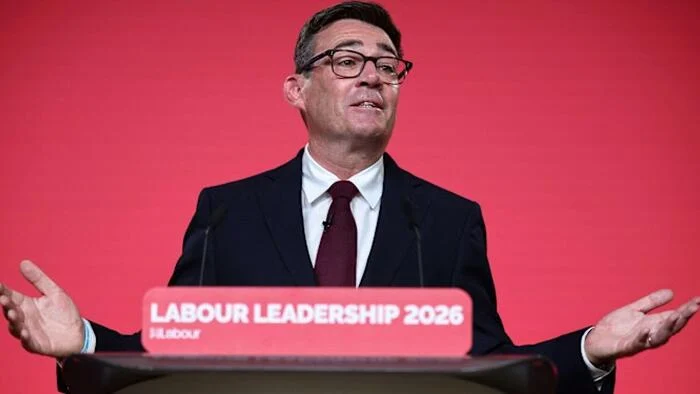
The United Kingdom’s political landscape has, over the past decade, become a crucible for leadership, with Prime Ministers experiencing tenures often shorter than the average Premier League football manager’s stint. As Andy Burnham formally assumes the mantle of Prime Minister at 10 Downing Street, questions immediately arise regarding the prospective longevity of his administration, particularly given the circumstances of his ascension. The political system’s increased volatility has seen a succession of leaders navigate turbulent waters, and the prevailing sentiment suggests Burnham faces an immediate and formidable challenge to break this cycle of rapid turnover.
An Unprecedented Era of Prime Ministerial Volatility
The last ten years have witnessed an extraordinary pace of change at the apex of British politics. Since the 2010s, the UK has seen an unprecedented number of Prime Ministers, each grappling with a complex array of domestic and international crises. This period, marked by the seismic shifts of Brexit, the global COVID-19 pandemic, and a persistent cost-of-living crisis, has placed immense pressure on political leadership. The average tenure of a UK Prime Minister in the 21st century has significantly decreased compared to historical norms, reflecting a more demanding and less forgiving political environment. Public patience appears thinner, media scrutiny is relentless, and internal party dynamics are often fractious, leading to swift and often brutal changes at the top. The phenomenon of "regicide," once a rare occurrence, has become a recurring motif in both major parties, underscoring a broader instability within the political establishment. This pattern inevitably casts a long shadow over any new occupant of Number 10, prompting observers to evaluate their prospects for endurance from day one.
The Road to Number 10: Starmer’s Struggles and Burnham’s Opportunity
Andy Burnham’s journey to the premiership was paved by the growing dissatisfaction within the Labour Party regarding Sir Keir Starmer’s leadership. Despite inheriting a party reeling from significant electoral defeats, Starmer struggled to translate Conservative government difficulties into a decisive Labour advantage in public opinion polls. Throughout his tenure, a recurring critique centered on his perceived inability to articulate a clear, compelling vision for the country, often leading to accusations of being overly cautious or lacking charisma. Public approval ratings for Starmer remained stubbornly low, and the party’s overall polling figures, while fluctuating, often failed to inspire confidence among the Labour faithful and the wider electorate.
As the prospect of a general election loomed, the internal pressure on Starmer intensified. The sentiment within significant factions of the Labour Party was that, despite their desire for stability, the electoral calculus necessitated a change. There was a palpable "one chance" mentality – a belief that if a leadership change were to occur, it had to be decisive and immediately effective, lest it further alienate an already cynical electorate. This created an environment ripe for a challenge, culminating in a movement to replace Starmer driven primarily by concerns over the party’s electability rather than a fundamental ideological schism. Burnham, with his background as a former cabinet minister and highly visible Mayor of Greater Manchester, known for his strong communication skills and regional appeal, emerged as the most viable candidate to unite disparate wings of the party and offer a fresh face to the public. His experience and perceived ability to connect with working-class voters were highlighted as key assets in a bid to revitalise Labour’s electoral fortunes.
Historical Precedents: The Perils of Non-Ideological Leadership Changes
The history of British Prime Ministers who accede to power mid-term, particularly without a clear ideological mandate for change, offers a mixed bag of outcomes, often leaning towards brevity. Political scientists and historians generally categorise the circumstances leading to a Prime Minister’s removal into three broad types: ideological disagreement, health concerns, or perceived aesthetic/performance failings.
Leadership changes driven by fundamental ideological schisms have, historically, sometimes resulted in longer-lasting administrations. Margaret Thatcher’s departure in 1990, for instance, was largely due to her unwavering stance on the hugely unpopular Poll Tax and a European policy increasingly at odds with significant elements of her party. Her successor, John Major, despite a challenging start, went on to win a general election. Similarly, David Cameron’s resignation following the Brexit referendum, and Theresa May’s subsequent push from office, were fundamentally tied to the intractable issue of the UK’s relationship with the European Union. In these instances, the new leader often had a clear, albeit sometimes difficult, mandate to reset a specific policy direction, which could resonate with the electorate as a necessary course correction. Major, and later Boris Johnson (who succeeded May with a clear "get Brexit done" mandate), demonstrated that a distinct policy shift could indeed provide a renewed impetus and electoral success.
However, the outlook becomes considerably more precarious when a leader is removed primarily due to a perceived lack of effectiveness, poor communication, or dismal poll ratings, without a corresponding, explicit, and easily explicable shift in core policy. The tenures of James Callaghan (who replaced Harold Wilson mid-term) and Gordon Brown (who succeeded Tony Blair) serve as cautionary tales. While both men brought different leadership styles and nuanced policy approaches, neither was installed on the back of a dramatically different, singular policy platform. Both subsequently lost general elections, suggesting that the public can be wary of leadership changes that appear to be merely a reshuffling of the deck chairs without a fundamental change of direction.
More recently, the Conservative Party’s experience following Boris Johnson’s resignation further underscores this point. The swift succession from Johnson to Liz Truss, and then to Rishi Sunak, was precipitated by a combination of scandal, economic turmoil, and devastating poll numbers. Far from improving the Conservatives’ standing, these rapid changes exacerbated public perceptions of chaos and instability, leading to a further decline in their electoral prospects. The absence of a clear, stable, and unified ideological message throughout these transitions appeared to actively harm the party’s credibility.
Andy Burnham finds himself in a scenario that, based on this historical analysis, appears to align more closely with the latter, more perilous category. His elevation to Prime Minister was not driven by a profound disagreement with Starmer on a specific, defining policy, such as a hypothetical "war in Iran" or a radical overhaul of Net Zero commitments, or even membership of the European Convention on Human Rights. Instead, it was predominantly a pragmatic decision born of Labour’s abysmal poll ratings and Starmer’s catastrophic approval figures. The hope, as articulated by many of his supporters, is that Burnham’s perceived charisma and superior communication skills can somehow revive the party’s fortunes, a strategy that relies heavily on an "aesthetic" rather than an "ideological" pivot.
Early Public Sentiment and the Absence of a "Burnham Bounce"
In the immediate aftermath of Andy Burnham’s move into Downing Street, initial polling data has offered little evidence of the hoped-for "Burnham bounce." Political analysts had anticipated that a significant change in leadership, particularly one accompanied by a renewed sense of energy and communication, might generate at least a temporary uplift in public support for the Labour Party. However, early surveys suggest that the governing party remains stubbornly mired in historically low approval ratings, with national support hovering around the 20% mark. This figure, consistent with the party’s standing prior to Starmer’s departure, indicates a deep-seated public skepticism or perhaps a "wait and see" attitude that has yet to translate into any measurable surge of enthusiasm.
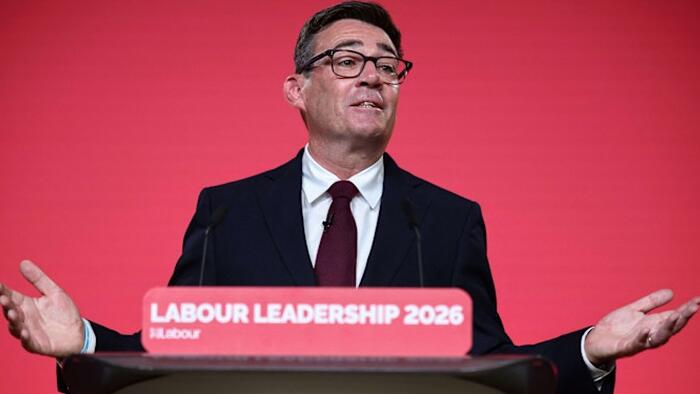
This lack of an immediate positive shift suggests that the public might be viewing the change in leadership as an internal party matter rather than a fundamental reorientation of the nation’s political direction. It raises questions about whether the issues plaguing the Labour Party and, indeed, the broader political system, are more profound than simply a matter of leadership style or communication strategy. While Burnham’s supporters maintain that his true impact will only be felt once he is fully entrenched and seen "in action" as Prime Minister, the absence of an anticipatory uplift in the polls presents an immediate challenge to the narrative of a revitalized Labour Party. This early data point underscores the difficult task Burnham faces in convincing a weary and disillusioned electorate that his premiership represents a genuine and impactful new chapter for the country.
Burnham’s Economic Vision: A Return to "Control" and Its Implications
A critical aspect determining the longevity of any Prime Minister is the clarity and perceived viability of their economic strategy. Andy Burnham’s initial pronouncements as Labour leader offered a distinct critique of economic policy since the 1980s. In his coronation speech, he lamented what he described as a "series of wrong turns in the 1980s," specifically highlighting a period where "political power was centralised and economic power was privatised." He contended that this shift led to the country surrendering "control of the essentials – housing, water, energy, transport – and left people exposed to higher costs."
Burnham’s analysis broadly lumps the Thatcher years and every subsequent administration, regardless of party, under the umbrella of "four decades of the neoliberalism that began in the 1980s [which] have not been kind to the places that built our party." His proposed solution, encapsulated by the term "control," signals a significant shift towards greater state intervention. This vision suggests an agenda prioritising more state ownership and increased political diktats over key sectors of the economy.
The implications of such an economic strategy are multifaceted and potentially profound:
-
Fiscal Impact: A move towards greater state ownership and increased public spending on essentials would almost certainly necessitate a significant increase in taxation. With national debt already at elevated levels and public services under strain, funding such an expansion of state control could lead to higher income taxes, corporation taxes, or new forms of levies. This could exacerbate existing fiscal pressures and potentially constrain the government’s ability to invest in other areas or respond to unforeseen economic shocks.
-
Economic Growth: Critics of increased state intervention often argue that it can stifle private sector innovation, reduce competition, and deter foreign investment. A perception of growing state control might make the UK less attractive to businesses, potentially leading to lower levels of economic growth. This could, in turn, reduce tax revenues and make it even harder to fund expanded public services, creating a challenging feedback loop. The Office for Budget Responsibility has consistently highlighted the importance of private sector investment for long-term growth, and any policy perceived to undermine this could raise concerns among economic forecasters.
-
Inflationary Pressures: Increased public spending not directly tied to productivity gains, coupled with potential supply-side disruptions from renationalisation efforts, could contribute to inflationary pressures. While "control" might be intended to stabilise costs for consumers in the long run, the transition phase could be economically disruptive.
-
Market Reaction: Financial markets tend to react to significant shifts in economic policy. A move towards extensive state ownership and higher taxation could trigger volatility in the pound sterling and UK bond markets, as investors reassess the risk profile of the British economy.
In essence, Burnham’s economic platform, while appealing to a segment of the electorate seeking greater stability and lower costs for essential services, presents a clear departure from prevailing orthodoxy. While the specifics are still to be fully elaborated, the general thrust suggests a pathway of "taxes being dialled up, growth being low, debt increasing and public spending ballooning (particularly welfare spending)." This economic philosophy, if implemented rigorously, is unlikely to produce a rapid improvement in living standards or a significant boost to the national economy in the short term, which could quickly test public patience and support.
The Longevity Challenge: A Test of Political Endurance
Given the confluence of these factors – the unstable political backdrop, the non-ideological nature of his rise to power, the lack of an immediate public bounce, and a potentially challenging economic agenda – Andy Burnham’s premiership faces an uphill battle for long-term endurance. The "honeymoon period," if it materialises at all, is widely anticipated to be brief.
Should the Labour Party’s poll numbers fail to improve significantly within the next year or so, and if the economic situation remains challenging, the party could find itself staring down the barrel of electoral oblivion once again. This scenario would inevitably reignite the internal pressures that led to Starmer’s removal. Having set the precedent of ousting a leader due to poor polling, the Labour Parliamentary party might find it easier to consider a similar course of action against Burnham. Historically, the Conservative Party has been more prone to such acts of "regicide," but the recent events demonstrate that Labour is not immune to adopting similar tactics when faced with existential electoral threats.
In such a desperate situation, altering the fundamental policy direction dramatically would likely be challenging. The party would already be locked into a governmental strategy of high taxation and extensive public spending. However, desperate political actors are often prone to throwing the dice again. The perceived need for a fresh start, even without a clear ideological shift, could once again become a dominant narrative.
Ultimately, Andy Burnham’s premiership arrives at a juncture of profound political and economic uncertainty. His ability to navigate these turbulent waters, to forge a clear and convincing mandate from a sceptical public, and to deliver tangible improvements in the lives of ordinary Britons will be the ultimate determinants of his political fate. Analysts are already pondering the durability of his premiership, with many suggesting that a tenure shorter than the full electoral cycle is a distinct possibility, given the historical context of similar leadership changes and the daunting challenges that lie ahead. The question is not if his leadership will be tested, but how profoundly, and how quickly.

