
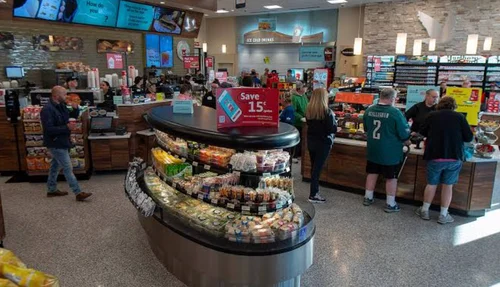
The pulse of the American working class, often best gauged through everyday spending habits at local convenience stores, continues to send concerning signals. A persistent spending pullback, first observed during the early stages of the US-Iran conflict, has intensified significantly into late summer, exacerbated by a sharp spike in fuel prices in August. This economic strain is not merely a transient blip; it reflects a deepening pressure on household budgets, forcing consumers to become increasingly defensive with their discretionary spending. Recent insights from Jefferies food analyst Scott Marks, drawing on comprehensive data from major convenience store chains, paint a stark picture of declining traffic and contracting sales volumes, even as prices continue to rise.
The Geopolitical and Economic Backdrop: A Perfect Storm for Consumers
The origins of this economic weakness can be traced back to a confluence of geopolitical tensions and domestic market dynamics. The initial spending pullback emerged early in the US-Iran conflict, a period characterized by heightened instability in a critical global oil-producing region. Geopolitical conflicts involving major oil suppliers or key transit routes, such as the Strait of Hormuz, inherently introduce a "fear premium" into crude oil prices. Market participants anticipate potential supply disruptions, leading to speculative buying and an upward trajectory in prices. For the average American consumer, this translates directly to higher costs at the gas pump, immediately impacting their daily commute and overall budget.
Compounding the effects of geopolitical uncertainty was a significant "global refining squeeze." Refining capacity, which converts crude oil into usable products like gasoline and diesel, is a crucial link in the energy supply chain. A squeeze in this sector can arise from several factors: scheduled maintenance at major refineries, unexpected outages due to technical issues or natural disasters, and even shifts in global demand patterns. In recent months, a combination of these factors, possibly including post-pandemic demand recovery outstripping refining capacity or strategic decisions to reduce capacity, has led to a bottleneck. This squeeze specifically pushed the price of regular gasoline above $4.50 a gallon and diesel above $5.50 a gallon in August. For many households, particularly those in the working class who often have longer commutes or rely on diesel for work vehicles, these elevated fuel costs represented a substantial and unavoidable increase in essential expenditures. The immediate consequence was a significant reduction in the financial leeway available for discretionary purchases, from impulse buys at the convenience store to larger household goods.
A Chronology of Deterioration: From Initial Pullback to August’s Intensification
The timeline of consumer spending shows a concerning pattern of sustained weakness. The initial spending pullback coincided with the onset of the US-Iran conflict, suggesting an immediate consumer reaction to economic uncertainty and the first whispers of rising energy costs. This weakness did not dissipate but rather persisted into late summer, indicating that the pressures were not temporary but rather systemic and deepening.
August emerged as a critical month, marking a significant intensification of these trends. The fuel-price spike, detailed above, served as a powerful catalyst, placing further, acute pressure on already strained household budgets. Jefferies food analyst Scott Marks, in a comprehensive note published on a recent Monday morning, provided new, granular insights into these consumer trends at the convenience store level specifically for August. His analysis, leveraging robust data sources, confirmed that the elevated fuel prices had indeed renewed and amplified the pressure on consumers.
Looking ahead, Marks’ report also warned that the continued rise in fuel prices observed in late August and early September suggested that consumer traffic and spending would likely remain under significant pressure. This chronological progression underscores a worrying trend: what began as a cautious pullback has evolved into a more entrenched pattern of economic retrenchment among a significant segment of the population.
Dissecting Convenience Store Performance: A Deep Dive into the Data
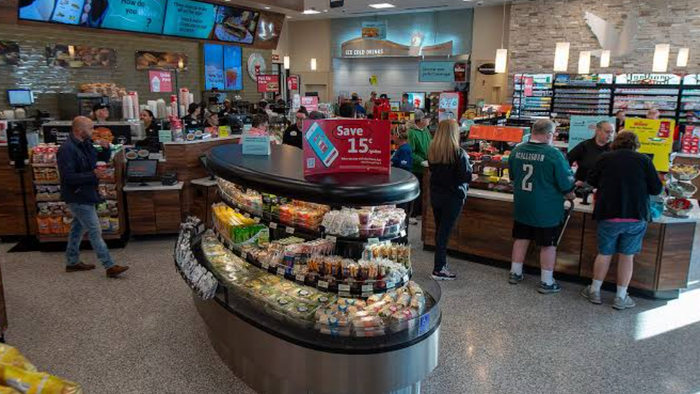
The detailed analysis presented by Scott Marks and his team at Jefferies, utilizing data from Placer.AI for foot traffic and NielsenIQ for sales, offers a granular view of how consumers are adjusting their spending habits. This broad data set covers major convenience store chains and fuel retailers, including industry giants like 7-Eleven, Casey’s, Circle K, QuikTrip, Royal Farms, and Wawa, providing a representative snapshot of the channel.

Overall Foot Traffic Takes a Step Back:
A primary indicator of consumer sentiment and activity, convenience store foot traffic, experienced a notable decline in August. Visits fell by approximately 2% from a year earlier. This decline represented a 1.25-percentage-point deterioration in the annual growth rate compared with July. Crucially, this reversal largely erased any modest improvements seen in July, indicating that the renewed pressure from fuel prices swiftly undid any nascent recovery in consumer confidence or willingness to frequent these outlets. The message is clear: consumers are making fewer trips, which inevitably leads to fewer opportunities for impulse purchases or incidental spending inside the store. Marks explicitly stated, "Convenience store traffic stepped back down in August, with rising fuel prices appearing to renew pressure on the consumer."
Inside-Store Sales and Volume Contraction:
The squeeze on household budgets is manifesting not only at the fuel pump but also within the convenience store aisles. Across tracked convenience store food categories, volumes declined roughly 9% from a year earlier during the three months ending August 22 (L3M). This figure represents a worsening trend compared to the 7.5% decline observed over the six-month period (L6M), indicating an accelerating contraction in the quantity of goods consumers are purchasing.
Even more telling is the performance of dollar sales. Despite significant pricing growth, which accelerated to approximately 6% (up from 5% in the L6M), overall dollar sales fell by about 3%. This divergence is critical: retailers are raising prices, likely in an attempt to offset rising operational costs and maintain margins, but consumers are responding by drastically reducing the volume of their purchases. This dynamic signals strong consumer resistance to higher prices and a clear prioritization of needs over wants.
Category-Specific Insights: Winners and Losers:
Marks’ report provided a detailed breakdown of how different product categories fared, offering insights into changing consumer priorities:

-
Outperformers:
- Performance Nutrition Shakes: These were the clear standout, demonstrating robust growth with sales up approximately 13.5% over the L3M (compared to 9% L6M) and volume growth of about 13%. This strong performance, coupled with a 15% growth in price per unit (TDP), underscores a significant consumer demand for protein and functional beverages. This suggests that consumers are prioritizing health and wellness, potentially even using these shakes as a cost-effective meal replacement or an essential part of their fitness regimen amidst rising food costs.
- Energy Drinks: Continued their strong showing within the beverage sector, growing by 4.7% over the L3M. Marks noted, "Pricing is sticking, innovation is working, and new consumers are entering the category as consumers prioritize functional beverages." This highlights a consumer willingness to pay for perceived benefits like increased alertness or focus, perhaps as an affordable pick-me-up during demanding times.
-
Underperformers:
- Chocolate: This classic impulse and comfort item inflected negative, with sales down approximately 1% over the L3M (compared to up 1% L6M). Volumes worsened significantly, declining to about 10% from 8.5%. This indicates that discretionary treats are among the first items consumers cut when budgets tighten.
- Multi-serve Items: Experienced steep declines, with volumes down approximately 17.5% and sales down 12.5% over the L3M. This suggests that consumers may be making fewer purchases for groups or families at convenience stores, possibly opting for larger, more cost-effective options at grocery stores.
- Other Notable Declines: Ice cream (down ~11.5% volume), meat snacks (down ~11% volume, ~6% sales), and confection (down ~10.5% volume, ~6.5% sales) also saw significant declines. Doughnuts were down about 6% on a sales basis. These categories collectively point to a widespread reduction in impulse buys, snacks, and treats.
- Beverage Sector Weakness: Beyond energy drinks, other non-alcoholic beverages declined 0.5% year-over-year over the L3M. Soft drinks saw both dollar sales (down 3.4%) and volume (units down 7.5%) declines. Even beer, a relatively affordable indulgence, saw sales fall 5.0% over the L3M in the convenience channel. This suggests a broader shift in beverage consumption, possibly towards home consumption or larger format stores where prices are generally lower.
Pricing Acceleration Amidst Volume Declines:
Despite the significant drop in volumes, price realization remained positive for most categories. Total convenience food pricing accelerated to +6% over the L3M from +5% over the L6M. Chocolate, for instance, saw pricing growth of +8.5%. This trend indicates that retailers are largely passing on increased costs to consumers, but the accompanying volume declines show that this strategy is encountering significant consumer resistance.
Retailer Response and Consumer Adaptations: A Case Study from Casey’s
The report further illustrates these dynamics through the specific performance of Casey’s General Stores (CASY) in their fiscal first quarter. Casey’s results underscored a nuanced consumer behavior: while still spending on food and beverages, consumers are visibly "trading down elsewhere." The company reported inside comparable store sales up +3.2% and prepared food and dispensed beverage (PFDB) sales up +4.8%, driven by both traffic and units. This suggests that Casey’s, with its focus on fresh food and beverages, managed to retain some customer loyalty and traffic for essential or perceived-value items.

However, the analysis also revealed critical underlying shifts:
- Income Cohort Disparity: While all income cohorts showed some growth, "lower-income shoppers were more pressured," indicating that the economic strain is disproportionately affecting vulnerable segments of the population.
- Fuel vs. Inside-Store Dynamics: Higher fuel prices led to "fewer gallons per trip but more trips." This could suggest that consumers are "topping off" their tanks more frequently with smaller amounts of fuel to manage immediate cash flow, rather than filling up completely. This behavior change impacts the frequency of convenience store visits and the potential for impulse purchases.
- Grocery Softness and Private Labels: Grocery weakness was category-led, with national brand pricing pushing snack buyers into private label alternatives. This is direct evidence of consumers actively seeking out cheaper options and sacrificing brand loyalty for affordability. Beer sales remained weak, while nicotine alternatives and energy drinks continued to outperform, reinforcing the patterns seen across the broader convenience channel.
These findings from Casey’s provide a microcosm of the broader trends. Consumers are becoming increasingly strategic with their spending, prioritizing value, functionality, and essentials, even if it means trading down on brands or foregoing discretionary items.
Broader Economic and Political Implications
The trends observed at convenience stores are far more than just retail statistics; they serve as a critical, real-time barometer of the economic health and sentiment of the working class. This segment of the population, often living paycheck to paycheck, is particularly susceptible to fluctuations in non-discretionary costs like fuel and essential food items. The "squeeze" evident in the data suggests a significant reduction in disposable income, which invariably impacts broader economic activity.
Economic Outlook: The persistent decline in volumes despite accelerating pricing points to a worrying scenario for the broader economy. It indicates that consumers are cutting back on consumption, which can be an early warning sign of a wider economic slowdown or even recessionary pressures. If consumers are forced to allocate a larger portion of their budgets to essential goods and services due to inflation, less money is available for other sectors of the economy, potentially dampening overall growth. This situation, characterized by rising prices and stagnating or declining consumption, raises concerns about a "stagflationary" environment.

Political Ramifications: The report’s direct implication for the political landscape is particularly salient: "This consumer pressure story at the convenience store level doesn’t bode well for the Trump administration ahead of the midterm elections, as folks usually vote with their pocketbooks." This observation highlights a fundamental truth in electoral politics: economic conditions, especially those affecting daily living costs, profoundly influence voter sentiment.
For an incumbent administration, widespread economic strain at the gas pump and inside the grocery store can translate directly into political vulnerability. Voters experiencing firsthand the impact of higher fuel prices and reduced purchasing power are more likely to express discontent at the ballot box. The administration would face immense pressure to address these inflationary pressures, stabilize energy markets, and demonstrate concrete actions to alleviate the financial burden on American households. Failure to effectively manage or communicate solutions to these economic challenges could significantly impact election outcomes, as the narrative of economic hardship often outweighs other policy successes in the minds of voters.
In conclusion, the detailed analysis of convenience store trends offers a stark and sobering assessment of consumer economic health. The intertwining forces of geopolitical conflict, refining bottlenecks, and accelerating inflation have created a challenging environment for working-class households. As consumers become more defensive, prioritize essentials, and actively trade down, these grassroots economic indicators signal a growing strain that carries significant implications for the broader economy and the political landscape. The continued monitoring of these fundamental spending behaviors will be crucial for understanding the trajectory of the nation’s financial well-being in the months ahead.

