
U.S. Senator Bernie Moreno (R-Ohio) has announced his intention to introduce a legislative bill next week aimed at imposing significant sanctions on Canada and its government officials. The proposed measures, which include asset freezes, visa restrictions, and tariffs, are a direct response to the persistent and "toxic" wildfire smoke originating from Canada, which has enveloped vast swathes of the United States, causing widespread environmental, health, and economic disruption. The announcement comes as millions of Americans grapple with dangerously poor air quality, likened by health experts to smoking multiple cigarettes daily.
Senator Moreno articulated his firm stance during an appearance on Fox News’ The Ingraham Angle on Friday, July 17, 2026, stating, "We’re going to put sanctions on them, hold their assets, make sure they don’t have visas, and impose tariffs because we have to ensure that the people suffering are compensated." He characterized the situation as an "abject, avoidable disaster," pointedly criticizing Canada’s liberal leadership. "This is totally avoidable. And it’s not due to climate change. It’s due to leadership change in Canada that’s caused this problem," Moreno asserted, directly challenging the narrative often presented by environmental advocates.
Escalating Cross-Border Pollution and Public Health Emergency
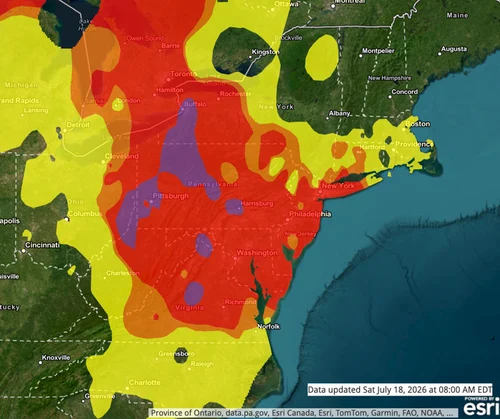
The current wildfire season in Canada has proven to be particularly severe, with over 700 active wildfires reported and an estimated 8.2 million acres already consumed. This widespread conflagration has generated massive plumes of smoke that have consistently drifted south, blanketing major U.S. metropolitan areas from the Midwest to the Eastern Seaboard. As of Saturday morning, July 18, 2026, air quality maps indicated hazardous conditions across critical regions, mirroring or even exceeding the severity of the historic 2023 wildfire event. The Washington Post’s Capital Weather Gang warned that conditions "could get worse before it gets better."
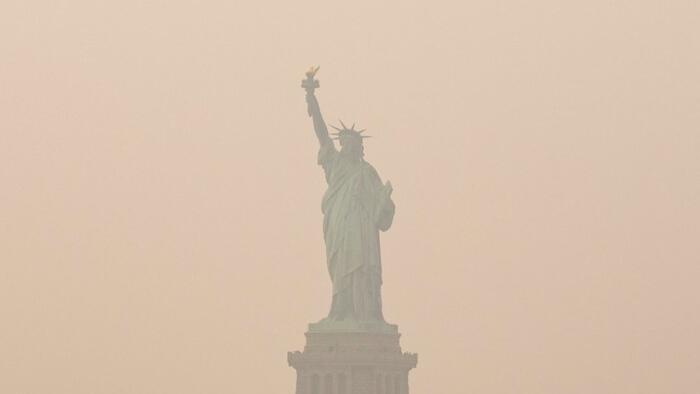
The health implications of this prolonged exposure are profound. Health experts have highlighted that spending a full day outdoors in areas like Washington, D.C., or New York City, under current conditions, is equivalent to smoking approximately 10 cigarettes. In some cities, the Air Quality Index (AQI) has soared past 500, a level deemed "Hazardous" and representing a significant public health emergency for all individuals, not just sensitive groups. Cities such as Detroit, Milwaukee, and Toledo registered AQI readings exceeding this critical threshold, with Chicago, Cleveland, Minneapolis, and Toronto also experiencing severely unhealthy conditions.
The particulate matter (PM2.5) in wildfire smoke is microscopic, capable of penetrating deep into the lungs and entering the bloodstream. This can exacerbate pre-existing respiratory conditions like asthma and chronic obstructive pulmonary disease (COPD), trigger cardiovascular events, and lead to a range of symptoms including coughing, wheezing, shortness of breath, and eye irritation. Long-term exposure to such pollutants carries risks of chronic respiratory illnesses, heart disease, and even premature death. Hospitals and emergency services in affected U.S. regions have reported an uptick in patients presenting with smoke-related ailments, straining healthcare infrastructure.
Economic Disruptions and Societal Impact
Beyond the immediate health crisis, the pervasive smoke has begun to exact a measurable economic toll on affected U.S. communities. Outdoor activities and businesses, particularly those reliant on clear skies and healthy air, have faced significant disruptions. On Friday, July 17, Six Flags Great America in Gurnee, Illinois, announced its closure due to "hazardous" air quality. Similarly, Cedar Point amusement park in Sandusky, Ohio, and Dutch Wonderland in Lancaster, Pennsylvania, also ceased operations early or for the entire day, citing air quality concerns.
These closures represent direct financial losses for the businesses, their employees, and the local economies that benefit from tourism and recreational spending. The ripple effect extends to other sectors, including outdoor construction, agriculture, and events. There are growing concerns about the potential impact on high-profile events, with meteorologists noting that wildfire smoke could become a significant factor surrounding the upcoming World Cup Final, potentially affecting player performance and spectator health in East Rutherford, New Jersey, where air quality was already deemed "Unhealthy" on Thursday.
The broader societal impact includes reduced productivity as individuals stay indoors, increased healthcare costs, and a general decline in quality of life. Schools and daycares have had to adjust schedules, limit outdoor playtime, or even close, creating childcare challenges for working parents. The orange haze and acrid smell have transformed daily life for tens of millions, fostering a sense of vulnerability and frustration.
The Political Blame Game: Forest Management vs. Climate Change
The recurring nature of the Canadian wildfire crisis and its cross-border impact has ignited a heated political debate in the United States, particularly among Republicans. Senator Moreno’s proposed sanctions are rooted in the argument that Canada’s liberal government has failed to implement adequate forest management practices, thereby exacerbating the severity and spread of these fires.
"This is an abject, avoidable disaster," Moreno stated, explicitly dismissing climate change as the primary culprit and instead pointing to "leadership change in Canada." This perspective aligns with a broader conservative critique that attributes the escalating wildfire problem not to global climate trends, but to what they describe as "climate activism stupidity" hindering essential preventative measures.
Tony Kinnett of the Daily Signal echoed this sentiment on X, writing, "The Canadian parliament & Mark Carney’s decision not to do the most basic forest maintenance out of climate activism stupidity is now threatening hundreds of millions of Americans with carcinogens." (It is worth noting that while Mark Carney is a prominent Canadian economist and former Governor of the Bank of Canada, Justin Trudeau is the current Prime Minister. The original source’s mention of "Prime Minister Mark Carney" in 2026 may be an error or refer to a speculative future scenario. For the purpose of this article, "Canada’s liberal government" or "Canadian officials" is used to refer to the leadership being criticized).
This viewpoint emphasizes practices like controlled burns, thinning overgrown forests, and clearing debris—methods that proponents argue reduce fuel loads and create firebreaks, thereby preventing smaller fires from escalating into uncontrollable infernos. The American Conservation Coalition, a conservative environmental nonprofit, explicitly stated, "Canada continues to fail to manage their forests. Controlled burns + thinning + clearing debris would go a long way in preventing this from happening every summer."
Four Republican members of the House of Representatives—Reps. John James (Mich.), Jack Bergman (Mich.), John Moolenaar (Mich.), and Lisa McClain (Mich.)—had previously sent a letter to Canadian officials, criticizing their liberal government for insufficient forest prevention management. Their letter highlighted the pattern, noting, "This is the third consecutive year we have had to write to Canadian officials about a crisis that Canada has the tools to prevent and has chosen not to." This continuity suggests a growing frustration within parts of the U.S. political establishment regarding Canada’s approach.
Conversely, the U.S. Democratic party, despite frequently championing climate issues, has been notably silent on criticizing Canadian officials for the wildfire crisis. This perceived lack of outrage has drawn criticism from Republicans, who suggest Democrats are unwilling to criticize "their own" — referring to ideologically aligned progressive governments. The former President Donald Trump also signaled his disapproval through social media posts, although specific details of his criticism were not provided in the original context.

A Deep Dive into Forest Management Practices
The debate over forest management is complex and multi-faceted. Proponents of aggressive forest management, often from the timber industry or conservative environmental groups, advocate for a proactive approach. This includes:
- Prescribed Burns (Controlled Burns): Intentionally setting fires under controlled conditions to remove excess fuel (dead leaves, branches, undergrowth). This mimics natural fire cycles that healthy ecosystems evolved with and prevents the buildup of highly flammable material.
- Thinning: Removing smaller trees and brush to reduce forest density, allowing larger, more fire-resistant trees to thrive and creating space that slows fire spread.
- Salvage Logging: Removing dead or dying trees after a fire or insect infestation, which can reduce fuel load and allow for forest regeneration.
- Defensible Space Creation: Around communities, clearing vegetation to create buffer zones that protect homes and infrastructure.
Critics of these methods, or those who emphasize climate change as the primary driver, argue that:
- Climate Change Amplification: Rising global temperatures, prolonged droughts, and increased heatwaves create conditions where fires start more easily, spread faster, and burn more intensely, regardless of management practices. They argue that even pristine forests are vulnerable under extreme climatic conditions.
- Ecological Concerns of Aggressive Logging: Extensive logging can disrupt ecosystems, reduce biodiversity, and impact water quality.
- Cost and Scale: Implementing comprehensive forest management across vast, remote areas like those in Canada is an enormous logistical and financial challenge.
- Indigenous Land Management: Traditional indigenous fire management practices, which historically incorporated controlled burns, were often disrupted by colonial policies, and their reintroduction requires careful cultural and environmental consideration.
The Canadian government, while acknowledging the role of climate change, has also invested in wildfire fighting and prevention. However, the scale of the fires and the criticisms from the U.S. suggest that these efforts are perceived as insufficient by some. The vastness of Canada’s boreal forest, combined with increasingly extreme weather patterns, presents an unprecedented challenge.
Implications for US-Canada Relations and Future Outlook
The proposal for sanctions on Canada marks a significant escalation in the rhetoric surrounding the wildfire crisis. The United States and Canada share the world’s longest undefended border and maintain one of the closest economic and diplomatic relationships globally. Imposing sanctions—which typically target adversarial nations or those engaging in human rights abuses—on a key ally would be an extraordinary and potentially destabilizing move.
Such sanctions could lead to retaliatory measures from Canada, disrupting billions of dollars in cross-border trade, affecting supply chains, and impacting industries reliant on bilateral commerce. The diplomatic fallout could be severe, straining a relationship that has historically been characterized by cooperation and mutual respect. It would also set a precedent for how the U.S. might address environmental issues originating from neighboring countries.
For Senator Moreno and his Republican colleagues, the proposed sanctions are a means of demanding "accountability" and "compensation" for American citizens suffering from what they view as Canada’s negligence. This stance could resonate with a segment of the American public experiencing direct adverse effects from the smoke. However, it risks alienating Canadian allies and complicating broader North American cooperation on issues ranging from trade to defense.
As the wildfire season progresses, with "700+ active wildfires" and "8.2 million acres already destroyed," the immediate focus remains on mitigating the fires and protecting communities. The question of accountability and the effectiveness of current forest management strategies, intertwined with the overarching debate on climate change, will continue to fuel political discourse on both sides of the border. The unfolding events underscore the interconnectedness of North American environmental challenges and the potential for domestic policy decisions in one country to have profound and far-reaching consequences for its neighbors. "It doesn’t feel like normal wildfire season anymore. It feels like a war on our forests," as expressed by Our Country Our Choice, an organization run by retired U.S. Army Col. Douglas Macgregor, captures the gravity of the situation and the mounting pressure for a definitive, effective response.

