

The integration of financial literacy into early childhood education has emerged as a critical component of modern parenting, as demonstrated by a recent series of practical applications involving children ages 5 and 7 during seasonal events in Vermont. By utilizing high-stimulus environments such as county fairs and school-sanctioned retail events, educators and parents are finding new ways to instill complex economic concepts including debt, interest, and the distinction between essential needs and discretionary wants. This approach moves beyond theoretical discussions, placing tangible currency into the hands of minors to facilitate real-world decision-making and consequence management.
The Framework of the Family Money Philosophy
At the core of this educational model is a clearly defined "Family Money Philosophy" that establishes a boundary between parental obligations and child-led consumerism. Under this framework, the household is divided into two distinct economic zones. The first zone encompasses "essential needs," which are funded entirely by the parents. This includes housing, healthcare, basic nutrition, clothing, and educational materials. Furthermore, the parents provide access to cultural and social experiences, such as admission fees for museums and local fairs.

The second zone consists of "discretionary extras," which are the sole responsibility of the children. These include specialized treats at restaurants, souvenirs from gift shops, and items from the Scholastic Book Fair. By drawing this line, children are taught that while their survival and growth are guaranteed, their participation in the broader consumer market requires personal capital. This distinction is designed to mitigate the "pester power" often observed in retail settings, where children demand purchases without an understanding of the underlying cost.
Chronology of Financial Exposure: From Earning to Spending
The development of these financial skills follows a logical progression, beginning with the acquisition of capital through household labor. The system employed by the subjects in this case study involves a tiered chore structure.
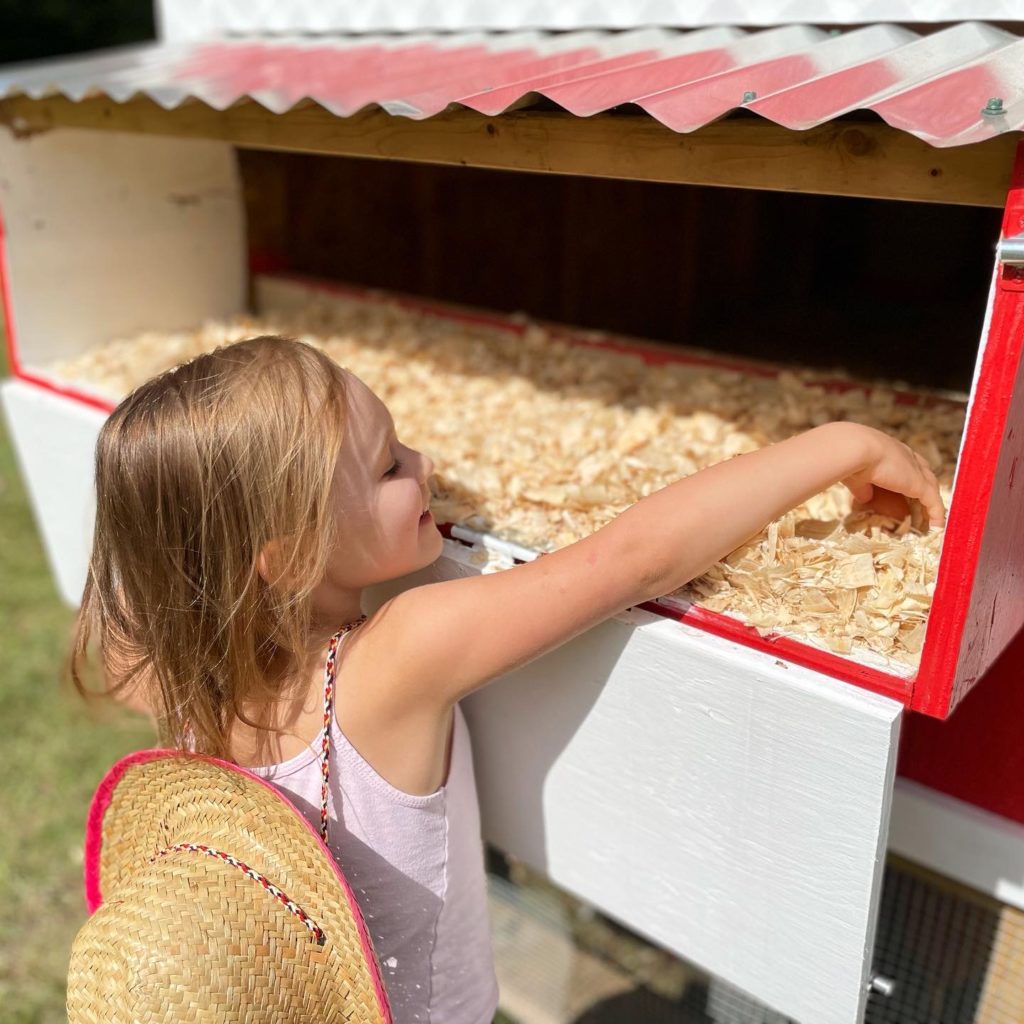
- Unpaid Daily Labor: This category includes tasks deemed necessary for the individual’s personal upkeep or general contribution to the family unit, such as making beds, clearing tables, and collecting eggs from the family’s chickens. These are categorized as non-negotiable responsibilities of being a family member.
- Paid Compensated Labor: This category involves tasks that provide a broader service to the household, such as organizing kitchen cabinets, emptying communal trash bins, or assisting with seasonal yard work.
Compensation for these tasks is set at a perceived "fair market value," and notably, the children are encouraged to negotiate. For instance, a recent agreement saw a seven-year-old subject negotiate a $10 lump sum for a comprehensive organization of the kitchen’s cabinetry. This introduces the concept of labor value and the potential for increased earnings through efficiency or specialized effort.

The timeline of these lessons often peaks during high-consumerism events. During a recent visit to a Vermont county fair, the subjects were tasked with managing their own funds for the duration of the event. While admission was covered by the parents, all secondary purchases—ranging from carnival games to specific snacks—required the children to use their saved chore money. This environment serves as a high-pressure testing ground for the "planning" and "execution" phases of money management.
Behavioral Economics and the "Unicorn Debt" Incident
One of the most significant milestones in this educational journey occurred during a previous year’s fair, involving the purchase of an inflatable toy. When a subject desired a $13 item but possessed only $9, the parents acted as a lending institution, providing a $4 loan to bridge the gap. This decision was a deliberate move to introduce the concept of debt and its subsequent impact on future labor.
Upon returning home, the subject was required to perform mandatory chores to repay the debt. The child’s observation—that it was "not fun" to work for something already consumed—highlights a successful internalization of the psychological burden of debt. Financial experts often cite this "visceral understanding" as more effective than abstract explanations of credit card interest or loan amortization. By allowing the child to experience the "work-off" period, the parents effectively demonstrated the concept of "opportunity cost"—the reality that future earnings are restricted by past consumption.
Supporting Data: The State of Financial Literacy in the United States
The necessity for such early interventions is supported by national data regarding financial literacy among American youth and adults. According to the 2022 TIAA Institute-GFLEC Personal Finance Index, U.S. adults correctly answered only 50% of functional finance questions on average. Furthermore, a study by the Council for Economic Education (CEE) found that as of 2024, only 35 states require high school students to take a course in personal finance to graduate.
Research from the University of Cambridge suggests that many of the habits that will help children manage their money as adults are set by the age of seven. These include the ability to plan ahead, the understanding that some things are worth waiting for, and the realization that choices involve trade-offs. The Vermont case study aligns with these findings, targeting children during the "habit-forming" window of ages five to seven.
Child-Directed Marketing and the Retail Environment
A critical component of this educational approach involves navigating "annoying instances of kid-directed consumerism." Modern retail environments are frequently designed to bypass parental gatekeepers and appeal directly to children’s impulses. The Scholastic Book Fair is a prime example of this phenomenon, where the school environment provides a sense of academic legitimacy to what is, at its core, a retail event.
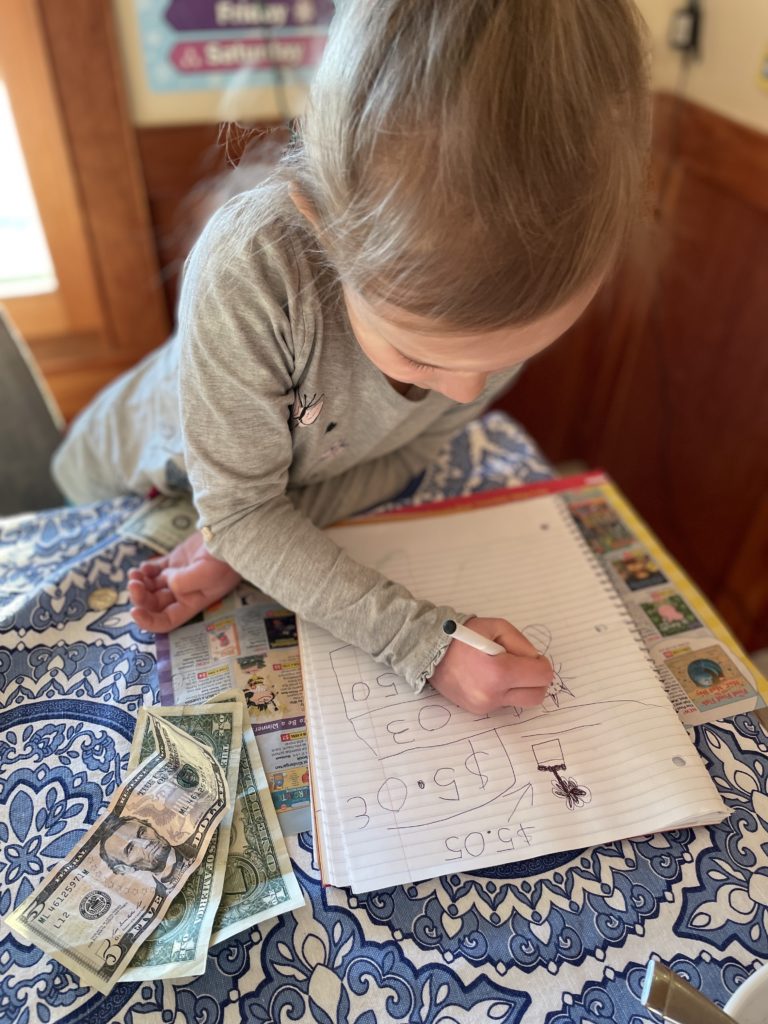
By requiring children to use their own money for book fair purchases, parents teach them to evaluate the value of a product regardless of its setting. The subjects were observed "comparison shopping" within the book fair fliers, weighing the cost of a new book against the "free" alternative of the local library or the "low-cost" alternative of used book sales. This develops a critical eye toward marketing and encourages a more analytical approach to consumption.
Broader Impact and Future Implications
The long-term goal of this scaffolded approach is to demystify money and present it as a tool rather than a source of anxiety or a measure of self-worth. By explaining that "Mama works and is paid money for her work," parents remove the "magic" from the ATM and replace it with a clear cause-and-effect relationship between labor and purchasing power.
The next phase of this financial education plan involves the introduction of "The Bank of Parental Units." This system will simulate a savings account, where the parents pay a high interest rate on any money the children choose to save rather than spend. This is designed to teach:

- Compound Interest: The concept that money can "grow" when left untouched.
- Delayed Gratification: The benefit of resisting immediate small purchases for the sake of a larger future goal.
- Asset Management: The responsibility of tracking balances and understanding how interest is calculated.
As society moves toward a more cashless economy, the transition from physical wallets to digital banking becomes the next hurdle. Experts suggest that while physical cash is essential for teaching young children (due to its tactile nature), the move to digital tracking is necessary by age ten to prepare them for the modern financial landscape.
Analysis of the "Scaffolded" Learning Model
Educational theorists often refer to the "Zone of Proximal Development," a concept where children learn best when they are challenged just beyond their current independent ability but with the support of a mentor. In this case, the parents act as the "scaffold," providing the safety net of basic needs while allowing the children to fail—or succeed—in the controlled environment of discretionary spending.
The success of the "pizza night" experiment, where two siblings eventually agreed to split the cost of a shared dessert, demonstrates the evolution of social-economic cooperation. The realization that a shared benefit should involve a shared cost is a fundamental principle of fair trade and partnership.

In conclusion, the Vermont case study illustrates that financial literacy is not merely about mathematics; it is about behavior, psychology, and values. By treating money as a tool for living rather than a taboo subject, parents can equip the next generation with the resilience and analytical skills necessary to navigate an increasingly complex global economy. The lessons of the "inflatable unicorn" and the "negotiated kitchen chore" serve as the building blocks for a lifetime of informed financial agency.

