
Brent crude futures briefly surged to $98 a barrel overnight before settling back to approximately $96, positioning the benchmark for its first weekly gain this month. This significant upward movement in oil prices is primarily attributed to a burgeoning war risk premium, ignited by recent Houthi attacks on critical Saudi Arabian energy infrastructure and persistent drone strikes targeting tankers in vital Middle Eastern maritime chokepoints, which have collectively amplified fears of supply disruptions. Concurrently, Russia’s decision to extend its ban on most jet fuel exports through March, a move stemming from intensified Ukrainian drone campaigns against its domestic refineries, adds another layer of complexity to an already strained global refined-fuel market.
The confluence of these geopolitical flashpoints and structural market challenges underscores a precarious moment for global energy security and prices. While immediate market reactions reflect short-term anxieties, underlying vulnerabilities in both crude supply chains and refined product availability suggest a prolonged period of elevated volatility.
Geopolitical Undercurrents Drive Crude Price Surge
The recent escalation in the Middle East, particularly the Houthi attacks, has been a principal catalyst for the rising crude prices. These Iran-backed Houthi rebels, formally known as Ansar Allah, have been engaged in a protracted conflict with the Saudi-led coalition in Yemen since 2014. Their targeting of Saudi Arabia’s energy facilities represents a significant escalation, aimed at pressuring the Kingdom and asserting their regional influence.
On the specific targets, the Jazan refinery, located in Saudi Arabia’s southwestern region near the Yemeni border, is a crucial component of the Kingdom’s refining capacity. Its strategic location makes it vulnerable but also a potent symbol for Houthi aggression. More significantly, the Ras Tanura export hub, situated on Saudi Arabia’s eastern coast along the Persian Gulf, is one of the world’s largest oil terminals and a cornerstone of global crude oil exports. An attack on such a pivotal facility, even if limited in impact, sends reverberations through the global market due to its sheer importance in ensuring consistent supply. The threat of future attacks on these or similar installations translates directly into a "war risk premium," where traders price in the increased likelihood of supply disruptions, higher insurance costs for shipping, and potential for broader regional conflict.
The broader context of these attacks includes an intensified campaign of drone and missile strikes by the Houthis against Saudi targets, which has seen periods of ebb and flow throughout the Yemen conflict. The current wave signals a renewed intent to disrupt Saudi oil operations and challenge regional stability. Furthermore, the mention of "continued drone attacks pummeling tankers in the critical maritime chokepoints in the Middle East area" refers to the broader threat to shipping in crucial passages like the Strait of Hormuz, through which a significant portion of the world’s oil supply passes. While specific incidents might not always be attributed, the general climate of insecurity elevates insurance premiums and freight costs, indirectly contributing to higher oil prices.
Russia’s Export Ban Exacerbates Refined Fuel Shortages
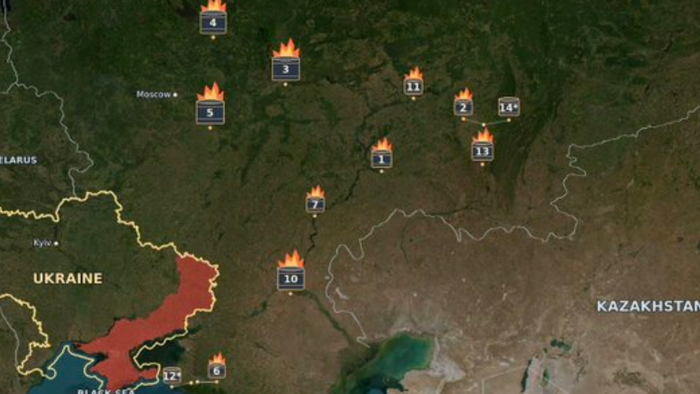
Adding to the global energy market’s woes is Russia’s decision to extend its ban on most jet fuel exports through March. This move comes as a direct response to an intensified Ukrainian drone campaign that has systematically targeted Russian oil refineries. Since late October, at least 18 Russian oil refineries have been hit, causing varying degrees of damage and disrupting refining capacity. These attacks are part of Ukraine’s broader strategy to degrade Russia’s military and economic capabilities, with energy infrastructure being a key vulnerability.
The Russian government’s official statement, as quoted by Bloomberg, emphasized its commitment to "maintain a reliable and uninterrupted supply of fuel to the domestic market." This highlights the internal pressure Russia faces to prioritize its own needs, particularly for military operations and domestic consumption, over export revenues. The attacks on refineries directly threaten Russia’s ability to produce refined products, necessitating measures like export bans to prevent domestic shortages.
UBS markets analyst Nana Antiedu provided additional context, noting that "Russian supply constraints add further upward pressure, with Moscow extending its ban on most jet fuel exports through March amid ongoing Ukrainian strikes on domestic refineries." Antiedu further projected that Russia’s total crude and condensate production is expected to fall to around 494 million tons this year, down from 511.4 million tons in 2025 (a likely projection for the preceding year or a misstatement, indicating a downward trend in output). This decline in crude production, coupled with refining disruptions, paints a grim picture for global refined fuel supplies, particularly for jet fuel which is crucial for the aviation sector and military logistics worldwide.
The Stubborn Reality of the Global Refining Crisis
The challenges extend beyond crude oil, manifesting acutely in the refined products market. Here in the United States, despite the recent Thanksgiving holiday seeing millions of Americans hit the highways, the fuel price landscape presents a stark contrast between gasoline and diesel. While AAA data indicates US gasoline prices averaging around $3.55 a gallon, representing a noticeable decline from peak levels earlier in the year, diesel prices remain stubbornly high at approximately $5.70 a gallon. This significant disparity underscores an ongoing "global refining crisis," particularly severe for industrial fuels.
Several factors contribute to this crisis:
- Post-Pandemic Demand Rebound: Global demand for refined products, especially diesel, surged as industrial activity, freight transport, and construction rebounded sharply after the COVID-19 lockdowns.
- Underinvestment in Refining Capacity: Years of underinvestment in new refinery construction and upgrades, partly due to environmental regulations and uncertain long-term demand outlooks for fossil fuels, have left the global refining system less resilient to shocks.
- Refinery Closures and Maintenance: Numerous refineries globally have either permanently shut down or undergone extensive maintenance in recent years, reducing overall processing capacity.
- Geopolitical Shifts and Sanctions: Sanctions against Russian refined products following the invasion of Ukraine forced a significant restructuring of global trade flows. European nations, previously reliant on Russian diesel, had to seek alternative suppliers, putting immense pressure on other refining hubs.
- Seasonal Factors: Diesel demand typically increases in winter months for heating oil, particularly in the Northern Hemisphere, further tightening supplies and pushing prices higher.
The elevated cost of diesel, a critical fuel for trucking, shipping, agriculture, and heavy machinery, has profound implications for the broader economy. It translates into higher transportation costs for goods, contributing to inflationary pressures across supply chains and ultimately impacting consumer prices. For businesses, it increases operational expenses, potentially squeezing profit margins and impeding economic growth.
OPEC+ Meeting and Future Market Outlook

Looking ahead, the global oil market will closely watch the upcoming OPEC+ ministerial meeting, scheduled for Sunday. OPEC+, an alliance of the Organization of the Petroleum Exporting Countries and other major oil-producing nations led by Russia, plays a pivotal role in managing global oil supply through production quotas. Reuters reports that producers are expected to leave their output targets for the near term, likely extending into the first quarter of the coming year, unchanged. While the original article mentioned "first-quarter 2027 output targets," this is an unusually distant timeframe for specific quarterly quota decisions; it more plausibly refers to broader capacity planning or is a typographical error for a closer quarter.
The collective strategy of OPEC+ has been to stabilize the market, often by implementing production cuts to support prices amidst fluctuating demand and geopolitical uncertainties. Their decisions significantly influence global supply and, consequently, price levels. Any deviation from expectations, whether a surprise cut or an increase, could send ripples through the market.
Interestingly, the International Energy Agency (IEA) recently warned that the global oil market would return to a surplus in the fourth quarter of this year. This assessment, based on fundamental supply and demand projections, contrasts somewhat with the current upward price trajectory driven by geopolitical risk premiums. The apparent contradiction highlights the dual nature of oil market dynamics: while long-term fundamentals might point towards adequate supply, short-term geopolitical events can rapidly override these fundamentals, injecting volatility and pushing prices higher due to perceived threats to immediate supply security.
Broader Implications and Market Volatility
The current energy market landscape carries significant implications for the global economy and geopolitical stability:
- Inflationary Pressures: Elevated oil and refined fuel prices directly feed into inflation, increasing costs for transportation, manufacturing, and consumer goods. This complicates monetary policy decisions for central banks worldwide, which are already grappling with persistent inflationary pressures.
- Economic Growth Risks: High energy costs can act as a drag on economic growth by reducing consumer purchasing power and increasing business operational expenses. Industries heavily reliant on transportation and energy-intensive processes are particularly vulnerable.
- Energy Security Concerns: The ongoing geopolitical tensions in the Middle East and Eastern Europe underscore the fragility of global energy supply chains and raise significant energy security concerns for importing nations. Diversification of energy sources and strategic petroleum reserves become even more critical in such an environment.
- Geopolitical Ramifications: The targeting of critical infrastructure and the weaponization of energy exports intensify existing geopolitical rivalries and conflicts. The interplay between military actions, economic sanctions, and energy market responses creates a complex web of international relations.
- Consumer Impact: For ordinary consumers, the direct impact is felt at the pump and in heating bills. While US gasoline prices have shown some relief, the persistently high diesel prices indirectly affect the cost of almost every good and service, from food to electronics, due to increased freight costs.
In conclusion, the global oil market is navigating a turbulent period, characterized by a potent mix of geopolitical tensions, supply-side constraints, and structural refining challenges. The brief ascent of Brent crude towards $98 a barrel serves as a stark reminder of the market’s sensitivity to perceived risks, particularly those emanating from crucial production and transit regions. As stakeholders brace for the OPEC+ decision and monitor evolving geopolitical landscapes, the immediate outlook points towards continued volatility, with the price of oil remaining a critical barometer of global stability and economic health.

