

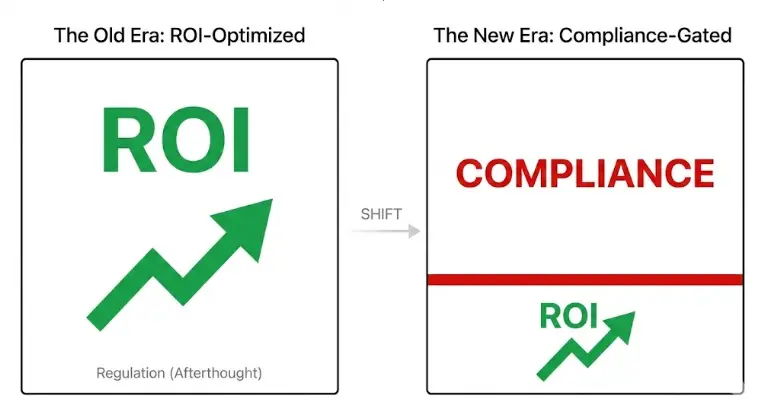
For nearly a decade, the short-term rental (STR) investment landscape operated with a distinct set of priorities. Investors meticulously optimized for nightly rates, occupancy curves, and platform algorithms. The fundamental equation was simple: if the numbers aligned, the investment was deemed viable. Regulatory compliance, while acknowledged, often remained a secondary consideration, a task relegated to the latter stages of the investment process, typically after financing and furnishing were secured. This era of unchecked growth and a regulatory "afterthought" mentality has decisively concluded, ushering in a new paradigm where legal adherence has ascended to become a critical underwriting risk.
The shift is profound. A single vote by a city council can overnight eliminate non-owner-occupied rentals, effectively shuttering a significant portion of existing inventory. The imposition of a permit cap can instantly freeze new supply, creating an artificial scarcity. Furthermore, aggressive enforcement cycles, often initiated by municipalities seeking to reclaim residential character or increase tax revenue, can quietly decimate occupancy rates across entire zip codes. In this evolving environment, generating yield without demonstrable legality is no longer a sustainable strategy; it is an illusion. For PropTech platforms, marketplaces, analytics dashboards, and STR lending engines, this fundamental alteration in market dynamics necessitates a complete re-evaluation of how compliance is managed. It can no longer reside in static blog posts or require manual research; it must be integrated as a programmatic underwriting input.
The API as a Policy Enforcement Engine
In the realm of real estate compliance, an Application Programming Interface (API) transcends its role as a mere data conduit. It evolves into the essential infrastructure for automated policy enforcement. The concept of "staying compliant by city" translates to the ability to systematically process and interpret thousands of diverse local municipal codes, transforming them into a singular, executable logic gate. This programmatic approach is crucial for navigating the complex and fragmented regulatory landscape of STRs.
Deterministic vs. Probabilistic Data: The Compliance Threshold
A critical distinction within real estate technology lies between probabilistic modeling and deterministic data. Historically, most PropTech platforms have relied heavily on probabilistic data—estimations, inferred classifications, and Automated Valuation Models (AVMs). While such data may suffice for ROI calculations, where an "estimate" can often be acceptable, it presents a significant liability when it comes to compliance.
Probabilistic data operates on "likelihoods." For instance, it might infer a property is a single-family home based on its square footage or neighborhood profile. However, if a city ordinance explicitly bans STRs in multi-family units but permits them in single-family homes, a "likely" classification is insufficient. The absence of definitive, verifiable information introduces unacceptable risk.
Deterministic data, conversely, is grounded in authoritative records. This includes tax assessments, deed filings, and official land-use codes. For a platform to genuinely function as an underwriting tool, its API must provide these deterministic metadata points. Compliance mandates a binary "Yes" or "No" decision, derived from legal truth. When a platform relies on inferred data for compliance, it exposes its users to catastrophic capital risk. Imagine an institutional investor deploying $50 million into a market based on "probable" eligibility, only to discover that the underlying metadata was incorrect. The entire portfolio’s cash flow could be obliterated by a single enforcement letter.
The "Ghost Listing" Problem and Enforcement Signals
Standard real estate APIs also grapple with the "Ghost Listing" phenomenon. In markets undergoing stringent regulatory crackdowns, thousands of listings may remain ostensibly "active" on booking platforms even after their legal permits have been revoked. This creates a misleading impression of market health.
If a platform solely tracks active listings, it might report a thriving market. In reality, that market could be experiencing a severe "supply contraction" driven by regulatory action. A compliance-aware API must offer more than a static snapshot; it needs to provide historical performance trends. By cross-referencing a sudden decline in supply with sustained demand, platforms can detect an "enforcement signal." For example, a 40% drop in active rentals within a specific zip code in a single quarter, while nightly rates remain high, is seldom an indicator of market failure. Instead, it strongly suggests a regulatory "clean sweep." Platforms capable of programmatically identifying these signals empower their users to avoid entering markets where the "door is closing," even if current ROI projections appear attractive. This foresight is invaluable for preserving capital and mitigating exposure to regulatory uncertainty.
Turning Ordinances Into Logic
To automate compliance effectively, platforms must translate complex legal language into structured, queryable data. At a practical level, most STR regulations can be categorized into three primary operational "guardrails."
1. Zoning & Property-Type Restrictions
Numerous municipalities impose STR restrictions based on building classification. By leveraging property-level metadata, a platform can automatically flag ineligible property classes or exclude restricted asset types from search results. This ensures that users are presented only with inventory that is legally viable for STR operation, streamlining the initial screening process.

2. Residency & Ownership Mandates
A growing number of cities are permitting STRs only if the property is owner-occupied. By utilizing ownership indicators within the property dataset, a platform can transition from mere "ROI modeling" to "operational viability modeling." This represents a fundamental shift: moving from a tool that projects potential earnings to one that clearly defines what an investor is legally allowed to earn. This distinction is crucial for accurate financial planning and risk assessment.
3. Market Saturation & Permit Caps
Some jurisdictions regulate STRs through hard permit caps. While official ordinance databases define these limits, performance trends often reveal the real-world enforcement patterns. This is where a platform transcends static data and enters the realm of predictive risk modeling. By analyzing historical permit issuance rates, renewal trends, and enforcement actions, platforms can provide insights into the practical availability of permits, not just the theoretical maximum.
Technical Architecture: Building the Compliance Layer with Mashvisor
For compliance to function as an integral underwriting input, it must be deeply embedded within a platform’s technical architecture. By leveraging Mashvisor’s structured data, platforms can seamlessly integrate these compliance checks into their own validation frameworks.
A compliance-aware underwriting engine can be constructed by combining several Mashvisor API endpoints that expose deterministic property metadata and historical rental performance data. This layered approach ensures comprehensive coverage of regulatory requirements.
Phase 1: The Eligibility Filter (Property Info)
The foundational data pull is achieved through the GET /v1.1/client/property endpoint. When a user selects a listing, the platform retrieves the comprehensive Property Object. This object contains critical deterministic data points such as property_type (e.g., single-family, multi-family, condo), zoning_code, and occupancy_status (e.g., primary residence, secondary home, vacant). This information is paramount for initial eligibility screening against zoning and property-type restrictions. For example, if a city ordinance prohibits STRs in multi-family buildings, the API can immediately flag any listing categorized as such, preventing further analysis and saving valuable time.
Phase 2: Ownership & Residency Screening (Property Ownership)
Where cities mandate primary residence status for STR operation, the GET /v1.1/client/owner/contact endpoint becomes vital. This endpoint allows platforms to access ownership indicators, including the owner’s mailing address. By cross-referencing the owner’s mailing address with the subject property’s address, platforms can programmatically determine if the property is likely owner-occupied. This capability is essential for navigating regulations that distinguish between owner-operated STRs and investment properties managed by absentee owners. This moves the underwriting process from simply assessing potential revenue to verifying operational legality.
Phase 3: Regulatory Pressure Detection (Rental Activity Data)
Static rules capture what is written in ordinances, but trend data captures what is happening in the market. The GET /v1.1/client/rento-calculator/historical-performance endpoint provides crucial insights into market dynamics. This endpoint delivers historical data on active listings, occupancy rates, and average daily rates over time. By analyzing these trends, platforms can identify "enforcement signals" indicative of regulatory pressure. A sharp decline in the number of active listings, for instance, could signal a crackdown, even if existing listings still appear active on booking platforms. This allows investors to anticipate potential future regulatory shifts and avoid markets experiencing significant supply contractions.
Case Study: Institutional Underwriting for a Multi-Market REIT
Consider a Real Estate Investment Trust (REIT) targeting the Florida market, specifically Miami, a region known for its dynamic city-level ordinances with significant fiduciary implications. For such an entity, compliance is not merely a legal objective but a fundamental capital markets requirement. Their investment committee (IC) demands a robust, audit-traceable risk framework before deploying any institutional capital.
Example: Institutional STR Underwriting Workflow
Step 1: The Metadata "Gateway"
The workflow commences with a query to GET /v1.1/client/property. In a traditional manual workflow, an analyst might spend hours navigating a city’s GIS website and zoning maps. Programmatically, the system analyzes the property_type and occupancy_status fields within milliseconds. If, for example, the property is flagged as a "Second Home" in a zone that strictly requires primary residency for STR operation, the potential investment is immediately disqualified before reaching the analyst’s desk, drastically improving efficiency and reducing risk.
Step 2: Ownership & Residency Verification
The platform then verifies ownership details via GET /v1.1/client/owner/contact. The engine extracts the owner’s mailing address and cross-references it with the subject property’s address. For a REIT evaluating a portfolio of 50 properties, manual verification is logistically impossible. The API provides the deterministic proof required for the IC memo, ensuring scalability and rigorous due diligence. This programmatic check is vital for ensuring adherence to residency mandates.
Step 3: Market Contraction & Enforcement Analysis
A query to GET /v1.1/client/rento-calculator/historical-performance is executed. If the data reveals a sharp decline in active listing counts over recent quarters, the REIT identifies a "Regulatory Pressure" signal. This intelligence allows the REIT to pivot its capital allocation towards more stable micro-markets, thereby preserving capital amidst municipal volatility and anticipating potential future regulatory actions. This proactive approach is critical in managing institutional capital.
Step 4: Output – The Unified Underwriting Score
The platform aggregates these Mashvisor data points into its internal decision engine, generating a comprehensive underwriting score.
| Metric | Mashvisor API Source | Value |
|---|---|---|
| Projected ROI | Investment Analysis | 8.2% |
| Zoning Match | Property Info (property_type) |
Pass |
| Residency Match | Property Ownership (mailing_address) |
Fail |
| Market Pressure | Historical Performance Trends | High |
The Result: Based on this integrated analysis, the system generates a "No-Buy" signal. This programmatic workflow ensures that every potential deal in the pipeline rigorously meets the REIT’s stringent fiduciary standards for operational certainty and regulatory compliance. This objective, data-driven approach removes subjective bias and provides a clear, defensible rationale for investment decisions.
Compliance as a Fiduciary Guardrail
As short-term rentals mature from speculative retail plays into a recognized institutional asset class, the demand for repeatable risk frameworks has evolved from a "nice-to-have" feature to a fundamental capital markets requirement. For institutional funds, compliance serves as the ultimate fiduciary guardrail, protecting both the fund and its investors.
Lenders and capital partners are increasingly attuned to "regulatory drift"—the phenomenon where an asset is acquired under one legal framework but subsequently becomes "orphaned" by evolving regulations. In this high-stakes environment, a platform’s reliance on manual research or vague "best-effort" disclaimers is no longer acceptable. Institutional underwriting necessitates an audit-traceable data lineage. By integrating deterministic property metadata, platforms provide a digital paper trail for every investment decision. When a lender inquires about the rationale behind approving a specific asset for a high-leverage loan, the platform can reference the precise Mashvisor-backed occupancy_status and property_type indicators that aligned with the city’s ordinance at the time of underwriting. This transforms compliance from a potential legal burden into a tangible liquidity feature, making assets demonstrably more attractive to risk-averse institutional buyers. The ability to prove compliance retrospectively is as crucial as demonstrating it prospectively.
Conclusion: From ROI to Operational Viability
The short-term rental market has definitively moved beyond its "growth at all costs" phase. In this new landscape, the most sophisticated calculation is no longer about how much a property could generate, but whether it is legally allowed to operate. For PropTech platforms, this represents a fundamental shift in product category and market positioning.
By integrating deterministic property metadata and real-time performance signals directly into the underwriting workflow, platforms transcend their role as mere ROI calculators. They evolve into essential risk infrastructure—tools that actively protect capital, ensure fiduciary compliance, and provide the operational certainty that institutional investors demand. As regulatory scrutiny continues to intensify and municipal governments become more proactive in their enforcement, the platforms that successfully encode legality into their technical architecture will not merely survive; they will define the next era of real estate investing, setting the standard for responsible and sustainable growth in the STR market. The future of real estate investment technology lies in its ability to provide not just opportunity, but also absolute certainty.

