

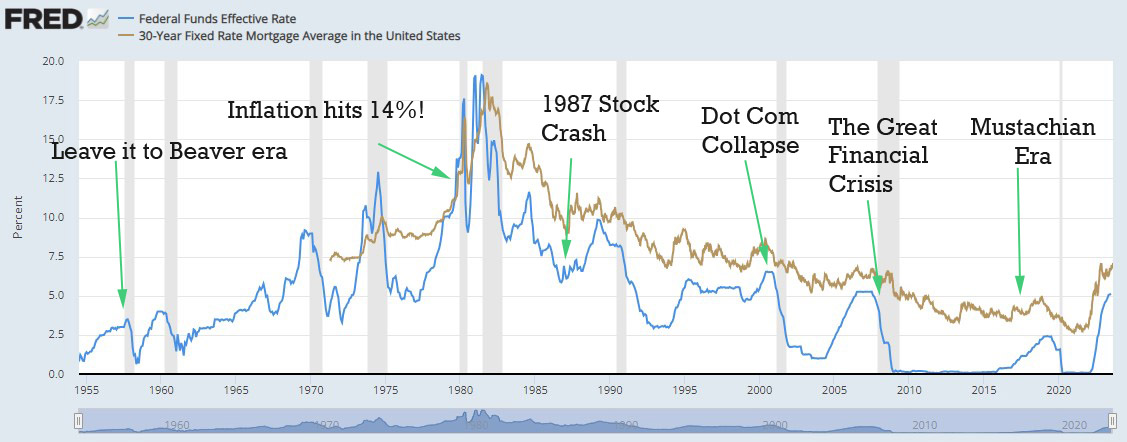
For over a decade, spanning roughly from the aftermath of the 2008 global financial crisis through the initial phases of the COVID-19 pandemic, the world experienced an era of exceptionally low interest rates. This period saw benchmark rates hovering close to zero, creating an environment of inexpensive borrowing and ample liquidity. However, this extended era concluded abruptly, with central banks, most notably the U.S. Federal Reserve, embarking on an aggressive campaign of rate hikes to combat spiraling inflation. This dramatic reversal has pushed rates to their highest point since the early 2000s, prompting widespread questions about the implications for personal finance, investment strategies, and the broader economy.
The Genesis of the Rate Hike Cycle: A Response to Inflation

The precipitous rise in interest rates did not occur in a vacuum; it was a direct and forceful response to an inflation surge that proved more persistent and widespread than initially anticipated. Following the economic dislocations of the COVID-19 pandemic, a confluence of factors ignited inflationary pressures. Massive fiscal stimulus packages, coupled with exceptionally accommodative monetary policies, injected trillions of dollars into the global economy. Simultaneously, pandemic-induced supply chain disruptions, labor shortages, and geopolitical events (such as the war in Ukraine impacting energy and food prices) constrained the availability of goods and services. The classic economic scenario of "too much money chasing too few goods" rapidly materialized, pushing the Consumer Price Index (CPI) to multi-decade highs, peaking at 9.1% year-over-year in June 2022.
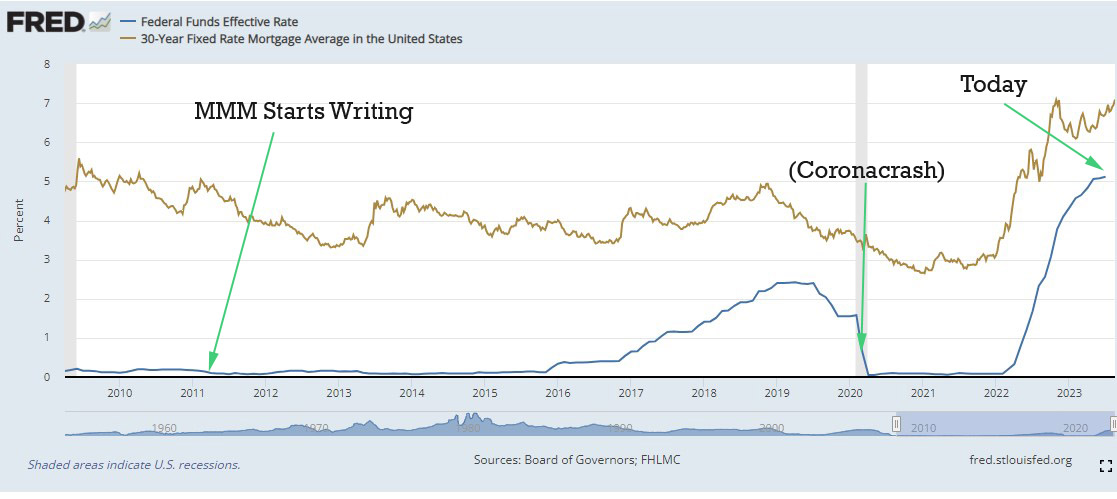
The Federal Reserve, mandated with achieving maximum employment and price stability, initially characterized inflation as "transitory." However, as inflation proved more entrenched, particularly with wage growth contributing to a potential wage-price spiral, the Fed pivoted sharply. Under Chairman Jerome Powell’s leadership, the Federal Open Market Committee (FOMC) initiated a series of aggressive interest rate increases, beginning in March 2022. The Federal Funds Rate, which had been near zero since March 2020, was incrementally raised, quarter-point by quarter-point, and sometimes by half or three-quarters of a point, reaching a range of 5.25% to 5.50% by mid-2023. This rapid tightening cycle marked the fastest pace of rate increases since the early 1980s, fundamentally recalibrating the cost of money across the economy.
Impact on Financial Markets and Investment Strategies
The dramatic shift in interest rates has reverberated throughout financial markets, challenging long-held investment assumptions. For nearly two decades, investors grew accustomed to a TINA ("There Is No Alternative") environment, where low bond yields pushed capital into equities in search of higher returns. With savings accounts and government bonds offering negligible interest, the stock market often appeared to be the only viable avenue for significant growth.
However, the current landscape has introduced viable alternatives. High-yield savings accounts and money market funds now offer rates in the 4.5% to 5.0% range, providing a meaningful return on cash for the first time in years. Similarly, U.S. Treasury bonds, once yielding close to zero, now offer attractive returns, with short-term Treasuries often surpassing 5.0%. This resurgence of fixed-income returns forces a re-evaluation of portfolio allocations, as investors can now achieve decent, low-risk returns without venturing into the more volatile equity markets.
Despite this, the stock market has shown resilience. From its peak in early 2022, the overall U.S. market, as measured by the S&P 500, experienced a correction but has largely recovered by mid-2023, demonstrating a remarkable ability to absorb higher rates. While some sectors, particularly growth stocks heavily reliant on cheap capital, faced significant headwinds, the broader market has absorbed the shock. Historically, the stock market has consistently delivered superior returns over the long term compared to cash or bonds, even during periods of higher interest rates. This underscores the enduring principle of long-term investing and the challenges of market timing. For investors with a long time horizon, market downturns or periods of stagnation can be viewed as opportunities to acquire assets at lower valuations, potentially amplifying future returns.

The Reshaping of the Housing Market
Perhaps no sector has felt the immediate and profound impact of rising interest rates more acutely than the housing market. For years, historically low mortgage rates fueled a housing boom, making homeownership accessible to a wider demographic and driving property values to unprecedented levels. A 30-year fixed-rate mortgage, which averaged around 3% in late 2020 and early 2021, soared to over 7.5% by mid-2023. This nearly trebling of borrowing costs has dramatically eroded housing affordability.
Consider a hypothetical $400,000 home purchase with a 10% down payment, requiring a $360,000 mortgage. At a 3% interest rate, the monthly principal and interest payment would be approximately $1,519. At 7.5%, that same payment jumps to roughly $2,517 – an increase of nearly $1,000 per month. This substantial increase effectively prices many potential buyers out of the market, reducing demand and increasing the financial burden for those who can still qualify.

The ripple effects are numerous:
- Reduced Demand: Fewer buyers qualify for mortgages, leading to a noticeable slowdown in transaction volumes.
- Inventory Challenges: Existing homeowners, many of whom locked in historically low mortgage rates, are reluctant to sell and forfeit their advantageous financing, leading to constrained inventory despite reduced demand.
- Builder Response: New home construction, which faced rising material and labor costs, now also contends with higher financing costs for projects and a smaller pool of eligible buyers, leading to project delays or cancellations.
- Rental Market Spillover: As homeownership becomes less accessible, more individuals remain in the rental market, contributing to sustained demand and upward pressure on rental prices in many urban centers.
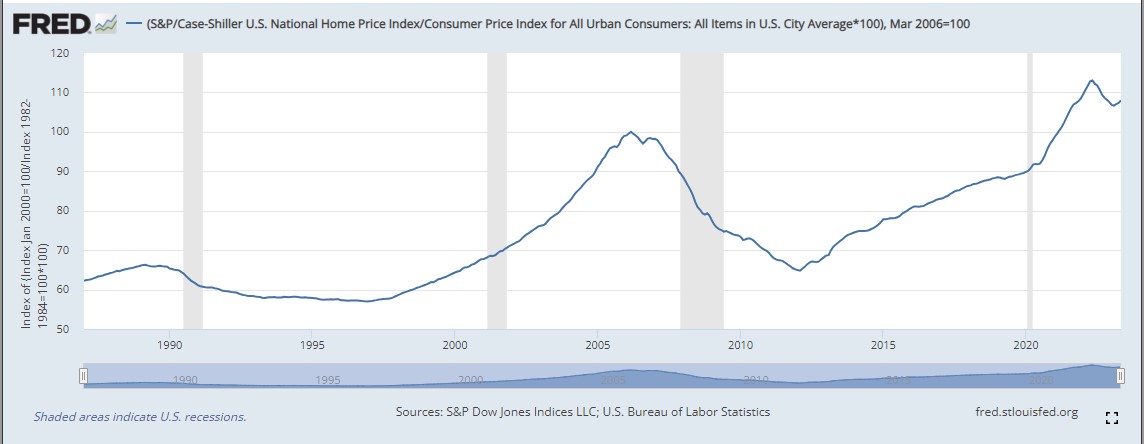
While the rapid price appreciation seen during the pandemic has largely halted, a significant nationwide decline in home prices has been slower to materialize than some predicted. Many housing markets have seen modest corrections or simply flat prices, failing to keep pace with inflation. The "value" of a house remains heavily influenced by local supply and demand dynamics, which are complex. Factors like construction costs, regulatory hurdles (including restrictive zoning laws and "Not In My Back Yard" or NIMBY sentiment hindering new development), and demographic shifts all play a role. While some economists foresee a potential further softening of prices, others anticipate a prolonged period of stagnation, where prices remain elevated but fail to grow, effectively becoming cheaper relative to future incomes over time.
Broader Economic Implications and the Soft Landing Debate

The Federal Reserve’s aggressive tightening was designed to cool an overheating economy and bring inflation back to its 2% target. This process inevitably entails some economic slowdown. Higher interest rates make it more expensive for businesses to borrow for investment, leading to scaled-back expansion plans, reduced hiring, and even layoffs, as seen in sectors like technology (e.g., Meta’s 10,000 layoffs, Amazon’s 27,000 workforce reduction). The "miniature banking crisis" of early 2023, which saw the collapse of Silicon Valley Bank and Signature Bank, partly stemmed from rising rates eroding the value of their bond portfolios, highlighting vulnerabilities within the financial system.
Despite these headwinds, the U.S. economy has demonstrated remarkable resilience. Unemployment rates have remained near 50-year lows, fluctuating between 3.5% and 3.8% through much of 2023. GDP growth, while decelerating, has avoided a deep recession. This unexpected strength has fueled an ongoing debate among economists: Is the Fed achieving a "soft landing," where inflation is tamed without triggering a severe recession, or is a delayed, more painful economic contraction still on the horizon?
The narrative in some media outlets often paints a picture of imminent economic collapse, fueled by partisan analyses. However, a data-driven perspective reveals an economy in a complex rebalancing act. The labor market remains robust, consumer spending has held up, and corporate earnings, while moderating, have largely avoided a precipitous decline. The current period could be interpreted as the economy digesting the "sugar rush" of past stimulus, transitioning to a more sustainable growth trajectory.
Forecasting the Future: The Yield Curve as an Indicator
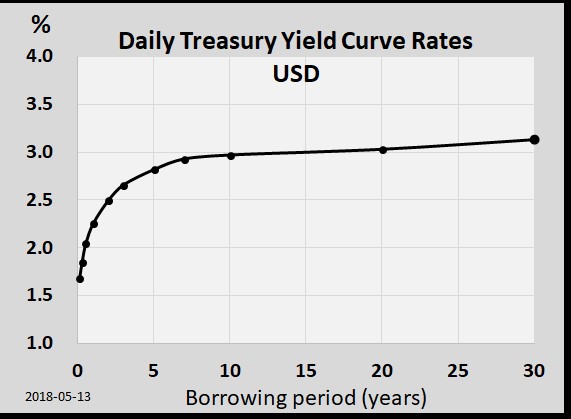
Predicting the future path of interest rates is inherently challenging, but financial markets offer clues. The U.S. Treasury Yield Curve, which plots the yields of Treasury bonds across different maturities, is a particularly insightful indicator. In a "normal" economic environment, longer-term bonds typically offer higher yields than shorter-term bonds, compensating investors for locking up their capital for longer periods. This curve usually slopes upwards.
However, the current environment presents an "inverted yield curve," a rare phenomenon where short-term Treasury yields are higher than long-term yields. For instance, in mid-2023, 1-year Treasury bills might yield over 5.4%, while 10-year Treasury bonds yield around 4.05%. This inversion signals that bond market participants anticipate interest rates will fall in the future, often due to an expected economic slowdown or recession. Historically, an inverted yield curve has been a remarkably accurate predictor of recessions, preceding 10 of the last 11 U.S. recessions over the past 75 years. This suggests that while the economy remains robust currently, financial markets are pricing in a significant probability of an economic contraction, and thus a reversal of Fed policy, within the next 18-24 months.
Strategic Positioning in a Shifting Environment
For individuals and businesses, navigating this dynamic interest rate environment requires a strategic approach rooted in financial resilience. For those with substantial debt, particularly variable-rate debt, the higher cost of borrowing necessitates a focus on accelerated debt repayment. Conversely, individuals with significant cash savings can benefit from the attractive yields offered by high-yield savings accounts and short-term fixed-income products.
For long-term investors, the core principles of diversification, consistent investing (dollar-cost averaging), and a focus on one’s personal financial goals remain paramount. Attempting to time market fluctuations based on interest rate predictions is notoriously difficult and often counterproductive. Instead, maintaining a diversified portfolio aligned with one’s risk tolerance and time horizon is a more reliable strategy.
Ultimately, the most potent "strategy hack" is cultivating financial independence. Reducing reliance on debt, building substantial savings, and maintaining a lean and sustainable lifestyle provides a buffer against economic uncertainties. When one possesses sufficient capital to make significant purchases without external financing, or to weather periods of market volatility, the daily fluctuations in interest rates or asset prices diminish in their immediate impact. This allows for opportunistic action when favorable conditions arise, whether it’s a property coming onto the market at a reduced price or an investment opportunity presenting itself.
The current economic transition, marked by surging interest rates, represents a return to more historically normal financial conditions after an anomalous period. While it brings challenges and necessitates adjustments, it also reintroduces a greater balance between risk and reward across different asset classes. By focusing on fundamental personal finance principles – earning, saving, living below one’s means, and making informed, long-term decisions – individuals can effectively navigate these shifts and maintain progress toward their financial goals, regardless of the immediate economic currents.

