
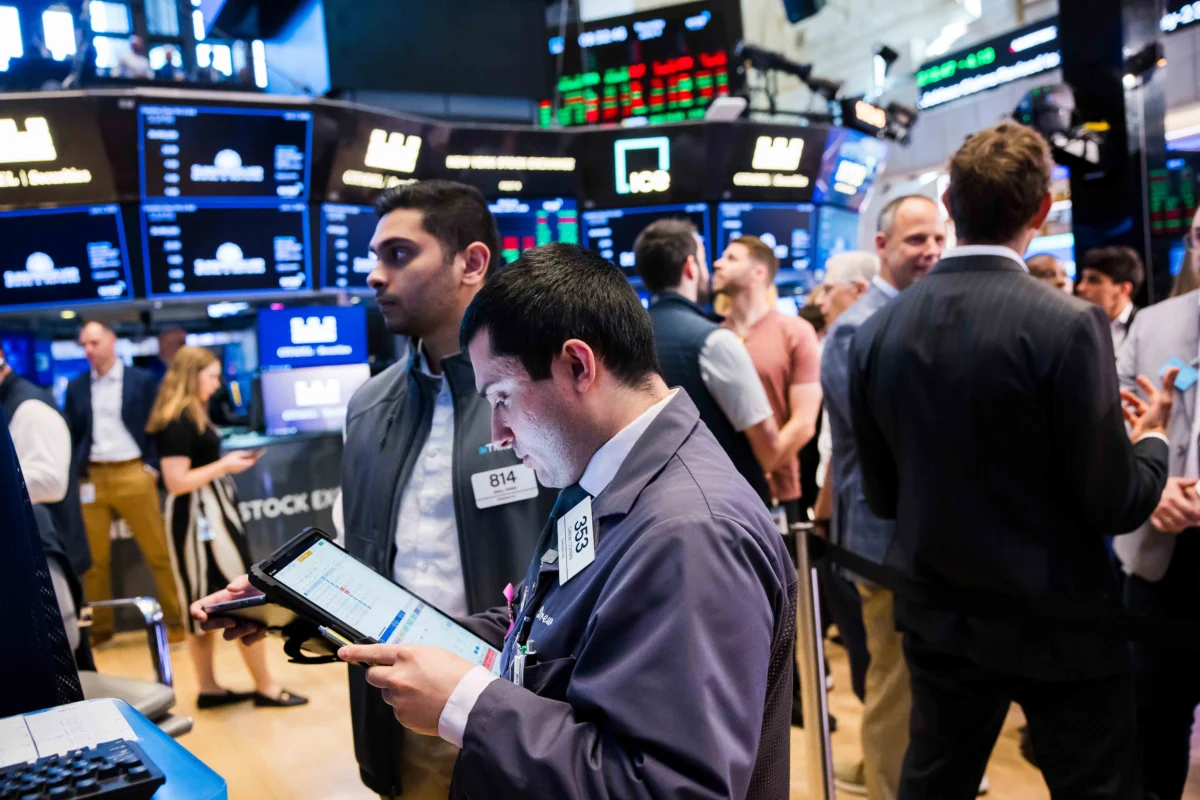
The landscape of Wall Street has shifted dramatically, with a relentless tech-driven sell-off sending major indices into correction territory and prompting prediction market traders to adopt an increasingly pessimistic outlook for the remainder of the year. What began as a cautious reassessment of high-flying technology stocks has escalated into a broad market retreat, eroding significant year-to-date gains and challenging prevailing bullish narratives. This deepening market angst is reflected starkly in the dramatically reduced odds for the S&P 500 to reach the 8,000 mark by the close of 2026, a target that just weeks ago seemed within plausible reach.
Prediction Markets Signal Sharp Deterioration in Sentiment
A key indicator of this rapidly shifting sentiment comes from Kalshi, a regulated prediction market platform where speculators wager on future events. Data from Kalshi reveals a precipitous decline in confidence regarding the S&P 500’s trajectory. As of the latest assessment, traders are assigning a mere 6% probability that the benchmark index will cross the 8,000 threshold before the end of 2026. This figure represents a staggering collapse from Oct. 13, when the odds for the same event stood at a robust 72%. The contracts on Kalshi are designed to provide a real-time gauge of collective market expectation, with outcomes resolved based on official data from S&P Dow Jones Indices, lending a unique, data-driven perspective to market sentiment beyond traditional analyst forecasts. The dramatic fall in these odds underscores a profound re-evaluation of market fundamentals and future growth prospects, particularly within the technology sector.
Major Indices Plunge into Correction Territory
The immediate catalyst for this intensified gloom was a series of sharp declines across the major U.S. stock indices. On Friday, the Nasdaq Composite, heavily weighted towards technology and growth stocks, officially turned negative for the year. This reversal marks a significant psychological blow, as the Nasdaq had enjoyed a period of robust growth earlier in the year, largely fueled by optimism surrounding artificial intelligence. The relentless selling pressure has been particularly concentrated on companies with substantial exposure to the AI build-out, suggesting a broader skepticism emerging around valuation multiples that were once considered justified by future AI-driven revenue streams.
Beyond the Nasdaq, the market’s pain has spread, with both the S&P 500 and the Dow Jones Industrial Average also falling into correction territory. A "correction" is typically defined as a decline of 10% or more from a recent peak. For the S&P 500, this downturn has slashed its year-to-date gain to just over 2%, a stark contrast to the significantly higher returns enjoyed by investors earlier in the year. The Dow, composed of 30 large, publicly owned companies, while often seen as more stable, has not been immune, indicating that the sell-off is not confined to speculative growth stocks but is impacting a broader spectrum of the market. This widespread decline suggests that investors are not merely rotating out of overvalued segments but are de-risking across portfolios, driven by macroeconomic concerns and shifting monetary policy expectations.
The Tech Sell-Off: Unpacking the Drivers
The current tech-driven sell-off is not an isolated event but rather the culmination of several intertwined factors. For much of the year, technology stocks, particularly those positioned at the forefront of artificial intelligence innovation, experienced a speculative boom. Companies involved in chip manufacturing, cloud computing, and AI software development saw their valuations soar, often based on future potential rather than immediate profitability. However, as the year progressed, several headwinds began to emerge.
Firstly, rising interest rates have a disproportionately negative impact on growth stocks. Higher rates increase the cost of capital for companies and reduce the present value of future earnings, making highly valued tech stocks less attractive. The Federal Reserve’s aggressive monetary tightening cycle, initiated to combat persistent inflation, has consistently put pressure on these valuations.
Secondly, investor scrutiny on AI-related earnings has intensified. While the long-term prospects of AI remain compelling, some analysts have begun to question the immediate revenue impact and the sustainability of current expenditure levels on AI infrastructure. Concerns about a potential slowdown in enterprise spending, coupled with a cautious outlook on global economic growth, have also contributed to the re-evaluation of tech sector fundamentals. The sheer speed and magnitude of the rally in AI stocks created an environment ripe for profit-taking, and as momentum shifted, the selling pressure accelerated.
Expert Insights: Fading Hopes for a December Rally
Adding to the growing chorus of caution, the influential Stock Trader’s Almanac broadly concurs with the notion that hopes for a traditional December rally are diminishing. In a Thursday note, the Almanac, a widely respected authority on market seasonality and historical patterns, acknowledged the prevailing market pressure and stated unequivocally that "more downside can’t be ruled out." This assessment aligns with the broader sentiment of de-risking and uncertainty gripping the markets.
However, the Almanac did introduce a critical caveat: the possibility of a "Santa rally" still appearing at the very end of the year. A "Santa rally" refers to a tendency for the stock market to rise during the last five trading days of December and the first two in January. While not guaranteed, this phenomenon has historically been attributed to factors such as holiday optimism, institutional window dressing, tax-loss harvesting, and year-end bonuses. The Almanac’s mention suggests that while the broader December outlook might be bleak, a short-term, sentiment-driven rebound remains a statistical possibility, albeit one that should be approached with caution given the current market dynamics.
Historical Parallels: The 2018 Blueprint
The Stock Trader’s Almanac further elaborates on its outlook by drawing a compelling historical parallel: it sees 2026’s year-end pattern mirroring that of 2018. This comparison is particularly insightful because 2018 was also characterized by a Federal Reserve in a tightening cycle, coupled with being a midterm election year. In 2018, the Fed raised interest rates four times, culminating in a December hike that spooked markets and led to a significant year-end sell-off. The S&P 500 experienced its worst December since 1931, plunging nearly 9% in the month and briefly entering a bear market (a decline of 20% or more).
The similarities to the current environment are striking. The Fed is once again in an aggressive tightening cycle, having raised rates multiple times throughout the year, and is widely expected to hike rates again at its upcoming December meeting. This anticipated move, while aimed at curbing inflation, could further tighten financial conditions and dampen investor enthusiasm. Midterm years, while historically less volatile than presidential election years, can still introduce elements of policy uncertainty that influence market behavior.
In this scenario, the Stock Trader’s Almanac predicts "more churn is to come." The term "churn" implies continued volatility, sideways trading, and a lack of clear directional momentum, rather than a straightforward rebound. Crucially, the Almanac posits that "The low is more likely in mid- to late December than this week." This suggests that investors should brace for further declines before any potential bottom is found, positioning the market for a challenging few weeks ahead. The implication is that any "Santa rally" would likely be a short-lived technical bounce rather than a sustained recovery.
The Federal Reserve’s Looming Decision and Its Impact
At the heart of the market’s current anxiety is the Federal Reserve’s monetary policy. The central bank has been steadfast in its commitment to bringing inflation down to its 2% target, employing a strategy of aggressive interest rate hikes. Higher rates are designed to cool the economy by making borrowing more expensive, thereby reducing demand and inflationary pressures. However, this policy carries the inherent risk of tipping the economy into a recession, or at the very least, slowing corporate earnings growth.
The market is now widely anticipating another rate hike at the Fed’s December meeting. While the exact magnitude of the hike is subject to ongoing debate and economic data, the mere expectation of continued tightening acts as a persistent headwind for equity valuations. When interest rates rise, the discount rate used to value future corporate earnings increases, making future cash flows less valuable in today’s terms. This effect is particularly pronounced for growth stocks, which are valued more heavily on their long-term potential.
Beyond direct valuation impacts, higher rates also affect corporate balance sheets, increasing borrowing costs for companies with significant debt. Furthermore, a hawkish Fed can lead to a strengthening U.S. dollar, which can hurt the earnings of multinational corporations as their overseas profits are translated back into a stronger greenback. The Fed’s dual mandate of maximum employment and price stability means it must carefully navigate these trade-offs, but its current focus remains firmly on taming inflation, even if it comes at the expense of market buoyancy.
Broader Economic Implications and Investor Strategy
The deepening market sell-off carries significant implications beyond the trading floors. A sustained period of market decline can erode investor confidence, potentially leading to reduced consumer spending and business investment, which are crucial drivers of economic growth. For individual investors, particularly those nearing retirement or relying on their portfolios for income, the downturn can be a source of considerable stress, potentially altering retirement timelines or spending habits.
From a corporate perspective, a weaker stock market can make it more challenging for companies to raise capital through equity offerings, impacting expansion plans and innovation. Lower valuations can also make companies more vulnerable to hostile takeovers or reduce the incentive for mergers and acquisitions. The tech sector, which has been a significant engine of job creation, might also see a slowdown in hiring or even layoffs if growth prospects dim considerably.
In response to this uncertain environment, many institutional investors and fund managers are likely recalibrating their strategies. This could involve rebalancing portfolios away from high-beta growth stocks towards more defensive sectors such as utilities, consumer staples, and healthcare, which tend to be less sensitive to economic cycles. There might also be a flight to quality, with increased demand for U.S. Treasury bonds and other safe-haven assets. Value stocks, which trade at lower multiples relative to their earnings or assets, might also regain favor as investors prioritize stability and intrinsic value over speculative growth.
Outlook for Q4 and Beyond
As 2026 draws to a close, the prevailing sentiment is one of caution and uncertainty. While the possibility of a brief "Santa rally" remains on the radar of seasonal analysts, the broader trajectory appears to be one of continued pressure and volatility. The combination of a hawkish Federal Reserve, a re-evaluation of tech sector valuations, and broader macroeconomic concerns suggests that the path to recovery will likely be bumpy.
Investors are now keenly watching for signs that inflation is genuinely receding, which could prompt the Fed to signal a pause in its rate hiking cycle. Any such signal would likely be a significant catalyst for a market rebound. However, until then, the market is expected to remain highly sensitive to economic data, corporate earnings reports, and any pronouncements from central bank officials. The "churn" predicted by the Stock Trader’s Almanac suggests that patience and strategic positioning will be key for navigating the challenging weeks ahead, with a potential market low not materializing until deeper into December. The shift in prediction market odds serves as a stark reminder that market sentiment can turn rapidly, challenging even the most entrenched expectations for year-end performance.
Disclosure: CNBC and Kalshi have a commercial relationship that includes customer acquisition and a minority investment.

