
As the United States approaches another pivotal election, the economic discourse has taken center stage, with presidential candidates engaging in a fierce debate over the nation’s financial health. While the political arena often thrives on compelling narratives, a closer examination reveals a significant divergence between prevailing economic data and the rhetoric employed to sway public opinion. This analysis delves into common economic misconceptions perpetuated during election cycles, offering a fact-based perspective on the U.S. economy, the Federal Reserve’s role, and the broader implications for policy and public understanding.
The Disconnect: Public Perception Versus Economic Data
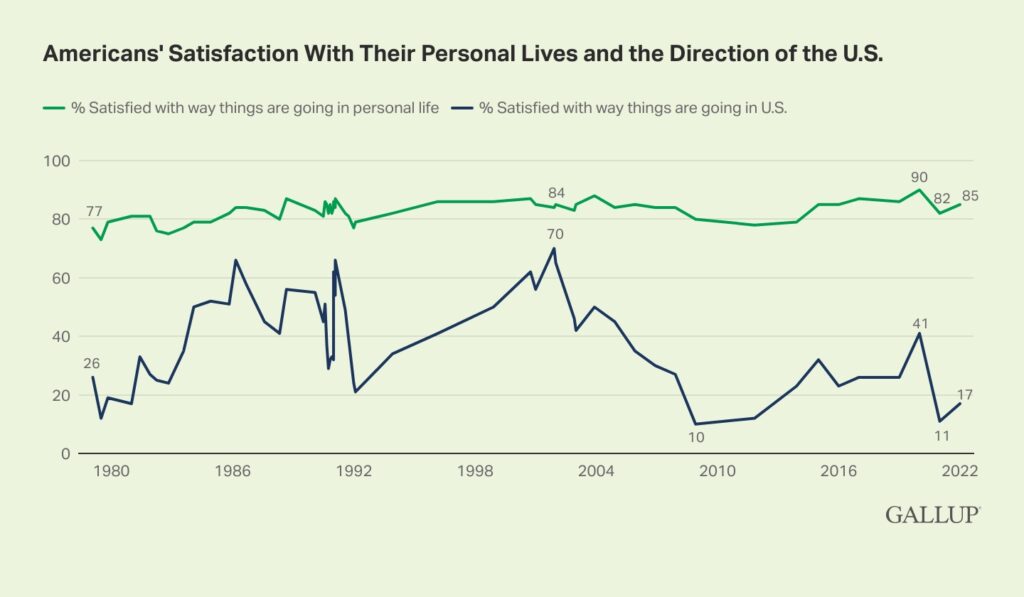
A striking paradox has emerged in recent polling data: a substantial majority of Americans report personal financial stability, yet a disproportionately small percentage believe the national economy is performing well. For instance, a recent Gallup poll indicated that while approximately 85% of individuals feel their personal finances are strong, only about 17% hold a positive view of the broader economy. This stark contrast suggests a significant disconnect, fueled in part by the highly polarized political landscape and the pervasive influence of social media misinformation.
Contrary to the narrative of a struggling economy, key economic indicators paint a picture of resilience and strength. The U.S. has consistently maintained an unemployment rate near historic lows, hovering around 3.8% in recent periods, a level not seen consistently in decades. Gross Domestic Product (GDP) growth has remained robust, indicating a healthy expansion of economic activity. This strong performance, particularly in the aftermath of the COVID-19 pandemic, has led some economic observers to characterize the current U.S. economy as among the strongest in its history. The challenge lies in translating these macro-level successes into a widely accepted public perception, especially when political campaigns often focus on isolated grievances rather than comprehensive economic trends.
The Myth of Presidential Economic Control

One of the most enduring myths in American politics is the notion that a sitting president directly controls the nation’s vast and complex economy. Opposition parties frequently attribute economic downturns to the incumbent, while presidents are quick to claim credit for periods of prosperity. However, the reality is far more nuanced. The U.S. economy, an immense system valued at over $28 trillion annually, is largely driven by the collective decisions of millions of consumers, businesses, and investors, operating within a framework of free markets.
While the executive branch can influence economic conditions through fiscal policies—such as taxation, government spending, and regulatory changes—the effects of these measures are often delayed, indirect, and subject to numerous external variables. Global events, technological advancements, shifts in consumer behavior, and geopolitical stability all play significant roles that far exceed the immediate control of any single political office. Economic cycles, characterized by periods of "irrational exuberance" followed by fear and pessimism, are inherent to capitalist systems and are largely beyond a president’s direct command. Blaming or crediting a president for the entire economic cycle oversimplifies a multifaceted global system.
The Federal Reserve’s Autonomy and Monetary Policy
Another prevalent misconception is the idea that the president can dictate interest rates. During campaigns, candidates often express sympathy for homeowners and consumers facing higher borrowing costs, pledging to "fight" to lower rates. Some even suggest direct intervention in the operations of the Federal Reserve. Such claims fundamentally misunderstand the structure and purpose of the U.S. central bank.
The Federal Reserve operates as an independent entity, designed to insulate monetary policy from short-term political pressures. Its dual mandate is to achieve maximum employment and maintain price stability. To fulfill this, the Federal Open Market Committee (FOMC) adjusts the federal funds rate, which influences broader interest rates across the economy. Following a period of historically low rates post-2008 and during the COVID-19 pandemic, the Fed embarked on an aggressive campaign of interest rate hikes starting in March 2022, raising the federal funds rate from near zero to a range of 5.25-5.50% by mid-2023. This action was a deliberate effort to curb surging inflation, demonstrating the Fed’s role as a crucial "gas and brake pedal" for the economy. Political interference in monetary policy, as seen in some other nations, often leads to disastrous outcomes, including hyperinflation and economic instability. The Fed’s independence is considered a cornerstone of sound economic management.
Inflation: Causes, Effects, and Misconceptions
The debate over inflation has been particularly heated, with many politicians asserting that rising prices have severely damaged Americans’ quality of life and promising to "magically reverse" them. While the U.S. experienced a significant bout of inflation in the post-COVID era, reaching peaks of over 9% in mid-2022, the underlying causes were complex, involving a confluence of supply chain disruptions (factory closures, shipping bottlenecks), robust consumer demand fueled by government stimulus, and historically low interest rates.
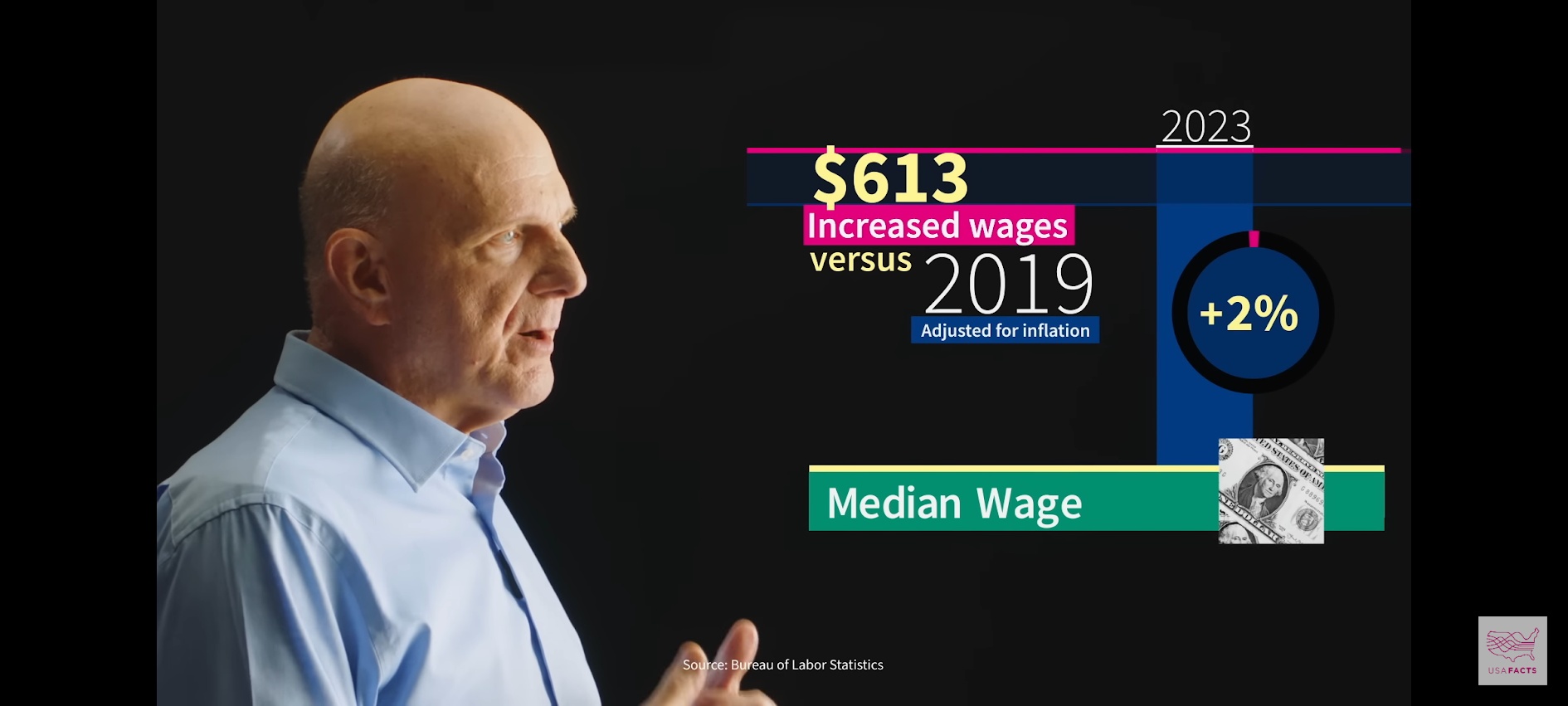
However, current data shows that inflation has substantially moderated, with the Consumer Price Index (CPI) now hovering around 2.4% year-over-year, approaching the Federal Reserve’s target of 2%. More importantly, an often-overlooked fact is that average wages have largely kept pace with, and in many cases, outpaced inflation. Since 2019, cumulative wage growth has been approximately 21%, while overall prices have risen by about 19%. This means that, on average, Americans are financially better off than before the recent inflationary period. The narrative that "higher wages and prices" automatically equate to a "bad economy" is a simplification that ignores real purchasing power gains.
Another common political talking point blames "greedy corporations" for price increases. While businesses are certainly driven by profit, competitive market dynamics typically prevent widespread "greedflation" where companies can arbitrarily raise prices without losing market share. Detailed analyses, such as one conducted by NPR on the grocery sector, found no evidence of windfall profits by retailers directly attributable to COVID-fueled inflation, suggesting that price increases were largely passed-through costs rather than exploitative profiteering.
Housing Market Dynamics and Policy Proposals
Housing affordability has become a critical concern, as both home prices and rents have surged significantly faster than general inflation and wages over the past decade. This trend, coupled with higher interest rates, has made homeownership feel increasingly out of reach for many. The challenge is complex, involving supply constraints, demographic shifts, and investment trends.
However, political proposals often miss the mark. Measures like subsidies for first-time homebuyers or government schemes to reduce mortgage interest rates, while seemingly helpful, can inadvertently exacerbate the problem by stimulating demand without addressing the fundamental issue of insufficient supply. When more buyers are empowered to enter a limited market, prices tend to rise further.
Economists and urban planners widely agree that the most effective solution to rising housing costs is to increase the supply of housing units. This involves tackling systemic roadblocks such as restrictive zoning laws that favor single-family homes, slow and costly permitting processes, outdated and expensive building codes, and "Not In My Backyard" (NIMBY) opposition from existing residents. Streamlining regulations, allowing for denser development, and reducing bureaucratic hurdles could significantly lower the cost of construction and, consequently, housing prices, making homes more accessible across income levels.
Energy Policy and the Evolving Fuel Landscape
Gasoline prices are a perennial topic in U.S. elections, often framed as a direct reflection of presidential policy and a key indicator of economic hardship. Politicians frequently promise to lower gas prices, tapping into public frustration at the pump. Yet, a look at historical data, adjusted for inflation, reveals that gasoline prices in the U.S. have remained remarkably stable, generally fluctuating within the $3-4 per gallon range in today’s dollars since the 1950s.
Furthermore, despite the focus on pump prices, gasoline constitutes a relatively small portion of the average household’s disposable income—around 2.5%. This is dwarfed by other vehicle-related expenses such as insurance, maintenance, and depreciation, which often go unnoticed in the political debate.
Perhaps most significantly, the energy landscape is rapidly evolving. Electric vehicles (EVs) are becoming increasingly competitive, offering lower operating costs due to cheaper "fuel" (electricity) and reduced maintenance. The market for used EVs is growing, making them accessible to a broader range of consumers, often at prices comparable to or even below their gasoline counterparts. The continued political fixation on gasoline prices, therefore, increasingly appears to be a discussion about an "antique fuel of a previous era," overlooking the broader shift towards more efficient and sustainable transportation options.
Beyond Economic Metrics: The Pursuit of Societal Well-being
The constant focus on economic growth and traditional metrics, while important, often overshadows a deeper question: what truly constitutes societal well-being? For many advanced economies like the U.S., the point of having "enough" basic necessities was passed decades ago. Yet, political discourse often frames economic challenges in terms of scarcity, even for a middle class that enjoys unprecedented levels of material comfort compared to previous generations or other parts of the world.
While income and wealth inequality remain significant concerns that warrant attention through progressive taxation and social safety nets to foster a more equitable and peaceful society, studies consistently show that beyond a certain income threshold, increased wealth does not correlate with increased happiness. True well-being is often more closely tied to factors such as community, purpose, health, and personal freedom—elements that economic policy can support but cannot solely create. A shift in focus from mere accumulation to sustainable living, robust social connections, and the development of life skills could offer a more holistic path to national happiness, a perspective rarely championed in election campaigns driven by specific interest groups and immediate gratification.
The Impact of Economic Misinformation
The widespread dissemination of economic misinformation during election cycles carries significant implications. It can erode public trust in institutions, foster political polarization, and lead to suboptimal policy decisions based on emotional appeals rather than sound economic principles. When voters are consistently presented with narratives that contradict empirical data, it becomes challenging to make informed choices about leadership and policy directions.
In an era of information overload, the ability to critically evaluate economic claims is more crucial than ever. Resources like Steve Ballmer’s USA Facts, which aims to provide objective data on government performance without political spin, highlight the need for greater data literacy and a commitment from both politicians and media to share accurate, contextualized information. Ultimately, a well-informed electorate is essential for a functioning democracy and for guiding the nation towards genuinely beneficial economic and social outcomes. Understanding how things truly work economically is not just about knowledge; it is about empowering citizens to demand more effective and truthful governance.

