
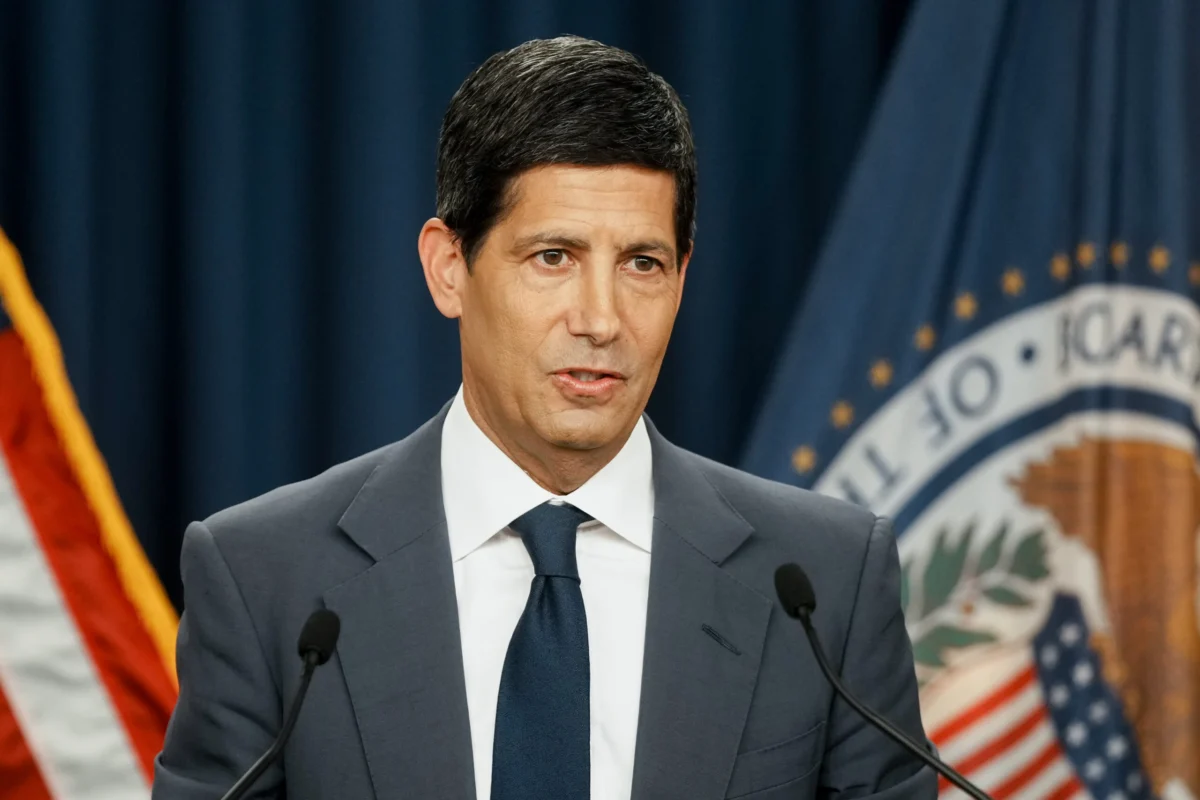
A New Era of Deliberation: The October 2027 Precedent
This specific alteration to the 2027 calendar represents a tangible manifestation of Chairman Warsh’s stated objective to reduce the Federal Reserve’s "market footprint" and foster a more reflective, long-term strategic approach to monetary policy. Historically, the FOMC has convened eight times a year, with each meeting culminating in a vote on the federal funds rate, followed by a public statement and, more recently, a press conference from the Chair. The decision to forgo a rate vote in October 2027 slashes the number of voting meetings for that year to seven, positioning the autumn session as a dedicated period for deep analytical discourse without the immediate pressure of a policy action. Furthermore, the new schedule reveals a shift in the final meeting of the year, moving it from its traditional December slot to November, compressing the year-end policy calendar.
Chairman Warsh first alluded to this procedural modification during his news conference following the October 2026 FOMC meeting, though the specific meeting designated for this strategic reorientation remained unspecified until the recent announcement. The explicit designation of the October 2027 meeting underscores a deliberate move away from what some critics, including Warsh, have characterized as an overemphasis on frequent, incremental adjustments and short-term market guidance.
Chairman Warsh’s Vision for a Streamlined and Strategic Fed
Since assuming leadership, Chairman Warsh has been a vocal proponent of reforming the Federal Reserve’s communication strategies and its operational cadence. His overarching philosophy centers on the belief that while timely responses to economic data are crucial, the central bank also requires dedicated intellectual space for "big picture" thinking. "Now, what’s the reasoning behind this change? To me, it’s quite straightforward," the chairman elaborated during a recent address, explaining his rationale. "Getting policy right involves assessing near-term developments at timely, regular, and information-rich intervals." He continued, emphasizing the equally vital need to "reserve time and space, as an intellectually diverse group, for strategic deliberations—for thinking anew about big questions, looking out over longer time horizons, focusing, as I say, on the left side of the decimal point." This metaphor suggests a focus on foundational economic principles and long-term structural issues rather than minute, short-term percentage point adjustments.
Warsh has consistently argued that the Fed’s prior communications strategy, which often involved extensive forward guidance and detailed post-meeting statements, inadvertently constrained policymakers. He suggested that such granular guidance could create a perception of commitments that might later prove inflexible or suboptimal in the face of evolving economic realities. This perspective marks a notable departure from the era of "enhanced forward guidance" that characterized much of the post-financial crisis period, where central banks actively sought to manage market expectations through explicit signals about future policy paths.
Under Warsh’s stewardship, several changes have already been implemented to refine the Fed’s public engagement. The post-meeting statements have been significantly shortened, reducing the volume of textual analysis for markets to dissect. Moreover, the traditional 45-minute press question-and-answer sessions following FOMC meetings have been trimmed to approximately half an hour, aiming to focus the dialogue and reduce the potential for extraneous market-moving commentary. The adjustment to the meeting schedule is explicitly framed by Warsh as "another step in his plan to streamline communication," reinforcing a consistent theme of his tenure. He has also indicated that the number of non-voting strategic meetings is projected to increase to two in 2028, suggesting that the October 2027 change is not an isolated event but rather the vanguard of a more profound structural transformation.
Historical Context: The Evolution of Fed Communication
The Federal Reserve’s approach to communication has undergone significant evolution over its century-plus history. For much of its early existence, the Fed operated with a high degree of opacity, with policy decisions often conveyed through indirect market operations rather than explicit public statements. The era of Alan Greenspan, while iconic for its "Maestro" mystique, was also characterized by deliberately ambiguous language, often referred to as "Greenspeak," which aimed to maintain flexibility and avoid prematurely signaling policy intentions.
However, the late 20th and early 21st centuries saw a growing global trend towards central bank transparency, driven by academic research suggesting that clear communication could enhance monetary policy effectiveness by better anchoring inflation expectations and reducing market uncertainty. Under Chairs Ben Bernanke, Janet Yellen, and Jerome Powell, the Fed embraced a more open approach, introducing regular press conferences, publishing detailed economic projections (the "dot plot"), and providing explicit forward guidance on interest rate paths and balance sheet policies. This period saw an expansion in the length and detail of FOMC statements, comprehensive meeting minutes, and the aforementioned longer press conferences.

Chairman Warsh’s reforms can be seen as a counter-swing in this pendulum of transparency. While not advocating for a return to pre-Greenspan opacity, he appears to be seeking an optimal balance where clarity coexists with strategic flexibility and profound deliberation, rather than an incessant stream of granular, short-term guidance that may inadvertently create rigidity. The argument is that an excessive focus on telegraphing every minor policy nuance can distract from the deeper, more complex economic challenges that require sustained analytical attention.
The Rationale for Deeper Strategic Deliberation
The decision to dedicate a full FOMC session to "broad monetary policy strategy issues" reflects a growing acknowledgment of the increasing complexity of the global economic landscape. Modern economies are characterized by rapid technological advancements, evolving labor market dynamics, intricate global supply chains, and interconnected financial markets. Inflation, once thought to be primarily a domestic phenomenon, is now heavily influenced by global factors, commodity prices, and geopolitical events. Traditional economic models, while valuable, often struggle to capture the full scope of these multi-faceted challenges.
For instance, recent years have highlighted the limitations of purely short-term reactive policy adjustments in addressing structural issues like persistent supply-side constraints or the long-term implications of demographic shifts. A dedicated strategic meeting could allow the FOMC to delve into topics such as:
- The neutral rate of interest (r*): Reassessing its trajectory in a post-pandemic, high-debt environment.
- The efficacy of unconventional tools: A deep dive into the long-term impact and exit strategies for quantitative easing and forward guidance.
- Climate change risks: Analyzing the implications of climate transition policies and physical risks for financial stability and long-run economic growth.
- Digital currencies and financial innovation: Understanding the transformative potential and regulatory challenges posed by new financial technologies.
- Structural unemployment: Exploring the role of monetary policy in addressing labor market frictions beyond cyclical downturns.
- The global monetary policy landscape: Coordinating or understanding the spillovers from actions by other major central banks.
Warsh’s emphasis on "thinking anew about big questions" suggests a desire to move beyond the reactive cycle of data-dependent rate adjustments and engage in more proactive, foresightful policymaking. By carving out this time, the Fed aims to elevate the intellectual rigor of its discussions, allowing for a more holistic understanding of long-term economic forces and their implications for monetary stability. This could lead to more robust policy frameworks that are less susceptible to short-term market noise and better equipped to navigate structural shifts.
Market Reactions and Expert Analysis (Inferred)
The announcement of this significant calendar change has inevitably drawn a spectrum of reactions from financial markets and economic analysts. While specific, real-time reactions for 2027 are hypothetical, plausible responses can be inferred based on historical precedents and typical market behavior.
- Market Strategists: Many market strategists might initially express a mix of relief and caution. On one hand, the reduction in frequent rate-setting meetings could diminish "event risk" and reduce the potential for market overreaction to minor phrasing changes in FOMC statements, a phenomenon observed in numerous studies. A leading market strategist at a major investment bank, speaking anonymously, might suggest, "Less frequent direct policy votes could reduce the ‘noise’ in the market, allowing investors to focus on fundamental economic data rather than dissecting every word from the Fed." However, others might voice concerns about periods of reduced official guidance. "While strategic thinking is vital, markets thrive on clarity," might caution another analyst. "Longer intervals between policy decisions could lead to increased uncertainty during periods of economic flux, potentially increasing volatility if the Fed’s intentions become less clear."
- Academic Economists: The academic community would likely engage in robust debate. A professor of economics specializing in central banking might applaud the move, stating, "This shift allows for more sophisticated macroeconomic modeling and a deeper dive into the structural challenges that transcend quarterly data points. It aligns with the growing consensus that monetary policy needs to be more forward-looking and less reactive." Conversely, another economist might raise a point about the trade-off, arguing, "While strategic depth is commendable, the agility to respond to unforeseen shocks is paramount. If economic conditions deteriorate rapidly between less frequent meetings, the Fed might be perceived as slow to react, potentially exacerbating downturns or inflation spikes."
- Former Central Bank Officials: A former Fed governor, perhaps echoing Warsh’s sentiments, could support the change, emphasizing the value of insulation from short-term market pressures. "The job of a central banker is not to manage daily market fluctuations, but to ensure long-term price stability and maximum employment," the former official might remark. "Creating dedicated space for strategic thought can only enhance the quality of those foundational decisions."
The consensus view, if one were to emerge, might be that the success of this new approach hinges on the effectiveness of the strategic deliberations and the clarity of communication between voting meetings. If the Fed can articulate its evolving strategic framework transparently, even with fewer immediate policy votes, it could successfully manage expectations.
Broader Impact and Implications
The implications of Warsh’s reforms extend beyond mere calendar adjustments. They signify a philosophical reorientation that could have profound effects on the Federal Reserve’s operational effectiveness, its independence, and its relationship with financial markets and the public.
- Enhanced Decision Quality: By dedicating time solely to strategic deliberation, the FOMC could potentially make more robust, well-considered decisions, less swayed by immediate market pressures or the need to meet predefined communication benchmarks. This could lead to policies that are better aligned with long-term economic objectives.
- Reduced Market Volatility (Potentially): Fewer "live" meetings with rate decisions might reduce the frequency of market jitters associated with Fed announcements. However, if significant policy changes are made less frequently, the impact of each decision could be amplified, potentially leading to larger, albeit less frequent, market movements.
- Shifting Role of Forward Guidance: With fewer formal policy statements, the nature of forward guidance might evolve. Instead of specific rate path indications, the Fed might rely more on broader qualitative statements about its economic outlook and reaction function, allowing for greater flexibility.
- Central Bank Independence: A Fed that is perceived as less beholden to short-term market expectations and more focused on its long-term mandate could reinforce its institutional independence. This could be particularly important in an era where central banks often face political pressures.
- Global Influence: Other major central banks, such as the European Central Bank or the Bank of England, might observe the outcomes of this experiment closely. If successful, it could influence a broader trend in central banking towards more strategic, less frequent policy interventions.
- Challenges of Interpretation: The market and public will need to adapt to a new communication rhythm. The absence of a rate vote and statement from a traditional meeting slot might initially be interpreted in various ways, requiring careful management of public perception.
The FOMC’s next scheduled meeting following the announcement of these changes is slated for Dec. 8-9, offering the immediate opportunity for market participants to gauge any further refinements in the Fed’s communication style. The first meeting in the landmark year of 2027 is set for Jan. 26-27, marking the beginning of this new chapter in the Federal Reserve’s history. Chairman Warsh’s assertion that "the setting of the meeting schedule and agenda is more than some administrative detail… It’s an institutional choice, affecting the nature and the quality of our deliberations and, ultimately, the wisdom of our decisions" underscores the profound significance of this strategic shift. It is, in his view, "yet another change to get the conduct of monetary policy on the right track," aiming to sculpt a more agile, reflective, and ultimately more effective central bank for the challenges of the 21st century.

