
Bud Financial, a global leader in customer intelligence and transaction enrichment for the banking sector, has officially secured a strategic investment from BankTech Ventures, a prominent United States-based venture capital firm focused on identifying and scaling transformative financial technology for community banks. While the specific financial terms of the deal were not immediately disclosed, the partnership marks a significant milestone in Bud’s expansion strategy, providing the capital and institutional network necessary to scale its presence across the U.S. banking landscape. This infusion of capital is earmarked for the acceleration of Bud’s growth among domestic banks and credit unions, as well as the continued refinement of its proprietary data ontology and generative artificial intelligence capabilities.
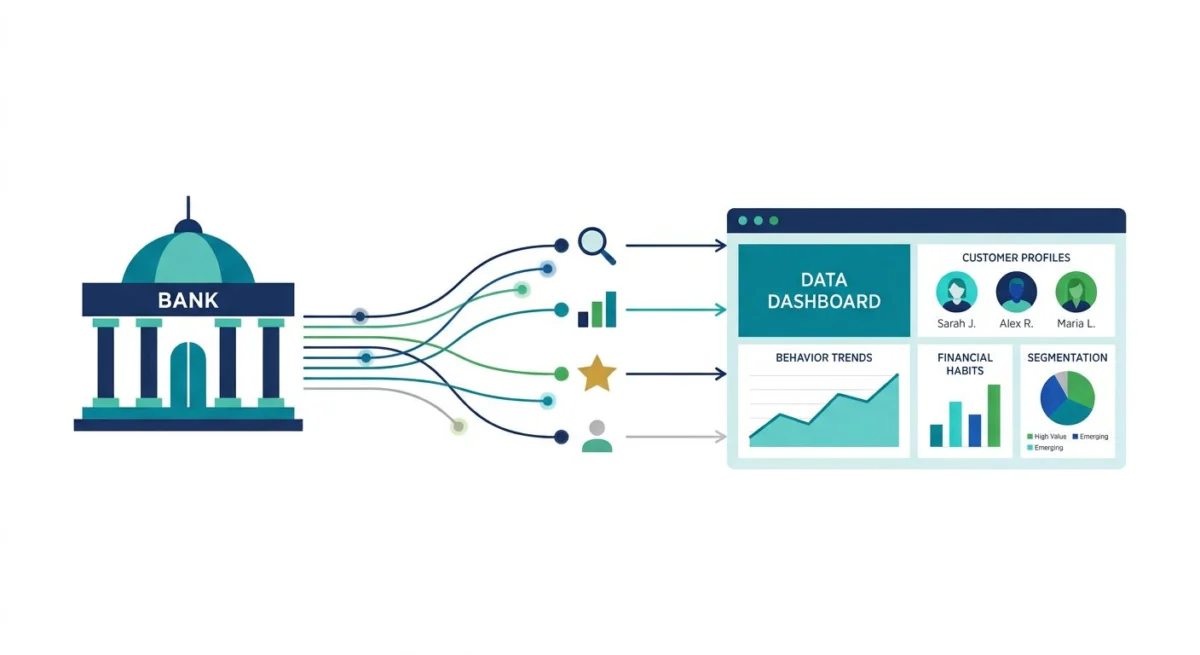
The investment arrives at a critical juncture for the American financial services industry, as institutions grapple with the transition from legacy infrastructure to AI-first operational models. Bud’s technology is designed to bridge this gap, offering a sophisticated intelligence layer that sits atop existing core banking systems. By transforming raw, fragmented transactional data into structured, actionable insights, Bud enables financial institutions to better understand customer behavior, manage risk with greater precision, and unlock new revenue streams through hyper-personalized product offerings.
The Strategic Significance of the US Market Expansion
Bud Financial’s entry into the U.S. market is not merely a geographic expansion but a strategic response to the evolving needs of mid-market and community banks. For years, these institutions have faced intense competition from both "Too Big to Fail" national banks with massive R&D budgets and agile neobanks that are digital-native. BankTech Ventures, which acts as a bridge between innovative fintechs and its network of limited partner banks, identified Bud as a key enabler for these institutions to reclaim their competitive edge.
The investment will specifically support the development of Bud’s "Revenue Agents." These autonomous or semi-autonomous AI tools are designed to identify specific revenue-generating opportunities within a bank’s existing customer base—such as identifying a customer who is eligible for a mortgage refinance or a small business in need of a line of credit—and acting upon those insights under the strict control and compliance frameworks of the bank. This move signifies a shift from passive data storage to active intelligence, where data is no longer a byproduct of banking but the primary engine of growth.
A Chronology of Innovation and Market Penetration
Founded in London in 2015, Bud Financial initially made a name for itself as a pioneer in the Open Banking movement in the United Kingdom. Over the past decade, the company has evolved from a simple API aggregator into a sophisticated data intelligence platform.
In 2024, Bud made its high-profile debut at FinovateFall, where it showcased its "Drive" solution. The demonstration highlighted how the platform democratizes access to enriched data through a generative AI interface, allowing bank staff—regardless of their technical expertise—to query complex datasets using natural language. By late 2025 and early 2026, the company’s momentum in the North American market accelerated significantly.
The partnership with BankTech Ventures follows a series of high-impact collaborations. In early 2026, Bud announced a major integration with Jack Henry, a leading provider of technology solutions for the banking industry. This integration allowed Jack Henry’s vast network of bank clients to access Bud’s transaction enrichment tools directly. Simultaneously, First Fidelity Bank launched a suite of "smarter" digital banking services powered by Bud, proving the scalability of the platform for mid-sized institutions. The current investment from BankTech Ventures serves as a definitive validation of Bud’s product-market fit within the highly regulated and complex U.S. financial ecosystem.
Addressing the Limitations of Traditional CRM Systems
A core component of Bud’s value proposition is the assertion that traditional Customer Relationship Management (CRM) systems have largely failed to meet the modern needs of the banking sector. Edward Maslaveckas, CEO and Co-Founder of Bud, has noted that while CRMs were intended to personalize banking relationships, they often remain siloed and static, failing to capture the real-time financial "pulse" of a customer.
"Your data already knows where the best opportunities are. Bud helps you act on it," Maslaveckas stated following the investment announcement. He emphasized that banks do not need to undergo the prohibitively expensive and risky process of replacing their core banking systems to compete in an AI-driven world. Instead, they require an intelligence layer that integrates Core, CRM, and Credit Risk Assessment (CRA) data.
By deploying advanced customer models across these three pillars, Bud allows bank staff to segment customers with unprecedented granularity. This ensures that the right products are offered to the right customers at the precise moment of need, moving the industry away from "spray and pray" marketing toward a model of genuine financial advocacy.
Technical Architecture: Data Ontology and Transaction Enrichment
At the heart of Bud’s platform is its sophisticated data ontology. In the context of banking, raw transaction data is often a "alphabet soup" of cryptic codes, merchant IDs, and timestamps. Bud’s AI engines ingest this data and perform a process known as transaction enrichment. This involves:
- Merchant Identification: Correctly identifying the business behind a transaction string (e.g., recognizing "AMZN MKTP" as Amazon).
- Categorization: Assigning transactions to specific spending categories such as groceries, utilities, or discretionary entertainment.
- Geospatial Analysis: Determining the physical location of transactions to identify local spending patterns.
- Recurrence Detection: Identifying regular payments like subscriptions, insurance premiums, or rent, which are vital for assessing a customer’s committed monthly outgoings.
By cleaning and labeling this data, Bud provides "readable inputs" for Large Language Models (LLMs). This is a crucial step; while LLMs are powerful, their output is only as good as the data they consume. By providing structured, high-quality financial data, Bud ensures that the AI insights generated are accurate, compliant, and useful for decision-making.
Market Context: The Growing Demand for AI in Financial Services
The investment by BankTech Ventures reflects broader industry trends. According to recent market analysis, the global market for AI in fintech is expected to grow at a compound annual growth rate (CAGR) of over 20% through 2030. Financial institutions are increasingly prioritizing investments in data analytics and AI to combat shrinking net interest margins and rising customer acquisition costs.
In the U.S., community banks are particularly focused on "personalization at scale." While these banks have historically relied on personal relationships and local knowledge, the shift to digital banking has threatened that advantage. Bud’s technology allows these banks to replicate the "personal touch" of a local branch manager within a digital app, using data to anticipate customer needs before the customer even voices them.
Carey Ransom, Managing Director at BankTech Ventures, highlighted this necessity, stating that banks are being "rebuilt from the inside out." According to Ransom, modern customers expect relevance and real value in every interaction. He characterized Bud as a "key enabler" of this institutional rethinking, providing the organized intelligence layer necessary to understand every transaction across a bank’s entire system.
Implications for Risk Management and Operational Efficiency
Beyond marketing and revenue generation, the enrichment of financial data has profound implications for risk management. Traditional credit scoring often relies on historical data that may be weeks or months old. Bud’s real-time analysis of transaction data allows for "cash-flow underwriting," providing a more accurate and current picture of a borrower’s financial health. This is particularly valuable for lending to "thin-file" customers or small businesses that may not have extensive credit histories but possess strong, consistent cash flows.
Operationally, the use of AI-powered analysis reduces the manual labor required for data processing and customer segmentation. By automating the identification of trends and anomalies, banks can reallocate their human capital toward high-value advisory roles and complex problem-solving, rather than data entry or basic analysis.
Future Outlook: The Era of the Intelligent Bank
The partnership between Bud Financial and BankTech Ventures signals a move toward what industry experts call "autonomous finance." In this future, the banking interface becomes a proactive financial assistant. For example, if Bud’s system detects a customer is paying for two overlapping streaming services, or if it identifies a pattern of late fees that could be avoided with a small liquidity bridge, the "Revenue Agent" can prompt a notification or suggest a financial product that solves the problem in real-time.
As Bud continues to deepen its AI capabilities, the focus will likely shift toward even more complex predictive modeling. The company’s ability to integrate with major U.S. service providers like Jack Henry suggests that Bud is positioning itself as the industry standard for financial data enrichment.
For the broader fintech ecosystem, this investment underscores a shift in VC sentiment. Investors are increasingly moving away from "disruptors" that seek to replace banks and are instead funding "enablers" that help traditional institutions modernize. By focusing on the "intelligence layer" rather than the "core," Bud has found a path to rapid scale that avoids the regulatory and capital hurdles of becoming a bank itself.
In conclusion, Bud Financial’s latest funding round and its strategic alignment with BankTech Ventures represent a pivotal moment for U.S. banking. As the industry moves past the initial hype of generative AI and into the phase of practical implementation, the ability to turn raw data into actionable intelligence will be the primary differentiator between institutions that thrive and those that fall behind. With a robust technological foundation and a growing network of American partners, Bud is well-positioned to lead this transformation, redefining the relationship between banks, their data, and their customers.

