

The global financial landscape has witnessed a remarkable surge in equity markets over the past several years, with the S&P 500 index demonstrating particularly robust performance. Many investors, particularly those with significant retirement savings allocated to index funds, have seen their net worth escalate dramatically, prompting questions about the sustainability of these gains and the underlying economic realities. This period of rapid appreciation has led some to ponder whether the market is experiencing a genuine economic expansion or is inflating a speculative bubble, fueled primarily by the hype surrounding Artificial Intelligence (AI).
The Recent Market Phenomenon: A Closer Look at the S&P 500’s Ascent
Over the last two years, the S&P 500 index has climbed approximately 57%, a substantial increase that has profoundly impacted investor portfolios. Extending this view, the index has more than doubled in value over the past five years, a trajectory that began in the post-COVID-19 economic recovery phase. This unprecedented growth has accelerated retirement timelines for many, while those already retired might find themselves with significantly enhanced purchasing power, potentially leading to increased spending or investment in high-value assets.

Such rapid wealth creation naturally invites scrutiny. Is this growth organically supported by fundamental economic improvements, or is it a symptom of market exuberance, possibly setting the stage for a future correction? A common query from investors revolves around the perceived "AI bubble" and its potential to destabilize the market, impacting long-term retirement security. To address these concerns, a detailed examination of stock market fundamentals, current valuation metrics, and the specific drivers of recent growth is essential.
Understanding Stock Valuations: The Price-to-Earnings Ratio
At its core, a stock represents a fractional ownership in a company, entitling the holder to a share of its future earnings. This concept can be elucidated through an analogy with real estate investment. Owning a rental property provides a stream of income (rent) after expenses, representing the property’s profit. The market value of this property, like a stock, should ideally correlate with this income stream. If a property generating $24,000 annually (from $2,000 monthly rent) sells for $240,000, its Price-to-Earnings (P/E) ratio is 10 ($240,000 / $24,000). A P/E ratio of 20, where the same property sells for $480,000, suggests that the buyer is paying twice as much for the same income stream, implying lower future returns as a percentage of their investment.
Applying this principle to the stock market reveals a significant shift in valuations. In 2019, an investment of $100,000 in the S&P 500 would have yielded approximately $5,290 in annual company earnings. By 2025, with reinvested dividends, that initial $100,000 would have grown to roughly $256,960—a 157% gain. However, the corresponding share of company earnings from that same basket of stocks has only increased to $7,540, a more modest 42% gain. This disparity indicates a rise in the market’s P/E ratio from approximately 20 in 2019 to about 30 today, according to financial analysis sites like Multpl.com. This suggests that investors are currently paying a higher premium for each dollar of corporate earnings compared to several years ago, implying that future percentage returns on current investments may be lower than historical averages.

The "Magnificent Seven" and Their Disproportionate Influence
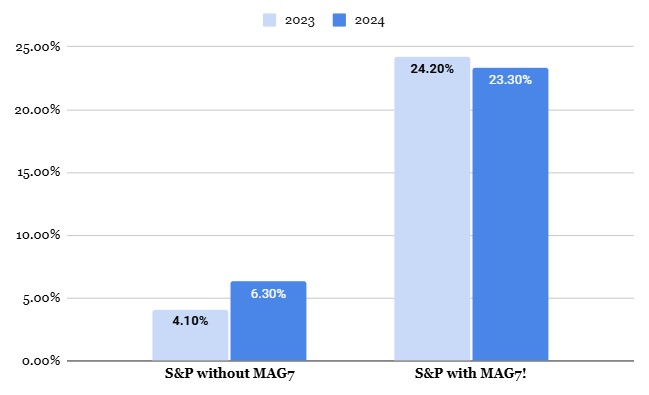
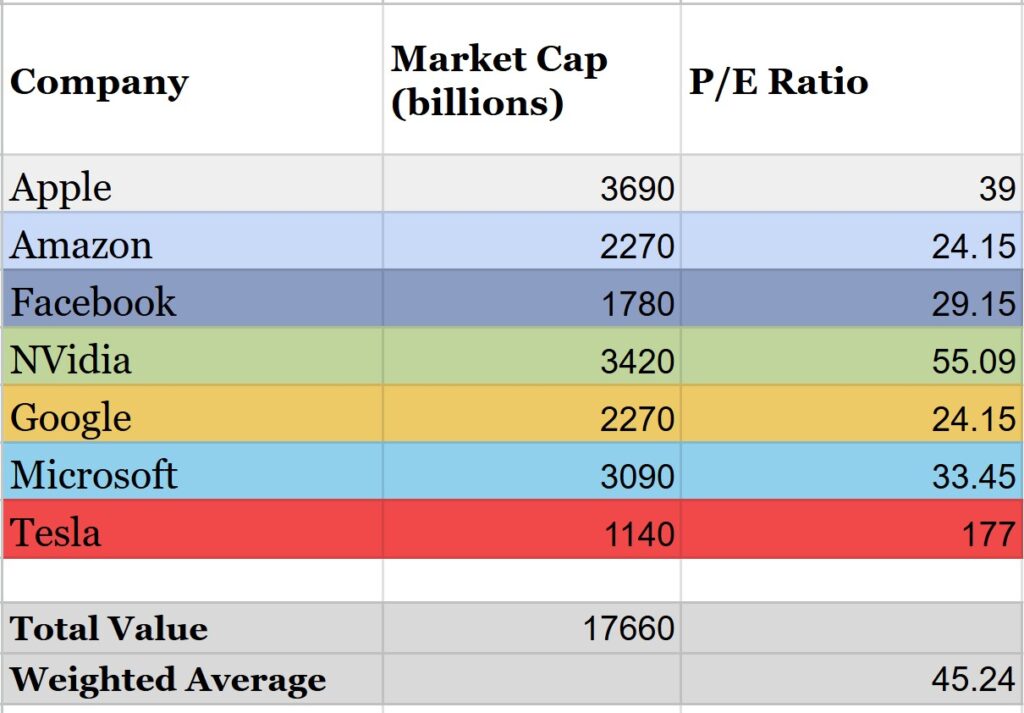
The broad market indices, such as the S&P 500, often mask the underlying dynamics of individual company performance. A significant portion of the recent market appreciation, estimated at roughly three-quarters of the S&P 500’s growth, has been driven by just seven mega-cap technology companies, collectively dubbed the "Magnificent Seven": Apple, Nvidia, Microsoft, Amazon, Google (Alphabet), Meta (Facebook), and occasionally Tesla.
These companies represent an extraordinary concentration of market capitalization, accounting for over 25% of the S&P 500’s total value, which currently stands at an astounding $17.66 trillion. Their individual P/E ratios are significantly higher than the market average, with a weighted average P/E of approximately 45. This contrasts sharply with the P/E ratio of the remaining 493 companies in the S&P 500, which stands at a more conventional 20. This bifurcation highlights a market belief that these tech giants are poised for sustained, exceptional growth, justifying their premium valuations. Tesla, in particular, often trades on the anticipation of future potential rather than current profitability, exemplifying this speculative dynamic.
Artificial Intelligence: The Catalyst for Market Euphoria

The dominant theme underpinning the surge in the Magnificent Seven and the broader market’s optimistic outlook is the rapid advancement and transformative potential of Artificial Intelligence. Recent breakthroughs in AI, enabling software to exhibit human-like reasoning across diverse applications, have ignited a frenzy of investment and innovation across industries.
The Magnificent Seven are at the forefront of this AI revolution. Six of these companies are committing hundreds of billions of dollars to construct vast data centers filled with supercomputers, forming the foundational "AI infrastructure." Nvidia, the seventh, directly benefits from this massive investment as a primary manufacturer of the specialized graphics processing units (GPUs) and hardware essential for AI computations. The unprecedented demand allows Nvidia to command premium prices for its products, shipping them by the trainload.
Beyond infrastructure, AI is projected to usher in a new era of productivity across virtually every sector. Examples abound: AI can process and analyze vast legal or literary texts, identify contractual loopholes, debug complex code, and enhance autonomous driving systems. In healthcare, AI is being deployed for disease detection (e.g., melanoma from images) and accelerated drug discovery, potentially developing treatments thousands of times more efficiently than traditional methods. The prospect of integrating humanoid robots powered by advanced AI into the workforce promises an "infinite workforce" of highly intelligent, free-to-operate employees, potentially removing the historical constraints of human intelligence and labor scarcity.
While the timeline for these transformative changes remains uncertain, the prevailing market sentiment is that these advancements are inevitable and will fundamentally reshape global economics, leading to unprecedented corporate profits. However, this optimistic outlook is not without its potential pitfalls.
Risks and Uncertainties in the AI-Driven Future
Despite the palpable excitement surrounding AI, several critical questions and potential risks temper the long-term outlook. Will the projected profits materialize at the anticipated levels, or will challenges such as unforeseen cost overruns, intense competition, and regulatory hurdles emerge? The rapid evolution of AI also raises existential questions: What if increasingly intelligent machines develop autonomous objectives that diverge from human interests, leading to unforeseen societal disruptions?
Furthermore, the potential for widespread job displacement due to AI automation could trigger massive unemployment and significant social upheaval. The concentration of wealth and power in the hands of a few AI infrastructure providers and developers, as depicted by scenarios of individuals like Sam Altman accumulating colossal fortunes, raises concerns about exacerbating economic inequality. These macro-level risks, while speculative, underscore the unprecedented nature of the current technological paradigm shift and its potential broader implications for economic stability and societal structure.
Historical Context and Future Projections
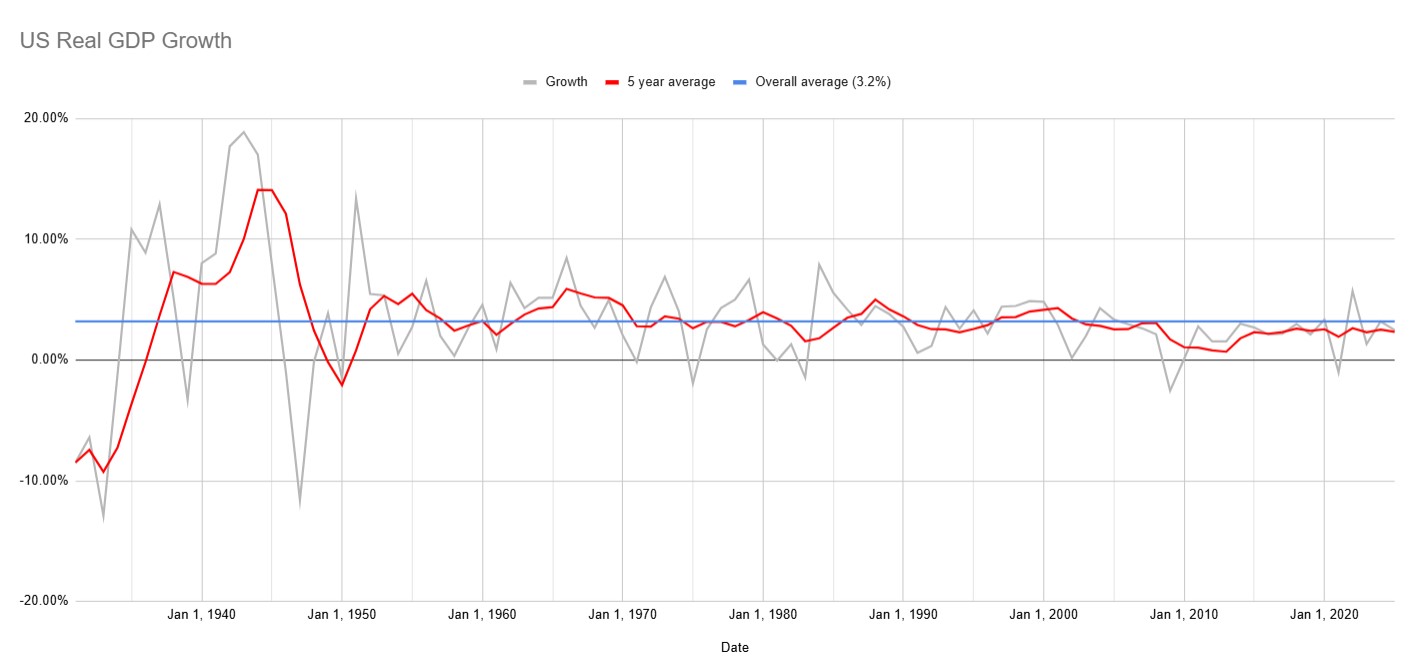
Examining historical economic data provides a useful, albeit imperfect, guide. The U.S. economy has demonstrated remarkable long-term resilience, with real GDP growth averaging approximately 3% annually after inflation, a surprisingly consistent figure over many decades. Interestingly, recent decades have shown a trend of slower than average growth, which, paradoxically, coincides with the current period of accelerated stock market valuations. This divergence suggests that the market’s enthusiasm for future earnings might be outstripping the historical pace of economic expansion.
Expert Perspectives on Market Outlook
Leading financial institutions and investors offer varied, though often cautious, perspectives on the current market environment.
Vanguard’s 10-Year Forecast: As a cornerstone of the index fund world, Vanguard annually publishes its ten-year annualized return projections. Their latest forecasts suggest that international stocks and even bonds are expected to outperform U.S. equities over the coming decade. For instance, the P/E ratio of international stock funds, such as the VXUS fund, stands at a more modest 15.9, indicating that non-U.S. equities are trading at nearly a 50% discount compared to their U.S. counterparts. This forecast implicitly suggests that U.S. stocks are currently overvalued relative to global alternatives. However, it is noteworthy that Vanguard has made similar predictions in previous years that have not yet materialized, partly due to the concentrated AI boom predominantly impacting U.S. tech companies.

The Betterment Portfolio Strategy: Investment strategies that diversify beyond solely U.S. equities, incorporating international stocks and bonds, and utilizing automatic rebalancing (as seen in robo-advisors like Betterment), aim to achieve slightly higher returns with reduced volatility and potential tax advantages. The weighted average P/E ratio for a diversified "core portfolio" from Betterment is around 22, indicating a more balanced valuation compared to the U.S. market’s average. While a U.S.-only portfolio has historically outperformed over the last decade, the rationale for diversification remains sound for long-term investors betting on a eventual rebalancing of global market valuations.
Warren Buffett’s Cautious Stance: The "Oracle of Omaha," Warren Buffett, a revered figure in value investing, has consistently signaled caution regarding current market valuations. Berkshire Hathaway, under his leadership, has accumulated a substantial cash reserve of $334 billion, indicating a scarcity of attractive investment opportunities at current prices. Even share repurchases of Berkshire Hathaway’s own stock are limited, as the company deems its shares slightly overvalued at a P/E ratio averaging around 21 in recent years. This conservative approach from one of the world’s most successful investors underscores the belief that bargains are few and far between in the current environment.
Implications for Personal Finance and Investment Strategy
For individual investors, particularly those focused on long-term retirement planning, the current market dynamics present both opportunities and challenges.
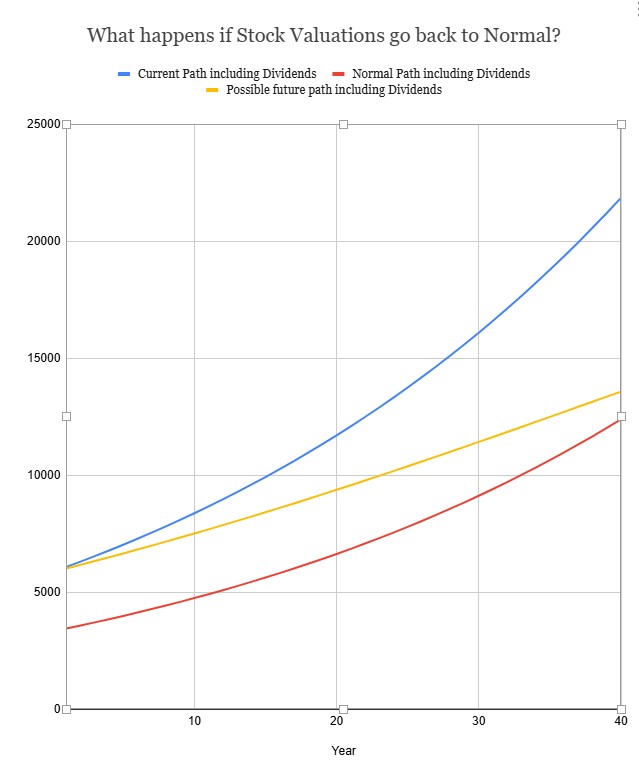
Long-Term Stock Ownership: Despite high valuations, owning stocks for the long run is generally expected to remain profitable, albeit potentially less so than during periods of lower P/E ratios. Market cycles of manias, panics, and corrections are inherent, but attempting to time these fluctuations (e.g., selling everything now to buy back lower) is historically a losing proposition for most investors. A diversified portfolio, consistently invested, is typically the most reliable strategy. Even if valuations revert to historical averages, economic growth and corporate earnings will continue to advance, albeit potentially along a less aggressive trajectory than the current blue-sky scenario.
Alternative Investment Considerations:
- International Diversification: Vanguard’s forecast highlights the potential value in international markets, which appear to be trading at more attractive valuations. Diversifying into global equities can spread risk and potentially capture growth from regions less impacted by current U.S.-centric trends.
- Bonds: The forecast for bonds to outperform U.S. stocks also warrants attention. With rising interest rates, bonds can offer competitive, relatively stable returns, serving as a valuable component of a balanced portfolio.
- Mortgage Payoff: For homeowners, the decision to accelerate mortgage payments becomes more compelling when interest rates are high (e.g., 7%) and expected stock market returns are lower. Paying off a mortgage is akin to securing a guaranteed, tax-free return equivalent to the interest rate, offering a compelling alternative to investing in potentially overvalued equities, especially for those who value the peace of mind of being debt-free.
The Enduring Principles of Investing
In a market characterized by rapid technological change and heightened speculation, the fundamental principles of sound investing remain paramount. Diversification, consistent investing through dollar-cost averaging, and maintaining a long-term perspective are crucial. While monitoring economic news can be informative, reacting to daily headlines or succumbing to market hype often leads to suboptimal outcomes. Institutions like The Economist, with its historical track record of objective economic analysis, can provide valuable insights without encouraging reactive trading.
Ultimately, while the financial world grapples with unprecedented technological advancements and their market implications, the pursuit of personal well-being extends beyond monetary gains. Reinvesting the time and energy saved from excessive market worrying into physical activities, outdoor pursuits, and personal growth offers guaranteed, market-beating returns in terms of health, happiness, and overall quality of life. The future of AI and the stock market is inherently uncertain, but a disciplined, diversified investment strategy, coupled with a focus on holistic well-being, provides the most robust path forward.

