
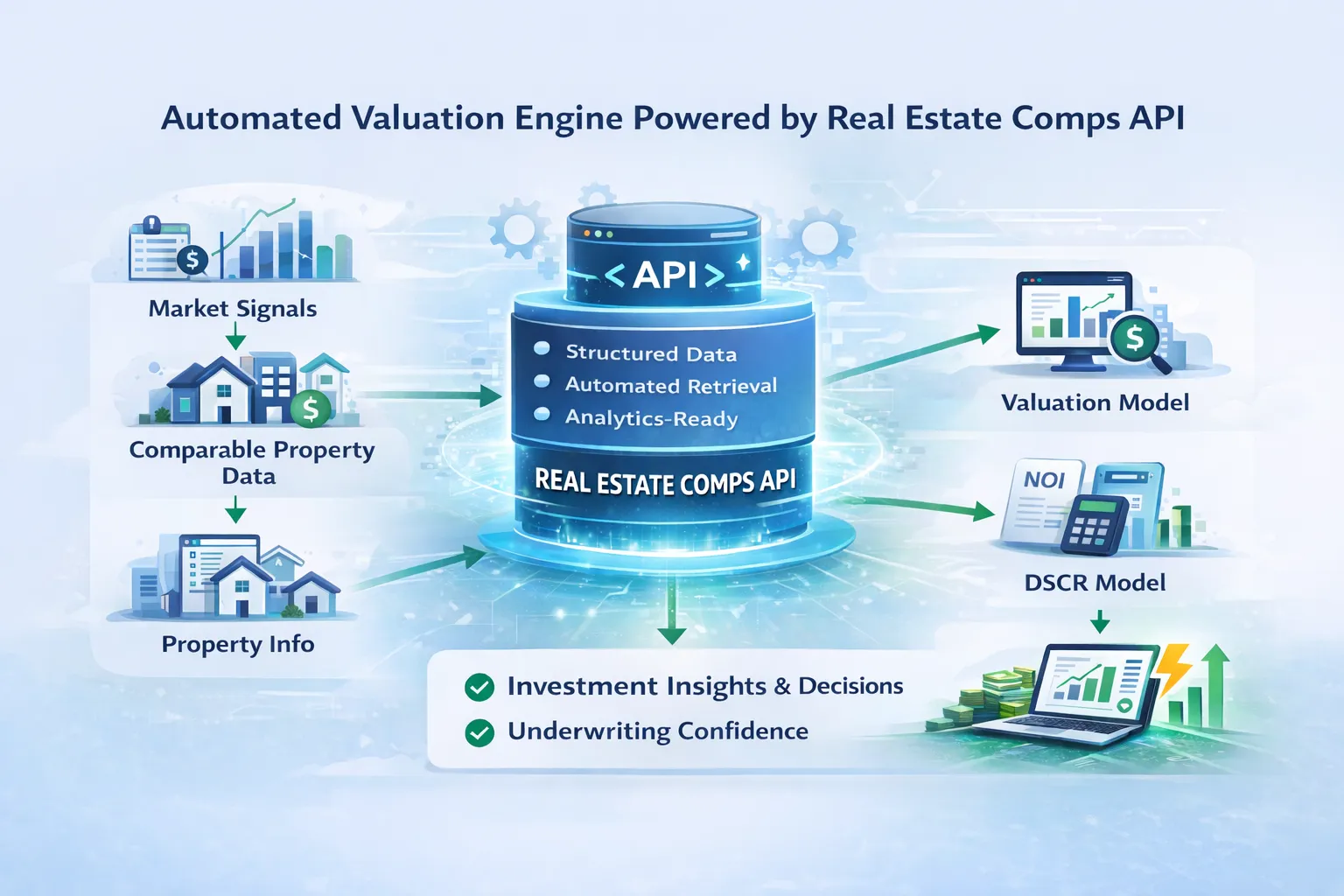
The real estate industry, long reliant on meticulous analysis and on-the-ground expertise, is undergoing a profound digital transformation. At the heart of this evolution lies the critical challenge of data accessibility and utilization. For decades, the accuracy and efficiency of real estate valuation models have been fundamentally constrained not by the sophistication of their logic, but by the availability and quality of comparable property data. This persistent bottleneck forces skilled analysts to dedicate countless hours to the laborious tasks of gathering, cleansing, and reconciling fragmented datasets. As real estate portfolios expand and market dynamics accelerate, these manual workflows not only slow down critical decision-making processes but also introduce inconsistencies and limit the ability to evaluate potential deals with the speed and precision demanded by today’s competitive landscape.
In response to these pervasive challenges, a new technological solution is emerging as a game-changer: the real estate comps API. This innovative tool automates the delivery of structured comparable sales and rental data, thereby enabling faster, more reliable valuation models and more robust Debt Service Coverage Ratio (DSCR) analyses. By integrating market intelligence directly into existing tools and workflows, investors, developers, and financial institutions can now access the critical data points needed to make informed decisions with unprecedented speed and accuracy. This comprehensive guide explores the mechanics of comps APIs, highlights how platforms like Mashvisor are empowering smarter valuation and underwriting, details the specific data endpoints available, and illustrates how businesses can leverage automated comparable property data to build scalable and sophisticated real estate analytics solutions.
The Foundational Role of Comparable Property Data in Modern Valuation
Comparable property data, often referred to as "comps," forms the bedrock of modern real estate valuation methods. By analyzing the recent sales and rental performance of similar nearby properties, investors and analysts can accurately estimate a property’s Fair Market Value (FMV) and its income-generating potential. These market-based benchmarks provide a crucial point of comparison for evaluating potential deals, ensuring that pricing and investment strategies are grounded in observable market realities rather than speculative assumptions.
Understanding Real Estate Comparables (Comps)
Real estate comps are properties that share similar characteristics with the subject property being valued. These characteristics typically include location, size, property type, age, condition, and amenities. Traditionally, the focus of comps has been on recent sales transactions. However, for investment property analysis, particularly in the rental market, rental comps play an equally vital role. Rental comps provide insights into the prevailing market rates for similar properties, enabling investors to project rental income with greater confidence.
The two primary types of comps are:
- Sales Comps: These are recently sold properties that are similar to the subject property. They are used to establish an estimated market value based on what buyers have recently paid for comparable assets.
- Rental Comps: These are properties that are currently rented or have recently been rented out. They are crucial for estimating the potential rental income of an investment property.
Collectively, these comps serve as the essential foundation for robust pricing strategies, sound underwriting practices, and effective investment analysis. Consequently, the ability to access structured comparable sales and rental data is paramount for investors aiming to build repeatable and scalable valuation frameworks across diverse markets.
The Inherent Limitations of Manual Comp Analysis
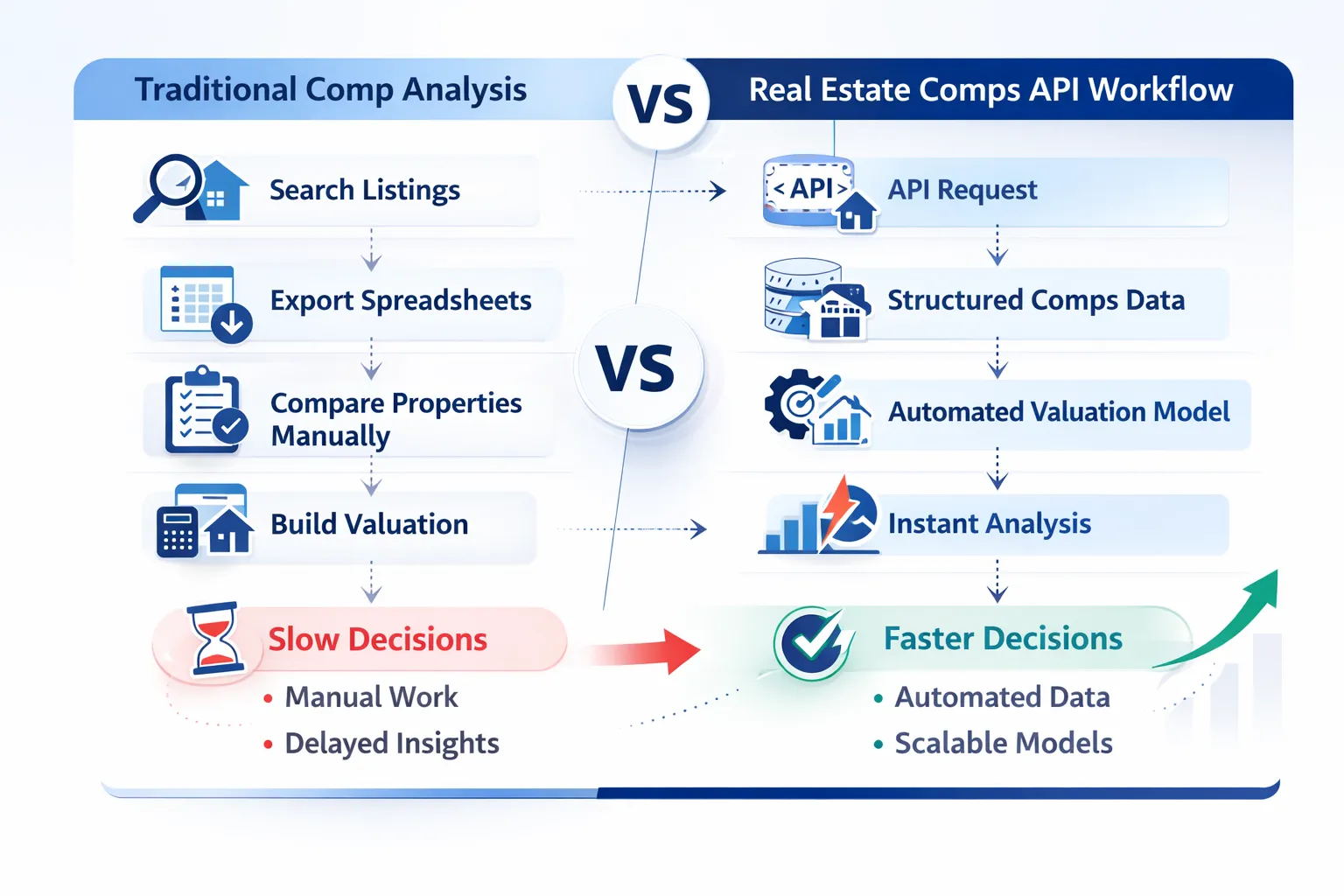
Despite their critical importance, the traditional methods of analyzing comps are fraught with limitations that severely hinder scalability. The process typically involves manual searches across a multitude of sources, including Multiple Listing Services (MLS), public property records, online listing platforms, and proprietary databases. This reliance on manual research leads to several significant challenges:
- Time-Intensive Data Gathering: Analysts spend an inordinate amount of time searching for, downloading, and organizing data from disparate sources, diverting valuable resources from higher-value analytical tasks.
- Data Inconsistency and Inaccuracy: Information across different platforms can be inconsistent, incomplete, or outdated, leading to errors in analysis and potentially flawed valuations. Reconciliation of these discrepancies is a time-consuming and error-prone process.
- Lack of Standardization: Data formats vary widely across sources, requiring extensive data cleaning and transformation before it can be used in valuation models. This lack of standardization makes it difficult to compare properties objectively.
- Limited Scalability: Manual workflows are inherently difficult to scale. As the volume of deals or portfolio size increases, the time and resources required for comp analysis grow exponentially, creating a significant bottleneck.
- Subjectivity and Bias: The manual selection of comps can be influenced by subjective judgment, potentially introducing unconscious bias into the valuation process and leading to inconsistencies between analysts.
- Delayed Decision-Making: The extended time required for manual analysis delays critical investment decisions, potentially causing investors to miss out on time-sensitive opportunities.
These limitations become particularly acute for entities that analyze a high volume of deals or operate across multiple geographic markets. Consequently, there is a growing industry-wide shift towards automated data delivery mechanisms, such as Application Programming Interfaces (APIs), which enable the instant retrieval of comps data and its seamless integration into analytical models.
Unpacking the Real Estate Comps API: Functionality and Workflow
A real estate comps API fundamentally transforms the process of acquiring comparable property data. Instead of relying on manual research, users can leverage an API to automatically retrieve essential information, including recent sales, pricing benchmarks, and detailed property characteristics, through structured data requests. The typical workflow involves a user sending a query based on specific location criteria or property attributes. In return, the API delivers standardized comps data that can be directly and efficiently integrated into valuation and underwriting models.
From Static Reports to Dynamic, Automated Valuation
Traditional comp analysis has historically relied on static reports or ad-hoc manual searches that must be meticulously repeated for each property under consideration. This iterative and time-consuming process is effectively replaced by the automated data retrieval capabilities of a comps API, which ushers in an era of automated valuation.
The automated workflow can be visualized as follows:
- Data Request: An application or user sends a programmatic request to the comps API, specifying parameters such as property address, geographic area (e.g., city, zip code), property type, or specific feature criteria (e.g., number of bedrooms, square footage).
- Data Retrieval and Processing: The API accesses its vast database of real estate transactions and property information, identifies relevant comparable properties based on the request parameters, and processes the data to ensure consistency and accuracy.
- Structured Data Delivery: The API returns the comparable property data in a standardized, machine-readable format, most commonly JSON. This data includes key attributes of both the subject property and its comparables, such as sale price, date of sale, property features, and proximity.
- Integration and Analysis: The structured data is then seamlessly integrated into the user’s valuation models, underwriting software, or investment analysis platforms. This allows for immediate use in calculations, visualizations, and automated decision-making processes.
With the assistance of a property comps data API, investors and platforms gain the ability to pull updated datasets on demand. Because the data is delivered in a standardized format, it can be immediately utilized to build repeatable valuation logic that applies consistently across different property types and diverse markets.
The Strategic Placement of a Real Estate Valuation API within Modern Tech Stacks
In today’s digital-first environment, comparable property data is increasingly being embedded directly into software workflows, moving away from being a standalone analytical component. A real estate valuation API acts as a vital data layer, powering a wide range of tools and applications used by various stakeholders within the real estate ecosystem.
These tools include:
- Property Valuation Platforms: Applications that provide automated property valuations and market analysis.
- Investment Analysis Software: Tools designed to help investors assess the financial viability of real estate deals.
- Loan Origination Systems: Software used by lenders to manage the mortgage application and approval process.
- Portfolio Management Systems: Platforms that track and manage a company’s real estate holdings.
- Real Estate Brokerage CRM Systems: Customer Relationship Management systems that can provide agents with up-to-date market data for their clients.
For technology-focused teams, a real estate API designed for developers eliminates the significant burden of aggregating raw listing datasets or maintaining complex, in-house data pipelines. Instead, an automated property valuation API provides ready-to-use, enriched comps data that can be readily integrated into existing underwriting systems, dynamic dashboards, or sophisticated investment analysis platforms. This allows development teams to focus on building core product features and user experiences, rather than on the intricate and resource-intensive task of data management.
Mashvisor Real Estate Comps API: A Deep Dive into Data, Endpoints, and Features
The efficacy of any comparable sales data API is directly contingent upon the quality, structure, and comprehensiveness of the data it provides. The Mashvisor API stands out by offering robust comparable property datasets that are not only enriched with market benchmarks and investment analytics but are also unified into a single, cohesive real estate analytics API. This integrated approach allows users to transition directly from raw comps to sophisticated valuation and underwriting analyses without the need for extensive, time-consuming additional data processing.
Key Data Points Available Through the Mashvisor API
Mashvisor delivers structured comparable property data that is meticulously designed to support advanced real estate valuation models, precise pricing analysis, and informed investment decision-making. The data is categorized to provide both granular property-level insights and broader market context.
Property-Level Comparable Data:
- Sale Price: The final price at which a comparable property was sold.
- Date of Sale: The specific date when the transaction was completed.
- Property Type: Categorization of the property (e.g., single-family home, condominium, multi-family unit).
- Property Size: Square footage of the living area and lot size.
- Number of Bedrooms and Bathrooms: Key features influencing a property’s value and desirability.
- Year Built and Condition: Information on the property’s age and its current state of repair.
- Lot Size and Features: Details about the land parcel and any significant outdoor amenities.
- Listing History: A record of previous listings, including price changes and days on market.
Market and Investment Context:
- Rental Rates: Average rental prices for similar properties in the area.
- Occupancy Rates: The percentage of time comparable rental properties are occupied.
- Cap Rate: The capitalization rate, a measure of a property’s potential return on investment.
- Cash-on-Cash Return: The annual return on the cash invested in a property.
- ROI (Return on Investment): A broader measure of profitability.
- Estimated Property Taxes and Insurance Costs: Key operating expenses that impact net operating income.
- Market Trends and Appreciation Rates: Historical data on how property values and rental rates have changed over time in the specific market.
These comprehensive data points and analytical metrics enable users to seamlessly integrate a real estate investment analysis API directly into their acquisition or real estate underwriting pipelines, facilitating more informed and data-driven strategic decisions.
Example Mashvisor API Endpoints
Mashvisor offers a suite of well-defined API endpoints, each designed to provide specific types of comparable property data and analytical insights. These endpoints are crucial for building automated workflows that replace manual research with structured, efficient data retrieval.
Commonly utilized API endpoints in comparable property analysis include:
GET /v1.1/client/property: This endpoint typically retrieves detailed information about a specific property, which can serve as the subject property for comparison.GET /v1.1/client/property/nearby: This is a cornerstone endpoint for comps analysis, allowing users to request comparable properties located within a specified radius of a given address. It returns a list of nearby properties with their key attributes and transaction details.GET /v1.1/client/property/transactions: This endpoint provides access to historical transaction data for properties, including sales prices, dates, and other relevant deal specifics. It can be used to filter for specific types of sales or timeframes.GET /v1.1/client/property/price-estimates: This endpoint offers automated price estimations for properties based on various valuation models, including those that heavily rely on comparable sales data.
By leveraging these and other available endpoints, developers and analysts can construct highly customized and automated data retrieval processes. A quick glance at the Mashvisor API documentation reveals the full spectrum of available endpoints, providing granular control over data acquisition.
How Endpoints Support Analysis:
GET /v1.1/client/property/nearby: Crucial for identifying direct comparables for a subject property, enabling accurate market value estimations and rental income projections.GET /v1.1/client/property/transactions: Essential for understanding recent market activity, identifying trends, and filtering comps based on recency and sale type (e.g., distressed sales vs. standard sales).GET /v1.1/client/property/price-estimates: Provides an automated valuation baseline that can be cross-referenced with manual comp analysis or used directly in automated valuation models.GET /v1.1/client/property: Allows for the retrieval of detailed information on the subject property itself, ensuring that the selected comps are truly comparable in terms of features and condition.
In synergy, these endpoints facilitate a fully automated comps workflow that effectively replaces time-consuming manual research with efficient, structured data retrieval, empowering users to analyze properties at scale.
Example Request: Retrieving Comparable Properties
To illustrate the practical application of the Mashvisor API, consider a scenario where a real estate developer needs to quickly assess the market value of a property in Phoenix, Arizona. Instead of manually sifting through listing sites, the developer can employ the following API request:
GET https://api.mashvisor.com/v1.1/client/property/nearby?state=AZ&city=Phoenix&address=123+Main+StHeaders:
x-api-key: YOUR_API_KEYThis request is designed to retrieve a list of nearby properties that can serve as relevant real estate comparables for valuation modeling purposes, based on the specified address in Phoenix, Arizona.
Simplified Example Response:
Upon receiving this request, the API returns structured comparable property data in a JSON format, ready for direct integration into valuation or underwriting models:
  "subject_property":
    "address": "123 Main St",
    "property_type": "Single Family",
    "price_estimate": 420000
  ,
  "nearby_properties": [

      "address": "118 Main St",
      "sale_price": 415000,
      "beds": 3,
      "baths": 2,
      "distance_miles": 0.3
    ,

      "address": "140 Oak Ave",
      "sale_price": 432000,
      "beds": 3,
      "baths": 2,
      "distance_miles": 0.6

  ]
This standardized JSON output allows the data to be immediately consumed by valuation dashboards and automated underwriting tools without requiring any manual formatting or data manipulation. This efficiency is a cornerstone of modern real estate analytics.
Building Smarter Valuation & DSCR Models Using Mashvisor Data
The integration of comparable property data directly into analysis workflows dramatically enhances both the accuracy and scalability of real estate valuation and DSCR models. By automating the retrieval of comps through an API, investors and developers can standardize their analytical assumptions, significantly reduce manual research efforts, and ensure that properties are evaluated against consistent and reliable market benchmarks.
How to Build a Property Valuation Model Using Comparable Data
Accurate property valuation models are fundamentally reliant on comparable sales data to estimate Fair Market Value. This estimation process is grounded in observable market behavior rather than subjective pricing assumptions. The use of API-delivered comps enables this critical process to be repeated automatically across a multitude of properties and markets, ensuring consistency and efficiency.
A simplified workflow for building a real estate valuation model using API-sourced comps involves the following steps:
- Data Ingestion: The valuation model programmatically requests and receives comparable property data via the comps API for a specific subject property.
- Data Standardization and Filtering: The retrieved data is automatically standardized and filtered to ensure relevance (e.g., same property type, similar square footage, recent sale dates).
- Feature Extraction and Weighting: Key property features from the comparable sales are extracted, and algorithms assign appropriate weights to these features based on their impact on value.
- Automated Valuation Calculation: Using statistical models (e.g., multiple regression analysis) or machine learning algorithms, the system calculates an estimated Fair Market Value for the subject property based on the weighted comparable data.
- Output and Reporting: The calculated valuation is outputted, often integrated into a broader report or dashboard, and can be used for immediate decision-making.
As comps are delivered through a real estate valuation API, the valuation model can run automatically whenever new properties are analyzed, facilitating consistent and scalable valuation practices.
Using Comps Data for DSCR Model Real Estate Analysis
The Debt Service Coverage Ratio (DSCR) model is a critical metric for assessing a property’s ability to generate sufficient income to cover its debt obligations. The accuracy of DSCR calculations is heavily dependent on realistic income and valuation assumptions. Comparable property data significantly improves DSCR accuracy by grounding these projections in verified market activity.
The fundamental DSCR Calculation Formula is:
DSCR = Net Operating Income / Total Debt Service
To calculate DSCR for a rental property, analysts typically undertake the following steps:
- Estimate Potential Gross Income (PGI): This is derived from projected rental rates, often informed by rental comps, and the expected occupancy rate.
- Calculate Vacancy and Credit Loss: A percentage is deducted from PGI to account for periods when units are vacant or tenants fail to pay rent, informed by market occupancy data.
- Determine Effective Gross Income (EGI): PGI minus vacancy and credit loss.
- Estimate Operating Expenses: This includes property taxes, insurance, management fees, maintenance, utilities, and other recurring costs. Data from comparable properties can inform these estimates.
- Calculate Net Operating Income (NOI): EGI minus total operating expenses.
- Determine Total Debt Service: This is the sum of annual principal and interest payments on any loans secured by the property.
- Calculate DSCR: Divide the NOI by the Total Debt Service. A DSCR above 1.0 indicates that the property’s income is sufficient to cover its debt obligations.
Accurate comps are instrumental in reducing risk by preventing the common underwriting errors of overestimated valuations or unrealistic income projections. By providing data-driven insights into market rental rates and property values, comps ensure that these foundational assumptions are grounded in reality.
Automating Rental Property Underwriting Workflows
When comparable property data is delivered programmatically via an API, the underwriting process can evolve from a manual, labor-intensive review to a highly automated and efficient evaluation.
A typical automation pipeline for rental property underwriting looks like this:
API → Valuation Model → DSCR Calculation → Investment Decision
This automated workflow for rental property underwriting enables platforms to:
- Process Deals at Scale: Evaluate a significantly higher volume of potential investments in a shorter timeframe.
- Standardize Underwriting Criteria: Ensure consistent application of valuation and risk assessment methodologies across all deals, reducing human error and bias.
- Accelerate Decision Cycles: Provide near real-time feedback on deal viability, allowing for quicker offers and securing more opportunities.
- Enhance Risk Management: Utilize data-driven insights to identify potential risks and overvalued assets more effectively.
- Reduce Operational Costs: Minimize the need for extensive manual data collection and analysis, freeing up human resources for more strategic tasks.
Instead of investing heavily in building data infrastructure from scratch, teams can leverage a real estate data API partnership to access standardized comps data that is immediately ready for integration into their analytical and underwriting models.
Real-World Example: Automating DSCR-Based Loan Underwriting
Consider a hypothetical scenario involving a lending institution evaluating a loan application for a rental property. Instead of relying on traditional, time-consuming manual appraisals and spreadsheet-based analyses, the system can be designed to automatically pull comparable property data through an API as soon as a property is submitted for evaluation.
The automated workflow proceeds as follows:
- Loan Application Submission: A borrower submits a loan application for a specific rental property.
- API Data Retrieval: The lending platform’s system automatically queries the Mashvisor comps API, requesting nearby comparable sales and rental data for the subject property’s address.
- Automated Valuation: The system uses the retrieved comps to generate an automated property valuation, providing an estimated Fair Market Value for the collateral.
- Income Projection: Based on rental comps and market occupancy rates provided by the API, the system projects the potential annual rental income.
- Expense Estimation: Operating expenses, such as property taxes and insurance, are estimated, potentially using data points also accessible via the API or through integrated databases.
- DSCR Calculation: The system calculates the Net Operating Income (NOI) and then computes the DSCR using the projected income, estimated expenses, and the proposed loan terms.
- Risk Assessment and Decision: The calculated DSCR, alongside the automated valuation and other risk factors, informs the lender’s decision regarding loan approval and terms.
In this setup, a process that previously might have taken hours or even days is transformed into a repeatable, near-instantaneous operation. Crucially, every loan application is evaluated using consistent, data-driven criteria, minimizing the impact of subjective assumptions and enhancing the overall reliability of the underwriting process. While this example highlights a typical underwriting workflow, the applications of a real estate comps API extend to numerous other scenarios within the real estate domain.
Real-World Use Cases for Investors, Developers, and PropTech Teams
The true value of a real estate comps API is realized when it is seamlessly integrated into critical decision-making workflows. This technology empowers a diverse range of real estate professionals to optimize their processes and achieve better outcomes.
Investors and Acquisition Teams
Real estate investors and acquisition teams leverage comparable property data to evaluate potential deals with greater speed and consistency across multiple markets. This is critical in fast-paced investment environments.
Common applications include:
- Deal Sourcing and Screening: Quickly assess the viability of numerous potential acquisitions by rapidly evaluating their market value and income potential against comps.
- Offer Price Determination: Formulate competitive yet profitable offer prices by understanding the prevailing market rates for similar properties.
- Portfolio Diversification Analysis: Evaluate investment opportunities in new markets by accessing accurate and up-to-date local comps data.
- Due Diligence Acceleration: Streamline the due diligence process by automating the retrieval and initial analysis of comparable property data.
Access to a centralized and structured real estate comps dataset allows investors to standardize their decision criteria, reduce bias in deal evaluation, and make more confident investment choices.
Lenders and DSCR Underwriting
Lending institutions are increasingly adopting automated data workflows to enhance the accuracy and efficiency of evaluating borrower risk and collateral value.
With API-delivered comps, lenders can:
- Automate Collateral Valuation: Obtain rapid, data-driven property valuations for loan underwriting, reducing reliance on lengthy manual appraisals.
- Improve DSCR Accuracy: Ensure that income and expense projections for DSCR calculations are based on verifiable market data, leading to more reliable risk assessments.
- Enhance Loan Portfolio Risk Management: Continuously monitor the market value and income potential of properties within their loan portfolios.
- Streamline Underwriting Processes: Accelerate loan approval times by automating key data gathering and analysis steps.
This approach aligns with broader industry trends toward automated underwriting, which is increasingly powered by sophisticated historical real estate data APIs.
PropTech Platforms and Developers
For emerging PropTech startups and established analytics platforms, comparable property data serves as a fundamental data layer that underpins their valuation and analytics tools.
Typical developer use cases include:
- Building Automated Valuation Models (AVMs): Integrating comps data as a core input for developing proprietary AVMs that can be offered as a service.
- Enhancing Property Listing Portals: Providing users with richer market context and valuation insights directly on property listings.
- Developing Investment Analytics Tools: Creating platforms that offer investors detailed analysis of potential returns, risk profiles, and market trends, all powered by comps data.
- Creating Portfolio Management Software: Developing tools that allow users to track and analyze the performance of their real estate assets based on current market comparables.
By partnering with a leading real estate data API provider, such as Mashvisor, technology teams can efficiently launch sophisticated valuation features without the immense undertaking of building and maintaining complex property data pipelines internally. This accelerates product development cycles and allows them to focus on innovation and user experience.
Mashvisor API Pricing and Getting Started
Mashvisor offers a flexible, usage-based pricing model for its API, allowing businesses to scale their API access in direct proportion to their evolving data needs. This model is designed to be adaptable, catering to the requirements of both early-stage projects with nascent data demands and established enterprise platforms requiring extensive data access.
Mashvisor provides a range of monthly and annual plans. Annual subscriptions offer a financial incentive, effectively providing two months of access free of charge. The pricing structure is tiered, carefully designed to accommodate businesses at different stages of growth and with varying data consumption patterns:
- Starter Plans: Ideal for individuals or small teams beginning their data integration journey, offering a limited number of API credits at an accessible price point.
- Growth Plans: Suited for growing businesses that require more extensive data access and higher usage volumes, providing a greater allocation of API credits.
- Enterprise Plans: Tailored for large organizations with substantial data requirements, offering custom solutions, dedicated support, and the highest volume of API credits, often with bespoke pricing.
To initiate the process of leveraging Mashvisor’s comprehensive data solutions, prospective users are encouraged to schedule a consultation call with the Mashvisor Data Team. This allows for a personalized discussion of specific data needs and the development of a tailored API access strategy.
Benefits of Using Mashvisor for Automated Property Valuation
Employing the Mashvisor API for comparable property analysis empowers investors and developers to transition from inefficient, manual valuation workflows to scalable, data-driven decision-making processes. The advantages derived from this approach are substantial and contribute to a more robust and profitable real estate investment strategy.
The key benefits include:
- Enhanced Speed and Efficiency: Automating data retrieval significantly reduces the time spent on manual research, allowing for faster deal evaluation and execution.
- Improved Data Accuracy and Consistency: Standardized data delivery minimizes errors associated with manual data entry and reconciliation, leading to more reliable valuations.
- Scalability for Growth: The API infrastructure allows businesses to scale their valuation capabilities seamlessly as their portfolio or deal volume grows, without a proportional increase in manual labor.
- Data-Driven Decision Making: Access to comprehensive, up-to-date market data ensures that investment decisions are grounded in objective, verifiable information.
- Reduced Operational Costs: Automating data collection and analysis frees up valuable human resources, allowing them to focus on higher-value strategic activities.
- Deeper Market Insights: The API provides access not only to raw comps but also to enriched market trends and investment metrics, offering a more holistic view of property potential.
- Competitive Advantage: The ability to analyze deals faster and more accurately provides a significant edge in competitive real estate markets.
By consolidating comparable property data with crucial investment analytics within a single, accessible platform, Mashvisor empowers users to achieve faster, more reliable property valuation at scale.
When a Real Estate Comps API May Not Be Necessary
While the advantages of a real estate comps API are undeniable for many applications, it is important to recognize that such a tool may not be universally necessary. The value proposition of an API is most pronounced when specific operational needs and strategic objectives are in play.
A real estate comps API might be less critical or even an unnecessary addition if:
- Analysis is Infrequent and Low-Volume: For individuals or small entities that only analyze a handful of properties per year, manual research might still be manageable and cost-effective.
- Integration into Software Workflows is Not Required: If the goal is simply to conduct one-off valuations for personal knowledge and not to embed this data into an automated system or application, manual methods may suffice.
- Existing Proprietary Data Sources are Sufficient: Some large organizations may have invested heavily in building and maintaining their own extensive internal databases that meet their specific needs for comparable data.
- Budgetary Constraints are Extreme: For very early-stage startups or individuals with extremely limited budgets, the cost of an API subscription might be prohibitive, even if the efficiency gains are recognized.
- The Market is Highly Static and Predictable: In exceptionally stable markets where property values and rental rates change minimally over long periods, the need for real-time, automated data updates might be less pressing.
In these scenarios, the complexity and cost associated with implementing and utilizing an API might outweigh the benefits. However, the moment the need arises for faster analysis, the establishment of consistent market benchmarks across multiple properties, or the simultaneous evaluation of numerous investment opportunities, the value proposition of automated comps data becomes significantly more compelling.
Bottom Line
As the real estate analysis landscape continues its rapid evolution towards a data-driven paradigm, valuation and underwriting practices are decisively shifting from manual, labor-intensive research to sophisticated, automated intelligence. Within this transformative context, property comps data has evolved from a periodic, one-time analysis performed for individual deals to a continuous input that fuels pricing models, informs risk evaluation, and guides investment decisions across entire portfolios.
A real estate comps API serves as the critical enabler of this paradigm shift. By delivering consistent, high-quality market data directly into automated valuation and DSCR models, it empowers teams to analyze opportunities with unprecedented speed while maintaining standardized and reliable assumptions. With scalable access to comparable properties, essential investment metrics, and analytics-ready datasets, Mashvisor equips investors, lenders, and PropTech platforms with the tools they need to concentrate less on the arduous task of data collection and more on the strategic imperative of building smarter, more profitable real estate ventures.
For those ready to harness the power of automated data for superior valuation and DSCR modeling, the opportunity to experience the Mashvisor API firsthand is readily available. A 7-day free trial offers access to 30 credits, providing a practical gateway to exploring the platform’s capabilities and understanding its transformative potential for your real estate analysis workflows.
Frequently Asked Questions (FAQs)
What Is a Real Estate Comps API?
A real estate comps API is a digital interface that provides programmatic access to data on properties similar to a subject property within a specific geographic area. This allows software applications to automatically retrieve comparable sales and rental data, facilitating automated market analysis.
How Is DSCR Calculated for Rental Properties?
The Debt Service Coverage Ratio (DSCR) for rental properties is calculated by dividing the property’s Net Operating Income (NOI) by its total annual debt obligations (principal and interest payments). This ratio serves as a key indicator for lenders, measuring a property’s ability to generate sufficient income to cover its loan payments and assess repayment risk.
Who Uses Real Estate Comps APIs?
Real estate comps APIs are widely utilized by real estate investors, lending institutions, commercial and residential brokerages, property management companies, and PropTech platforms. These entities rely on the APIs for scalable valuation data essential for analysis, reporting, and the development of automated real estate analysis systems.
What Makes Mashvisor Different from Other Real Estate APIs?
Mashvisor distinguishes itself by focusing on investment-oriented analytics. Its API integrates detailed property information with comprehensive market insights and crucial performance indicators, such as cap rates and cash-on-cash returns. This means users can perform thorough investment opportunity evaluations without needing to aggregate data from multiple disparate sources.
How Do I Get Comparable Property Data Automatically?
Comparable property data can be accessed automatically by connecting analytical software tools to a data provider’s API. This connection enables the retrieval of nearby property information and pricing benchmarks through automated requests, which are typically based on specific location parameters or property characteristics.

