
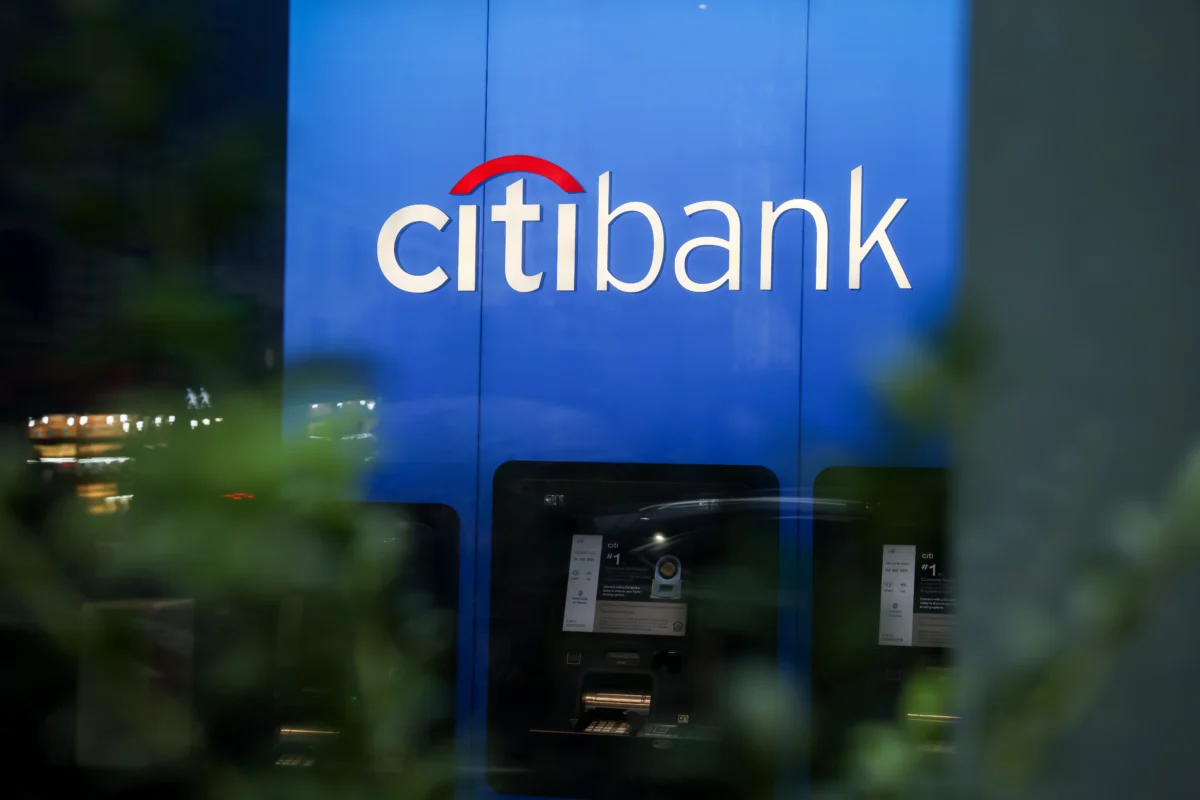
BANGKOK – In a series of high-stakes bilateral meetings held on the sidelines of the Group of 20 (G20) finance meetings and the International Monetary Fund-World Bank annual gathering in Bangkok this week, U.S. officials intensified pressure on Beijing regarding critical market access issues for prominent American financial institutions, specifically Mastercard Inc. and Citigroup Inc. These discussions, led by U.S. Deputy Treasury Secretary Francis Brooke, involved senior counterparts from the People’s Bank of China (PBOC) and China’s finance ministry, underscoring the persistent efforts by Washington to secure greater operational freedom for its companies within China’s vast, yet still tightly controlled, financial sector.
The confidential nature of these closed-door meetings, as conveyed by a U.S. Treasury official speaking anonymously, highlights the sensitivity and strategic importance of the ongoing economic dialogue between the two global powers. The talks explicitly targeted regulatory approvals and market access for a broader spectrum of U.S. firms, including Visa, which recently achieved a significant breakthrough in its own Chinese market entry. This renewed push comes on the heels of a landmark agreement reached last month between Presidents Donald Trump and Xi Jinping during the Chinese leader’s state visit to Washington, an accord that included provisions for such regulatory clearances. The Bangkok discussions, therefore, served as a crucial follow-up, aiming to translate those high-level commitments into concrete implementation.
A Chronology of China’s Financial Opening and Recent Milestones
China’s journey towards opening its financial sector has been a gradual and often cautious process, marked by strategic concessions and carefully managed reforms. While the nation has been a magnet for foreign investment in manufacturing and technology for decades, its financial markets, particularly in areas like payments, securities, and asset management, have historically remained under stringent state control, prioritizing domestic players and capital flow management.
The current wave of significant financial sector opening largely commenced around 2018, when Beijing began to incrementally lift foreign ownership caps across various financial services. This included allowing foreign firms to hold majority stakes, and eventually full ownership, in areas such as securities, futures, and fund management companies. The stated objectives behind these reforms were multifaceted: to attract foreign capital, enhance competition, introduce advanced financial technologies and management practices, and ultimately, to modernize China’s financial system in line with global standards. However, the pace and scope of this liberalization have consistently been subject to China’s domestic economic priorities and broader geopolitical considerations.
A pivotal moment in this chronology occurred on October 13, 2026, when the People’s Bank of China granted approval for Visa Inc. to begin preparations for establishing a wholly-owned domestic card-clearing business. This decision was a significant victory for Visa, which had sought such access for years. Under the terms of the approval, Visa has up to a year to complete its preparatory work before formally applying for an operating license. This development set a crucial precedent, signaling Beijing’s willingness to grant full market access to major foreign payment networks, thereby intensifying expectations for similar approvals for other players like Mastercard.
For Citigroup, the timeline for its ambitions in China stretches back further. The global banking giant initially applied for a wholly-owned securities license in late 2021. This license would enable Citigroup to conduct a comprehensive suite of businesses in China’s onshore market, including A-share brokerage, underwriting, research, and principal trading. The prospect of such an approval gained momentum last month, with reports from Reuters suggesting that a decision could be imminent. The ongoing discussions in Bangkok suggest that U.S. officials are actively advocating for the acceleration of this long-pending application.
Mastercard’s presence in China currently operates through a local joint venture with NetsUnion Clearing Corp., which commenced operations in 2024. While this arrangement allows Mastercard to process yuan card payments, the company’s ultimate goal, and the subject of U.S. pressure, is to secure approval to operate as an independent, wholly-owned entity. This would grant Mastercard greater autonomy, direct control over its operations, and a more competitive standing against both domestic giants and other foreign players in the lucrative Chinese payments market.
The Stakes for US Financial Giants in a Vast Market
The intense diplomatic efforts to secure greater market access underscore the immense strategic importance of the Chinese market for global financial institutions. With a population exceeding 1.4 billion and a rapidly expanding middle class, China represents one of the largest and fastest-growing consumer markets in the world, particularly in digital payments and wealth management.
For Mastercard, obtaining a wholly-owned domestic card-clearing business license would be transformative. The Chinese domestic payments market is dominated by local players such as China UnionPay, Alipay, and WeChat Pay. While foreign card networks have served cross-border transactions for years, direct access to the vast domestic yuan-denominated clearing market has been largely restricted. An independent operation would allow Mastercard to directly compete for domestic card issuance, transaction processing, and partnerships with Chinese banks and merchants. This would unlock significant revenue streams and allow the company to leverage its global technology and brand recognition within China, potentially capturing a substantial share of the hundreds of billions of yuan in daily transactions. The ability to operate independently, rather than through a joint venture, offers full control over strategy, technology deployment, and profit repatriation, fundamentally altering its business model and growth trajectory in the region.
Citigroup’s pursuit of a wholly-owned securities license similarly reflects ambitions for deep penetration into China’s capital markets. The A-share market, comprising stocks traded on the Shanghai and Shenzhen stock exchanges, is the second largest in the world by market capitalization, offering immense opportunities in brokerage, underwriting initial public offerings (IPOs), conducting equity research, and proprietary trading. As China’s economy continues to mature and its capital markets deepen, the demand for sophisticated financial services, including wealth management for high-net-worth individuals and institutional investment advice, is projected to surge.
Citigroup has already demonstrated its commitment to this expansion, having reportedly hired several dozen employees for its China unit and planning to increase its China securities staff to approximately 100. This expansion signifies the bank’s long-term strategic vision to become a major player in China’s domestic capital markets, leveraging its global expertise and network to serve both Chinese and international clients seeking to invest in the A-share market. A wholly-owned license would provide Citigroup with the agility and comprehensive operational scope necessary to compete effectively against well-entrenched domestic securities firms and other foreign entrants.
China’s Strategic Calculus: Balancing Opening with Control
China’s approach to opening its financial sector is characterized by a delicate balance between attracting foreign capital and expertise, fostering competition, and maintaining domestic control over strategically vital sectors. While the gradual lifting of foreign ownership caps since 2018 is a clear indication of a commitment to liberalization, Beijing has consistently maintained tight control over cross-border capital flows and has ensured that state-backed domestic players remain dominant, particularly in sensitive areas like payments and banking infrastructure.
The decision to grant licenses to foreign financial firms like Visa, and potentially Mastercard and Citigroup, can be viewed through several lenses. From an economic perspective, it aligns with China’s broader agenda of deepening financial reforms, integrating further into the global financial system, and enhancing the efficiency and competitiveness of its domestic financial services industry. Foreign participation can introduce new technologies, improve risk management practices, and offer a wider range of financial products, ultimately benefiting Chinese consumers and businesses.
From a geopolitical and trade perspective, these concessions also serve as a crucial olive branch in the often-strained US-China economic relationship. Granting market access to prominent American companies can be a powerful signal of China’s commitment to fair trade practices and its willingness to address U.S. concerns regarding market barriers. This can help de-escalate trade tensions, foster a more stable bilateral economic environment, and potentially pave the way for further cooperation on other contentious issues. The observation by Dan Wang, China director at Eurasia Group, that "The move suggests the US-China trade environment remains benign, and Beijing is keen to keep up the momentum," underscores this strategic calculation. She further characterized licensing U.S. financial firms as a "limited concession" on market access, yet one that signals China’s continuing commitment to opening up, which "should marginally bolster investor confidence in Chinese assets."
However, China’s motivations are also rooted in self-interest. By selectively opening sectors, Beijing can manage the pace of foreign competition, protect key domestic industries, and ensure that any liberalization serves its long-term strategic objectives. The National Financial Regulatory Administration (NFRA), the China Securities Regulatory Commission (CSRC), and the People’s Bank of China (PBOC) collectively oversee a complex and often opaque regulatory landscape that foreign firms must navigate. The rigorous approval process and the conditionality often attached to licenses ensure that foreign firms operate within the parameters set by Beijing.
Broader US-China Economic Dialogue and Future Prospects
The bilateral meetings in Bangkok are an integral part of a broader, ongoing economic dialogue between the United States and China, which has seen increased engagement despite persistent geopolitical tensions. High-level interactions, such as the recent presidential meeting, signal a mutual desire to manage disagreements and seek areas of cooperation, particularly in economic spheres. The upcoming Asia-Pacific Economic Cooperation (APEC) summit in Shenzhen, China, in November, where Presidents Trump and Xi are expected to meet in person for the third time this year, provides another critical platform for these discussions to continue.
The outcomes of these financial market access negotiations carry significant implications beyond the individual companies involved. They serve as a barometer for the overall health of the US-China economic relationship and China’s commitment to market-oriented reforms. Successful market entry for Mastercard and Citigroup would not only benefit these corporations directly but could also encourage other foreign firms to deepen their investments in China, boosting overall foreign direct investment and fostering greater integration of China’s economy with global financial markets.
Conversely, delays or denials of these critical licenses could reignite concerns about protectionism, fair competition, and the reliability of China’s market opening pledges, potentially dampening investor confidence. The silence from the PBOC, China’s National Financial Regulatory Administration, China Securities Regulatory Commission, Chinese embassies in Singapore and Thailand, the U.S. Treasury Department press office, and Visa regarding CNBC’s request for comment—along with Citigroup and Mastercard declining to comment—is typical for ongoing sensitive negotiations.
As the global financial landscape evolves, the degree to which China opens its financial markets to foreign participation will remain a key indicator of its economic trajectory and its role in the global economy. For American financial giants, the pursuit of full market access is not merely about expanding their footprint but about securing a competitive edge in what is undoubtedly the most significant growth market of the 21st century. The Bangkok meetings represent another critical step in this long, complex, and strategically vital engagement.

