

Brian and Michael, a 34-year-old couple residing in central Connecticut, are currently navigating a complex financial transition characterized by high public sector earnings, significant consumer debt, and the long-term objective of transitioning from luxury rental living to homeownership. Both professionals work within the state’s health and human services infrastructure; Michael serves as a project coordinator for a state behavioral health agency and an advocate for disability leadership, while Brian operates as a quality assurance manager for a state-run hospital. Despite a combined gross household income exceeding $167,000, the couple reports significant financial anxiety stemming from $28,259 in consumer debt and a lack of real estate equity as they approach their tenth anniversary.

Economic Context and Geographic Factors
The couple’s financial situation is situated within the broader economic landscape of Connecticut, a state known for its high cost of living and substantial utility expenses. According to recent data, Connecticut consistently ranks among the top ten states for the highest electricity rates in the U.S., a factor reflected in the couple’s average monthly power bill of $235. Furthermore, the rental market in the Northeast has seen unprecedented volatility between 2022 and 2023. Brian and Michael’s transition from a $945-per-month studio to a $2,000-per-month refurbished mill apartment represents a 111% increase in housing costs, a shift that has significantly tightened their monthly cash flow.
The choice of a refurbished industrial mill reflects a growing trend in New England urban planning, where historic manufacturing structures are converted into "luxury" residential units. While providing modern amenities and aesthetic value—such as 12-foot ceilings and oversized windows—these living arrangements often come with higher price tags that can impede the ability of middle-income earners to save for a traditional down payment on a home.

Chronology of Financial Displacement (2022–2023)
The current financial standing of the household is the result of a series of compounding events over the last 18 months. In mid-2022, the couple lived in a 600-square-foot studio apartment with a stable, low overhead. However, an unplanned relocation necessitated by a change in their housing status forced them into the 2023 rental market during a period of peak inflation.
During this 3.5-month "scramble" to secure new housing, the couple faced simultaneous crises: the illness and eventual loss of their cat, Rex, and the acquisition of two new kittens requiring specialized veterinary care and prescription diets. These "unplanned veterinary and moving expenses" derailed their previous forecast, which had predicted a re-entry into the housing market by late 2023. Instead, the costs associated with the move and medical emergencies were absorbed through credit card utilization, leading to the current $28,000 debt load.

Comprehensive Analysis of Assets and Liabilities
A rigorous accounting of the couple’s finances reveals a dichotomy between strong long-term retirement security and weak short-term liquidity.
Income and Cash Flow
The household’s gross annual income is $167,544, resulting in a net take-home pay of $109,455.42 after taxes, healthcare, and retirement contributions. Their annual expenditures are currently calculated at $96,414.36, leaving a mathematical surplus of approximately $13,041 annually. However, the presence of high-interest consumer debt suggests that discretionary spending and "lifestyle creep" may be absorbing this surplus.

Debt Profile
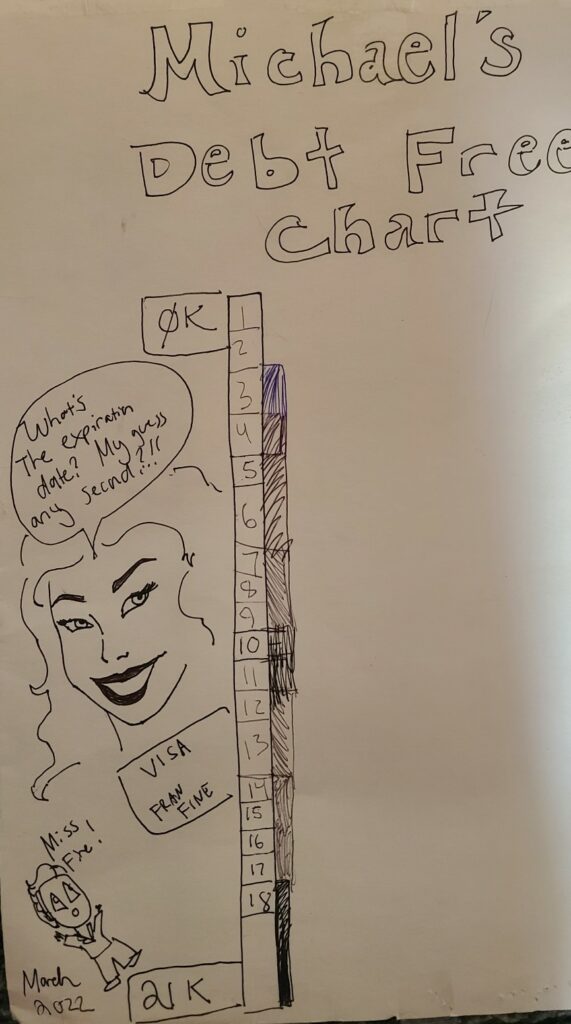
The $28,259 total debt is distributed across three primary accounts:
- Brian’s Visa (SCU): $16,057 at 0% interest until November 2023, after which the rate climbs to 17.99%.
- Michael’s Visa Platinum: $9,700 at 10.99% interest.
- Brian’s Visa Platinum (Navy Federal): $2,503 at 0.99% interest, escalating to 17.74% in November 2023.
The looming "interest cliff" in November represents a critical financial risk. If the balances are not significantly reduced before the promotional periods expire, the household will face thousands of dollars in annual interest charges, further delaying their homeownership goals.
Assets and Retirement
The couple’s total assets are valued at $91,250, primarily held in retirement accounts. Brian’s employment with the state provides a "triple crown" of retirement security: a 403(b), a 457(b), and a state pension fund. The pension is projected to pay out $4,150 monthly upon his retirement in 2054. Michael maintains a 401(k) through his primary employer with a 4% match. Their liquid savings are relatively low, with Michael holding a $7,000 emergency fund and Brian holding approximately $3,356 across various savings and health accounts.
Strategic Financial Recommendations
Financial analysts suggest a multi-phased approach to stabilize the household’s finances and enable their transition to homeownership.

Phase 1: Aggressive Debt Eradication
The immediate priority is the elimination of the $28,259 consumer debt. By categorizing expenses into "Fixed," "Reduceable," and "Discretionary," the couple can identify nearly $1,400 in monthly savings. Eliminating discretionary spending—such as eating out ($200), home goods ($200), and various subscriptions—would increase their monthly debt-payment capacity to $4,456. At this accelerated rate, the couple could achieve total debt freedom in approximately 6.5 months, effectively neutralizing the threat of the November interest rate hikes.
Phase 2: Liquidity and Emergency Fund Stabilization
Once the debt is cleared, the household must address their lack of liquidity. Their current $9,000 in combined cash covers only about five weeks of expenses. In a high-cost state like Connecticut, a standard three-to-six-month emergency fund is recommended. This fund acts as a "buffer" to prevent future reliance on credit cards when inevitable expenses, such as car repairs for their 2007-model vehicles, arise.

Phase 3: Retirement Optimization vs. Homeownership
Brian and Michael face a choice between maximizing tax-advantaged retirement accounts and saving for a home. Current tax law allows them to contribute up to $80,500 annually across their various accounts (401k, 403b, 457, and IRAs). While homeownership is a primary goal, financial advisors often recommend ensuring retirement contributions are "on lock" first, as the compound interest lost by skipping years of contributions cannot be recovered.
Evaluation of Career and Educational Goals
Brian has expressed interest in pursuing a Master’s degree to address feelings of academic underachievement. However, from a strictly financial standpoint, such a move requires a high-level Return on Investment (ROI) analysis. In a professional newsroom analysis of current labor trends, advanced degrees in the public sector are only advisable if they are tied to a "guaranteed, direct, iron-clad correlation to making more money." Given Brian’s existing pension-eligible role and solid salary, a self-funded graduate degree could potentially be a "detour" that delays homeownership by several years.

Conversely, Michael’s interest in expanding his consulting and public speaking business represents a low-overhead opportunity to increase household income. His previous experience as a brain injury survivor and mental health advocate provides a unique market niche that could generate the additional capital needed for a down payment.
Broader Implications and Societal Trends
The case of Brian and Michael is representative of the "millennial middle-class squeeze." Despite high earnings and professional success, this demographic often finds itself caught between the high costs of urban/suburban rentals and the barrier to entry for the housing market. The psychological impact of this—expressed by both Brian and Michael as "shame" and a feeling of being "behind their peers"—is a documented phenomenon in contemporary sociology, often referred to as "financial dysmorphia."

Their situation highlights the importance of financial literacy regarding public sector benefits. Many employees do not fully realize the value of a 457(b) plan, which allows for penalty-free withdrawals upon separation from an employer, regardless of age—a powerful tool for those considering early retirement or career pivots.
Conclusion
Brian and Michael possess the necessary income and institutional benefits to achieve their long-term goals of marriage, business ownership, and real estate acquisition. However, their path is currently obstructed by a "cycle of debt" and a lack of liquid reserves. By implementing a rigorous spending freeze and prioritizing debt repayment before the November 2023 interest escalations, the couple can pivot from a defensive financial posture to an offensive one. The transition from "adulting" as a series of crises to "adulting" as a series of strategic choices depends entirely on their ability to align their daily spending with their stated ten-year objectives. As the Connecticut housing market continues to evolve, the couple’s ability to build a robust emergency fund will be the deciding factor in whether they remain in the luxury rental cycle or successfully claim "a piece of earth to call their own."

